Chinese Cuisine
La Zi Ji (Chongqing Spicy Chicken)
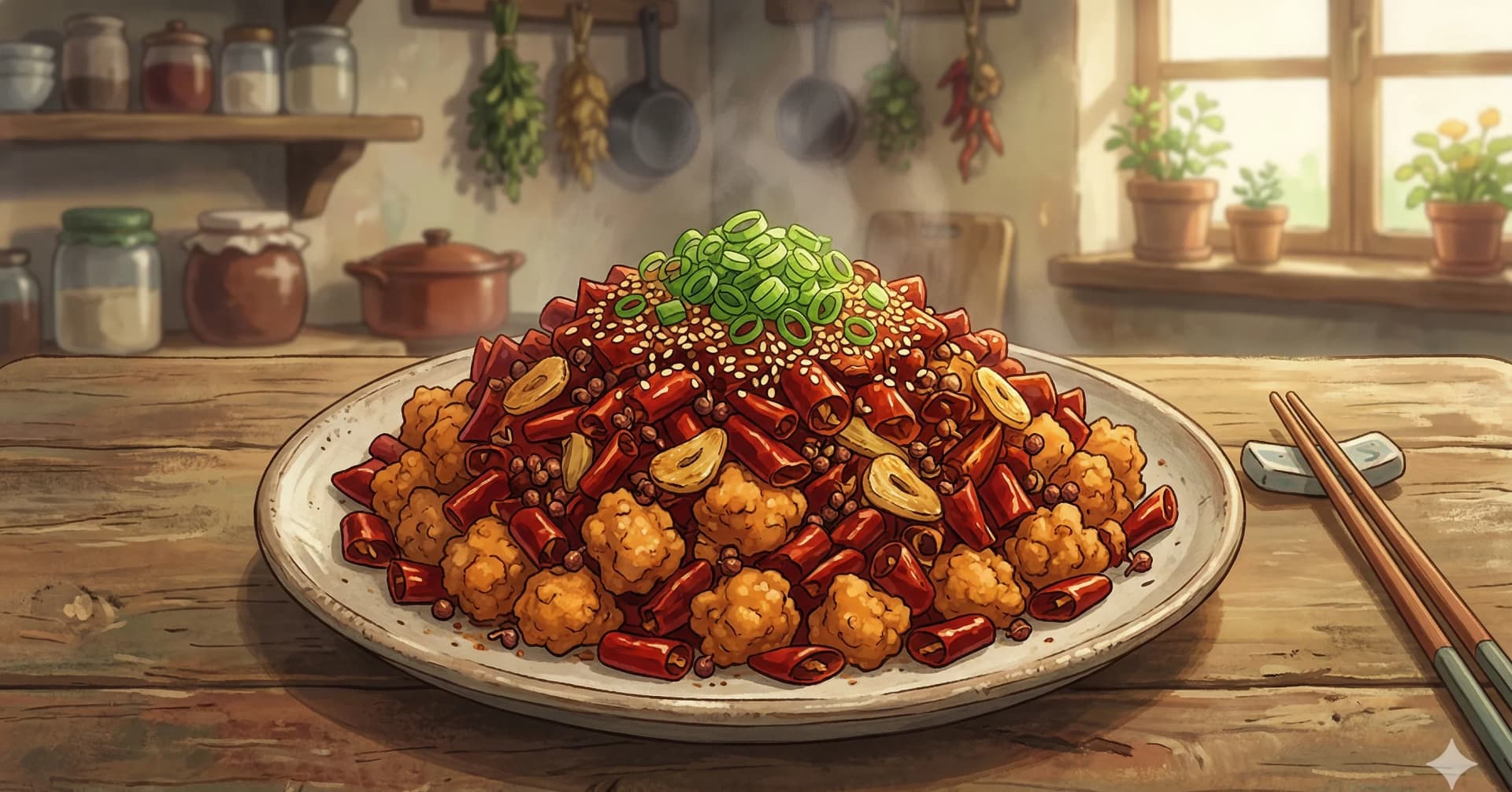
Bite-sized crispy chicken pieces buried in a mountain of toasted dried chilies and Sichuan peppercorn
La zi ji arrives at the table and provokes a moment of disbelief. The plate is heaped with dried red chilies, so many that the actual chicken seems like an afterthought, small golden nuggets buried in a crimson mountain. But look closer and the genius reveals itself: the chilies are not there to be eaten whole (though a few adventurous bites will not hurt you). They are there to flavor the oil, to perfume the air, and to create a slow-building heat that lingers and deepens with every piece of chicken you extract from the pile. The Sichuan peppercorns, scattered throughout like tiny landmines, add their trademark numbing tingle, and the chicken itself is crispy, salty, and deeply satisfying.
This is Chongqing's most famous contribution to the Sichuan culinary canon, a dish that embodies the city's reputation for bold, unapologetic flavors. Chongqing, perched at the confluence of the Yangtze and Jialing rivers, is known for a spiciness that goes beyond Sichuan's more measured heat. La zi ji is the proof: it is a dish of magnificent excess, where the ratio of chili to chicken can approach 3:1, and where the experience is as much about the spectacle and the aroma as it is about the eating.
The practical key is the double-frying of the chicken. The first fry cooks the chicken through and sets the coating. The second fry, at a higher temperature, crisps the exterior to a deep golden crunch that stays crispy even when tossed with the toasted chilies. Skipping the second fry produces chicken that softens quickly and loses its textural appeal.
At a Glance
Yield
4 servings
Prep
20 minutes (plus marinating)
Cook
15 minutes
Total
35 minutes (plus marinating)
Difficulty
Medium
Ingredients
Marinade Ingredients
- 1¼ lbboneless, skinless chicken thighs, cut into 2 cm cubes
- 1 tbsplight soy sauce
- 2 tspShaoxing wine
- ⅞ tspsalt
- ⅞ tspwhite pepper
- 1egg white
- 3¾ tbspcornstarch
For Frying
- —Vegetable oil for deep-frying (about 600 ml)
Stir-Fry Ingredients
- ⅞ cupdried red chilies (facing heaven chilies or similar), cut into 3 cm pieces, seeds shaken out
- 1 tbspSichuan peppercorns
- 6 clovesgarlic, sliced
- 2½ tbspfresh ginger, sliced
- 1¼ tspsugar
- 1 tspsesame oil
To Garnish
- —Toasted white sesame seeds
- 2scallions, sliced
Method
- 1
Cut the chicken thighs into bite-sized cubes, about 2 cm. Place them in a bowl with the light soy sauce, Shaoxing wine, salt, and white pepper. Mix well and marinate for at least 20 minutes, or up to 2 hours in the refrigerator.
- 2
Add the egg white and cornstarch to the marinated chicken. Mix until each piece is evenly coated. The coating should be thin and slightly sticky.
- 3
Prepare the dried chilies. Cut them into 3 cm pieces with scissors. Shake out as many seeds as you can (or leave them for extra heat). Have the Sichuan peppercorns, garlic, and ginger ready beside the stove.
- 4
Heat the vegetable oil in a wok or deep pot to 160°C. This moderate temperature is for the first fry.
- 5
Add the chicken pieces in batches to avoid crowding. Fry for 3 to 4 minutes, until the coating is set and the chicken is cooked through. The pieces should be pale golden, not deeply browned. Remove with a slotted spoon and drain on paper towels.
- 6
Increase the oil temperature to 190°C. Return all the chicken to the hot oil and fry for a second time, 1 to 2 minutes, until the exterior is deeply golden and very crispy. The pieces should make a hollow sound when tapped. Remove and drain well.
- 7
Pour out all but about 30 ml of the frying oil. Return the wok to medium heat.
- 8
Add the dried chilies and Sichuan peppercorns to the oil. Stir-fry for 1 to 2 minutes, watching carefully. The chilies should darken slightly and become fragrant, and the peppercorns should release their citrusy, numbing aroma. The oil will take on a reddish tint. Be vigilant: the chilies can go from perfectly toasted to burnt and bitter in seconds.
- 9
Add the sliced garlic and ginger. Stir for 15 seconds, until fragrant.
- 10
Return the crispy chicken to the wok. Toss everything vigorously over high heat for 30 to 45 seconds. The chicken should be evenly distributed among the chilies and coated with the fragrant oil.
- 11
Sprinkle the sugar over the chicken and toss once more. The sugar adds a subtle sweetness that balances the heat without making the dish taste sweet.
- 12
Remove from heat. Drizzle with sesame oil.
- 13
Transfer to a serving plate, mounding the chicken and chilies together. The chilies should outnumber the chicken visually, which is correct and traditional.
- 14
Garnish with toasted sesame seeds and sliced scallions. Serve immediately.
Key Ingredient Benefits
Dried red chilies contain capsaicin, which research associates with increased metabolism, pain modulation, and cardiovascular benefits. The capsaicin content varies by variety; facing heaven chilies (chao tian jiao) provide moderate heat suitable for this dish.
Sichuan peppercorn contains hydroxy-alpha sanshool, a unique compound that activates touch receptors rather than pain receptors, creating a numbing, buzzing sensation. Some research suggests potential analgesic and anti-inflammatory benefits.
Chicken thighs are preferred over breast in Chinese cooking for their higher fat content, which keeps the meat moist during high-heat cooking and provides a richer flavor.
Why This Works
Double-frying is a technique borrowed from the Chinese culinary principle of guo you (passing through oil). The first fry at a lower temperature cooks the chicken through and creates a base layer of crispness. Resting between fries allows the internal moisture to redistribute to the surface, where the second, hotter fry drives it out rapidly, creating an extra-crispy shell. Single-fried chicken would soften quickly when tossed with the chilies and oil.
The dried chilies serve primarily as a flavoring agent for the oil rather than as something to eat. When toasted in oil, they release capsaicin (the heat compound) and a range of aromatic compounds that infuse the oil. The chicken, tossed in this flavored oil, picks up a balanced heat rather than the raw, aggressive burn of eating whole chilies. That said, many diners do eat a few of the toasted chilies, which have a pleasantly smoky, mildly spicy crunch.
The Sichuan peppercorns contribute the "ma" (numbing) component of the ma la flavor profile. Their citrusy, almost floral aroma complements the heat of the chilies and creates a tingling sensation on the lips and tongue that actually increases the perception of other flavors.
Substitutions & Variations
- Chicken: Bone-in, skin-on chicken pieces chopped through the bone are the most traditional cut. Boneless thighs are more convenient. Breast meat can work but will be drier.
- Dried chilies: Facing heaven chilies (chao tian jiao) are traditional. Dried japones, Thai chilies, or Guajillo chilies can substitute. Reduce quantity for less heat.
- Peanut version: Add a handful of fried peanuts during the final toss for the classic kung pao-adjacent variation.
- Rabbit: In Chongqing, la zi tu (rabbit) is equally popular and prepared the same way. Cubed boneless rabbit can replace the chicken.
- Air fryer: The double-frying can be done in an air fryer at 180°C for 12 minutes, then 200°C for 4 minutes, with less oil. The result is lighter but lacks some of the depth of deep-fried.
Serving Suggestions
Serve as a main course with steamed rice. The rice acts as a necessary counterbalance to the heat and oil. Pair with a cooling side dish, like a cold cucumber salad or blanched greens, and a light soup. Cold beer is the classic beverage pairing in Chongqing. For a Sichuan-themed dinner, serve alongside mapo tofu, dry-fried green beans, and a cold appetizer like wood ear mushroom salad.
Storage & Reheating
La zi ji is best eaten immediately, while the chicken is at its crispiest. Leftovers can be stored in an airtight container in the refrigerator for up to 2 days. Reheat on a sheet pan in a 200°C oven for 8 to 10 minutes to restore some crispness. Discard the dried chilies when storing leftovers and add fresh toasted chilies if desired when reheating. The chicken alone (without chilies) can be repurposed in fried rice, noodle dishes, or salads.
Cultural Notes
La zi ji (辣子鸡, "chili chicken") is the Chongqing dish in which bite-sized pieces of fried chicken are buried beneath a mountain of dried red chilies and Sichuan peppercorns, presented on a wide platter so the diner has to hunt through the chilies to find the chicken underneath. The dish is a Chongqing specialty rather than a broader Sichuan dish, and it represents the Chongqing branch of the cuisine at its most extreme: the chilies in the dish outnumber the chicken by volume, sometimes dramatically, and the cooking method exposes the chicken to the chili oil and aromatic compounds rather than relying on a sauce.
The technique is a two-stage process. The chicken (traditionally a small whole bone-in bird, chopped through the bone into bite-sized pieces) is marinated briefly in Shaoxing wine, ginger, and salt, then deep-fried twice, once at moderate heat to cook through, then a second time at high heat to crisp the exterior. The chicken is drained and set aside while a wok is heated with a generous amount of oil, into which goes the mountain of dried erjingtiao chilies, whole Sichuan peppercorns, garlic, ginger, and scallion whites. The fried chicken is returned to the wok, tossed briefly with the aromatics so it picks up the chili oil and peppercorn fragrance, then plated immediately. No sauce, no thickener, no broth. The dish is dry by design.
The eating method is part of the cultural ritual. The chilies are mostly inedible (Chinese diners pick around them with chopsticks), but they release their oils and compounds into the chicken during the brief final cooking and continue to perfume the dish on the table. The diner picks out a piece of chicken, brushes off the chilies, and eats it with rice or a beer. La zi ji is heavily associated with Chongqing's jianghu cai (jianghu cooking, named for the wandering martial arts heroes of Chinese fiction), a style that emphasizes bold visual presentation, extreme heat, and the kind of theatrical excess that fits the city's reputation as the spiciest food capital in China.
Nutrition Facts
Calories: 413kcal (21%)|Total Carbohydrates: 11.5g (4%)|Protein: 35.1g (70%)|Total Fat: 24.2g (31%)|Saturated Fat: 4.3g (22%)|Cholesterol: 173mg (58%)|Sodium: 833mg (36%)|Dietary Fiber: 0.6g (2%)|Total Sugars: 1.7g
You Might Also Like
Ratings & Comments
Ratings & Comments
Ratings
Share your thoughts on this recipe.
Sign in to rate and comment