Chinese Cuisine
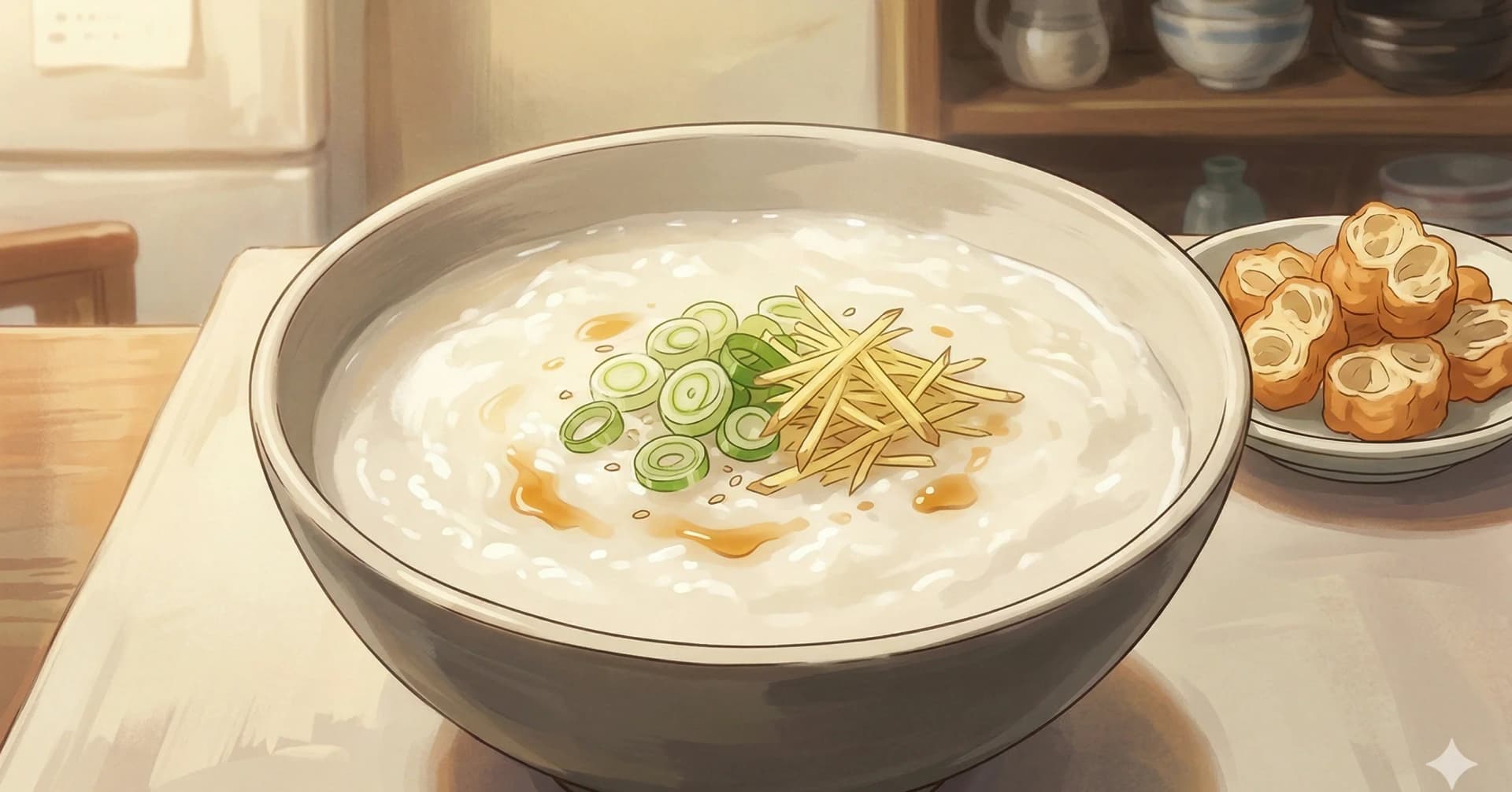
Congee (Chinese Rice Porridge)
The simplest, most comforting food in the Chinese kitchen, slow-simmered until creamy and silky
Congee is rice and water. That is the entire ingredient list. And yet this simple porridge is one of the most important foods in Chinese daily life, eaten at breakfast, lunch, dinner, and as a late-night snack. It is what you eat when you are sick, when you are tired, when the weather is cold, or when you simply want something warm and undemanding. It asks very little of the cook and gives back a great deal.
The technique is patient rather than difficult. Rice goes into boiling water, the heat drops to the lowest possible setting, and the pot simmers, mostly undisturbed, for 35 to 40 minutes. During that time, the rice grains slowly break down, releasing their starch into the surrounding water and transforming it from thin and watery to thick, creamy, and slightly viscous. A well-made congee should have a velvety, almost silky consistency, with individual grains that are soft enough to dissolve on your tongue but still visible.
The rice-to-water ratio is the only real decision. For a thicker porridge, use 1 cup rice to 8 cups water. For a thinner, more Cantonese-style congee that is almost drinkable, go up to 1 to 10. Start with 1 to 9 and adjust from there. Remember that congee thickens as it cools, so stop cooking slightly before it reaches your ideal consistency.
What makes congee endlessly interesting is what you put on top. A bowl of plain congee is a blank canvas. You can dress it simply with a drizzle of sesame oil, a splash of soy sauce, and chopped scallions. Or you can build it into a complete meal with shredded chicken, century egg, pork floss, pickled vegetables, and crispy fried dough sticks. The toppings section below offers a starting point, but the real tradition is to use whatever you have.
At a Glance
Yield
6 servings
Prep
5 minutes
Cook
40 minutes
Total
45 minutes
Difficulty
Easy
Ingredients
Congee Ingredients
- 6½ ozshort-grain rice or jasmine rice
- 2¼ qtwater (adjustable: 1.9 L for thicker, 2.4 L for thinner)
To Serve
- —Light soy sauce
- —Sesame oil
- —Chili oil or chili garlic sauce
- —Sliced scallions
- —Julienned fresh ginger
- —Chopped fresh cilantro
- —Century egg, quartered
- —Salted duck egg, chopped
- —Pork floss (rou song)
- —You tiao (Chinese fried dough), sliced
- —Preserved mustard stem (zha cai), chopped
- —Toasted peanuts
- —Dried seaweed (nori or laver)
Method
- 1
Bring the water to a boil. In a large pot or Dutch oven, bring 9 cups of water to a full, rolling boil over high heat.
- 2
Add the rice. Add the rice to the boiling water. Stir once to prevent sticking. When the water returns to a full boil, stir again, then reduce the heat to the lowest possible setting.
- 3
Simmer gently. Once the water calms to a very gentle simmer with only small, lazy bubbles, cover the pot with a lid. Cook for 35 to 40 minutes, stirring a few times during the process to prevent the rice from sticking to the bottom. The congee is ready when it has thickened to your desired consistency and the rice grains are soft and breaking apart.
- 4
Adjust texture. For a smoother, creamier result, use a whisk to vigorously stir the finished congee. This breaks the grains further and creates a more uniform, silky texture. If the congee is too thick, add a splash of hot water and stir. If too thin, cook uncovered for a few more minutes.
- 5
Serve. Ladle the congee into bowls and let each person add their own toppings. Season with soy sauce and sesame oil to taste.
Key Ingredient Benefits
Rice: The carbohydrate in congee is more easily absorbed than in steamed rice because the prolonged cooking process breaks down the starch into simpler forms. This is why congee has been a traditional recovery food for illness: it provides energy without taxing the digestive system. It is naturally gluten-free.
Congee in traditional Chinese medicine: For centuries, Chinese medical texts have recommended congee as a foundation for recuperation. The physician Sun Simiao (581-682 CE) included congee recipes in his medical texts, pairing plain rice porridge with specific ingredients to address different conditions. This reflects a long-standing cultural association between congee and healing, not a clinical claim.
Century egg: A preserved egg (usually duck) cured in a mixture of clay, ash, salt, quicklime, and rice hulls. The preservation process gives it a dark, translucent appearance and a rich, sulfurous flavor. It is a complete protein source. See the Century Eggs ingredient guide.
Why This Works
The science behind congee is straightforward. Rice grains are mostly starch, composed of two molecules: amylose (which forms firm gels) and amylopectin (which creates a sticky, viscous texture). Prolonged cooking in excess water causes the starch granules to swell, burst, and release their contents into the surrounding liquid. This is what transforms the water from thin and clear to thick and opaque.
Short-grain rice produces a creamier congee because it contains a higher proportion of amylopectin than long-grain varieties. Jasmine rice falls in the middle, producing a porridge that is smooth but slightly less viscous. Either works well.
Adding rice to boiling water rather than starting cold is a traditional technique that helps the grains maintain their structure initially, then break down gradually as they cook. This produces a congee with a mix of textures: some grains fully dissolved, some still partially intact, giving each spoonful a subtle complexity.
Red House Spice offers a brilliant shortcut for busy cooks: freeze wet, rinsed rice overnight, then cook the frozen block directly in boiling water using a reduced 1-to-6 ratio. The freezing process cracks the rice grains at a microscopic level, allowing them to break down in just 15 minutes. The result is remarkably close to the traditional method.
Substitutions & Variations
Rice type: Jasmine rice produces a slightly thinner, more fragrant congee. Short-grain rice gives the creamiest result. A small proportion of glutinous (sweet) rice, about 2 tablespoons per cup of regular rice, can be mixed in for extra stickiness.
Savory congee: Replace some or all of the water with chicken stock for a richer base. Add raw proteins like sliced fish, shrimp, or thinly sliced pork in the last 1 to 2 minutes of cooking. Stir in cooked proteins like shredded Bai Qie Ji or diced Char Siu just after turning off the heat. Add hardy vegetables like sliced shiitake mushrooms or diced carrots during the last 10 minutes.
Sweet congee: Cook with red dates (jujubes), dried longan, and rock sugar for a Cantonese-style sweet porridge. Add cooked red beans or mung beans for a more substantial version. See Red Date Sticky Rice for a related sweet preparation.
Instant Pot: Use a 1-to-8 rice-to-water ratio and the porridge setting. Most models will produce good results in about 25 minutes of pressure cooking.
Shortcut method: Rinse rice, freeze wet overnight, then add the frozen block to 6 cups of boiling water. Cook for 15 minutes. This is Red House Spice's recommended method and produces results very close to the traditional approach.
Serving Suggestions
Plain congee is traditionally served as part of a Chinese breakfast alongside pickled vegetables, you tiao (fried dough sticks), steamed buns, and tea eggs. For a simple lunch, top with Bai Qie Ji and a drizzle of its ginger scallion sauce. As a dinner side, congee bridges the gap between richer stir-fries and provides a gentle counterpoint to spicier dishes like Gong Bao Ji Ding or Mapo Tofu. A bowl of congee alongside Jiaozi is a classic northern Chinese combination.
Storage & Reheating
Refrigerator: Store in an airtight container for up to 3 days. Congee thickens significantly as it cools. This is normal.
Reheating: Reheat over low heat on the stovetop, stirring frequently and adding hot water until it reaches your desired consistency. Do not microwave without adding water first, as it will splatter.
Make-ahead tip: If planning to eat the congee the next day, slightly increase the water when cooking to account for thickening. Stop cooking when the congee is slightly thinner than your target consistency.
Freezing: Congee freezes well in individual portions for up to 1 month. Thaw in the refrigerator overnight and reheat on the stovetop with added water.
Cultural Notes
Juk (粥, called zhou in Mandarin) is the Chinese rice porridge tradition that exists across the entire country in countless regional and household variations. The dish is built from rice cooked with many times its volume in water or broth, simmered for an hour or longer until the grains break down into a creamy white porridge. The texture varies by region: Cantonese juk is cooked the longest and produces an almost soup-like consistency where the grains have largely dissolved; northern Chinese congee preserves more grain integrity; and Teochew moey sits in between, with the grains still visible but soft.
The dish has been documented in Chinese cooking texts continuously since the Han dynasty (roughly 200 BCE) and is one of the oldest preparations of cooked rice in the Chinese tradition. The historical significance comes from its role as both an everyday food and a recovery food. In its plain form, juk requires very little rice to produce a large volume of food and was traditionally served during famine, war, and economic hardship as a way to stretch grain. In its seasoned form (juk with chicken, fish, century egg and lean pork, or thousand-layer beef), it became the standard recovery dish for the sick, the elderly, and women after childbirth across virtually every Chinese regional tradition.
The Cantonese version has spread most widely internationally. Hong Kong's heritage juk shops, including Mui Kee Congee in Mong Kok and Sang Kee Congee Shop in Sheung Wan, serve dozens of variations: pei dan sau yuk juk (century egg with lean pork), fai gee juk (fish slice juk), gup dai juk (beef juk), and many others. The juk itself is built on a base of pork bone or chicken stock simmered with rice for hours, then portioned out and topped to order. A traditional Cantonese breakfast pairs a bowl of juk with yau ja gwai (fried dough sticks), which are torn into pieces and dropped into the juk to soak up the broth while staying slightly crisp on the inside.
Nutrition Facts
Calories: 123kcal (6%)|Total Carbohydrates: 24.5g (9%)|Protein: 2.2g (4%)|Total Fat: 1.5g (2%)|Saturated Fat: 0.1g (1%)|Cholesterol: 0mg (0%)|Sodium: 113mg (5%)|Dietary Fiber: 0.1g (0%)|Total Sugars: 0g
You Might Also Like
 Easy
EasyVietnamese Cuisine
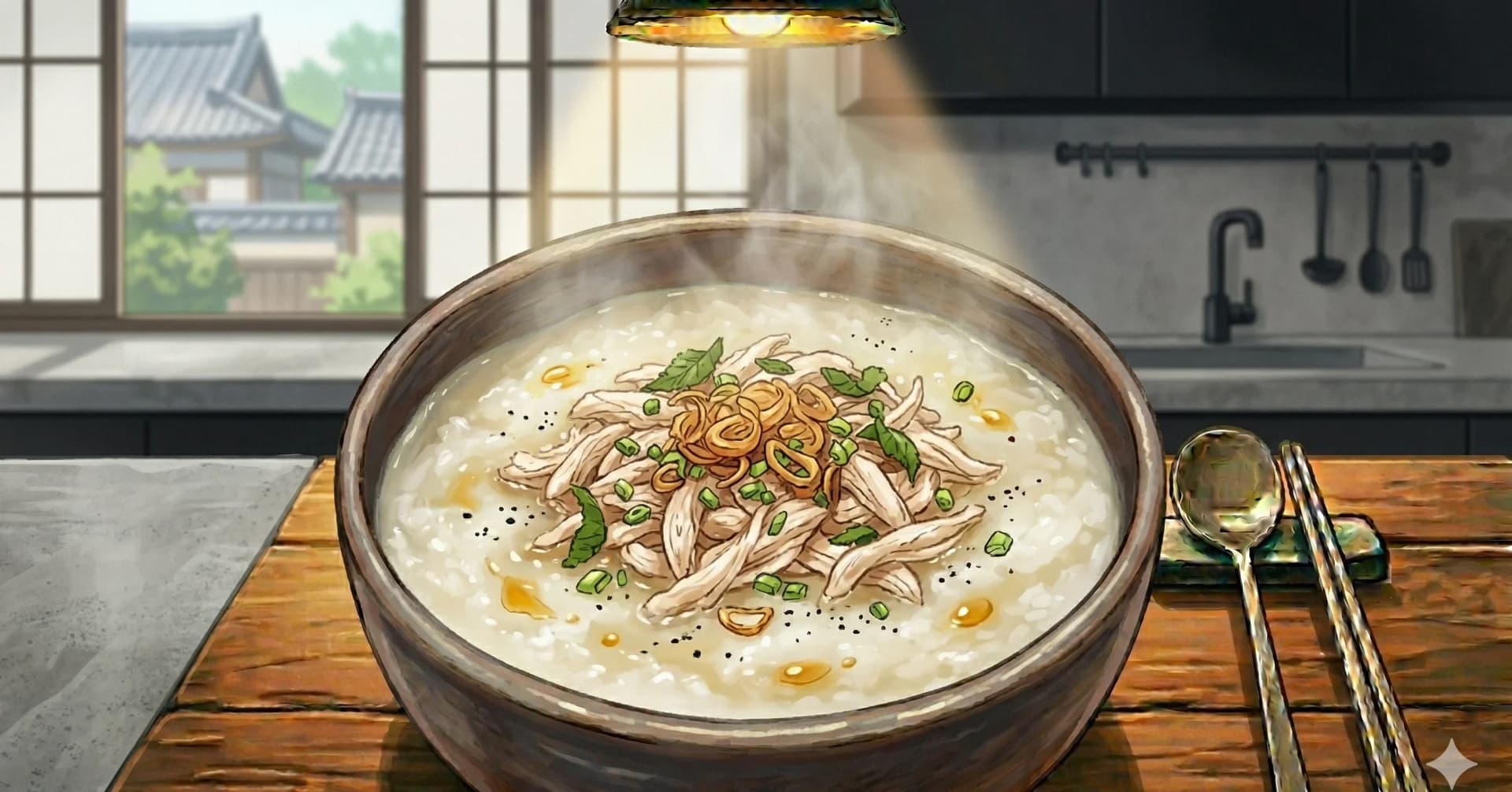
Cháo Gà (Vietnamese Chicken Rice Porridge)
1 hour 30 minutes
 Easy
EasyIndonesian Cuisine
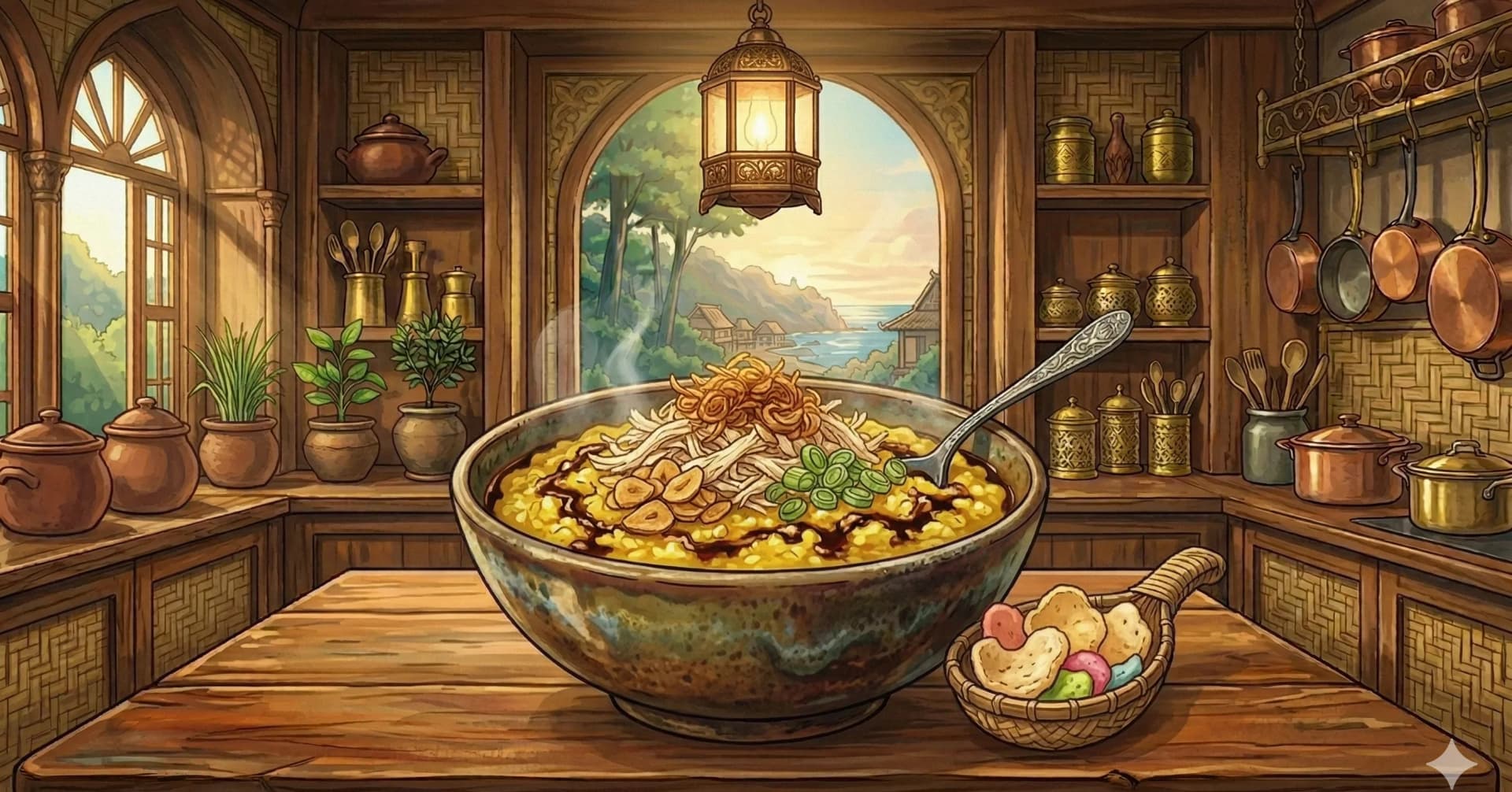
Bubur Ayam (Indonesian Chicken Rice Porridge)
1 hour 10 minutes
 Medium
Vietnamese Cuisine
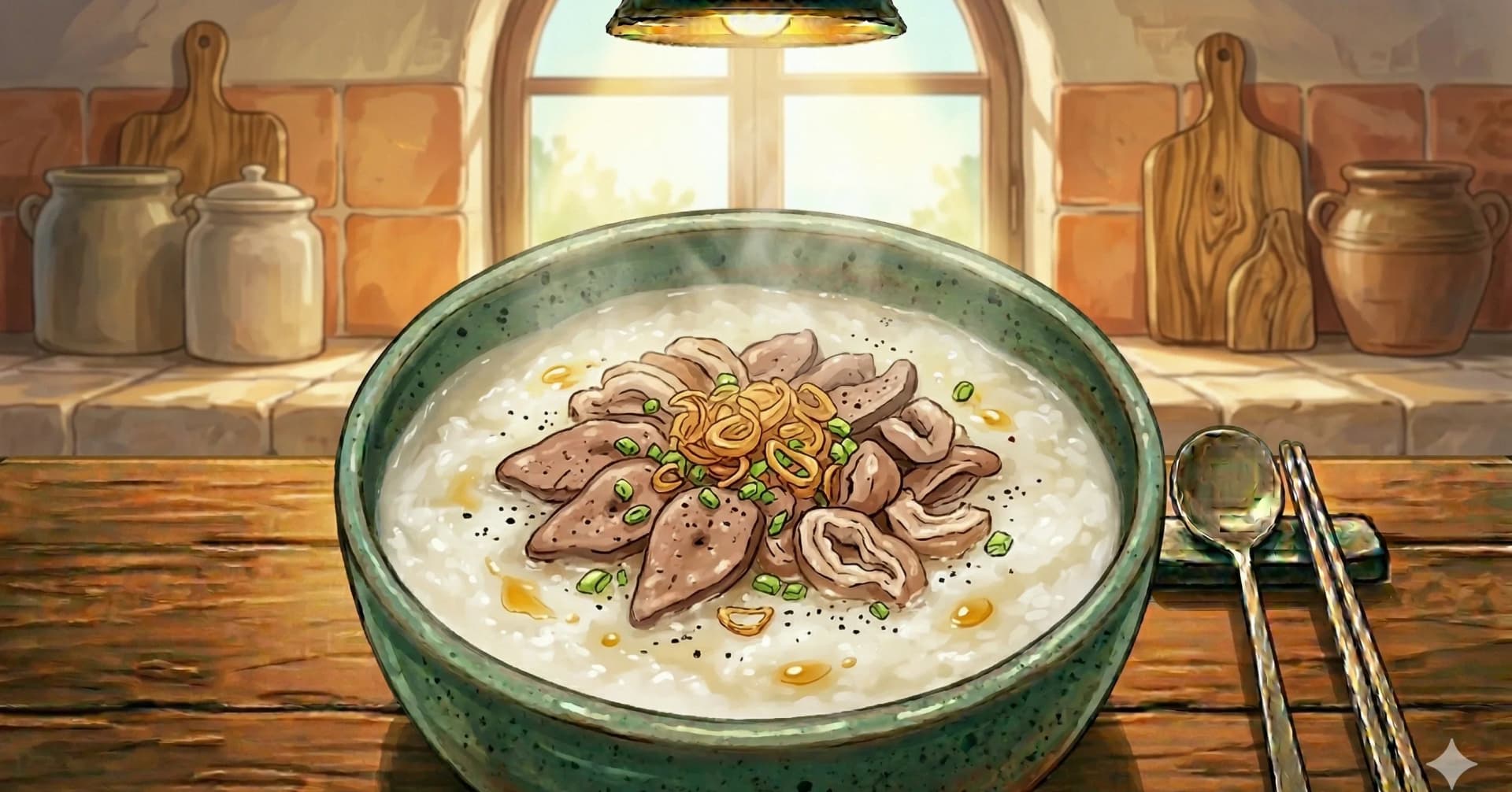
Cháo Lòng (Vietnamese Pork Organ Rice Porridge)
2 hours 15 minutes
 Easy
EasyVietnamese Cuisine
Ga Kho Gung (Vietnamese Caramelized Ginger Chicken)
1 hour
Ratings & Comments
Ratings & Comments
Ratings
Share your thoughts on this recipe.
Sign in to rate and comment