Chinese Cuisine
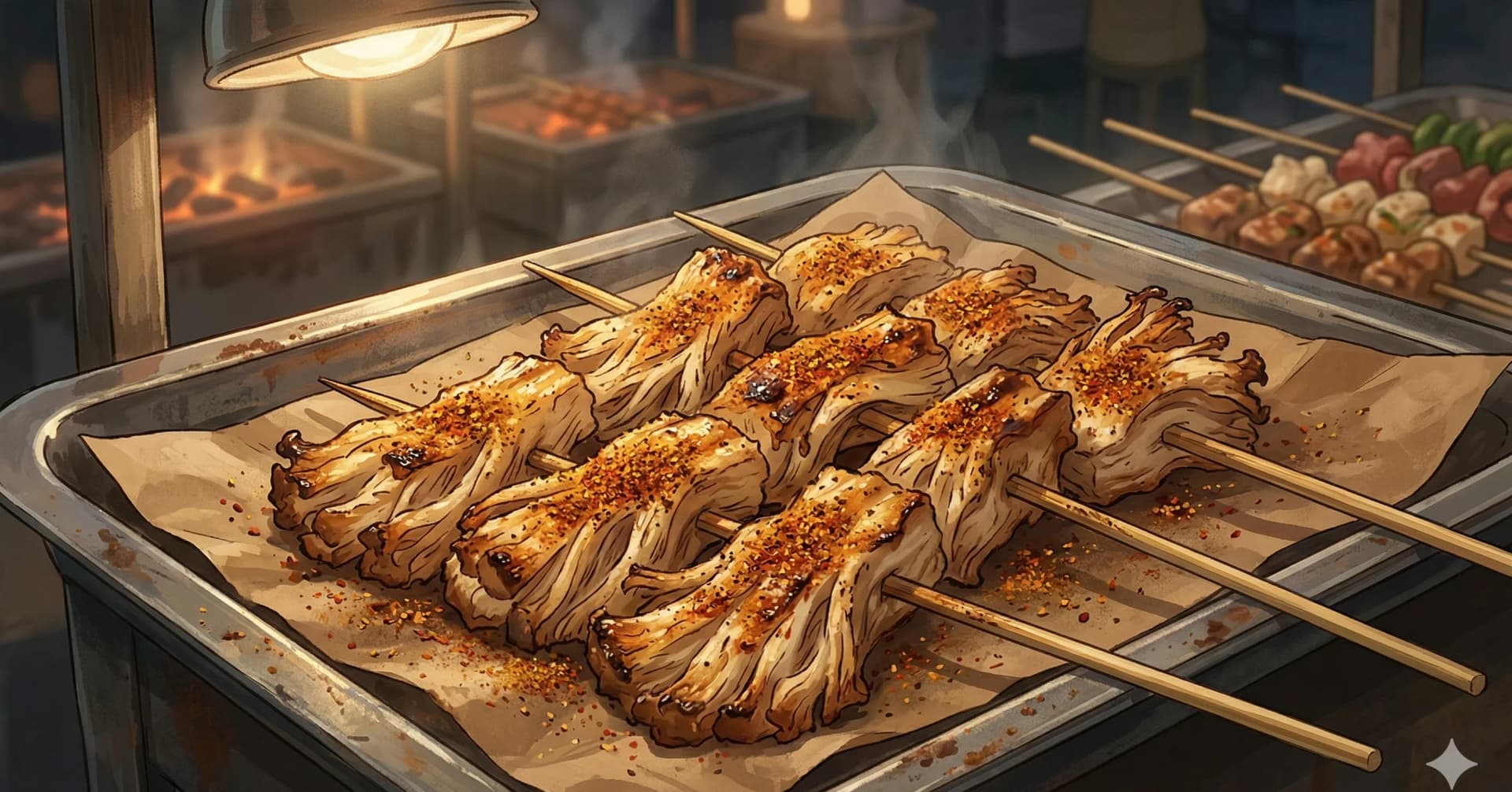
Cumin Lion's Mane Mushroom Skewers (Zi Ran Hou Tou Gu Chuan)
Xinjiang-inspired street food skewers where torn lion's mane mushrooms get a cumin-chili crust and a golden sear that mimics lamb kebabs
If you have walked through any night market in northern China, you know the smell. Cumin seeds hitting hot metal, chili powder blooming in rendered fat, smoke rising from rows of skewers lined up over glowing coals. That is the signature of Uyghur street food from Xinjiang, where cumin lamb skewers (yang rou chuan) are as fundamental as the air itself.
This version replaces the lamb with lion's mane mushroom, and the results are startlingly good. Lion's mane has a fibrous, stringy texture that shreds like pulled meat when you tear it by hand. That tearing is important. Cutting with a knife gives you clean, flat surfaces that stay smooth when cooked. Tearing creates ragged edges that catch the spice blend and crisp up into something with real bite.
The blanching step is quick but not optional. Three minutes in boiling water with a pinch of sugar removes the faint bitterness that raw lion's mane sometimes carries and firms up the texture so the pieces hold together on the skewer. After blanching, you squeeze out the water (lion's mane absorbs liquid like a sponge) and toss the pieces in the cumin-chili spice blend.
A thin batter of flour and water creates the bridge between mushroom and spice crust. It is barely there, just enough to give the sesame seeds something to stick to and to form a thin, crispy shell when the skewers hit the oil. Pan-frying in a thin layer of oil is easier than grilling and gives you better control over the crust. You want golden and crusty on the outside, tender and pulling apart on the inside.
The final hit of cumin and chili powder goes on while the skewers are still hot, so the spices bloom in the residual heat. This is street food. Eat it standing up, with your fingers, ideally with a cold beer.
At a Glance
Yield
4 servings (about 9 skewers)
Prep
15 minutes
Cook
15 minutes
Total
30 minutes
Difficulty
Easy
Ingredients
- 1 lblion's mane mushrooms, torn by hand into 2-inch pieces
- 1 tbspcumin powder
- 1 tspcumin seeds, lightly toasted
- 1 tbspchili powder, (or gochugaru for milder heat)
- 1 tbspsesame seeds
- 3 tbspall-purpose flour
- 3 tbspwater
- 0.5 tspsalt
- 0.5 tspmushroom seasoning or MSG
- —sugar, pinch, for blanching water
- 4 tbspneutral oil, for pan-frying
- 9skewers, soaked in water 20 minutes if bamboo
Method
- 1
Bring a pot of water to a boil and add a pinch of sugar. Add the torn lion's mane pieces and blanch for 3 minutes. Drain immediately and let cool just enough to handle. Squeeze each piece firmly between your palms to press out as much water as possible. The mushroom pieces should feel dense and slightly springy, not soggy.
- 2
Mix the cumin powder, half the cumin seeds, half the chili powder, salt, and mushroom seasoning in a bowl. Toss the squeezed mushroom pieces in this spice blend until evenly coated.
- 3
In a separate small bowl, whisk the flour and water together to make a thin batter. It should be the consistency of heavy cream, not pancake batter. Add a touch more water if needed.
- 4
Dip each spiced mushroom piece in the batter, letting the excess drip off, then press sesame seeds onto the surface. Thread 3 to 4 pieces onto each skewer, pressing them gently together so they hold.
- 5
Heat the oil in a large skillet or flat griddle over medium-high heat. The oil should form a thin layer across the bottom, not a deep pool. Lay the skewers in the pan and cook without moving for 3 to 4 minutes until the bottom is golden and crusty. Flip and cook the other side for another 3 minutes.
- 6
While the skewers are still sizzling hot, sprinkle the remaining cumin seeds and chili powder over both sides. The heat will bloom the spices. Transfer to a plate and serve immediately.
Key Ingredient Benefits
Lion's mane mushroom (Hericium erinaceus): This distinctive shaggy mushroom has gained attention for compounds called hericenones and erinacines, which have been studied in laboratory settings for potential neuroprotective properties. The research is early-stage and mostly in animal models, so specific health claims would be premature. What is well established is that lion's mane is a good source of protein for a mushroom (about 3g per 100g), provides B vitamins, and contains dietary fiber including beta-glucans.
Cumin: Cumin seeds contain thymoquinone and cuminaldehyde, compounds with antioxidant properties studied in laboratory settings. In traditional Uyghur and Central Asian food culture, cumin is considered warming and digestive. It is a source of iron and manganese, though the amounts consumed as a spice are small.
Sesame seeds: A concentrated source of calcium, iron, and zinc. The lignans sesamin and sesamolin have been studied for potential antioxidant and cholesterol-moderating effects, though clinical evidence in humans is still developing.
Why This Works
The success of this dish hinges on three things: tearing instead of cutting, blanching before seasoning, and building a thin crust.
Tearing lion's mane by hand creates rough, irregular surfaces with exposed fibers. These ragged edges do two things that smooth cut surfaces cannot. They trap the cumin-chili spice blend in their crevices, so every bite carries flavor. And they crisp up into thin, crunchy wisps when they hit the hot oil, giving the skewers a texture that genuinely resembles charred meat edges.
Blanching firms the mushroom's structure by setting its proteins, similar to how blanching firms tofu. The pinch of sugar in the water is a Chinese kitchen technique that counteracts any faint bitterness in the mushroom without making it taste sweet. Squeezing out the water afterward is essential because waterlogged mushrooms will steam in the pan instead of searing.
The flour-water batter is deliberately thin. It is not there to create a thick coating like tempura. It exists only as a glue layer: something for the sesame seeds to grip and a thin film that crisps in the oil to hold the spice crust together. Too thick and you taste batter instead of mushroom.
Substitutions & Variations
Lion's mane: King oyster mushrooms (sliced into thick planks and scored) or oyster mushrooms (torn into clusters) are the closest substitutes. Neither has the exact shredded-meat texture of lion's mane, but both take well to the cumin crust. Firm tofu, pressed very dry and torn into rough pieces, also works.
Chili powder: Gochugaru (Korean chili flakes) gives a fruitier, milder heat. Cayenne works for pure spice but lacks complexity. A blend of paprika and cayenne approximates the flavor profile if you want moderate heat.
Cumin: There is no substitute for cumin in this dish. It is the defining flavor of Xinjiang-style skewers. Without it, you have a different (still good) dish.
Cooking method: If you have a charcoal grill or grill pan, use it. The char and smoke add another dimension. Brush the skewers lightly with oil before grilling over high heat, turning every 2 minutes.
Serving Suggestions
These skewers are best eaten immediately as street food, but they also work as part of a larger spread. Serve alongside Mapo Tofu for a Sichuan-meets-Xinjiang combination, or with a cold cucumber salad dressed in black vinegar and garlic for contrast. A bowl of steamed rice or hand-pulled noodles turns the skewers into a full meal. Cold beer or chilled barley tea is the traditional pairing at Chinese night markets.
Storage & Reheating
Best fresh: These skewers are at their best within 15 minutes of cooking, while the crust is still crispy.
Refrigerator: Store leftovers in an airtight container for up to 2 days. The crust will soften.
Reheating: Reheat in a dry skillet over medium-high heat to re-crisp the exterior, about 2 minutes per side. The oven works too: 400F (200C) for 5 to 7 minutes on a wire rack. Do not microwave, as it will make the crust soggy.
Freezing: Not recommended. The thin crust does not survive freezing and thawing well.
Cultural Notes
Cumin lamb skewers (yang rou chuan, 羊肉串) are the iconic street food of the Uyghur people of Xinjiang, China's westernmost region. The Uyghur culinary tradition draws from Central Asian, Persian, and Chinese influences, with cumin, lamb, and flatbread forming its backbone. In cities across China, Xinjiang barbecue stalls are beloved gathering spots, recognizable by their long charcoal grills and the haze of cumin smoke. The seasoning blend, typically cumin, chili, salt, and sometimes Sichuan peppercorn, has become one of China's most recognized flavor profiles. Vegetarian and mushroom versions have grown popular in recent years, particularly in southern Chinese cities, where the combination of Xinjiang spicing with local mushroom varieties has created its own fusion tradition.
Nutrition Facts
Calories: 145kcal (7%)|Total Carbohydrates: 13g (5%)|Protein: 5g (10%)|Total Fat: 9g (12%)|Saturated Fat: 1.2g (6%)|Cholesterol: 0mg (0%)|Sodium: 380mg (17%)|Dietary Fiber: 2.8g (10%)|Total Sugars: 1.5g
You Might Also Like
Ratings & Comments
Ratings & Comments
Ratings
Share your thoughts on this recipe.
Sign in to rate and comment