Japanese Cuisine
Curry Udon (Udon Noodles in Curry Broth)
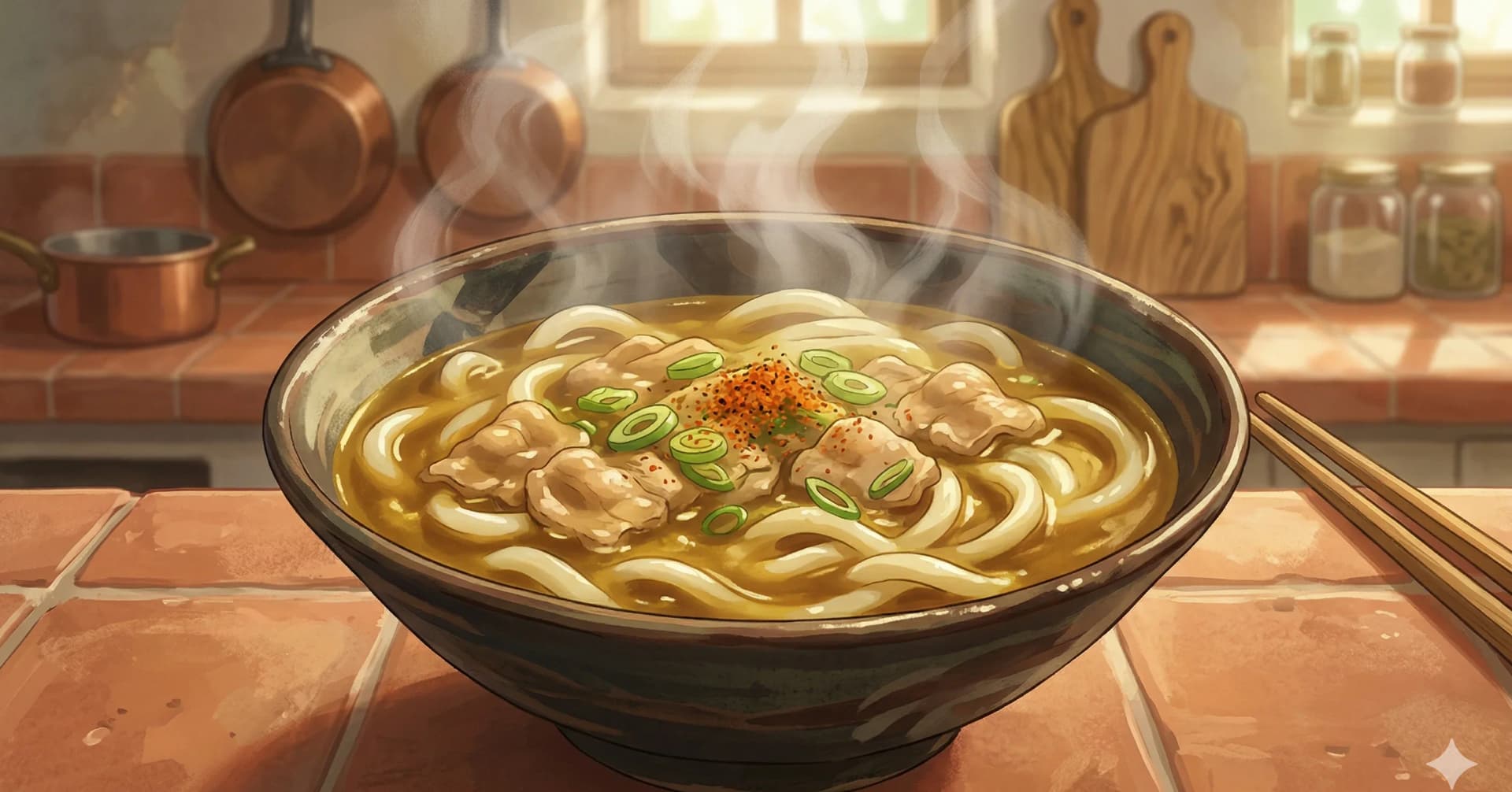
Thick udon noodles swimming in a rich, dashi-based curry broth thickened with roux and laced with sweet onion and sliced pork
The first slurp splatters. It is almost unavoidable with curry udon, and in Japan nobody apologizes for it. The broth is thick and clingy, somewhere between a soup and a sauce, and the udon noodles are fat and slippery, and the combination guarantees that some of it will end up on your shirt. This is a dish best eaten with a towel on your lap and a willingness to be undignified about it. The reward is worth it: each mouthful delivers the warm spice of Japanese curry, the savory depth of dashi, the chew of good udon, and the sweetness of soft, simmered onion.
Curry udon occupies a unique place in Japanese cuisine. It is neither a pure noodle dish like kitsune udon nor a standalone curry like kare raisu, but something in between. The broth is lighter than rice curry, cut with dashi to create something that is sippable rather than just scoopable, but still thick enough to coat the noodles generously. It is a dish born from practicality: udon shops traditionally made curry udon from leftover Japanese curry thinned with dashi and seasoned with soy sauce and mirin. The result was so good that it became a menu item in its own right.
The trick is building the broth in two parts. A quick roux of butter, flour, and curry powder provides body and spice. Dashi, soy sauce, and mirin provide the Japanese character. When combined, the roux melts into the seasoned dashi and creates a broth that is glossy, aromatic, and just thick enough to cling to the noodles without being heavy. The onions are simmered until completely soft, almost dissolved into the broth, contributing natural sweetness. Thinly sliced pork belly is the most common protein, adding richness that makes the dish feel substantial without being overwhelming. The whole thing comes together in under 30 minutes, making it one of the best cold-weather weeknight meals in the Japanese repertoire.
At a Glance
Yield
4 servings
Prep
10 minutes
Cook
25 minutes
Total
35 minutes
Difficulty
Easy
Ingredients
- 1 qtdashi stock
- 3 tbspsoy sauce
- 2 tbspmirin
- 2 tbspunsalted butter
- 2½ tbspplain flour
- ½ ozJapanese curry powder
- 1¾ lbfresh udon noodles (or 400 g dried udon, cooked according to package instructions)
- 7 ozthinly sliced pork belly, cut into 4 cm pieces
- 1large onion (about 200 g), halved and sliced into thin half-moons
- 3scallions, sliced into thin rings
- —Shichimi togarashi, for serving
Method
- 1
If using fresh udon, bring a large pot of water to a boil and cook the noodles according to the package instructions, typically 1 to 2 minutes. Drain, rinse briefly under warm water to remove excess starch, and set aside. If using frozen udon, cook from frozen for 1 minute. If using dried udon, cook until tender but still chewy and drain.
- 2
Combine the dashi, soy sauce, and mirin in a medium saucepan. Bring to a gentle simmer over medium heat. Taste the seasoned dashi: it should be savory and slightly sweet, with the umami clearly present. This is the base flavor of the broth. Keep it warm.
- 3
In a separate small saucepan, melt the butter over medium-low heat. Add the flour and stir with a wooden spoon or spatula until it forms a smooth paste. Cook for 1 minute, stirring constantly, until the roux smells nutty and has turned a shade darker. Do not let it brown.
- 4
Add the curry powder to the roux and stir for 30 seconds to bloom the spices. The mixture will become very aromatic and slightly dry. This brief toasting activates the volatile oils in the curry powder and removes any raw, powdery taste.
- 5
Gradually ladle the warm seasoned dashi into the roux, about 100 ml at a time, stirring vigorously after each addition. The first few additions will create a thick paste; keep stirring until smooth before adding more liquid. This gradual addition prevents lumps. After all the dashi is incorporated, you should have a smooth, golden-brown broth with a velvety consistency.
- 6
Return the curry broth to the medium saucepan if you prepared the roux in a smaller pan. Add the sliced onion. Simmer over medium-low heat for 8 to 10 minutes, stirring occasionally, until the onion is completely soft and translucent. The broth will thicken slightly as the onion releases its moisture and then cooks down.
- 7
Add the sliced pork belly to the simmering broth. Cook for 3 to 4 minutes, stirring gently to separate the slices, until the pork is cooked through and the fat has rendered into the broth. Skim any foam that rises to the surface.
- 8
Taste the broth and adjust the seasoning. If it is too thick, add a splash of dashi to thin it. If it needs more depth, add a teaspoon of soy sauce. If it lacks sweetness, add a teaspoon of mirin. The finished broth should coat the back of a spoon but still flow freely. It should be noticeably thicker than a standard noodle soup but thinner than kare raisu.
- 9
Divide the cooked udon noodles among four large, deep bowls. If the noodles have cooled and stuck together, dip them briefly in hot water to loosen them before portioning.
- 10
Ladle the hot curry broth over the noodles, distributing the pork and onion evenly. The broth should just cover the noodles. Use about 250 ml of broth per bowl.
- 11
Scatter scallion rings over the top and offer shichimi togarashi at the table. Some people also like a sprinkle of grated cheese on top, a modern addition that has become popular at certain curry udon shops.
- 12
Serve immediately with a deep spoon and chopsticks. The spoon is for the broth, the chopsticks are for the noodles. A bib or dark-colored shirt is recommended for the enthusiastic eater. Curry udon is best eaten very hot, slurped with abandon.
Key Ingredient Benefits
Turmeric, a key component of curry powder, contains curcumin, a polyphenol that research suggests has anti-inflammatory properties. However, curcumin is poorly absorbed on its own; the fat in the butter roux may improve its bioavailability slightly. Dashi provides natural umami compounds with very few calories, a quality that research suggests may promote satiety. Udon noodles are a source of complex carbohydrates and provide sustained energy. The combination of dashi with curry powder creates a dish that is warming and satisfying while being lighter than typical rice-based curry dishes.
Why This Works
Building the broth from a cooked roux rather than simply adding curry powder to dashi produces a fundamentally different result. The roux provides body and a silky, emulsified texture that cannot be achieved by thickening with starch alone. The fat in the butter disperses the curry spices evenly throughout the liquid, while the cooked flour acts as a stabilizer that prevents the broth from separating or becoming watery as it sits.
The dashi base distinguishes curry udon from simple "curry soup." Dashi adds glutamate and inosinate, the two primary umami compounds, which amplify the savory dimension of the curry spices. Soy sauce contributes additional glutamate along with salt and a fermented complexity. Mirin adds sweetness and a subtle glossiness. These Japanese seasonings transform what could be a generic curried broth into something that tastes unmistakably Japanese.
Simmering the onions in the broth for a full 8 to 10 minutes allows them to break down partially and release their natural sugars into the liquid. This dissolved onion sweetness rounds the edges of the curry spices and creates a broth that tastes deeply satisfying without being heavy or overspiced.
Substitutions & Variations
- Leftover curry: If you have leftover kare raisu, thin it with dashi, soy sauce, and mirin to make a quick curry udon broth. Skip the roux step entirely.
- Protein alternatives: Replace pork belly with thinly sliced beef, chicken thigh, fried tofu (aburaage), or tempura shrimp placed on top.
- Curry roux blocks: Substitute one cube of Japanese curry roux (such as Vermont or Golden Curry) for the butter-flour-curry powder combination. Dissolve it in the warm dashi.
- Spice level: Add cayenne pepper or a tablespoon of rayu (chili oil) for a spicier version. For a milder version, reduce the curry powder to 10 g.
- Soba alternative: Use soba noodles instead of udon for a lighter, nuttier version. The broth works well with either.
- Cheese curry udon: Top with a handful of shredded mozzarella or processed cheese, which melts into the hot broth. This is a popular modern variation.
Serving Suggestions
Curry udon is a complete meal in a bowl. It needs very little alongside it, perhaps a small dish of pickled vegetables (tsukemono) and a glass of cold barley tea (mugicha). In udon shops, it is sometimes served with a side of white rice, which diners use to soak up the remaining broth after the noodles are gone. For a heartier meal, top with a crispy piece of tonkatsu sliced into strips, creating katsu curry udon. It is particularly satisfying on cold nights and rainy days.
Storage & Reheating
The curry broth (without noodles) stores well in the refrigerator for up to 3 days or in the freezer for up to 1 month. The broth will thicken significantly when cold; thin it with a splash of dashi when reheating. Cook fresh udon noodles for each serving, as pre-soaked noodles in broth become bloated and lose their chew. Reheat the broth gently over medium heat, stirring occasionally, until it returns to a simmer before ladling over freshly cooked noodles.
Cultural Notes
Karē udon (カレーうどん) is the second great Japanese curry dish after kare raisu, and like its rice cousin, it owes its existence to the British Royal Navy rather than to India. Curry reached Japan in the late 19th century through the Royal Navy's curry stew, which the Imperial Japanese Navy adopted wholesale as a way to feed sailors a hot standardized meal. Soldiers brought the recipe home. Japanese spice companies started selling pre-blended roux blocks in the 1920s. Curry became Japanese.
The udon version emerged a little earlier, in the soba shops of early-20th-century Tokyo. The most cited origin is Sangoku-ya in Asakusa, which began serving curry udon in 1908 by combining the army's British-style curry with their existing dashi broth. It was a strange marriage: the kombu-and-bonito stock that defines Japanese soup cooking, thickened with a flour-and-spice roux from a different continent. The result tastes like nothing else. It is also one of the most genuinely fused things in the entire Japanese noodle repertoire, because the whole point is the meeting of two traditions.
The dish belongs to cold weather. October through April is when noodle shops put it back on the menu. The broth is unusually thick, much thicker than other udon broths, and that thickness is famous for one thing: it splatters. Eat curry udon in a Tokyo lunch counter and you will often be handed a paper bib at the same time as your bowl. The ritual is part of the affection people have for the dish. You order it knowing you might wear some of it home.
It belongs to the local soba and udon shop, not to the curry house. Which tells you something about how the Japanese think of its lineage. It is noodle food first.
Nutrition Facts
Calories: 609kcal (30%)|Total Carbohydrates: 58g (21%)|Protein: 11g (22%)|Total Fat: 33g (42%)|Saturated Fat: 13g (65%)|Cholesterol: 55mg (18%)|Sodium: 980mg (43%)|Dietary Fiber: 2g (7%)|Total Sugars: 6g
You Might Also Like
Ratings & Comments
Ratings & Comments
Ratings
Share your thoughts on this recipe.
Sign in to rate and comment