Korean Cuisine
Gamjatang (Pork Bone Soup)
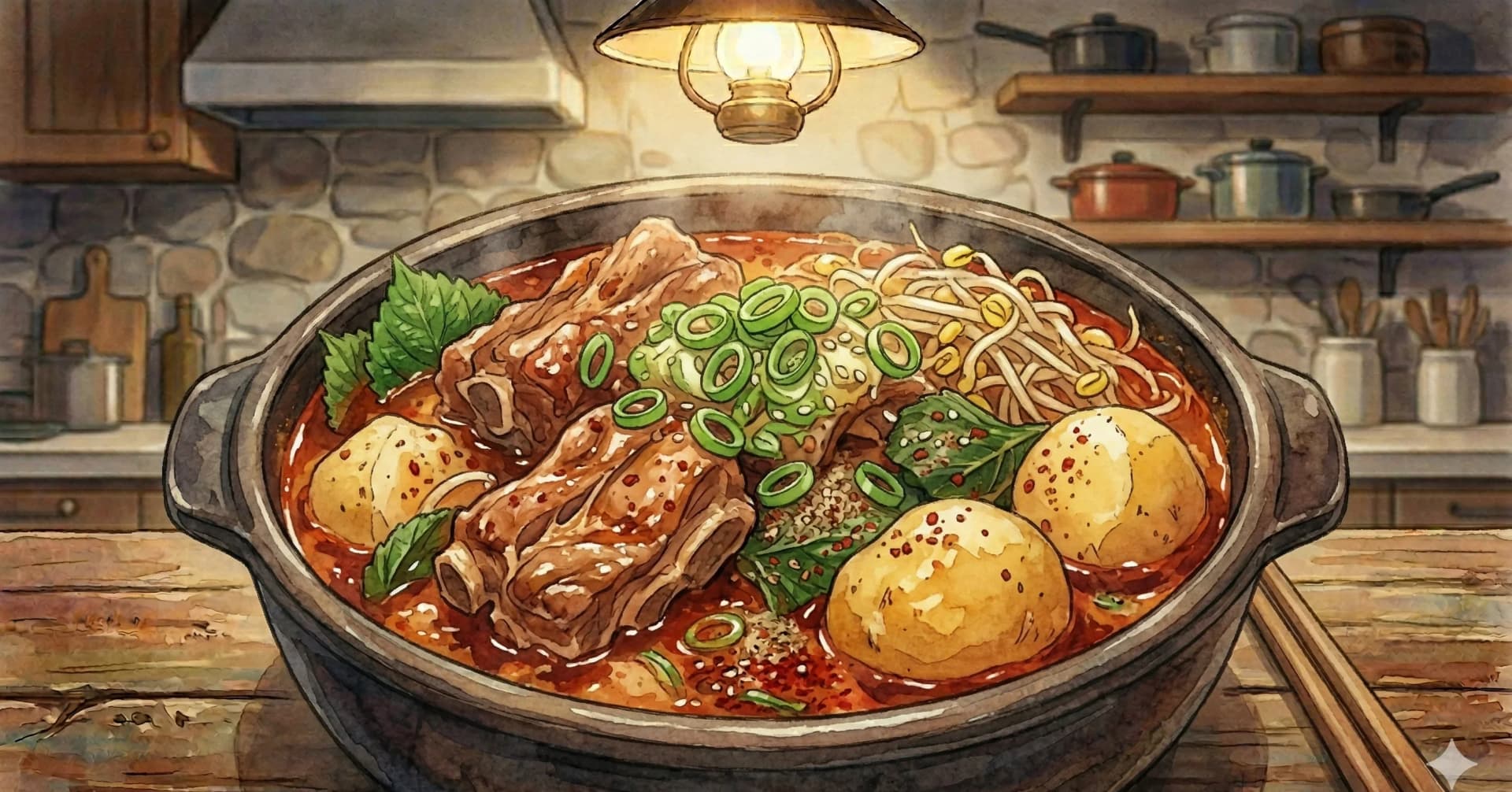
A robust, spicy soup of tender pork neck bones simmered until the meat falls away at the touch of chopsticks
The bones arrive at the table half-submerged in a ruddy, slightly milky broth, and as you pull at the meat with your chopsticks, it slides off in tender, yielding pieces, having given up any resistance hours ago during the slow simmer. The broth beneath is layered: spicy from gochugaru, earthy from doenjang, and slightly nutty from ground perilla seeds, which cloud the liquid and give it a distinctive, almost creamy quality.
Gamjatang is one of Korea's great cold-weather soups, a dish of substantial, uncompromising heartiness. Despite the name, which might suggest potatoes (gamja means potato), the "gamja" in gamjatang actually refers to the pork spine or neck bones, which are the heart of the dish. Potatoes were added later and are now considered essential, their starchy flesh soaking up the spicy broth and breaking apart into the soup.
The dish originated in the Jeolla province, known for its bold, generous cuisine, and migrated to Seoul, where 24-hour gamjatang restaurants became a fixture of late-night dining culture. It is the soup you seek out after a long day or a late night, when nothing less than a deeply nourishing, warming bowl will do.
The practical insight is in the preparation of the bones. Soaking them in cold water for an hour draws out blood and impurities, and a vigorous initial boil followed by draining removes any remaining scum. This two-step cleaning process is what makes the final broth clean-tasting rather than murky, allowing the seasonings to shine.
At a Glance
Yield
4 servings
Prep
30 minutes (plus 1 hour soaking)
Cook
1 hour 30 minutes
Total
3 hours
Difficulty
Medium
Ingredients
- 3¼ lbpork neck bones or spine bones
- —Cold water for soaking and blanching
- 2 qtwater
- ¾ ozdoenjang (Korean fermented soybean paste)
- ¼ cupgochugaru (Korean red pepper flakes)
- 1 tbspgochujang
- 1 tbspsoy sauce
- 3¼ tbspminced garlic
- 1¾ tbspminced ginger
- 1 tbsprice wine (mirin)
- ½ ozground perilla seeds (deulkkae garu)
- 1¼ tspsugar
- ¾ lbpotatoes (about 2 medium), peeled and quartered
- 7 oznapa cabbage, cut into large pieces
- 3½ ozmu (Korean radish) or daikon (about 1–1½ radishes), cut into 2 cm chunks (optional)
- 4scallions, cut into 5 cm lengths
- 2fresh green chili peppers, sliced
- —Ground perilla seeds
- —Sliced scallion
- —Toasted sesame seeds
Method
- 1
Soak the pork bones in a large bowl of cold water for at least 1 hour, changing the water once halfway through. This draws out blood and impurities from the marrow. The water will turn pink and murky, which is expected.
- 2
Drain the soaked bones and place them in a large pot. Cover with fresh cold water and bring to a vigorous boil over high heat. Boil for 10 minutes. You will see a significant amount of grey-brown scum rise to the surface. This is protein and impurities being released.
- 3
Drain the bones and rinse each one under running water, scrubbing away any remaining scum or dark residue clinging to the surface. This step is tedious but important. Clean bones make a clean broth.
- 4
Return the cleaned bones to the pot and add 2 liters of fresh water. Bring to a boil over high heat, then reduce to a steady, active simmer. Cover partially and cook for 45 minutes. The broth will begin to turn slightly milky as collagen releases from the bones.
- 5
While the bones simmer, prepare the seasoning. In a bowl, combine the doenjang, gochugaru, gochujang, soy sauce, garlic, ginger, rice wine, ground perilla seeds, and sugar. Stir into a rough paste.
- 6
After 45 minutes of simmering, add the seasoning paste to the pot. Stir well to dissolve the doenjang into the broth. The liquid will turn a ruddy, reddish-brown color and the aroma will become intensely savory and spicy.
- 7
Add the potatoes and radish (if using). These need time to soften and absorb the broth's flavor. Continue simmering for 20 to 25 minutes until the potatoes are tender when pierced with a knife and the edges have begun to soften and break down slightly.
- 8
Check the pork bones. The meat should be pulling away from the bone and very tender. If it still clings tightly, simmer for another 15 minutes. Well-cooked gamjatang meat should yield to gentle pressure from chopsticks.
- 9
Add the napa cabbage pieces. They will wilt quickly, in about 3 to 4 minutes. The cabbage adds freshness and a slightly sweet, vegetal note that balances the richness of the pork broth.
- 10
Add the scallion pieces and sliced chili peppers during the last 2 minutes of cooking.
- 11
Taste the broth and adjust the seasoning. Add more doenjang for depth, gochugaru for heat, or soy sauce for salt. The broth should taste robust, spicy, and complex, with the perilla seeds giving it a slightly gritty, nutty quality.
- 12
Ladle the soup into large, deep bowls, distributing the bones, potatoes, and vegetables evenly. Each serving should have 3 to 4 meaty bones.
- 13
Finish each bowl with a sprinkle of additional ground perilla seeds, sliced scallion, and toasted sesame seeds. Serve immediately while the broth is very hot.
Key Ingredient Benefits
Pork neck bones: Rich in collagen, which breaks down into gelatin during slow cooking. Bone broth has been traditionally valued across many cultures for its perceived restorative properties. Research suggests that bone broth provides bioavailable minerals and amino acids including glycine and proline.
Perilla seeds (deulkkae): Contain one of the highest plant-based concentrations of alpha-linolenic acid (ALA), an omega-3 fatty acid. Research suggests ALA may support cardiovascular health. Perilla has been used in Korean traditional medicine for respiratory and digestive support.
Doenjang: Korean fermented soybean paste containing beneficial probiotics and enzymes from the fermentation process. Research on fermented soy products suggests they may support gut health and improve the bioavailability of soy isoflavones.
Why This Works
The two-step cleaning process for the bones (soaking followed by blanching and scrubbing) removes blood, marrow impurities, and excess fat. This creates a broth that tastes clean and savory rather than greasy or gamy. Skipping this step results in a murky, off-tasting soup.
Doenjang contributes a deep, funky savoriness that anchors the broth. It works differently from soy sauce alone, providing a fermented complexity and body that ties the pork flavor to the chili seasonings.
Ground perilla seeds are the signature ingredient of gamjatang, distinguishing it from other Korean soups. They add a nutty, slightly herbal flavor and a subtle creaminess to the broth as they dissolve and suspend in the liquid. Without them, gamjatang loses its distinctive character.
The long simmer extracts collagen from the pork bones, which gives the broth body and a slightly viscous quality that coats the mouth. This is why gamjatang broth feels more substantial than clear soups despite using similar base ingredients.
Substitutions & Variations
Bones: Pork spine bones, pork hocks, or a combination can be used. Spine bones have less meat but more marrow. Neck bones have the best meat-to-bone ratio.
Without perilla seeds: Ground sesame seeds can approximate the nuttiness but will lack the distinctive herbal quality. Ground perilla seeds are increasingly available at Korean grocery stores and online.
Spice level: Reduce gochugaru to 15 g for a mild version. For more heat, add fresh chili peppers or extra gochugaru.
Vegetables: Sweet potato can replace regular potato for a sweeter, softer result. Crown daisy (ssukgat) is a traditional addition that adds a pleasantly bitter, herbal note when wilted into the soup at the end.
Serving Suggestions
Gamjatang is a substantial main course served with steamed white rice. Ladle the broth over the rice or eat them side by side. Essential banchan companions include kimchi, kongnamul muchim, and pickled perilla leaves. In gamjatang restaurants, the custom is to order a pot for the table and, when the soup is nearly finished, add leftover rice to the remaining broth to make a porridge (bokkeum-bap), scraping up the flavorful bits from the bottom.
Storage & Reheating
Leftover gamjatang: Stores well in the refrigerator for up to 3 days. The broth will gel when cold due to the extracted collagen, which is a sign of a well-made soup.
Reheating: Bring back to a boil over medium heat. The gelled broth will liquefy as it warms. Add a splash of water if the soup has thickened too much. Refresh with sliced scallion and a sprinkle of perilla seeds.
Freezing: The broth freezes well for up to 2 months. Remove the bones before freezing for easier storage. Thaw overnight in the refrigerator and reheat thoroughly.
Cultural Notes
Gamjatang (감자탕) has a name that confuses many newcomers. Gamja (감자) means "potato" in modern Korean, and the dish does contain potatoes. But most food historians agree that the gamja in gamjatang refers not to the tuber at all but to an old butchering term for the pork neck and spine bones that anchor the soup. The dish's identity rests on those bones. Simmered for hours, they release a deep, body-warming richness that thinner meat-based soups cannot reach.
Gamjatang is most strongly associated with the working-class neighborhoods of Seoul and other industrial cities. The 24-hour gamjatang restaurants in those neighborhoods have served late-shift workers, off-duty cab drivers, and post-drink crawlers for generations. The dish belongs to the same restorative tradition as haejangguk (hangover soup) and seolleongtang (ox-bone soup): foods built to revive a tired body. The Dongdaemun and Hapjeong neighborhoods in Seoul are well known for legendary gamjatang spots that have been running for decades.
The communal serving style is essential to the dish's character. Gamjatang almost always arrives at the table in a wide bubbling pot meant for two or more people, with everyone reaching in with chopsticks to pull pork off the bones. The end-of-meal ritual at most gamjatang restaurants involves adding a scoop of rice plus chopped kimchi and dried seaweed to the remaining broth, then frying the whole thing on the burner side of the pot to make bokkeumbap (볶음밥). The same ritual shows up at dak galbi and several other communal Korean stews.
The smell of perilla leaves (kkaennip, 깻잎), which crown the finished dish, is one of the most distinctive scent-cues of Korean comfort eating.
Nutrition Facts
Calories: 410kcal (21%)|Total Carbohydrates: 25.8g (9%)|Protein: 30.5g (61%)|Total Fat: 21.3g (27%)|Saturated Fat: 7.1g (36%)|Cholesterol: 105mg (35%)|Sodium: 984mg (43%)|Dietary Fiber: 4.2g (15%)|Total Sugars: 3.2g
You Might Also Like
Ratings & Comments
Ratings & Comments
Ratings
Share your thoughts on this recipe.
Sign in to rate and comment