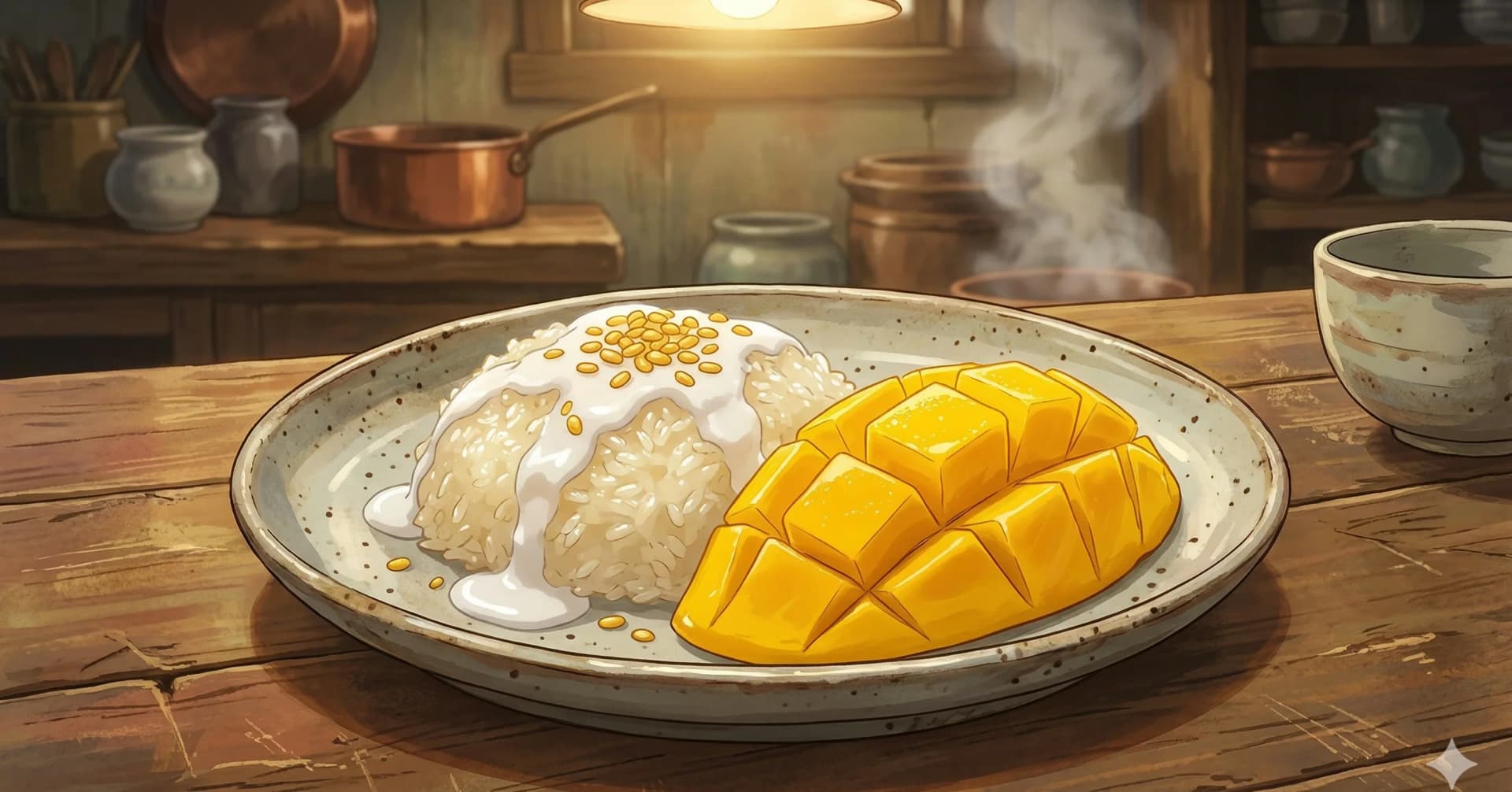
Thai Cuisine
Khao Niao Mamuang (Thai Mango Sticky Rice)
Sweet coconut-soaked sticky rice with ripe mango, salted coconut cream, and crispy mung beans
There are desserts that belong to restaurants and desserts that belong to seasons. Mango sticky rice belongs to the Thai hot season, roughly March through June, when the markets fill with nam dok mai mangoes so ripe they give off perfume from across the stall. Street vendors in Bangkok scoop the rice from wide metal trays, fan a sliced mango beside it, and pour the coconut cream from a squeeze bottle in one practiced motion. It takes about fifteen seconds. The eating takes only slightly longer.
Khao niao mamuang is a study in contrasts that somehow feels seamless. The sticky rice is warm, dense, and faintly sweet. The coconut cream on top is cool, salty, and rich. The mango is cold, tart-sweet, and bright. And the crispy mung beans scattered over everything add a gentle crunch that keeps each bite from feeling one-note. The balance between sweet and salty is the heart of the dessert, and getting it right matters more than any single ingredient.
This recipe follows the traditional steaming method rather than the shortcut of cooking glutinous rice in a pot, which produces a stickier, more porridge-like texture. Steamed sticky rice keeps its individual grain structure while still clinging together in satisfying clumps. If you have eaten pad thai or som tam at a Thai restaurant, you may have encountered sticky rice as a side. Here it becomes the main event. The coconut soaking step that follows steaming is where the dessert is really made, and patience during those resting minutes transforms plain steamed rice into something altogether different.
At a Glance
Yield
6 servings
Prep
20 minutes (plus 4 hours soaking)
Cook
40 minutes
Total
5 hours (including soaking)
Difficulty
Easy
Ingredients
Rice Ingredients
- 7 ozwhite glutinous rice (also labeled sweet rice or sticky rice)
Coconut Syrup Ingredients
- ⅔ cupfull-fat coconut milk
- ½ cupgranulated sugar (or palm sugar, finely chopped)
- ½ tsptable salt (about half a teaspoon)
- 1pandan leaf, tied in a knot (optional but traditional)
Coconut Cream Ingredients
- ½ cupfull-fat coconut milk
- ⅓ tsptable salt (about a quarter teaspoon)
- ¼ ozrice flour
- 1 tbspwater
Crispy Mung Bean Ingredients
- 1 ozshelled and split mung beans (dried, yellow)
To Serve
- 3ripe mangoes (about 450 g flesh), preferably nam dok mai or ataulfo
Method
- 1
Place the glutinous rice in a bowl and cover with cold water. Swish the grains vigorously with your hand to release the surface starch. The water will turn cloudy and white. Drain and repeat 4 to 5 times until the water runs mostly clear. Cover the washed rice with fresh room-temperature water by at least 5 cm and leave to soak for a minimum of 4 hours or overnight. The grains will turn from opaque white to a slightly translucent, almost pearly appearance when fully hydrated.
- 2
Bring water in a steamer to a full, rolling boil. Drain the soaked rice thoroughly through a fine-mesh sieve, shaking gently to remove excess water. Line the steamer rack or basket with a dampened muslin cloth or thin cotton tea towel. Spread the rice in an even layer on the cloth and fold the edges loosely over the top, leaving gaps around the edges so steam can circulate freely. Cover with the steamer lid and steam for 20 to 25 minutes over rapidly boiling water. The rice is ready when the grains are fully translucent, tender throughout, and cling to each other without any chalky center.
- 3
While the rice steams, combine the 160 ml coconut milk, sugar, salt, and pandan leaf in a small saucepan. Heat over medium until the mixture just begins to bubble around the edges and the sugar dissolves completely. Turn off the heat, cover, and keep warm. The syrup should be hot, not lukewarm, when it meets the rice.
- 4
Transfer the steamed rice to a wide mixing bowl and remove the pandan leaf from the coconut syrup. Pour the hot coconut syrup over the rice in a steady stream. Use a rubber spatula to fold the rice gently, breaking up any clumps and distributing the liquid evenly. The rice will look soupy at first. Cover the bowl tightly with a plate or plastic wrap and let it sit undisturbed for 20 minutes. The grains absorb the coconut milk steadily during this rest.
- 5
After 20 minutes, fold the rice from the bottom to the top with the spatula to redistribute any pooled syrup. Cover again and let it rest for at least another 20 minutes. The rice should now look glossy and slightly swollen, with no visible liquid remaining. It will stay at a good serving temperature at room temperature for several hours.
- 6
Prepare the salted coconut cream. Stir the rice flour into the 15 ml water in a small bowl until completely smooth and lump-free. Combine the 120 ml coconut milk and salt in a small saucepan and add the rice flour slurry. Place over medium heat and stir constantly with a small whisk or spoon. As soon as the mixture comes to a boil and thickens slightly to the consistency of thin cream, remove from heat. Pour into a small bowl and let it cool to room temperature. The sauce will thicken a touch more as it cools.
- 7
For the crispy mung beans, rinse the dried beans under cold water. Place them in a small saucepan with about 500 ml water and bring to a simmer over medium heat. As soon as the water reaches a simmer, remove the pan from heat, cover, and let the beans sit for exactly 10 minutes. Drain immediately and rinse under cold water to stop any further softening. Spread the beans on a paper towel and pat dry.
- 8
Lightly grease a small skillet and place over medium-high heat. Add the blanched mung beans and toast, stirring frequently, until they are completely dry, crunchy, and light golden. This takes about 3 to 5 minutes. Listen for the sound to change from damp and quiet to a dry, clicking rattle against the pan. Transfer to a plate and let cool completely. They will crisp further as they cool and can be stored in an airtight container for up to a month.
- 9
To serve, peel the mangoes and slice each cheek away from the pit. Cut the cheeks into long slices about 1 cm thick, or fan them by making parallel cuts while holding the cheek together. Mound the coconut sticky rice on a plate, arrange the mango slices alongside, spoon the salted coconut cream generously over the rice, and scatter the crispy mung beans on top.
Key Ingredient Benefits
Glutinous rice: Despite its name, glutinous rice contains no gluten. The term refers to its glue-like stickiness when cooked, which comes from its unusually high amylopectin content. Look for it in Asian grocery stores labeled as sweet rice, sticky rice, or Thai glutinous rice. Long-grain glutinous rice is traditional for this dessert. Short-grain varieties work but produce a denser, more compact result. Do not substitute regular jasmine rice, which has a completely different starch composition.
Coconut milk: Full-fat coconut milk is essential for both the soaking syrup and the cream topping. The fat content carries flavor and creates the characteristic richness. Canned coconut milk with no added emulsifiers or thickeners is ideal. Shake the can well before opening, or stir thoroughly to recombine the cream and water layers. Light coconut milk will produce a less satisfying result with thinner flavor and less body.
Mangoes: The Thai nam dok mai mango is the traditional choice, prized for its smooth, fiber-free flesh and intensely sweet, almost floral flavor. Ataulfo (champagne) mangoes, widely available in North American supermarkets from spring through summer, are the closest substitute and work beautifully. Tommy Atkins and Kent mangoes tend to be more fibrous and less sweet. The mango must be fully ripe, yielding to gentle thumb pressure and fragrant at the stem end.
Palm sugar: Traditional recipes use palm sugar for the syrup, which adds a mild caramel note. Granulated sugar produces a cleaner, more neutral sweetness that lets the coconut and mango flavors lead. Both work well. Avoid coconut sugar, which has a stronger molasses character that can overpower the delicate balance.
Mung beans: These small yellow split beans provide textural contrast. The brief blanching step softens them just enough to allow even toasting without burning. Skipping the blanch results in beans that are hard in the center and scorch on the outside.
Why This Works
Steaming glutinous rice rather than boiling it produces a texture with more integrity. Glutinous rice is almost entirely amylopectin starch, which is what makes it sticky. Boiling it in water releases too much of that starch into the cooking liquid, turning the grains into a soft, gluey mass. Steaming cooks the rice through direct contact with steam, keeping the grains distinct while still achieving that characteristic chewy, stretchy cling.
Soaking the rice for at least four hours before steaming is not optional. Glutinous rice grains are dense and do not absorb water during cooking the way regular long-grain rice does. Without thorough soaking, the center of each grain remains hard and chalky even after extended steaming. Four hours of soaking allows water to penetrate fully, and the difference between three hours and four is noticeable.
The hot coconut syrup must be poured over the rice immediately after steaming. Hot rice grains are more porous and absorbent than cooled ones, and the heat of the syrup keeps the coconut fat liquid long enough to penetrate the grain surface. If you wait until the rice cools, the coconut milk sits on the outside and the finished texture is greasy rather than creamy from within.
The rice flour in the salted coconut cream serves a specific purpose. Without it, the thin coconut milk separates as it cools, leaving a watery puddle around the rice. A small amount of rice flour emulsifies the sauce and gives it body, so it clings to the rice in a glossy, appetizing layer rather than running off.
Substitutions & Variations
Rice: There is no true substitute for glutinous rice in this dessert. Regular rice, whether jasmine, basmati, or sushi rice, will not achieve the same texture. If glutinous rice is unavailable, sushi rice comes closest but the result will be noticeably different.
Coconut milk: Full-fat coconut cream (the thicker product sold in smaller cans) can replace coconut milk for an even richer result. Thin it with a few tablespoons of water if it feels too dense. For a lighter version, use standard coconut milk throughout but expect a more subtle coconut flavor.
Mango: In winter when ripe mangoes are unavailable, ripe papaya or fresh jackfruit make acceptable Thai-appropriate substitutes. Canned mango packed in juice is a last resort. Some Thai restaurants serve sticky rice with durian during durian season, a variation called khao niao durian that is beloved and polarizing in equal measure.
Mung bean topping: Toasted white sesame seeds or toasted unsweetened coconut flakes provide a similar textural role if mung beans are hard to find. Some versions use roasted peanuts, which are less traditional but perfectly good.
Sweetener: Reduce the sugar to 70 g for a less sweet version that leans harder on the coconut and salt. Increase to 120 g if you prefer the sweeter style common at Thai dessert shops.
Pandan leaf: If unavailable, add a quarter teaspoon of vanilla extract to the coconut syrup. It fills a similar aromatic role, though the flavor profile shifts slightly toward Western pastry territory.
Serving Suggestions
Mango sticky rice is traditionally served as a standalone dessert or afternoon snack. In Thailand it appears at the end of a meal or on its own at street stalls, and it needs nothing alongside it. If you are building a full Thai dinner, it makes a beautiful finish after spicy dishes. The cool sweetness is especially welcome after the heat of green curry or the sour-spicy punch of tom yum goong. A meal that begins with som tam, continues through pad thai or khao soi, and ends with mango sticky rice covers a full sweep of Thai flavor profiles, from sour and spicy through savory and sweet.
Serve the rice at room temperature or slightly warm, never cold. Cold sticky rice hardens and loses its appealing chewiness. The mango, on the other hand, benefits from being chilled. The temperature contrast between warm rice and cool fruit is part of the pleasure. Pour the coconut cream at the table if you want the visual impact of the white sauce pooling around the golden rice.
Storage & Reheating
Sticky rice: Best eaten the same day it is made. Sticky rice hardens as it cools and refrigeration accelerates this. If you must store it, wrap tightly in plastic wrap and keep at room temperature for up to 8 hours. To revive day-old rice, sprinkle with a tablespoon of water, wrap in a damp towel, and steam for 5 to 8 minutes until soft and pliable again. Microwaving for 30 seconds under a damp paper towel also works in a pinch.
Coconut cream sauce: Keeps in the refrigerator for up to 3 days. It will thicken as it chills. Stir well and let it come to room temperature before serving, or warm gently in a small saucepan with a splash of coconut milk to loosen.
Crispy mung beans: Store in an airtight container at room temperature for up to 1 month. They stay crunchy as long as moisture is kept out. Do not refrigerate.
Mango: Cut mango should be covered and refrigerated, where it keeps for 1 to 2 days. The flavor and texture deteriorate after that. Uncut ripe mangoes can be refrigerated whole for 3 to 4 days to slow ripening.
Freezing: This dessert does not freeze well. The sticky rice becomes unpleasantly hard and grainy after thawing, and the mango releases water and turns mushy. Prepare fresh for the best experience.
Cultural Notes
Khao niao mamuang (ข้าวเหนียวมะม่วง, "sticky rice with mango") is the most internationally famous Thai dessert and one of the most strictly seasonal dishes in Thai cooking. The dessert is built around ripe yellow mangoes, which in Thailand peak from late March through May during the hot dry season. The two preferred cultivars are nam dok mai (sweeter, longer, more golden) and ok rong (smaller, fragrant, more aromatic). Outside of mango season, Thai cooks generally do not serve the dish at all, treating it as a brief annual specialty rather than a year-round dessert.
The technique has three parts that have to align. The sticky rice (khao niao, also called glutinous rice) is soaked overnight, then steamed in a conical bamboo basket until fully tender. The hot rice is mixed with sweetened, salted coconut milk and rested briefly so the rice absorbs the cream. A separate, looser, slightly thicker coconut cream is reserved to spoon over the finished dish at serving time, giving a textural contrast with the rice underneath. The mango is ripe, peeled, and sliced just before serving, with the slices arranged alongside the rice so each spoonful can pick up rice, coconut, and mango together. Toasted yellow mung beans or sesame seeds are sometimes scattered on top for crunch.
The dish is a defining feature of the Thai annual Songkran festival in April, which falls during peak mango season and marks the traditional Thai New Year. Bangkok street vendors set up mango sticky rice stalls along the major Songkran water-fight routes, and demand spikes so noticeably that wholesale mango prices climb during the festival period. The dish has also crossed into international fame in recent years through Thai-American rapper Milli, who performed at the 2022 Coachella music festival while eating mango sticky rice on stage. Thai-American restaurants and Thai produce importers in the US reported a measurable sales spike for both the dessert and for nam dok mai mangoes in the weeks that followed.
Nutrition Facts
Calories: 321kcal (16%)|Total Carbohydrates: 51.2g (19%)|Protein: 4.7g (9%)|Total Fat: 11.4g (15%)|Saturated Fat: 9.9g (50%)|Cholesterol: 0mg (0%)|Sodium: 333mg (14%)|Dietary Fiber: 2.6g (9%)|Total Sugars: 18.2g
You Might Also Like
Ratings & Comments
Ratings & Comments
Ratings
Share your thoughts on this recipe.
Sign in to rate and comment