Thai Cuisine
Turmeric Fried Fish
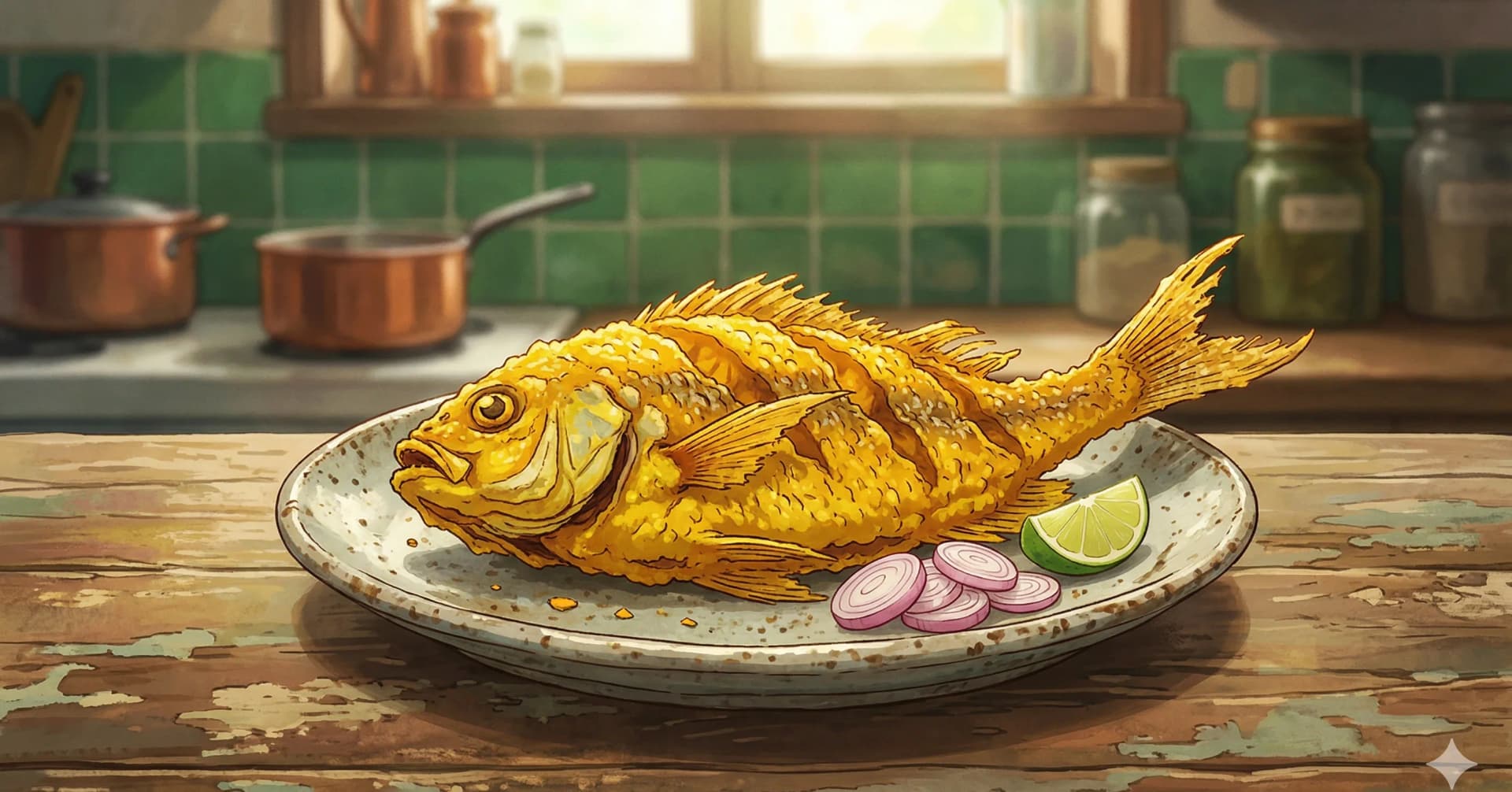
Southern Thai deep-fried fish buried under a mountain of crispy golden garlic and turmeric
In southern Thailand, the simplest dishes are often the most revelatory. Pla tod kamin, which translates to "turmeric fried fish," is a street food staple and home cooking favourite throughout the southern provinces and in Bangkok's southern Thai restaurants. The dish asks only a handful of questions: Do you have a fish? Some garlic? A knob of turmeric? Good. You are ready.
The technique is straightforward but deliberate. You pound fresh turmeric and an almost absurd quantity of garlic into a coarse, fragrant mixture, massage it into the scored flesh of a whole fish, and then fry the fish and the garlic-turmeric mixture separately so each reaches its ideal texture. The fish emerges golden and firm, its skin crackling and its flesh moist. The garlic and turmeric, fried at a lower temperature until shattering-crisp, get heaped on top in a golden crown that crackles when you press a spoon through it.
What makes this dish linger in memory is the interplay between the mild, sweet fish and the intensely aromatic topping. Turmeric brings an earthy warmth that is completely different from the heat of chili. Garlic, when fried until just golden, turns nutty and sweet rather than sharp. Together they create a flavour that feels both ancient and immediate. Some cooks in the south add a little coriander root and lemongrass to the marinade, which introduces a citrusy, herbal layer beneath the turmeric. This version includes both.
Serve pla tod kamin the way it is eaten throughout the south: with a plate of hot jasmine rice, a sour curry like gaeng som on the side, and perhaps a sharp som tam to cut through the richness. If you enjoy fish cooked simply and well, this belongs alongside pla nueng manao and cha ca la vong in your repertoire.
At a Glance
Yield
Serves 2 to 3
Prep
25 minutes
Cook
25 minutes
Total
50 minutes
Difficulty
Easy
Ingredients
Spice Paste Ingredients
- 2⅔ cupgarlic (about 7 heads), peeled
- 1¼ cupfresh turmeric root, scrubbed and roughly chopped (no need to peel if young and thin-skinned)
- 2coriander roots with stems (about 10 g), scraped clean and roughly chopped
- 1 stalklemongrass, tough outer layers removed (about 15 g), tender core finely sliced
- 1 tbspfish sauce
- 1/2 tspground white pepper
- 1/2 tspfine sea salt
Fish Ingredients
- 2¼ lbwhole fish, such as sea bass, snapper, tilapia, or mackerel (about 2 small fish), scaled and gutted with heads left on
- —Vegetable oil for deep frying, about 1 litre
To Serve
- —Jasmine rice
- —Sweet chili sauce or Sriracha (optional)
- —Lime wedges
- —Sliced cucumber
Method
- 1
Peel all the garlic cloves. If you have a large batch, place them in a metal bowl, cover with another bowl, and shake vigorously for 30 seconds to loosen the skins. Chop the turmeric into rough coins or small pieces so the mortar can grip them. Slice the lemongrass core thinly and chop the coriander roots.
- 2
Working in batches, add the garlic, turmeric, coriander roots, and lemongrass to a mortar and pestle. Pound until you have a coarse, chunky mixture. You are not making a smooth paste here. The pieces should be roughly the size of small pebbles, irregular and uneven, so they fry into crispy, craggy bits. A food processor works if you pulse carefully, but avoid running it continuously or you will end up with a wet purée that steams rather than fries. Combine all batches in a large bowl and stir in the fish sauce, white pepper, and salt.
- 3
Pat the fish dry with paper towels. Using a sharp knife, score three or four diagonal slashes on each side of the fish, cutting through the skin and about 5 mm into the flesh. The cuts should be deep enough that you can see the white meat beneath the skin, which allows the marinade to penetrate and helps the fish cook evenly.
- 4
Place the fish in a large bowl or tray. Rub a generous handful of the garlic-turmeric mixture over every surface: into the score marks, inside the cavity, over the head, and across the tail. Reserve the remaining mixture (roughly two-thirds of it) in its bowl. Let the fish sit at room temperature for 10 to 15 minutes while you heat the oil.
- 5
Pour the oil into a wok or wide, heavy pan. Heat over medium-high until the oil reaches about 170 to 180 degrees C (340 to 360 degrees F). If you do not have a thermometer, drop a small piece of garlic into the oil. It should sizzle immediately and float to the surface within a few seconds, with steady bubbles surrounding it. If it browns within seconds, the oil is too hot.
- 6
Just before frying, scrape and shake off as much of the garlic-turmeric mixture from the fish as you can, returning it to the reserved bowl. The fish goes into the oil first because it needs much longer to cook than the garlic and turmeric, and any bits left clinging to the skin will burn before the fish is done.
- 7
Carefully lower one fish into the hot oil, sliding it away from you so that any splashing oil moves in the opposite direction. The fish should sizzle vigorously. Fry for 5 to 8 minutes on the first side without moving it, until the underside is deep golden and the skin is visibly crisp and pulling away from the flesh slightly. Use a wide spatula or spider strainer to gently turn the fish. If it resists, give it another minute. Fry the second side for another 5 to 8 minutes until uniformly golden and cooked through. The flesh at the thickest part near the spine should be opaque and flake cleanly when tested with a skewer. Transfer to a wire rack or paper towels to drain. Repeat with the second fish if your wok is not large enough for both.
- 8
Reduce the heat to medium-low. The oil should be calmer now, with smaller, gentler bubbles. Add all of the reserved garlic-turmeric mixture to the oil in one batch. It will bubble enthusiastically for a moment, then settle. Stir slowly and continuously with a spider strainer or slotted spoon, lifting from the bottom to prevent sticking and clumping. The mixture will gradually change colour from bright orange-yellow to a deeper, tawny gold. This takes 5 to 10 minutes. Watch carefully during the final minutes. The garlic pieces should be light golden and the turmeric shards should be dark amber-orange. They will continue to darken slightly after you remove them from the oil. Remove the mixture with a spider strainer as soon as it looks evenly golden and smells toasty and fragrant rather than raw. Drain briefly on paper towels.
- 9
Place the fried fish on a serving plate. Heap the crispy garlic and turmeric on top and all around the fish, piling it generously. The mound should look extravagant. Squeeze a wedge of lime over the top and serve immediately alongside jasmine rice.
Key Ingredient Benefits
Fresh turmeric (Curcuma longa) is a rhizome in the ginger family, used extensively in southern Thai, Indian, and Indonesian cooking. Its vibrant orange colour comes from curcumin, a polyphenol that has been the subject of extensive research for potential anti-inflammatory, antioxidant, and neuroprotective effects. Curcumin's bioavailability is naturally low, but it increases substantially when consumed with fat or with piperine (found in black and white pepper). This recipe provides both a fat matrix (from frying) and white pepper, creating conditions that may improve absorption. In Thai traditional medicine, turmeric has long been used topically for skin conditions and internally for digestive complaints. Important: fresh turmeric will stain hands, cutting boards, plastic containers, and clothing a deep yellow. Use metal or glass bowls and consider wearing gloves when handling it.
Garlic (Allium sativum) is used here in quantities that would seem reckless in most Western cooking but are entirely normal in southern Thai cuisine. When fried slowly until golden, garlic undergoes the Maillard reaction, converting its sharp, sulfurous raw flavour into complex nutty sweetness. Garlic contains alliin, which converts to allicin when the cells are crushed. Allicin has demonstrated antimicrobial properties and has been associated with modest cardiovascular benefits in some clinical trials, including small reductions in blood pressure and cholesterol. These effects are best documented for raw or lightly cooked garlic; deep frying likely reduces allicin content significantly.
Coriander root (Coriandrum sativum) is a fundamental ingredient in Thai curry pastes and marinades, though it is rarely used in Western cooking, where only the leaves and seeds are familiar. The root has a deeper, earthier, more concentrated flavour than the leaves, with none of the soapy quality that some people perceive in coriander foliage (the aldehyde compounds responsible for that perception are concentrated in the leaves, not the roots). If coriander roots are unavailable, use the lower stems, which carry a similar though milder flavour.
Lemongrass (Cymbopogon citratus) contributes citral, the compound responsible for its distinctive lemony aroma. In traditional Southeast Asian medicine, lemongrass tea is used as a digestive aid and mild sedative. Some laboratory studies suggest antimicrobial and antifungal properties, though clinical evidence in humans is limited. Only the tender inner core of the stalk is used in this recipe, as the tough outer layers are too fibrous to eat even after frying.
Fish sauce (nam pla) is made from small fish (usually anchovies) fermented with salt for months to years. It is one of the richest natural sources of glutamate, the amino acid responsible for umami taste. A small amount in the marinade seasons the fish from within and enhances the savoury quality of the turmeric and garlic after frying. Fish sauce is high in sodium, so it replaces rather than supplements the salt in the marinade.
Why This Works
Frying the fish and the garlic-turmeric topping separately is the key technique that makes pla tod kamin succeed. The fish needs sustained high heat (170 to 180 degrees C) for 10 to 16 minutes to cook through and develop a crisp skin. Garlic and turmeric, on the other hand, go from golden to burnt in a matter of seconds at that temperature. Reducing the oil to medium-low for the second fry gives the garlic time to release its moisture slowly, which is what produces the shattering, almost chip-like crispness rather than a tough, leathery chew.
Scoring the fish serves two purposes. The cuts allow the marinade to season the flesh beneath the skin, and they also create more surface area for the hot oil to contact, which means more crispy edges and faster, more even cooking. Without the scores, the thickest part of the fillet near the spine can remain underdone by the time the skin and tail are fully cooked.
The coarse texture of the pounded garlic and turmeric is deliberate. A smooth paste would coat the fish thinly and fry into a flat, uniform crust. The chunky pieces fry into irregular, craggy shards with varying textures, from glassy-crisp thin bits to slightly chewy thicker pieces, which makes every bite interesting. This textural variety is a hallmark of the dish as it is made by street vendors in southern Thailand.
Fresh turmeric behaves very differently from dried ground turmeric in this recipe. The rhizome contains volatile oils (turmerone, ar-turmerone) that give it a warm, slightly peppery aroma that dried turmeric lacks. It also has a higher moisture content, which means it fries into crisp shards rather than simply colouring the oil the way powder would. If you can only find dried turmeric, the dish will still taste good, but you will lose the textural element that makes the topping special.
Adding coriander root and lemongrass to the marinade, a technique common among southern Thai home cooks, introduces a citrusy-herbal complexity beneath the dominant turmeric and garlic. The coriander root contributes a deep, earthy flavour distinct from coriander leaves, while lemongrass adds brightness without the acidity of citrus juice, which would interfere with the frying.
Substitutions & Variations
Fish choices: Sea bass (barramundi) and red snapper are the most common choices outside Thailand and produce excellent results with firm, flaky flesh. Tilapia is budget-friendly and holds together well during frying. Whole mackerel, the fish most commonly used by street vendors in southern Thailand, has richer, oilier flesh that pairs beautifully with the turmeric but is more fragile when flipping. For a boneless option, use thick fillets (at least 2.5 cm) of any firm white fish, skin on, and reduce frying time to about 4 minutes per side.
Fresh turmeric unavailable: Use 2 tablespoons of ground dried turmeric mixed into the pounded garlic. The topping will not have the same crispy shard texture, but the flavour will still be recognizably right. Add the ground turmeric after pounding the garlic so it does not fly out of the mortar.
Coriander root and lemongrass unavailable: These are supplementary aromatics. Omit them and the dish will still be authentic to many versions of pla tod kamin. The core flavour identity comes from garlic and turmeric alone.
Air fryer adaptation: Pat the marinated fish dry, spray or brush lightly with oil, and air fry at 190 degrees C for 12 to 15 minutes, flipping halfway. Toss the garlic-turmeric mixture with 1 to 2 tablespoons of oil and air fry separately at 160 degrees C for 8 to 10 minutes, shaking the basket every 2 minutes, until golden and crisp. The result is lighter but lacks the deep golden crust of the traditional version.
Fried fish steaks: If whole fish feels intimidating, cut a large fish into 3 cm thick steaks (cross-sections through the bone). Marinate, scrape, and fry exactly as described. Steaks are easier to handle, flip, and portion, and they cook in about 4 to 5 minutes per side.
Dipping sauce: In southern Thailand, pla tod kamin is often served with a simple nam jim seafood: 3 tablespoons lime juice, 2 tablespoons fish sauce, 1 tablespoon sugar, 4 to 6 chopped bird's eye chilies, and 2 minced garlic cloves. Stir until the sugar dissolves. The sharp, hot, sour sauce cuts through the richness of the fried fish.
Serving Suggestions
Pla tod kamin is a centrepiece dish. Set it in the middle of the table with the garlic-turmeric heap intact and let people break into the fish and scoop the crispy topping with their spoons. It needs rice, always, and it benefits from sour, spicy, or fresh accompaniments that balance the richness of the fried fish.
The most traditional pairing is a bowl of gaeng som, the sour curry whose thin, tart broth was practically designed to be spooned over rice alongside fried fish. The two dishes together are a classic southern Thai combination: rich and crispy next to bright and brothy. Tom yum goong offers a similar sour-spicy contrast if you prefer a soup with more herbal complexity.
A sharp salad rounds out the meal. Som tam, with its lime-chili-fish-sauce dressing and crunchy shredded papaya, is the natural choice, cutting through the oil with acidity and crunch. For a full southern Thai spread, add a green curry with chicken or beef for coconut richness and a plate of raw vegetables (cucumber, long beans, Thai basil, cabbage wedges) for freshness.
If you are exploring turmeric-marinated fish across Southeast Asian traditions, try cha ca la vong, the Hanoi specialty where turmeric-marinated fish is seared in a skillet with dill and scallions. The two dishes share the turmeric-fish pairing but treat it in completely different ways: one deep-fried and topped with crispy aromatics, the other pan-seared and wrapped in fresh herbs.
Storage & Reheating
Pla tod kamin is best eaten immediately. The crispy garlic-turmeric topping loses its crunch within an hour at room temperature and cannot be fully restored. If you have leftovers, store the fish and the topping separately in sealed containers in the refrigerator for up to 1 day. Reheat the fish in a 200 degrees C oven for 8 to 10 minutes until the skin re-crisps and the flesh is warmed through. Spread the garlic-turmeric topping on a parchment-lined baking sheet and warm it in the oven alongside the fish for the last 3 to 4 minutes. It will not return to its original shattering crispness, but it will be better than microwaving, which turns it soft and oily. Do not freeze fried fish; the texture degrades significantly. If you want to prep ahead, you can pound the garlic-turmeric mixture and store it in a sealed container in the refrigerator for up to 2 days before frying day.
Cultural Notes
Pla tod khamin (ปลาทอดขมิ้น, "turmeric-fried fish") is a defining preparation of southern Thai cooking, the regional cuisine that runs from Chumphon south through the Malay Peninsula. Southern Thai food leans heavily on turmeric, fresh seafood, and assertive heat, and turmeric-fried fish brings all three elements into a single dish: whole or filleted fish marinated in fresh turmeric, garlic, white pepper, and salt, then fried hard in shallow oil until the surface turns a deep golden orange and the flesh inside stays just barely cooked through.
The fresh turmeric (khamin, Curcuma longa) is the dish's defining ingredient, and southern Thai cooks treat it as completely distinct from the dried powder that most international Thai recipes substitute. Fresh turmeric has a brighter, more peppery, slightly resinous flavor that dried turmeric loses in processing. The fish is rubbed with a paste of grated fresh turmeric, pounded garlic, and salt, then left to marinate for at least 30 minutes (longer for a deeper color and flavor) before frying. The result is a fish with a faintly bitter, earthy aromatic edge that distinguishes the dish from standard Thai fried fish preparations.
The dish belongs squarely to the southern Thai Muslim food tradition, which runs from Songkhla and Yala south through Pattani and Narathiwat into the Malay-Muslim communities of northern Malaysia. The use of turmeric, the absence of fermented shrimp paste (kapi), and the format of frying whole small fish for hand-eating are all hallmarks of this regional cuisine. Pla tod khamin appears most prominently at southern Thai Muslim restaurants, at the khao yam (southern rice salad) breakfast tradition where it accompanies the herb-rice bowl, and at family Eid al-Fitr meals throughout the southern provinces.
Nutrition Facts
Calories: 793kcal (40%)|Total Carbohydrates: 37.5g (14%)|Protein: 67.9g (136%)|Total Fat: 41.3g (53%)|Saturated Fat: 6.6g (33%)|Cholesterol: 137mg (46%)|Sodium: 963mg (42%)|Dietary Fiber: 4.6g (16%)|Total Sugars: 1.3g
You Might Also Like
 Easy
EasyVietnamese Cuisine
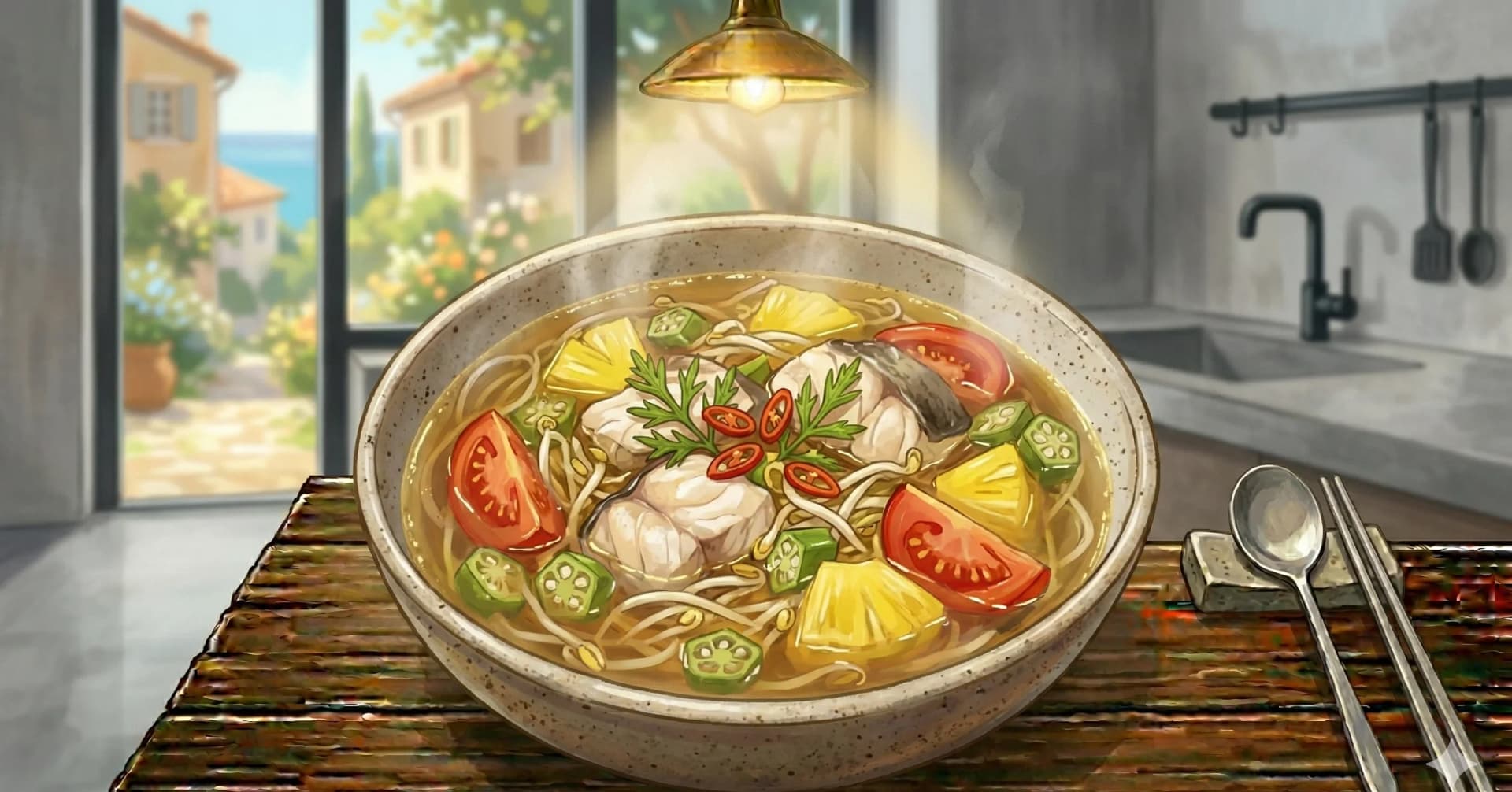
Canh Chua Cá (Vietnamese Sweet and Sour Fish Soup)
35 minutes
 Easy
EasyIndonesian Cuisine
Bubur Ayam (Indonesian Chicken Rice Porridge)
1 hour 10 minutes
 Easy
EasyVietnamese Cuisine
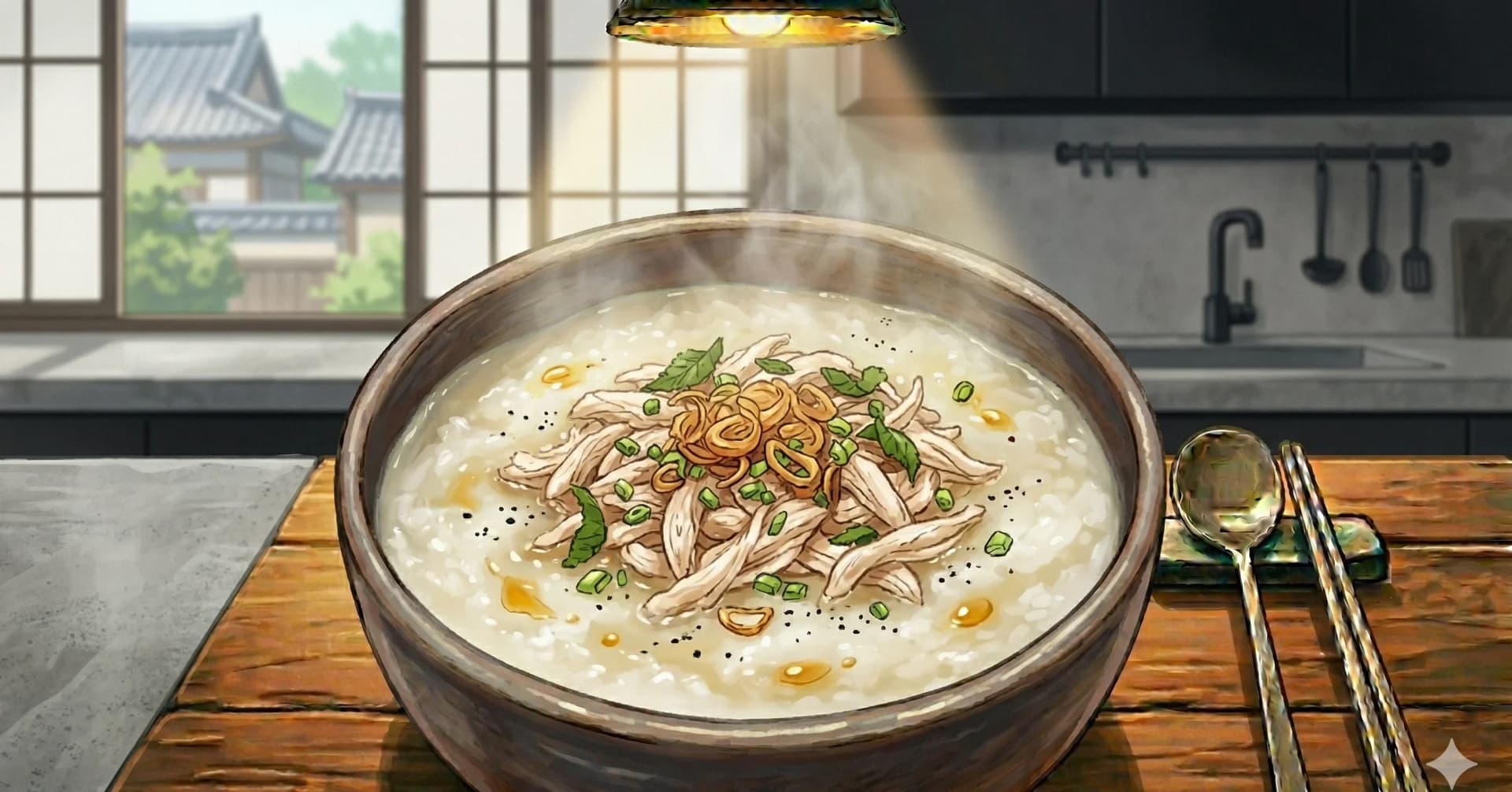
Cháo Gà (Vietnamese Chicken Rice Porridge)
1 hour 30 minutes
 Medium
Thai Cuisine
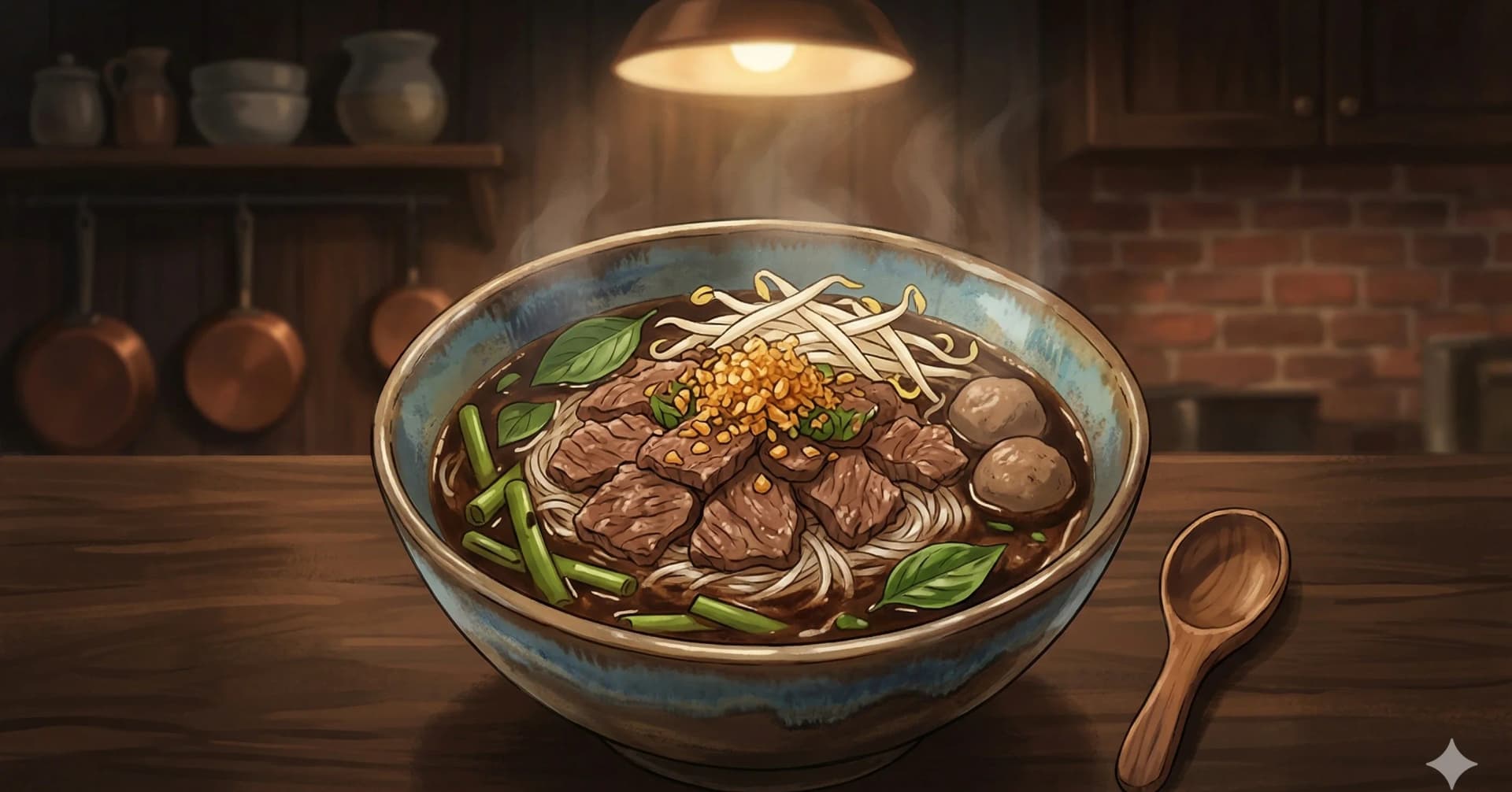
Boat Noodles (ก๋วยเตี๋ยวเรือ)
3 hours 15 minutes
Ratings & Comments
Ratings & Comments
Ratings
Share your thoughts on this recipe.
Sign in to rate and comment