Chinese Cuisine
Liang Ban Mu Er (Wood Ear Mushroom Salad)
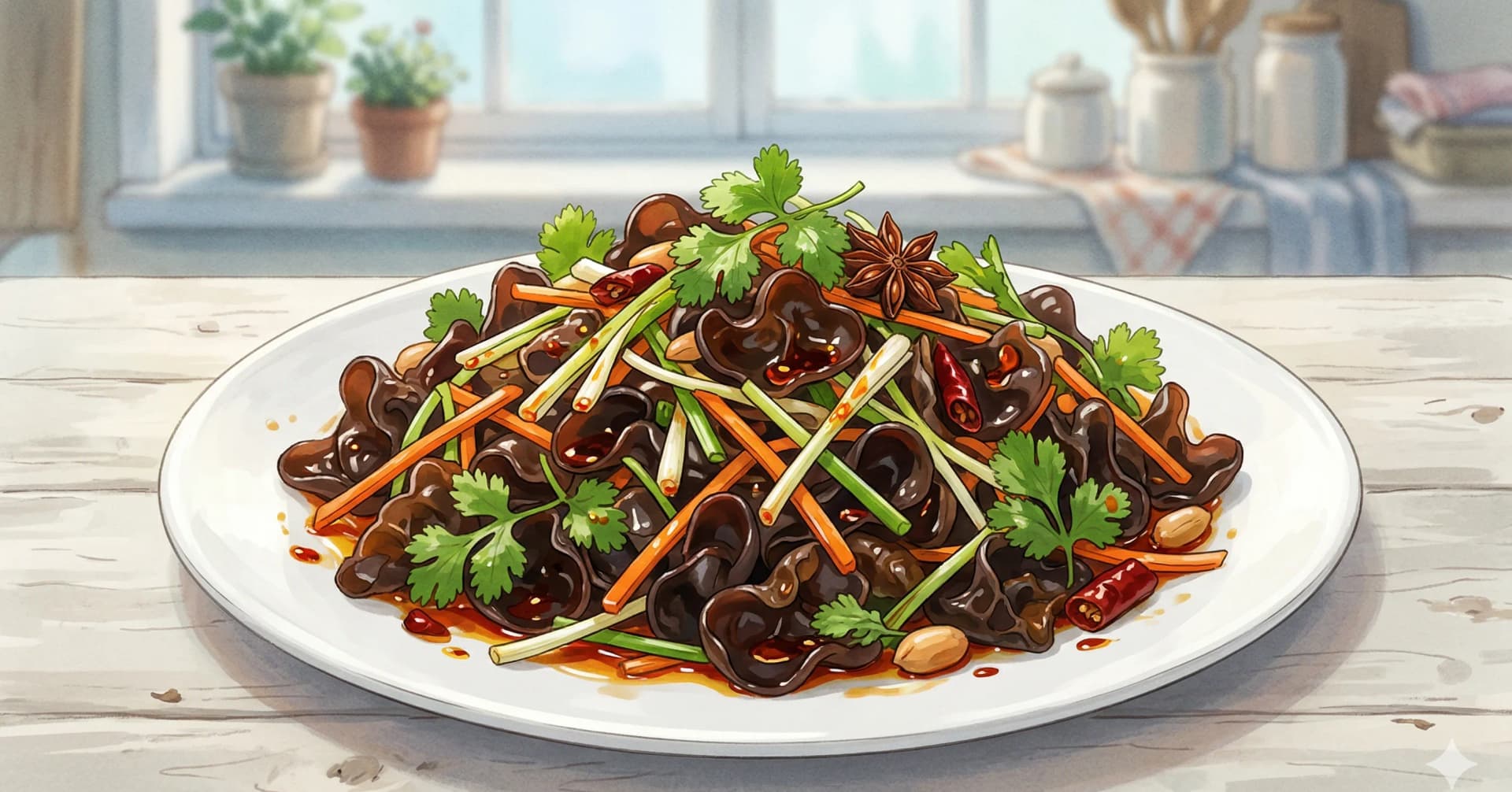
A refreshing cold salad of rehydrated wood ear mushrooms dressed with vinegar, chili oil, and garlic
Wood ear mushrooms have a texture that is unlike anything else in the kitchen. They are not soft, not chewy, not crunchy in the conventional sense. They have a springy, slightly gelatinous quality, a pleasant snap when you bite through them that is almost cartilaginous. In this cold salad, that unique texture is the foundation, dressed simply in a vinegar-forward sauce that is sharp, slightly sweet, and warmed with chili oil and the bite of raw garlic.
Liang ban mu er is one of the most common cold appetizers in Chinese cooking, found on nearly every Chinese restaurant menu that offers liang cai (cold dishes). It is served at the beginning of a meal, often alongside other cold preparations like dressed cucumber, marinated jellyfish, or smoked tofu. Its purpose is to awaken the palate and stimulate the appetite, and it does this beautifully: the tangy dressing and cool, crunchy mushrooms are refreshing and light, setting the stage for the heavier, richer dishes to follow.
Wood ear mushrooms (mu er, literally "wood ears") grow on decaying trees and have been a part of Chinese cuisine and medicine for centuries. They are almost always sold dried and must be rehydrated before use. The dried form keeps indefinitely and expands dramatically in water, making them one of the most practical pantry staples in Chinese cooking.
The practical key is the blanching step. After rehydrating, the mushrooms should be blanched briefly in boiling water. This removes any residual grit, slightly firms their texture, and makes them safer to eat, as raw rehydrated mushrooms can occasionally harbor bacteria.
At a Glance
Yield
4 servings
Prep
20 minutes
Cook
5 minutes
Total
25 minutes (plus chilling)
Difficulty
Easy
Ingredients
Salad Ingredients
- 1 ozdried wood ear mushrooms
- 1small carrot, julienned (optional, for color)
- 2scallions, julienned
- —Fresh cilantro leaves, a generous handful
Dressing Ingredients
- 3 clovesgarlic, minced
- 1 tbsplight soy sauce
- 1 tbspChinkiang black vinegar
- 2 tsprice vinegar
- 2 tspchili oil (with sediment)
- 1¼ tspsugar
- ½ tspsalt
- 1 tspsesame oil
Method
- 1
Place the dried wood ear mushrooms in a large bowl. Cover with warm water and soak for 20 to 30 minutes, until they are fully rehydrated, soft, and expanded to several times their dried size. They should look like dark, ruffled petals.
- 2
Drain the mushrooms. Trim off any hard, tough stems or gritty base pieces. Tear larger pieces into bite-sized portions, about 3 to 4 cm. Smaller pieces can be left whole.
- 3
Bring a pot of water to a rolling boil. Add the rehydrated mushrooms and blanch for 2 minutes. This step is important for food safety and for firming the texture slightly.
- 4
Drain the mushrooms and immediately plunge them into a bowl of ice water. This stops the cooking and preserves their springy crunch. Let them cool completely, about 5 minutes.
- 5
Drain the mushrooms thoroughly and pat dry with a clean towel. Excess water will dilute the dressing.
- 6
If using carrot, blanch the julienned pieces in boiling water for 30 seconds, then add them to the ice bath with the mushrooms.
- 7
Prepare the dressing. In a small bowl, combine the minced garlic, light soy sauce, Chinkiang vinegar, rice vinegar, chili oil, sugar, salt, and sesame oil. Stir until the sugar dissolves. Taste and adjust: the dressing should be tangy first, then savory, with a gentle chili warmth and a hint of sweetness.
- 8
Place the drained mushrooms in a mixing bowl. Add the julienned scallions and carrot (if using).
- 9
Pour the dressing over the mushrooms. Toss gently but thoroughly to coat every piece.
- 10
Let the dressed salad rest in the refrigerator for at least 15 minutes. The flavors will meld and the mushrooms will absorb some of the dressing.
- 11
Just before serving, add the cilantro leaves and toss lightly.
- 12
Transfer to a serving plate or bowl. The salad should look glossy and inviting, with the dark mushrooms contrasted by the bright green cilantro and the orange carrot.
- 13
Serve cold as an appetizer or side dish.
Key Ingredient Benefits
Wood ear mushrooms are rich in iron (significantly more than most vegetables) and dietary fiber, including soluble polysaccharides that research suggests may have anticoagulant properties similar to heparin. They have been traditionally used in Chinese medicine for blood circulation support and are considered beneficial for cardiovascular health. Those taking blood-thinning medications should consult a healthcare provider before consuming large quantities regularly.
Chinkiang vinegar is a fermented product that may contain small amounts of beneficial organic acids and amino acids. Its consumption is traditionally associated with digestive health in Chinese dietary culture.
Cilantro is a source of vitamins A and K and contains natural chelating compounds. It is a polarizing ingredient: approximately 4 to 14 percent of the population perceives it as soapy due to genetic variation in olfactory receptors.
Why This Works
Wood ear mushrooms have a unique microstructure of interlocking fibers that gives them their distinctive springy texture. Unlike most mushrooms, they do not soften or break down easily when cooked. This structural resilience makes them ideal for cold preparations, where they maintain their crunch even after being dressed in an acidic dressing that would wilt other vegetables.
The combination of two vinegars, Chinkiang and rice, creates a more complex acidity than either one alone. Chinkiang vinegar provides a deep, mellow tartness with slight sweetness, while rice vinegar adds a brighter, sharper note. Together, they create a multi-dimensional acidity that keeps the palate engaged.
Raw garlic, used here intentionally, provides a sharp bite that is characteristic of cold Chinese salads. It mellows slightly as it sits in the acidic dressing, but retains enough edge to wake up the palate. This is one of the few Chinese preparations where raw garlic is preferred over cooked.
Substitutions & Variations
- Wood ear mushrooms: There is no direct texture substitute. Cloud ear mushrooms (yin er, white/silver fungus) have a similar springiness but a milder flavor and lighter color.
- Cilantro: If you dislike cilantro, substitute with shredded shiso leaf, thinly sliced celery, or additional scallion.
- Spicier version: Add more chili oil, a few drops of Sichuan peppercorn oil, or sliced fresh Thai chilies.
- With protein: Shredded poached chicken or thin slices of pressed tofu can be added for a more substantial dish.
- Cucumber addition: Smashed cucumber pieces dressed alongside the mushrooms is a popular combination, adding a juicy crunch that complements the springy mushrooms.
Serving Suggestions
Serve as part of a cold appetizer spread at the beginning of a Chinese meal, alongside other liang cai such as smacked cucumber, marinated tofu, or cold dressed bean sprouts. It also works as a refreshing side dish for grilled or roasted meats, or as a light snack on its own. The salad pairs well with heavier, richer main courses, where its brightness provides necessary contrast.
Storage & Reheating
The dressed salad keeps in the refrigerator for up to 2 days. The mushrooms retain their texture remarkably well, though the cilantro and scallion will wilt. Add fresh garnishes when serving leftovers. The undressed blanched mushrooms can be stored separately in the refrigerator for up to 4 days and dressed as needed. Freezing is not recommended.
Cultural Notes
Liang ban hei mu er (涼拌黑木耳, "cold-dressed wood ear mushroom") is the northern Chinese cold appetizer of rehydrated wood ear mushrooms (hei mu er, the black tree fungus Auricularia auricula-judae) tossed with garlic, Chinese black vinegar, sesame oil, chili oil, soy sauce, and sometimes sliced cucumber or cilantro. The dish is a fixture of northern and Sichuan Chinese cold-dish (liang cai) lineups, served at the opening of a meal alongside other cold preparations like smashed cucumber, marinated radish, and cold sliced pork in garlic sauce. The defining sensory quality is the contrast between the slippery springy texture of the rehydrated fungus and the bright vinegar-chili dressing that coats it.
Wood ear has a long documented use in Chinese cookery. The fungus has been gathered from oak and elm trees across China for at least two thousand years and appears in Chinese medical texts as a circulation-supporting food. Modern cultivation has made the fungus widely available in dried form at every Asian market and many Western supermarkets, sold as small black wrinkled pieces that look almost ornamental. When soaked in cold or warm water for thirty to sixty minutes, the pieces expand to several times their dried volume and reveal the soft, ear-shaped folds that give the mushroom its name.
The preparation is fast and assembly-based. The rehydrated wood ear is rinsed thoroughly, trimmed of any tough stem bases, and torn or cut into bite-sized pieces. The pieces are blanched briefly in boiling water (thirty seconds to a minute) to soften them slightly and remove any earthy raw flavor, then drained and chilled. The dressing is whisked together from black vinegar (Chinkiang), light soy sauce, sesame oil, Sichuan chili oil, sugar, and a generous amount of finely minced garlic, then poured over the chilled mushrooms and tossed. The dish improves after fifteen to thirty minutes of resting so the dressing penetrates the fungus, and it keeps well in the refrigerator for several days.
Nutrition Facts
Calories: 69kcal (3%)|Total Carbohydrates: 8.4g (3%)|Protein: 1g (2%)|Total Fat: 3.8g (5%)|Saturated Fat: 0.4g (2%)|Cholesterol: 0mg (0%)|Sodium: 518mg (23%)|Dietary Fiber: 5.5g (20%)|Total Sugars: 1.6g
You Might Also Like
 Medium
Chinese Cuisine
Niu Rou Yang Cong Jiaozi (Beef and Onion Dumplings)
60 minutes
 Medium
Chinese Cuisine
Bai Qie Ji (White Cut Chicken)
4 hours 30 minutes
 Easy
EasyJapanese Cuisine
Agedashi Tofu (Fried Tofu in Dashi Broth)
25 minutes
 Medium
Chinese Cuisine
Char Siu (Chinese BBQ Pork)
9 hours (including marinating)
Ratings & Comments
Ratings & Comments
Ratings
Share your thoughts on this recipe.
Sign in to rate and comment