Chinese Cuisine
Wu Ji Tang (Silkie Chicken Herbal Soup)
A mineral-rich, dark-boned broth built with black-skinned chicken and a traditional herbal blend
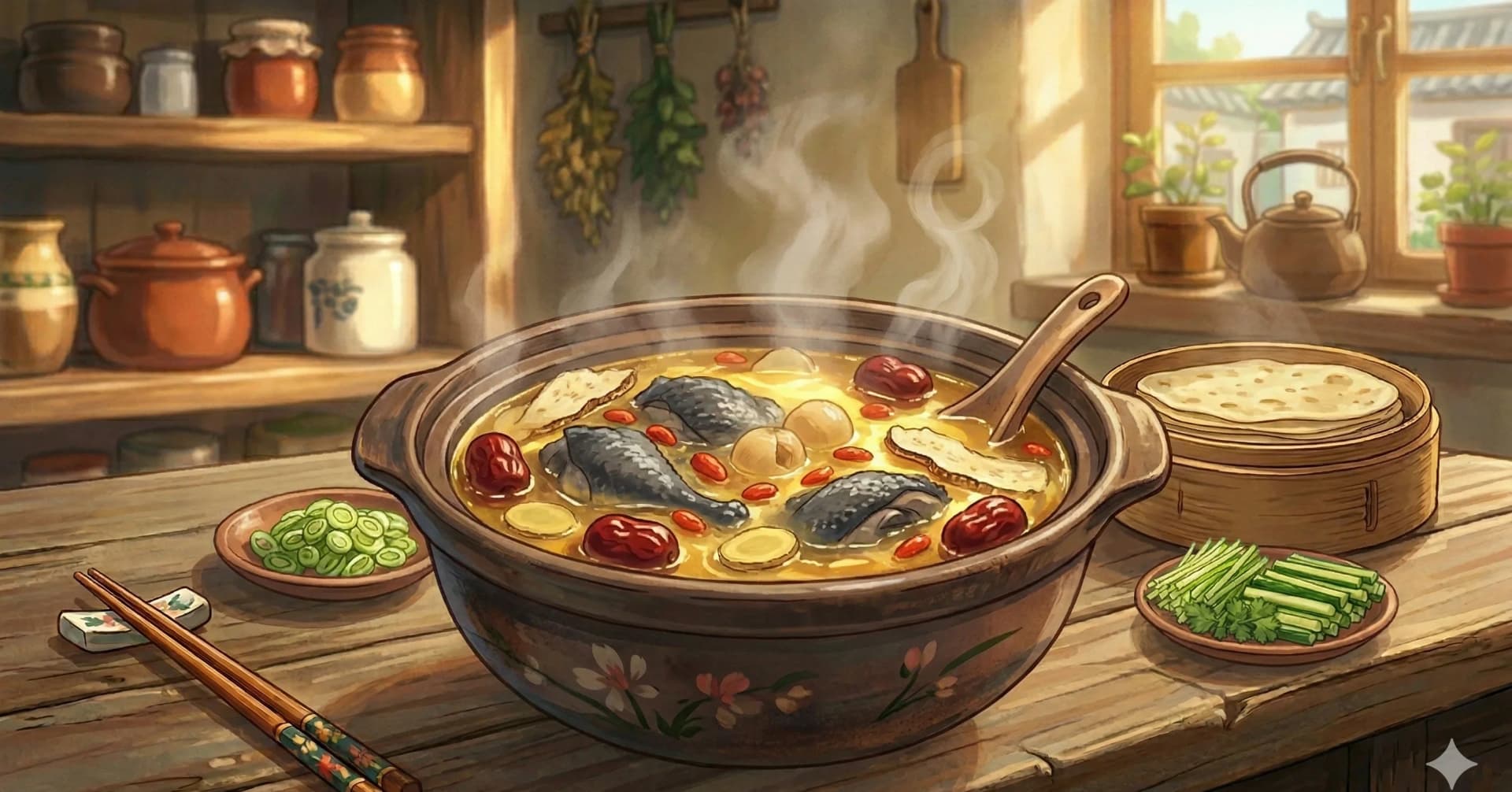
Silkie chicken looks like nothing you have seen at a regular grocery store. Its skin is dark, almost black. Its bones are charcoal grey. Its feathers, before they are removed, are white and fluffy. And yet when you simmer it slowly with a handful of traditional Chinese herbs, it produces one of the most deeply flavored broths in the entire Chinese soup tradition. The color is a rich, dark amber, and the taste is more mineral and savory than what you get from a standard chicken.
Wu ji tang is the soup that Chinese families turn to when someone needs building up. New mothers drink it in the weeks after giving birth. It appears during winter to warm the body from the inside out. It is deeply rooted in Chinese food culture, where the line between cooking and wellness has always been thin. The silkie chicken itself is prized not for its meat, which is lean and somewhat firm, but for what it gives to the broth: a concentration of flavor and minerals that regular chicken simply cannot match.
The herbal blend here is flexible. At its simplest, it can be just red dates and goji berries. At its most elaborate, it includes codonopsis, astragalus, dried longan, and Chinese wild yam, each adding its own layer of earthy sweetness and depth. The technique is the same as most Chinese slow-simmer soups: blanch, combine, bring to a gentle simmer, and wait. The longer you wait, the better it gets. Two hours is good. Three hours is better. The broth concentrates and the herbs give everything they have.
At a Glance
Yield
4 to 6 servings
Prep
15 minutes
Cook
2 hours 30 minutes
Total
2 hours 45 minutes
Difficulty
Easy
Ingredients
- 1 wholesilkie chicken (about 800 g to 1 kg), cleaned and cut into pieces
- 1thumb-sized piece fresh ginger, sliced into coins
- 3green onions, left whole
- 8dried red dates (hong zao), rinsed
- ½ ozdried goji berries (gou qi zi)
- 8 piecesdried longan flesh (long yan rou)
- 1 ozdried Chinese wild yam (huai shan), about 10 pieces
- 5 piecescodonopsis root (dang shen), broken into sections
- 4 piecesastragalus root (huang qi)
- —Salt to taste
- —White pepper to taste
- —Chopped green onion for garnish
Method
- 1
Blanch the silkie chicken. Place the chicken pieces in a large pot, cover with cold water, and bring to a boil over high heat. Boil for 3 minutes, then drain. Rinse each piece thoroughly under cool running water, removing any foam or impurities. The dark skin may look unusual, but this is normal. Clean the pot.
- 2
Rinse the herbs. Give all the dried ingredients a quick rinse under cold water. If using dried wild yam slices, soak them in water for 10 minutes first to soften slightly.
- 3
Build the soup. Return the blanched chicken to the clean pot. Add the ginger, green onions, red dates, longan, wild yam, codonopsis, and astragalus. Pour in 8 cups of fresh cold water. Bring to a boil over medium-high heat.
- 4
Simmer low and slow. As soon as the soup reaches a boil, reduce the heat to the lowest setting. Skim any foam that rises during the first few minutes. Cover partially and simmer for 2 to 2.5 hours. The broth will darken to a rich amber and develop a complex, slightly sweet aroma.
- 5
Add goji berries. Add the goji berries during the last 15 minutes of cooking. They need less time and will become mushy if added too early.
- 6
Season and serve. Remove and discard the green onions, astragalus, and codonopsis pieces. Season the broth with salt and white pepper. Ladle into bowls, distributing the chicken, dates, and berries evenly. Garnish with chopped green onion.
Key Ingredient Benefits
Silkie Chicken (Wu Ji / Wu Gu Ji). One of the oldest chicken breeds in the world, originating in China. In Traditional Chinese Medicine, silkie chicken is traditionally considered more nourishing than regular chicken, used to tonify blood and support recovery. Its meat is higher in certain peptides and lower in fat compared to standard broiler chickens. These properties have made it a traditional food for postpartum recovery and general wellness, though specific medical claims are not supported by robust clinical evidence.
Astragalus Root (Huang Qi). A foundational herb in TCM, traditionally considered an immune-supporting adaptogen. Some research suggests potential immunomodulatory effects. People on immunosuppressant medications should consult a physician before regular use.
Codonopsis Root (Dang Shen). Often described as a milder, more affordable alternative to ginseng. Traditionally used to support energy and digestion. Contributes a subtle earthy sweetness to the broth.
Chinese Wild Yam (Huai Shan). A dried root vegetable used both as food and medicine in China. Traditionally associated with supporting digestion and lung health. In the soup, it adds a mild starchy quality that slightly thickens the broth.
Dried Red Dates (Hong Zao). A staple of Chinese kitchens traditionally associated with tonifying the blood. They contribute natural sweetness and a modest amount of iron and vitamin C.
Why This Works
Silkie chicken has a different composition than standard broiler chickens. Its meat is leaner, its bones are denser, and it contains more connective tissue relative to its size. This means it needs a longer simmer to break down, but when it does, it releases a broth that is noticeably richer in body and more mineral-forward in flavor. The dark pigment in the skin and bones (caused by fibromelanosis, a genetic trait) does not affect the taste directly, but the breed's overall composition creates a broth you cannot replicate with regular chicken.
The herbal blend follows a classic TCM framework of balancing warming, neutral, and sweet elements. Astragalus and codonopsis form the savory, earthy base. Red dates and longan provide sweetness. Wild yam adds a starchy, slightly thickening quality. Goji berries brighten everything at the end. This layering is intentional, and you will find similar logic in Gouqi Ji Tang and Ren Shen Ji Tang, though each soup emphasizes different herbs.
Adding goji berries at the end rather than the beginning preserves their color and texture. They cook quickly and turn to mush if simmered for hours, losing both their visual appeal and their slight tartness.
Substitutions & Variations
No silkie chicken? Use bone-in, skin-on chicken thighs instead. The broth will be lighter in color and less mineral-rich, but still delicious. This is essentially the approach in Hong Zao Ji Tang.
Simplified herb blend. If you cannot find codonopsis, astragalus, or wild yam, the soup is still very good with just red dates, longan, and goji berries. These three are the most widely available and contribute the most noticeable flavor.
Double-boiled method. For an even clearer, more refined broth, place all ingredients in a ceramic double-boiling pot (dun zhong) and steam over simmering water for 3 to 4 hours. This method is prized in Cantonese cooking for its clarity and concentration.
Pressure cooker. Combine all ingredients except goji berries with 6 cups water. Cook at high pressure for 40 minutes with natural release. Add goji berries and let them steep for 5 minutes in the hot broth.
Serving Suggestions
Wu ji tang is traditionally served as a standalone tonic, sipped slowly from a small bowl. In a family dinner context, it pairs naturally with steamed rice and milder dishes that will not compete with the herbal flavors. Try it alongside Bai Qie Ji or a simple green vegetable stir-fry.
For a deeply warming winter meal, serve it as part of a spread that includes Congee and Lions Head Meatballs. The mellow sweetness of the soup balances the savoriness of the meatballs well.
Storage & Reheating
The soup stores well in the refrigerator for up to 4 days. The fat will solidify on top when cold. Lift it off before reheating if you prefer a leaner broth, or stir it back in for more richness. Reheat gently on the stovetop over medium-low heat. Avoid boiling hard, which can make the broth cloudy.
The broth freezes well for up to 3 months. Freeze in portions without the chicken meat for best results, as the lean silkie meat can become dry after freezing and reheating.
Cultural Notes
Wu ji tang (烏雞湯, "black-bone chicken soup") is the Chinese herbal soup built around the wu gu ji (silkie or black-bone chicken), an ancient Chinese chicken breed distinguished by its black skin, black bones, dark gray meat, and fluffy white feathers. The breed has been raised in China for at least a thousand years and is depicted in Tang dynasty paintings and described in the Bencao Gangmu (1578), the foundational Chinese pharmacopoeia. The silkie chicken is treated in traditional Chinese culture as a more medicinal and warming meat than ordinary chicken, with the dark color associated with greater nourishment and the soup traditionally prepared for postpartum mothers, the elderly, the convalescing sick, and during winter for general wellness.
The traditional preparation simmers a whole silkie chicken with a combination of herbs that varies by region and family but typically includes some or all of: jujube dates (hong zao), wolfberries (gou qi zi), dried longan (long yan rou), Chinese yam (shan yao), astragalus root (huang qi), and ginger. The chicken and herbs go into a clay pot or heatproof container with water and Shaoxing wine, then either simmered on the stovetop for two to three hours or steamed in a double-boiler for a longer cleaner extraction. The double-boiler method (dun, 燉) is the more refined Cantonese technique and produces a clearer broth with more concentrated flavor.
The cultural place of wu ji tang is grounded in the broader Chinese tradition of treating dark-colored ingredients (black sesame, black beans, black mushrooms, black rice, and silkie chicken) as more nourishing than their lighter-colored counterparts. The traditional Chinese medicine framework classifies the silkie chicken as warming and tonifying for the kidneys and the blood, and the soup is widely prepared in Hong Kong, Guangzhou, and the global Cantonese diaspora during recovery from illness and during the postpartum month. Modern Chinese supermarkets in major cities worldwide carry whole silkie chickens (often frozen), and the soup has become accessible to home cooks outside of historically Chinese communities through the increased visibility of Chinese herbal foods in global health food markets.
Nutrition Facts
Calories: 271kcal (14%)|Total Carbohydrates: 15g (5%)|Protein: 30g (60%)|Total Fat: 9g (12%)|Saturated Fat: 2.5g (13%)|Cholesterol: 125mg (42%)|Sodium: 257mg (11%)|Dietary Fiber: 1.2g (4%)|Total Sugars: 3.2g
You Might Also Like
Ratings & Comments
Ratings & Comments
Ratings
Share your thoughts on this recipe.
Sign in to rate and comment