Chinese Cuisine
Hong Zao Ji Tang (Red Date Chicken Soup)
A sweet, deeply nourishing broth where red dates and dried longan perfume every spoonful
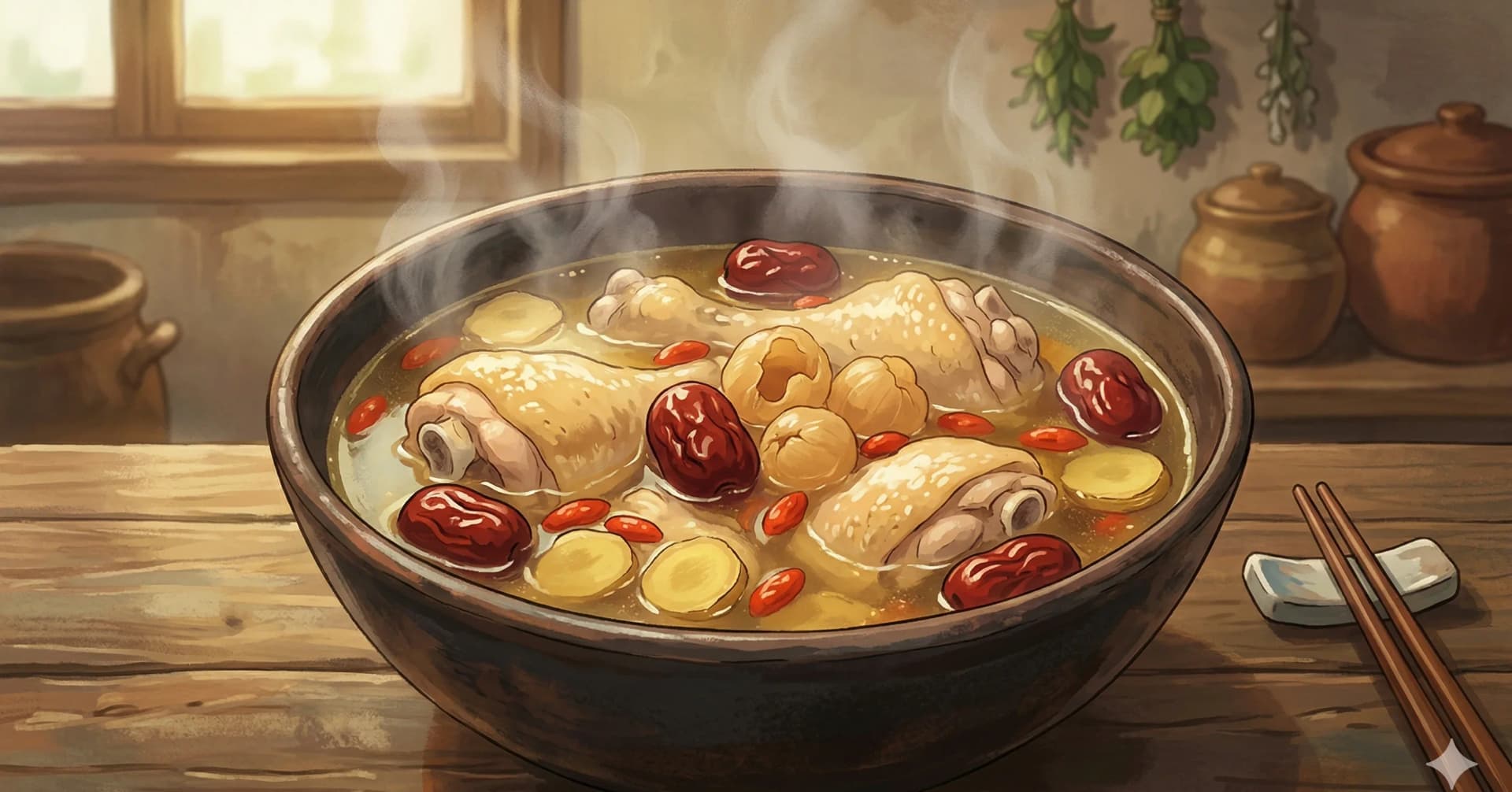
The first thing you notice about this soup is the smell. As it simmers, the kitchen fills with something warm and fruity, almost like mulled wine but without the alcohol. That fragrance comes from the red dates, those wrinkled, mahogany-colored fruits that have anchored Chinese home cooking for centuries. Combined with dried longan and a handful of goji berries, they build a broth that is naturally sweet, gently aromatic, and deeply satisfying in a way that plain chicken stock cannot replicate.
Hong zao ji tang is one of the most accessible Chinese herbal soups. The ingredients are inexpensive and available at any Asian grocery. The technique requires nothing more than patience. You put everything in the pot, bring it to a gentle simmer, and let time do the work. The chicken gives its fat and collagen to the liquid, the dates and longan dissolve their sweetness, and the goji berries bloom into soft, bright orange jewels on the surface.
In Chinese households, this is the soup that appears after someone has been unwell, or during the colder months when the body craves warmth. Mothers make it for daughters after childbirth. Grandmothers make it for everyone, at any time, for any reason. The sweetness is not dessert sweetness. It is subtle and round, balanced by the clean savoriness of the chicken. One practical note: do not skip the blanching step for the chicken. It is what gives you a crystal-clear, golden broth instead of a cloudy one.
At a Glance
Yield
4 to 6 servings
Prep
15 minutes
Cook
2 hours
Total
2 hours 15 minutes
Difficulty
Easy
Ingredients
- 1 wholechicken, cut into pieces, or 1.5 kg bone-in (about 1.5 kg), skin-on chicken thighs
- 1thumb-sized piece fresh ginger, sliced into coins
- 3green onions, left whole
- 15dried red dates (hong zao), rinsed, pitted or unpitted
- 10 piecesdried longan flesh (long yan rou)
- ½ ozdried goji berries (gou qi zi)
- 5 piecescodonopsis root (dang shen), optional
- 4 piecesastragalus root (huang qi), optional
- —Salt to taste
- —White pepper to taste
- —Chopped green onion or cilantro for garnish
Method
- 1
Blanch the chicken. Place the chicken pieces in a large pot and cover with cold water. Bring to a boil over high heat. As soon as the water reaches a full boil, cook for 2 minutes, then drain. Rinse each piece under cool running water, rubbing off any grey foam or impurities. Clean the pot. This step is what produces a clean, clear broth.
- 2
Build the broth. Return the blanched chicken to the clean pot. Add the ginger coins, whole green onions, and 8 cups of fresh cold water. Bring to a boil over medium-high heat, then immediately reduce to a low simmer. Skim any remaining foam from the surface during the first 10 minutes.
- 3
Add the dried fruits and herbs. Give the red dates, longan, goji berries, codonopsis, and astragalus a quick rinse under cold water. Add them to the pot. The broth will begin to take on a warm amber color within 15 minutes.
- 4
Simmer gently. Continue to simmer, partially covered, for 1.5 to 2 hours. The longer you simmer, the more the dates break down and sweeten the broth. Keep the heat low enough that the surface barely moves. Top up with a splash of boiling water if the level drops below the chicken pieces.
- 5
Season and serve. Remove and discard the green onions and any spent astragalus or codonopsis pieces. The red dates, longan, and goji berries are all edible and should stay in the soup. Season with salt and a pinch of white pepper. Ladle into bowls, making sure each serving gets a few dates and berries. Scatter with chopped green onion or cilantro.
Key Ingredient Benefits
Dried Red Dates (Hong Zao / Jujube). One of the most common ingredients in Chinese kitchens, used in both cooking and medicine for thousands of years. In Traditional Chinese Medicine, red dates are traditionally associated with tonifying the blood, supporting digestion, and calming the spirit. They are a modest source of vitamin C, potassium, and iron. Some preliminary research has examined their antioxidant properties, but evidence for specific health benefits remains limited.
Dried Longan (Long Yan Rou). The dried flesh of the longan fruit, intensely sweet with a smoky, floral quality. TCM traditionally uses longan to calm the mind and support restful sleep. In the soup, longan functions as both a sweetener and a textural element, softening into a chewy, jam-like consistency.
Goji Berries (Gou Qi Zi). Used in Chinese cooking and medicine for centuries. Traditionally associated with supporting kidney and liver function and improving vision. Research has explored their content of zeaxanthin and other antioxidants, though clinical evidence for specific health benefits is still developing.
Codonopsis Root (Dang Shen). A milder relative of ginseng, traditionally used to support digestion and energy. Its flavor contribution is subtle, adding a faintly earthy, sweet undertone to the broth.
Why This Works
Blanching the chicken in a separate round of water, then starting fresh, removes blood proteins and surface impurities before they can cloud the broth. This two-water approach is fundamental to Chinese soup making and appears across recipes from Lian Ou Pai Gu Tang to Dong Gua Tang. The result is a broth that looks as clean and golden as it tastes.
Red dates are not just a flavoring ingredient. They contain natural sugars that dissolve slowly into the broth, building sweetness over time without any added sugar. The longer the simmer, the softer the dates become and the more their flavor integrates. Dried longan amplifies this sweetness with a distinctive floral, lychee-like quality that you cannot get from any other ingredient.
Goji berries serve a different purpose. They add a mild, slightly tart brightness and a pop of color, but they also soften the overall sweetness and keep the broth balanced. Adding them at the same time as the other dried fruits works well here because the long simmer allows them to fully hydrate and release their flavor.
Using bone-in chicken with the skin on gives the broth its body. The collagen from the bones and the fat from the skin create that subtle richness on the lips. If you compare this to Gouqi Ji Tang, the difference is the emphasis: that recipe leans into the herbal complexity, while this one puts the dates front and center.
Substitutions & Variations
No codonopsis or astragalus? The soup is excellent without them. The red dates, longan, and goji berries carry the flavor. The herbs add depth but are not essential.
Silkie chicken. For a darker, more mineral-rich version, use silkie chicken as in Wu Ji Tang. The black-skinned bird produces a broth with more depth and a slightly gamier character.
Pork ribs instead of chicken. Red dates work beautifully with pork. Substitute 1 lb of pork spare ribs for the chicken and follow the same blanching and simmering method.
Honey dates (mi zao). Adding 1 or 2 honey dates along with the red dates produces an even sweeter, rounder broth. This is a common variation in Cantonese households.
Pressure cooker. Combine all ingredients with 6 cups water and cook at high pressure for 35 minutes with natural release.
Serving Suggestions
This soup is a complete, gentle meal when served alongside steamed jasmine rice. It often appears as part of a multi-dish Chinese dinner, with the broth sipped throughout the meal alongside heartier plates like Ginger Scallion Beef or Mapo Tofu.
For a warming winter spread, pair it with a bowl of Congee and a plate of Bai Qie Ji. The mild sweetness of the soup complements plain rice porridge particularly well.
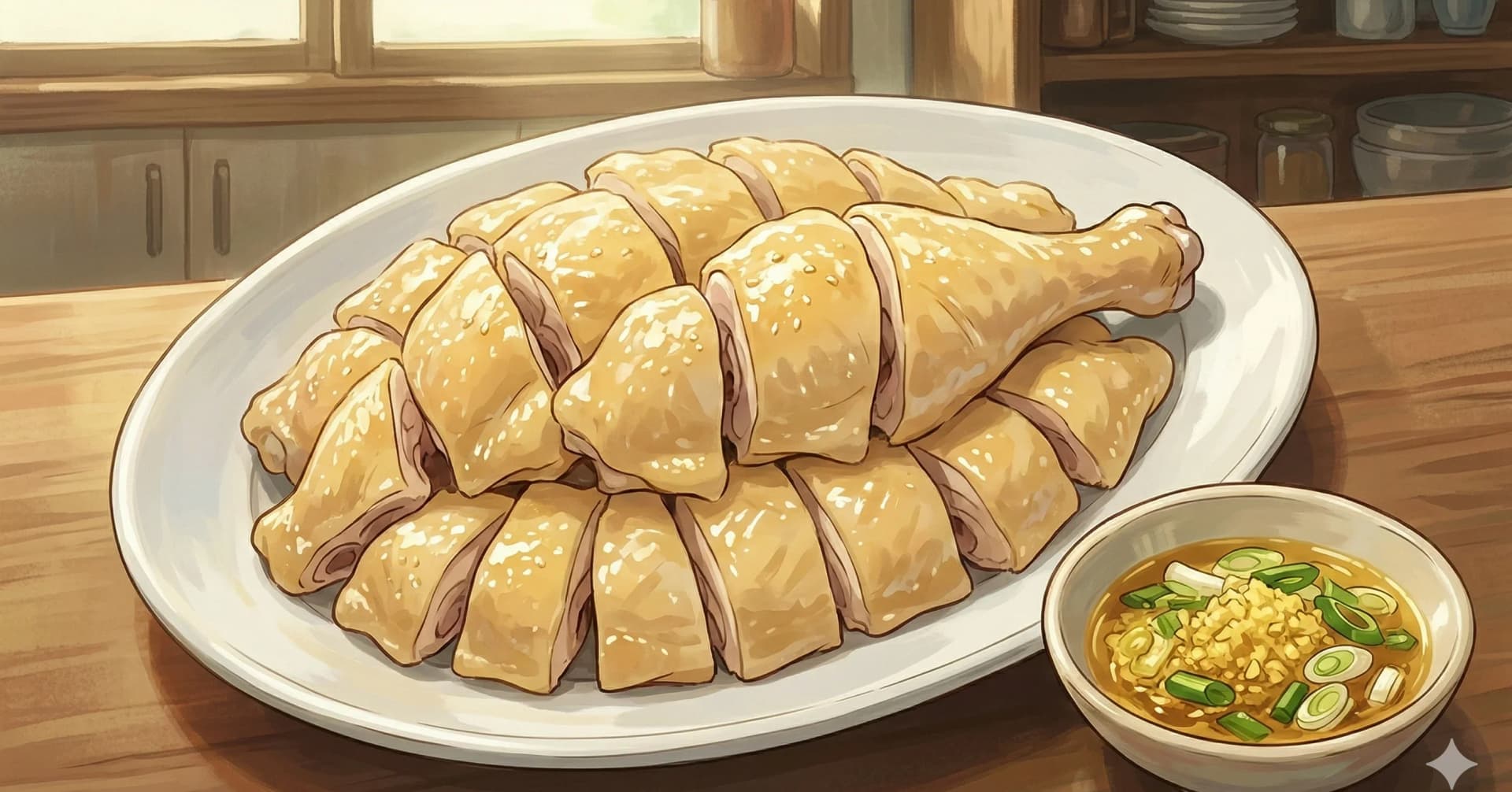
A small dish of soy sauce with sliced ginger on the side makes a good dip for the chicken pieces.
Storage & Reheating
The soup keeps well in the refrigerator for up to 4 days. A layer of fat will solidify on the surface when cold and can be lifted off before reheating. Reheat gently on the stovetop over medium-low heat. Avoid a hard boil, which can turn the broth cloudy and cause the dates to disintegrate.
The broth freezes well for up to 3 months. Store in portion-sized containers for easy weeknight meals. The chicken is best eaten fresh rather than frozen, as the texture suffers with freezing.
Cultural Notes
Hong zao ji tang (紅糟雞湯, "red yeast rice chicken soup") is the Fuzhou-style chicken soup that takes its color and signature flavor from hong zao (紅糟, red yeast rice paste), a Fujian fermentation product made from glutinous rice cultured with the red yeast mold Monascus purpureus. The soup is one of the defining home dishes of Fujian province and has spread widely through the Taiwanese diaspora, where it occupies a special role in postpartum recovery cooking (zuo yue zi) and at the celebrations marking a baby's first month (man yue) and first year. The red color carries auspicious symbolic weight in Chinese culture, and the dish's traditional pairing with new motherhood and infant milestones reflects that association.
The fermentation behind hong zao is a specific Fuzhou tradition. Cooked glutinous rice is inoculated with cultures of Monascus purpureus (sometimes traded under the name red yeast rice or hongqu), then allowed to ferment for one to two weeks until the rice mass takes on a deep purple-red color and develops a sweet-sour winey aroma. The fermented mass is then preserved with rice wine and salt, producing a thick paste that keeps in the refrigerator for months. The same red yeast rice fermentation also produces the red rice wine hong jiu of Fujian, and the paste and the wine are often used together in the same dishes for a deeper layered flavor.
The traditional soup preparation cooks bone-in chicken pieces with sliced ginger, the red yeast paste, a generous splash of red rice wine, and water until the chicken is tender and the broth has taken on the paste's pink-red color and faint sour-sweet note. Sesame oil is sometimes added at the end for additional warmth, and the soup is served hot in small bowls as part of a meal or eaten on its own as a tonic preparation. The postpartum association comes from Fuzhou traditional thinking that the warming herbal-fermented combination supports a new mother's recovery and milk production, similar to the Korean miyeok-guk (seaweed soup) tradition documented in Korean postpartum cooking. The dish is most commonly prepared at home rather than at restaurants, since the hong zao paste is a homemade or specialty-store ingredient rather than a restaurant pantry staple.
Nutrition Facts
Calories: 476kcal (24%)|Total Carbohydrates: 21.5g (8%)|Protein: 46.3g (93%)|Total Fat: 22.2g (28%)|Saturated Fat: 6.2g (31%)|Cholesterol: 144mg (48%)|Sodium: 193mg (8%)|Dietary Fiber: 1.9g (7%)|Total Sugars: 18g
You Might Also Like
Ratings & Comments
Ratings & Comments
Ratings
Share your thoughts on this recipe.
Sign in to rate and comment