Cross-Cultural · Korea
Korean Beef Tartare (Yukhoe / 육회)
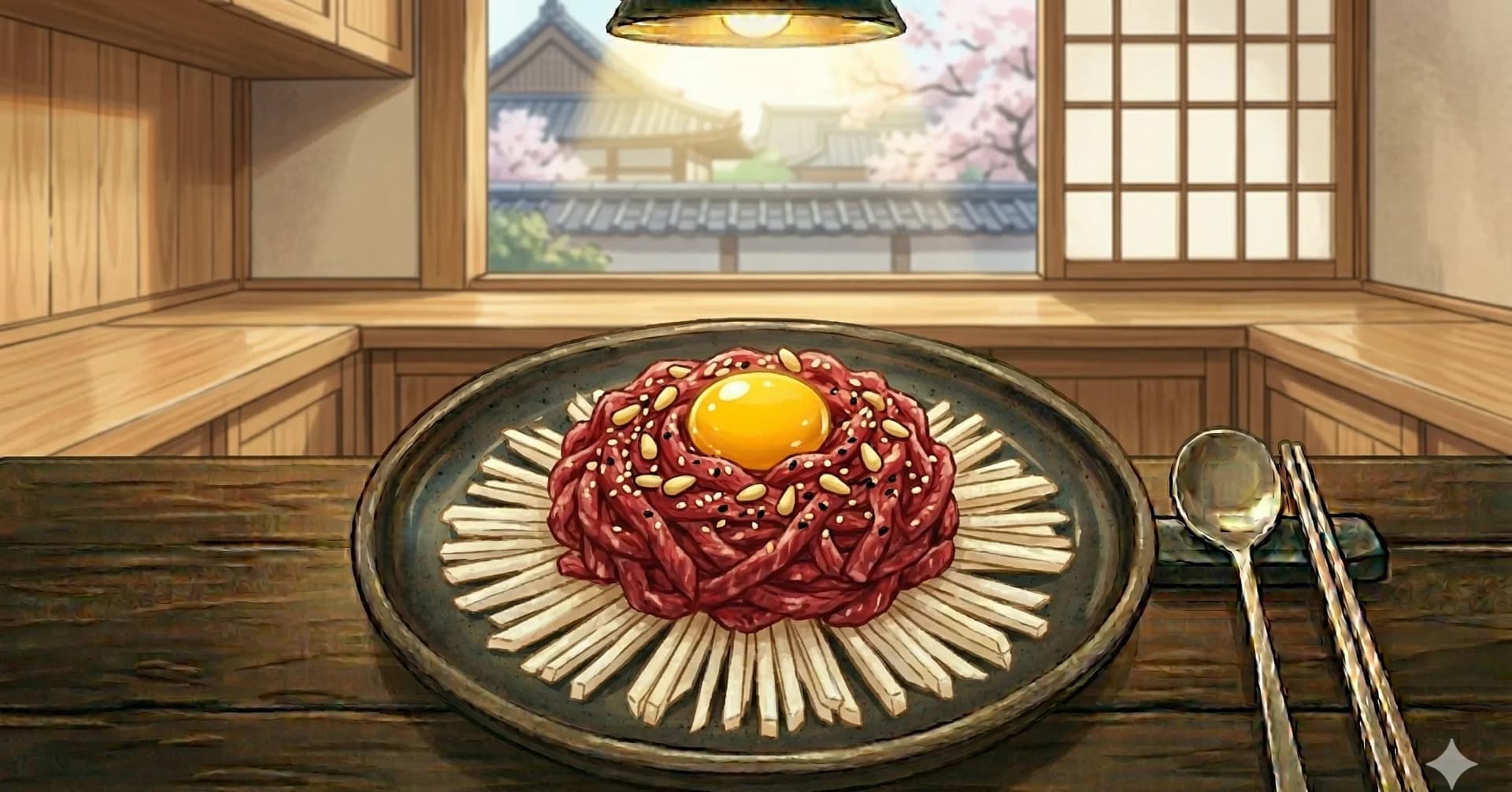
Korean beef tartare with soy, sesame, garlic, and pine nuts served on a bed of Asian pear matchsticks with an egg yolk
Yukhoe is Korea's beef tartare. It is cool, garlicky, nutty, faintly sweet, and intensely meaty, and it is one of those dishes that makes you understand why raw beef preparations exist in food cultures around the world. The beef is sliced into thin matchsticks, seasoned with soy sauce, honey, sesame oil, sesame seeds, garlic, and black pepper, and served on a bed of Asian pear matchsticks with pine nuts and an egg yolk on top.
The quality of the beef is everything. Use the freshest tenderloin or filet mignon you can find, from a butcher you trust. Partially freeze the beef for one to two hours before slicing, which firms it enough to cut into clean, thin julienne strips. Keep everything cold throughout preparation. Warm hands on raw beef is the enemy.
The Asian pear serves as both a bed and a textural contrast. Its crisp, juicy sweetness against the soft, rich beef is one of the great pairings in Korean cuisine. The pear matchsticks are soaked briefly in sugar water to prevent browning. Pine nuts add a creamy, resinous richness. The egg yolk, placed whole on top or served on the side, is mixed in by the diner, binding the beef with a rich, velvety coating.
Yukhoe is a specialty of Gwangjang Market in Seoul, one of the oldest traditional markets in Korea, where vendors have served it for decades. It is typically eaten as an anju, a drinking snack to accompany soju, or as an appetizer. This is not a dish for young children, elderly, pregnant women, or immunocompromised individuals.
At a Glance
Yield
2 servings
Prep
15 minutes
Cook
0 minutes
Total
2 hours 15 minutes
Difficulty
Medium
Ingredients
Beef Ingredients
- 8 ozbeef tenderloin (filet mignon), freshest possible
Sauce Ingredients
- 2 tbspsoy sauce
- 1 tbsphoney
- 1 tbsptoasted sesame oil
- 2 tbsptoasted sesame seeds
- 4garlic cloves, minced
- 1scallion, finely chopped
- —ground black pepper, to taste
To Serve
- 1Korean pear, julienned into matchsticks
- 2 cupscold water, with 1 tbsp sugar, for soaking pear
- —pine nuts, for garnish
- 1egg yolk, optional (optional)
Method
- 1
Freeze beef 1-2 hours until partially frozen for easier slicing.
- 2
Prepare pear. Mix 2 cups cold water with 1 tbsp sugar. Julienne the pear into matchsticks and soak 10 min to prevent browning. Drain and pat dry.
- 3
Mix seasoning sauce: soy sauce, honey, sesame oil, sesame seeds, garlic, scallion, black pepper.
- 4
Slice beef into thin matchstick julienne. Handle minimally. Keep cold.
- 5
Add beef to sauce, mix gently but thoroughly.
- 6
Arrange drained pear on a plate. Place seasoned beef on top. Garnish with pine nuts. Place egg yolk on top or serve on the side. Serve immediately.
Key Ingredient Benefits
Beef tenderloin (filet mignon): The cut must be exceptionally fresh and free of connective tissue, which is why yukhoe uses tenderloin specifically. Tenderloin has almost no intramuscular fat or sinew, producing a clean, almost buttery bite that holds up well to the soy-sesame seasoning. The lean cut is also less likely to harbor surface bacteria, which is critical for raw consumption.
Korean pear (bae): Julienned and used both as a bed for the beef and as a garnish, Korean pear contributes crunchy texture and a clean, refreshing sweetness that balances the rich meat. The pear's natural enzymes also act as a mild tenderizer.
Sesame oil and sesame seeds: Doubled up for maximum nutty character. The toasted sesame oil coats the beef in a fragrant film and adds glossy richness; the seeds provide textural contrast and visual appeal.
Garlic: Raw, minced, in significant quantity. The garlic's pungency cuts through the richness of the raw beef and is one of the defining flavors of yukhoe. Korean preparations use much more raw garlic than most other cuisines' tartare-style dishes.
Egg yolk: Served raw on top of the beef, the yolk is mixed in by the diner at the table. The yolk adds richness, helps the seasonings bind to the beef, and serves as a visual centerpiece. The traditional presentation places a single golden yolk in a small well in the center of the beef pile.
Why This Works
Beef quality is everything. Yukhoe lives or dies by the freshness and grade of the meat. The beef should be purchased the day of preparation from a butcher who can identify high-grade, sashimi-quality tenderloin. Pre-cut or pre-frozen beef is not appropriate.
The technique of dipping julienned pear in cold water is a small but important detail. The cold water keeps the pear crisp and prevents browning, both of which would compromise the visual appeal and texture of the finished dish. The pear must be served crunchy, not soft.
The seasoning is intentionally subtle. Soy sauce, sesame oil, honey, garlic, and pepper combine to enhance rather than dominate the beef's natural flavor. The honey is unusual but essential — it adds a faint sweetness that rounds out the salinity of soy sauce and the pungency of garlic, producing a more balanced final flavor than any other sweetener.
Serving immediately after mixing is critical. Yukhoe is meant to be cold, fresh, and just-dressed. Even 10 minutes of sitting causes the meat to release liquid and the texture to suffer. Many Korean restaurants dress the beef tableside or have the diner mix the components themselves to ensure optimal freshness.
Substitutions & Variations
Beef tenderloin: Top sirloin or eye of round (lean cuts with minimal connective tissue) can substitute if tenderloin is unavailable, but the texture will be slightly chewier. Avoid any cut with visible fat or sinew — the texture will be unpleasant raw.
Korean pear: Asian pear is a perfect substitute. Bosc or Anjou pears can work but lack the distinctive crunch. Apple (especially Honeycrisp or Fuji) is an unconventional but acceptable substitute, though sweeter.
Honey: Light agave or maple syrup can substitute, though the flavor shifts slightly. Brown rice syrup also works.
Sesame oil: Cannot be skipped or substituted with regular oil; sesame oil's distinctive flavor is foundational to the dish.
Egg yolk: Some modern presentations skip the egg yolk for safety reasons or use a salt-cured yolk for a more concentrated, less raw experience. The dish works either way.
Serving Suggestions
Yukhoe is best presented as a small plate at the start of a Korean meal or as part of a Korean barbecue spread, often alongside grilled meats. Mound the seasoned beef on a bed of julienned pear, place the egg yolk in a well at the center, and garnish with toasted pine nuts and sliced scallions. Serve with chopsticks (and ideally a small bowl for the diner to mix in).
The dish pairs especially well with chilled soju — yukhoe and soju is one of the canonical Korean drinking food combinations, served at anju-focused restaurants and home gatherings. Makgeolli (cloudy rice wine) and dry sake also work.
For a more substantial presentation, serve yukhoe over a bowl of steamed short-grain rice with sesame seeds, sliced scallions, and the egg yolk on top. This yukhoe-deopbap style transforms the appetizer into a complete meal.
Pair with other refreshing banchan: oi muchim (spicy cucumber salad), pickled radish, or a clear seaweed soup. Avoid heavy, sauced banchan, which can overwhelm the delicate flavor of the raw beef.
Storage & Reheating
Refrigerator: Yukhoe should not be stored. The dish is meant to be eaten within an hour of preparation. Beef that has been mixed with seasoning will release liquid and develop off-flavors within a few hours.
Pre-prep storage: The components can be prepared in advance and assembled at serving time. Slice the beef and keep covered in the coldest part of the fridge for up to 4 hours before serving. Julienne the pear and keep in cold acidulated water (water plus a teaspoon of vinegar) for up to 2 hours. Mix the seasoning sauce and refrigerate for up to 24 hours.
Beef storage: Raw tenderloin can be wrapped tightly and frozen for up to 2 weeks before use. Thaw in the refrigerator overnight, never at room temperature. The brief freeze can also make slicing easier; some Korean cooks intentionally freeze briefly to firm the meat for cleaner slicing.
Freezing: Never freeze prepared yukhoe.
Cultural Notes
Yukhoe (육회) is part of a Korean tradition of raw and fermented foods that includes hoe (raw fish sashimi), sannakji (live octopus), and yukhoe. The dish is one of the oldest documented in Korean cuisine, with references dating back to the Three Kingdoms period (1st century BCE to 7th century CE). It has been continuously eaten through every era of Korean history and remains a popular dish today.
The use of raw beef in Korean cooking reflects a broader Asian tradition of celebrating ingredient purity through minimal cooking. The dish is closely related to Chinese xianbei and Japanese gyu-sashi, though yukhoe is distinguished by its heavier use of garlic, soy sauce, and sesame, and the characteristic addition of an egg yolk.
In Korea, yukhoe is associated with Jeonju, a southern city famous for its food culture and home to some of the country's most acclaimed yukhoe restaurants. Jeonju-style yukhoe is typically served with bibimbap (mixed rice) as yukhoe bibimbap, one of the city's signature dishes. In other regions, yukhoe is more commonly served as a stand-alone appetizer or anju (drinking food).
Food safety regulations have made traditional yukhoe more challenging to prepare commercially in many countries, including the United States. Korean restaurants in the US sometimes use frozen-then-thawed beef (a treatment that kills parasites) to comply with health codes, and home preparation requires sourcing beef from butchers who can guarantee its sashimi-grade quality and handling.
Nutrition Facts
Calories: 527kcal (26%)|Total Carbohydrates: 26.4g (10%)|Protein: 32.8g (66%)|Total Fat: 33.3g (43%)|Saturated Fat: 9.1g (45%)|Cholesterol: 166mg (55%)|Sodium: 919mg (40%)|Dietary Fiber: 6.7g (24%)|Total Sugars: 15.3g
You Might Also Like
Ratings & Comments
Ratings & Comments
Ratings
Share your thoughts on this recipe.
Sign in to rate and comment