Vietnamese Cuisine
Vietnamese Pickled Daikon and Carrot (Đồ Chua)
The bright, crunchy quick pickle that cuts through grilled meat and fills every good bánh mì.
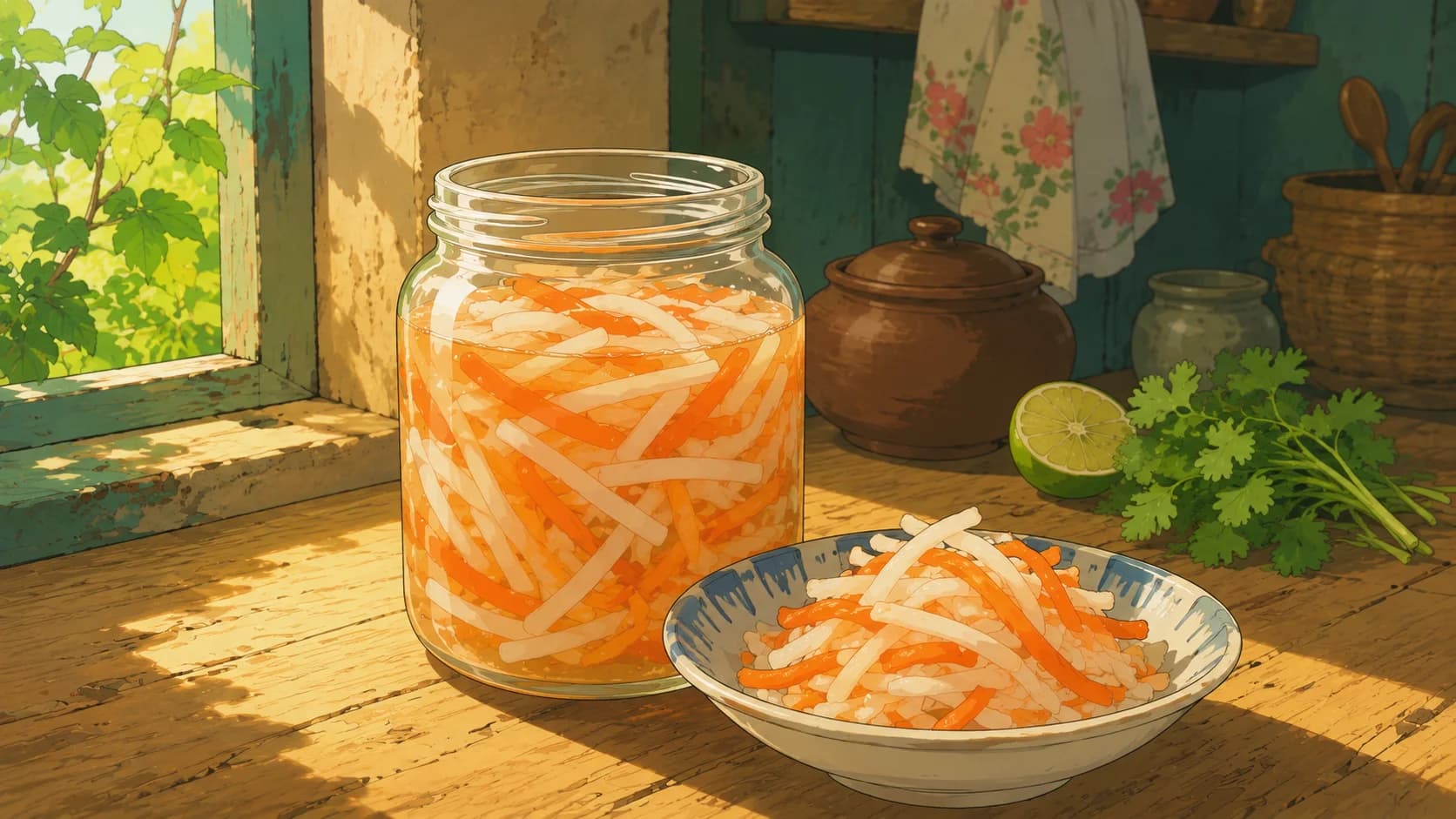
Open the jar and the smell hits first: sharp vinegar, a little sweetness underneath, the clean radish bite of daikon. Đồ chua is the pickle that lives in the door of every Vietnamese refrigerator. Equal parts daikon and carrot, cut into matchsticks and steeped in a sweet-sour brine, it is less a side dish than a built-in component of dozens of others.
You meet it in the bánh mì, where it pushes back against rich pâté and mayonnaise. You find it heaped over broken rice in cơm tấm, tangled into a bowl of grilled pork and noodles, tucked into fresh spring rolls. Its job is always the same: to cut, to brighten, to wake up everything around it with crunch and acid.
What makes a good đồ chua is texture as much as flavor. The vegetables should stay crisp and snap when you bite them, never go limp or tinny. The trick is a quick pre-salting step that draws out water before the brine goes on, so the daikon and carrot drink up the sweet-tart liquid without turning soft.
It takes fifteen minutes of hands-on work and no cooking at all. Make a jar on a Sunday and you have the backbone of a week of Vietnamese meals waiting in the fridge.
At a Glance
Yield
About 3 cups (6 to 8 servings)
Prep
15 minutes (plus 1 hour resting)
Cook
0 minutes (no cooking)
Total
1 hour 15 minutes
Difficulty
Easy
Ingredients
For the vegetables
- 8 ozdaikon radish (about 2½–3 radishes), peeled and cut into matchsticks
- 8 ozcarrots (about 3–3½ carrots), peeled and cut into matchsticks
- 1 tspsalt, for pre-salting
- 2⅞ tspsugar, for pre-salting
For the brine
- 1 cupwarm water
- 1 cuprice vinegar, or distilled white vinegar
- ½ cupsugar
- 1 tspsalt
Method
- 1
Prep the vegetables. Peel the daikon and carrots, then cut them into matchsticks about 2 inches long and 1/8 inch thick. A julienne peeler or the julienne blade of a mandoline makes quick work of this, but a knife and a little patience work just as well. Even thickness matters more than perfection, since it lets the pieces pickle at the same rate.
- 2
Pre-salt to soften. Toss the daikon and carrot in a large bowl with 1 teaspoon salt and 1 tablespoon sugar. Let them sit for 15 to 20 minutes. They will weep liquid and turn bendy. A piece of daikon is ready when you can bow it into a U without it snapping. This step draws out water now so the vegetables drink up the brine later, which is the whole secret to a crisp pickle.
- 3
Rinse and drain. Pour the vegetables into a colander, rinse under cool running water to wash off the surface salt, and squeeze them gently in your hands to wring out the liquid. Pack them snugly into a clean pint jar or two.
- 4
Mix the brine. In a bowl or measuring cup, stir together 1 cup warm water, 1 cup rice vinegar, 1/2 cup sugar, and 1 teaspoon salt until the sugar and salt fully dissolve. Taste it. It should land as equally sweet and sour, sharp but not harsh. Adjust with a little more sugar or vinegar to suit your tongue.
- 5
Pour and rest. Pour the brine over the vegetables until they are fully submerged, pressing them down so nothing floats above the liquid. Let the jar sit at room temperature for at least 1 hour. The pickle is ready as soon as the vegetables taste sweet-sour all the way through, though it is even better after a day in the refrigerator.
Key Ingredient Benefits
Daikon radish: The long white radish that gives đồ chua its juicy crunch and faint peppery bite. Daikon is mostly water and low in calories, which is why it stays so crisp and refreshing. In Japanese and Vietnamese kitchens, raw or pickled daikon is traditionally served alongside fried and fatty foods to lighten them and aid digestion.
Carrot: Adds color, a rounder sweetness, and a firmer snap that holds up in the brine longer than the daikon. Carrots are a well-known source of beta-carotene, the orange pigment the body converts to vitamin A.
Rice vinegar: The backbone of the brine. Milder and slightly sweeter than distilled white vinegar, it gives a gentler tang. Distilled white vinegar works too and makes a sharper, more assertive pickle.
Why This Works
Đồ chua works on contrast. Grilled pork, fried spring rolls, and fatty cuts of meat are rich and savory; the pickle answers with acid and sweetness, which is why a few forkfuls reset your palate between bites.
The pre-salting step is the part most home cooks skip, and it is the one that matters most. Salt and a little sugar pull water out of the daikon and carrot through osmosis. The vegetables go limp on the counter, then firm back up once they sit in the brine, ending up crisp rather than waterlogged. Skip it and the raw vegetables leak their own water into the brine, diluting it and leaving the pickle soft and flat.
This is a quick vinegar pickle, not a fermented one. Unlike kimchi or sauerkraut, đồ chua gets its tang from added vinegar rather than from lactic-acid bacteria, so it is ready in an hour instead of days and tastes clean and sharp rather than funky. The Vietnamese cookbook author Andrea Nguyen treats it as a pantry building block, the kind of thing you keep on hand the way others keep mustard.
Balance is everything in the brine. Taste it before you pour: it should read as equally sweet and sour, with enough salt to round it out. Too much vinegar and it stings; too much sugar and it cloys. Adjust to your own tongue.
Substitutions & Variations
Vinegar: Rice vinegar is traditional, but distilled white vinegar, apple cider vinegar, or even seasoned sushi vinegar all work. Cider vinegar brings a fruitier note; seasoned vinegar already has sugar and salt, so cut back on both if you use it.
Vegetables: Keep daikon and carrot as the base, but you can stretch the jar with thinly sliced kohlrabi, green papaya, or cucumber. Cucumber softens fast, so add it only to the portion you plan to eat within a day.
Sugar: Regular white sugar dissolves cleanest. Palm sugar or light brown sugar deepen the flavor slightly. For a lighter pickle, you can reduce the sugar, though some sweetness is part of what makes đồ chua taste right.
Serving Suggestions
Đồ chua is a finishing element, not a standalone dish. A small handful does its best work piled on top of something rich and warm.
It is essential in grilled pork noodle bowls (bún thịt nướng), where it cuts the charred, caramelized pork and soaks up the nuoc cham at the bottom of the bowl. Tuck it into a bánh mì with pâté and cold cuts, or heap it over broken rice (cơm tấm) next to a grilled pork chop.
Beyond Vietnamese food, it earns a place next to anything fatty or fried: roast pork, fried chicken, a rice bowl that needs a sharp, crunchy lift. Keep a jar in the fridge and you will reach for it more than you expect.
Storage & Reheating
Đồ chua keeps in a sealed jar in the refrigerator for 3 to 4 weeks. The vegetables stay crisp for the first couple of weeks, then slowly soften while the flavor deepens. As long as they smell clean and sharp and the brine stays clear, they are good to eat.
Always use a clean fork to pull pieces out, and keep the vegetables submerged in the brine. There is no reheating; đồ chua is served cold or at room temperature, straight from the jar.
Cultural Notes
Đồ chua, which translates roughly to "sour stuff," belongs to the larger family of Vietnamese pickles known as dưa chua. It rose to everyday prominence alongside the bánh mì, the sandwich that grew out of the French colonial baguette and became wholly Vietnamese in the decades that followed.
The pickle is most associated with southern Vietnam and the food of Saigon, where sweeter, brighter flavors dominate. Its sweet-sour profile is the southern answer to the cooling, herb-forward style of Vietnamese cooking: a way to keep heavy, grilled, and fried foods from feeling heavy.
In a Vietnamese kitchen, đồ chua is rarely the point of a meal. It is the quiet workhorse in the background of better-known dishes, the thing you stop noticing until it is missing and the bánh mì tastes flat without it.
Nutrition Facts
Calories: 35kcal (2%)|Total Carbohydrates: 8g (3%)|Protein: 1g (2%)|Total Fat: 0g (0%)|Saturated Fat: 0g (0%)|Cholesterol: 0mg (0%)|Sodium: 220mg (10%)|Dietary Fiber: 1g (4%)|Total Sugars: 6g
You Might Also Like
 Easy
EasyVietnamese Cuisine
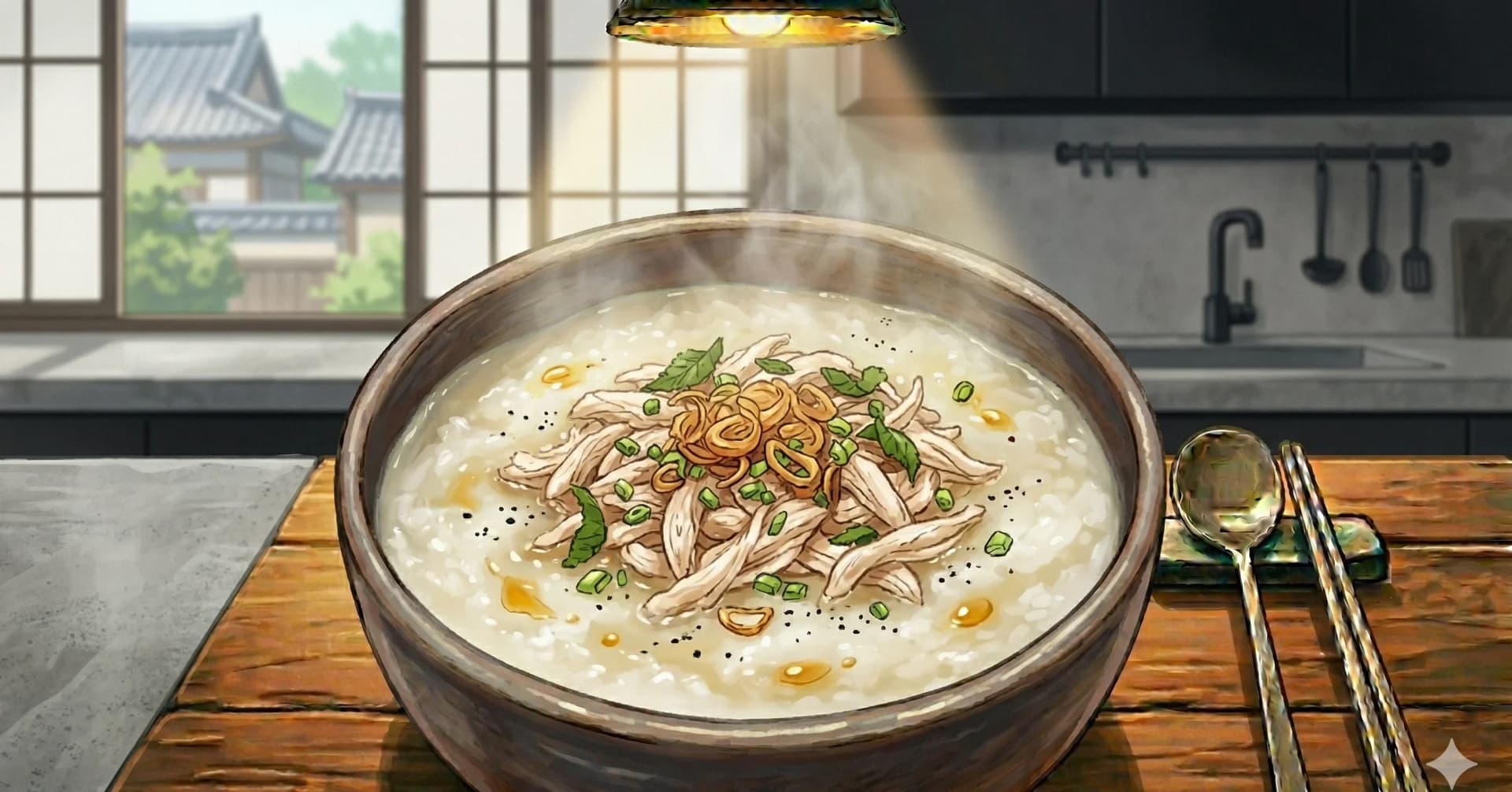
Cháo Gà (Vietnamese Chicken Rice Porridge)
1 hour 30 minutes
 Easy
EasyVietnamese Cuisine
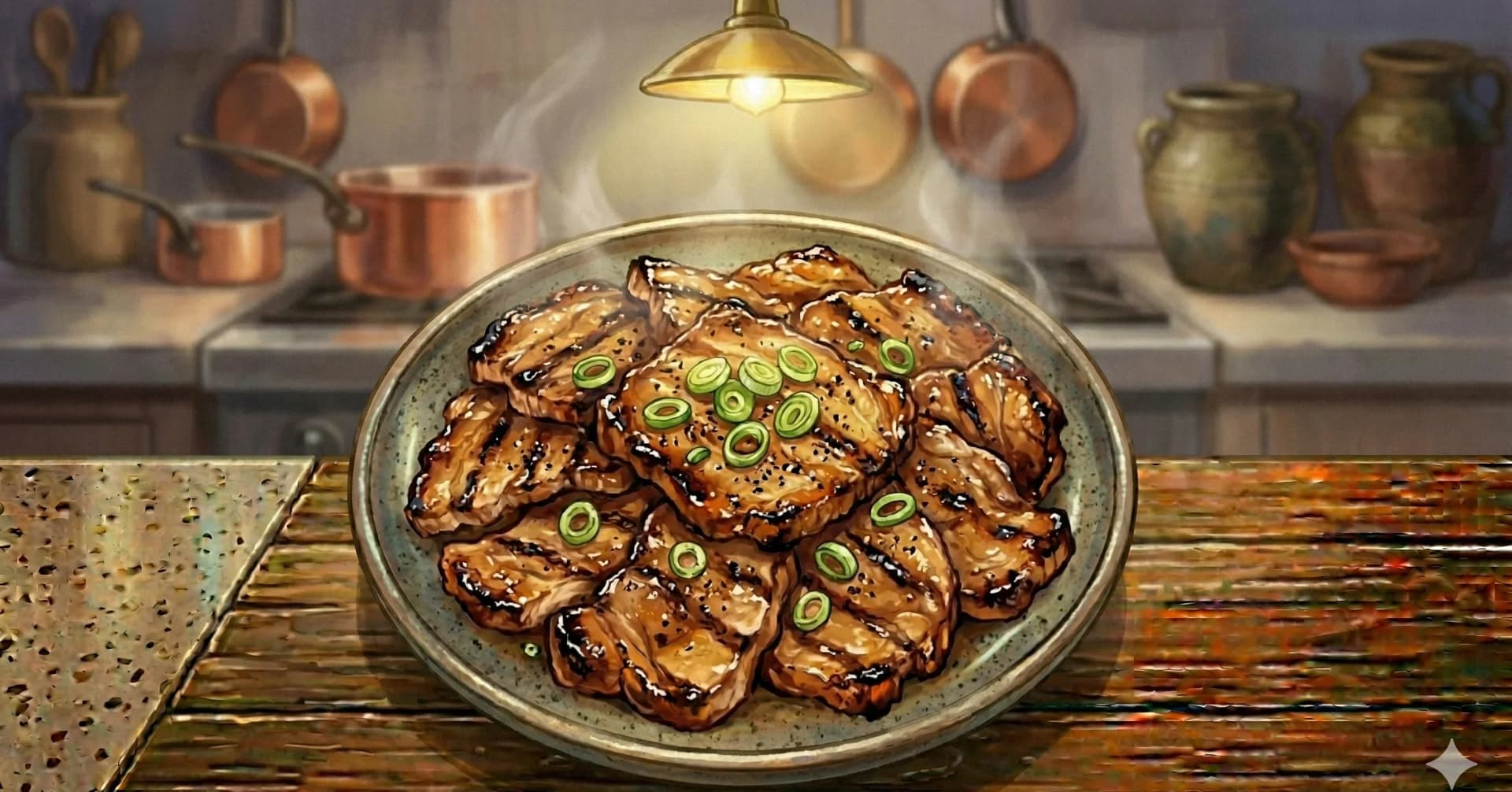
Grilled Lemongrass Pork (Thịt Nướng)
2 hours 30 minutes
 Involved
Vietnamese Cuisine
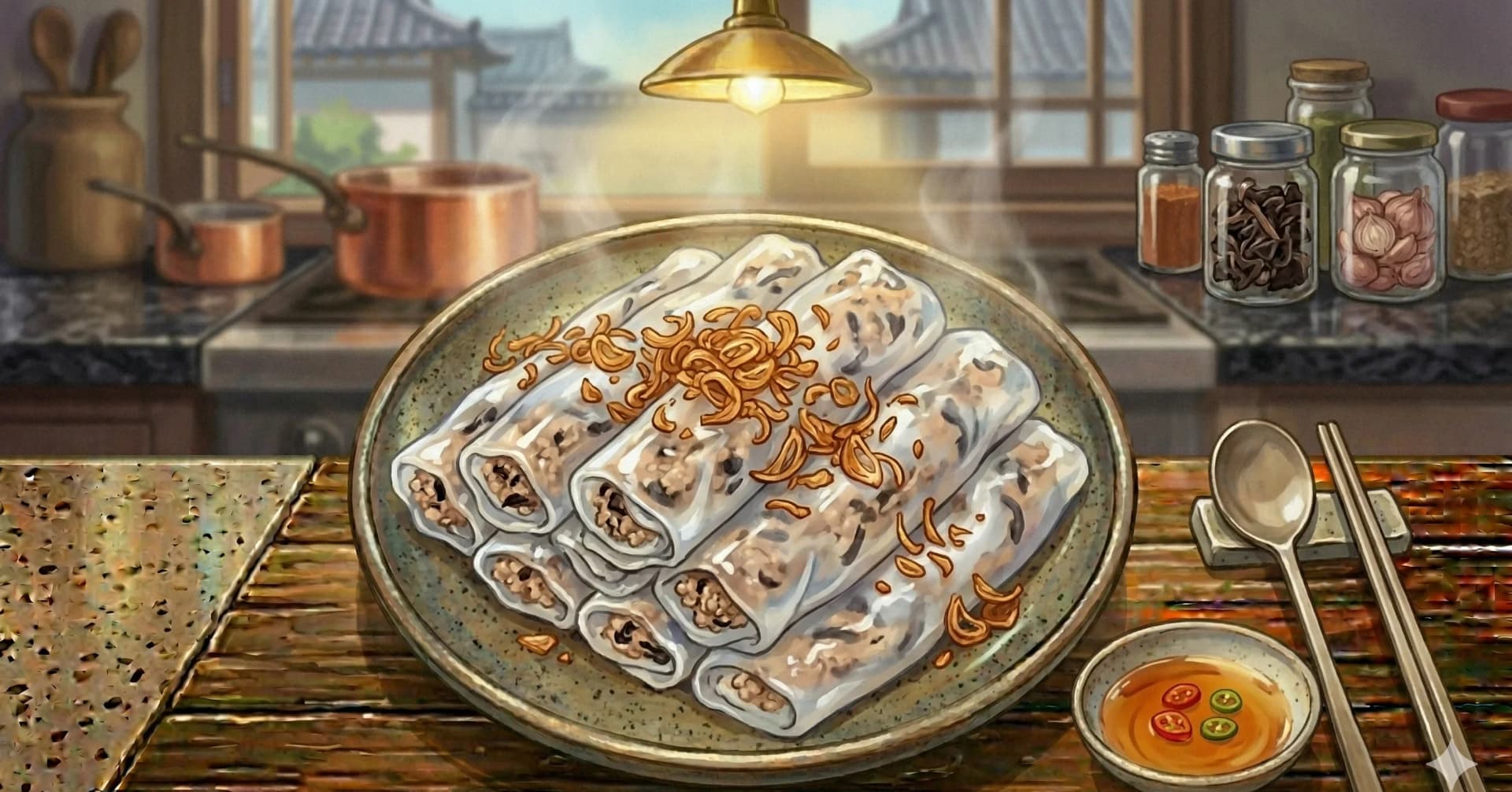
Steamed Rice Rolls (Bánh Cuốn)
3 hours 10 minutes
 Easy
EasyVietnamese Cuisine
Canh Chua Cá (Vietnamese Sweet and Sour Fish Soup)
35 minutes
Ratings & Comments
Ratings & Comments
Ratings
Share your thoughts on this recipe.
Sign in to rate and comment