Thai Cuisine
Nam Jim Jaew (Isan Dipping Sauce with Toasted Rice)
Sour, salty and hot, thickened with toasted rice powder, the sauce Isan cooks put next to anything grilled
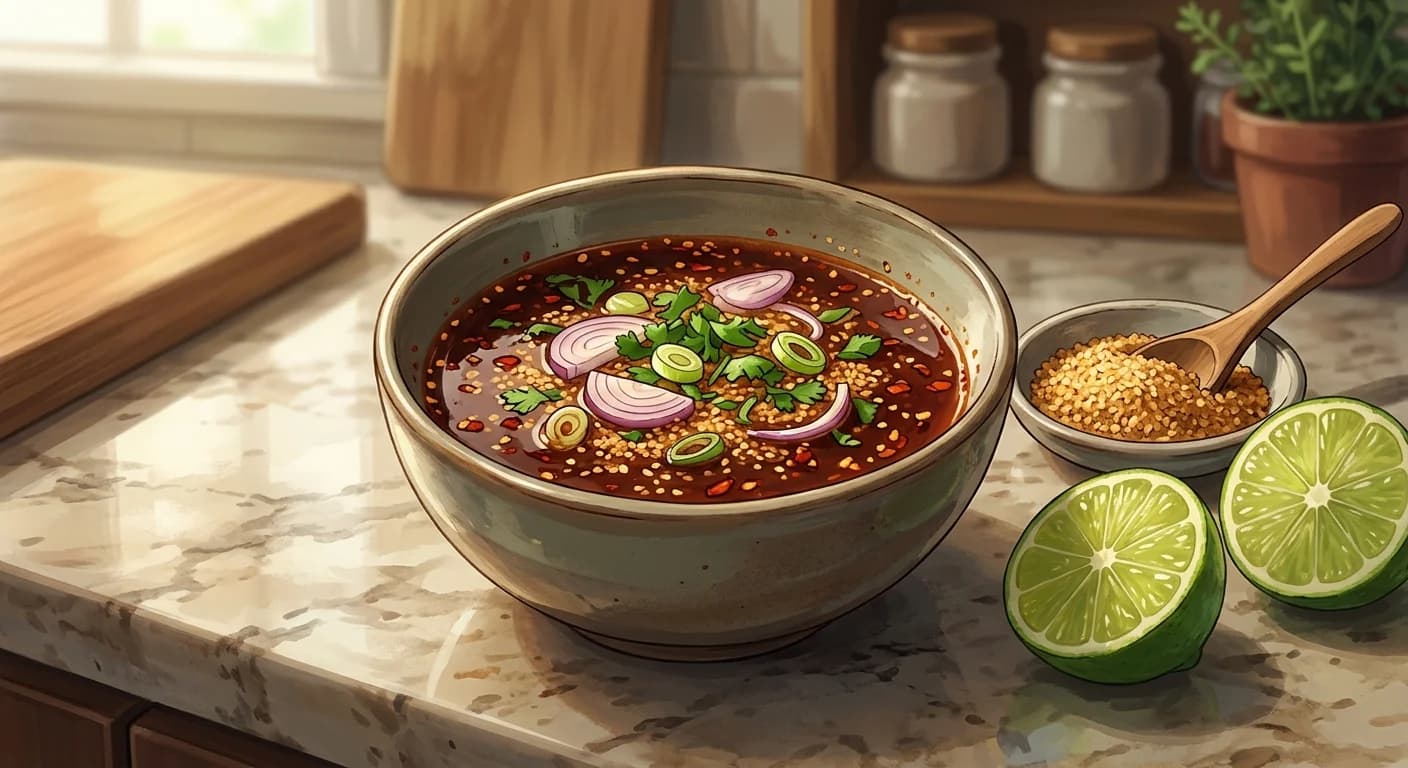
Somewhere in northeastern Thailand right now, someone is pulling a strip of grilled pork off the bone, pressing it into a ball of sticky rice and dragging both through a bowl of dark, gritty sauce. That sauce is jaew. It is sour first, salty right behind, and hot from roasted dried chilies, and the toasted rice powder floating in it smells like popcorn.
Jaew comes from Isan, the northeast, where grilled meat and sticky rice are everyday food. It is now on tables all over Thailand, served next to grilled chicken, pork neck, sausages and the beef dish called crying tiger. The sauce takes 5 minutes to mix once the rice is toasted, and it makes almost anything off a grill taste better.
If your idea of a Thai dipping sauce is the sweet bottled kind, this one goes the other way. Sourness leads. Tamarind gives a deep, fruity sourness and lime adds a sharper one on top, so this version uses both. There is only a tablespoon of palm sugar, enough to round off the edges and no more.
The one step worth taking slowly is the rice. Toast it low and slow until it is the color of peanut butter, then grind it fresh. Ground rice powder starts losing its smell right away, and store-bought powder is often flat. Add it right before serving, because it keeps drinking up the sauce as it sits.
Inspired by Hot Thai Kitchen and Rachel Cooks Thai.
At a Glance
Yield
About ⅔ cup (6 servings)
Prep
10 minutes
Cook
10 minutes
Total
20 minutes
Difficulty
Easy
Ingredients
Toasted Rice Powder Ingredients
- 3 tbspuncooked Thai sticky rice (glutinous rice), jasmine rice also works; makes more powder than you need
Sauce Ingredients
- 3 tbspfish sauce
- 2 tbspThai tamarind paste, not the Indian concentrate
- 2 tbspfresh lime juice, about 1 lime
- 1 tbsppalm sugar, finely chopped
- 1–2 tspThai roasted chili flakes (prik pon), to taste
- 1 1/2 tbsptoasted rice powder, from above, stirred in just before serving
- 1small shallot, about 25 g, thinly sliced
- 1green onion, thinly sliced
- 2 tbspchopped cilantro, leaves and tender stems
Method
- 1
Toast the rice. Put the uncooked rice in a dry skillet over medium-low heat and stir every 30 seconds or so for 8 to 12 minutes, until the grains are deep golden brown, about the color of peanut butter, and smell like popcorn. Low heat matters here. On high heat the outside browns while the inside stays raw, and the powder tastes chalky.
- 2
Tip the rice onto a plate and let it cool for 2 minutes. Grind it in a mortar or a spice grinder until it looks like coarse sand with a few broken bits of grain. Short pulses keep it from turning to flour. You will have about 3 tablespoons, twice what the sauce needs; keep the rest in a small jar.
- 3
In a small bowl, stir the fish sauce, tamarind paste, lime juice and palm sugar together, mashing the sugar against the side of the bowl, for 1 to 2 minutes, until it has dissolved. Palm sugar dissolves faster in plain liquid, so do this before anything else goes in.
- 4
Stir in 1 teaspoon of the chili flakes. Taste and add more if you want it hotter. The heat builds a little as it sits.
- 5
Just before serving, stir in the 1 1/2 tablespoons of toasted rice powder, the shallot, green onion and cilantro. Taste again. Sour should come first, then salt, then heat, with the sweetness only in the background. Add a squeeze of lime or a drop of fish sauce if it needs it. If it is thicker than you like, stir in 1 tablespoon of water. Serve within an hour, because the rice powder keeps soaking up the liquid.
Key Ingredient Benefits
Fish sauce and sodium: Fish sauce supplies the salt here, and a lot of it. USDA FoodData Central lists ready-to-serve fish sauce at 7,850 mg of sodium per 100 grams, which works out to roughly 1,400 mg per tablespoon. Spread over six servings, this sauce has about 710 mg of sodium per serving. If you're watching salt, dip lightly, or replace a tablespoon of the fish sauce with water and an extra squeeze of lime.
Glutinous rice: Despite the name, it contains no gluten. "Glutinous" describes the glue-like texture of the cooked rice, which comes from its starch. The sauce is gluten-free as long as your fish sauce is (most Thai brands are, but check the label).
Tamarind: The pulp of the tamarind pod. Its sourness comes mainly from tartaric acid, and in Thai cooking it is used alongside lime as one of the main souring ingredients.
Shallots and cilantro: They are added raw at the end for crunch and a fresh, green edge against the salt and smoke.
Why This Works
Toasting raw rice browns its surface through the Maillard reaction, the same process that colors bread crust, and that is where the nutty, popcorn smell comes from. Low heat lets the color reach the center of each grain, so it grinds cleanly and tastes toasted all the way through. Many of those aroma compounds are volatile, so the powder smells strongest right after grinding.
The powder also thickens. It soaks up some of the liquid and swells, just enough for the jaew to cling to a piece of meat or a ball of sticky rice. That same swelling is why it goes in at the last minute.
Tamarind and lime are sour in different ways. Tamarind gets most of its sourness from tartaric acid and tastes round and fruity, and the dark pulp colors the sauce. Lime juice is mostly citric acid, brighter and sharper, and its fresh smell fades faster. Using both gives the sauce a sourness with some depth and a fresh top note.
Roasted dried chilies bring a smoky heat that fresh chilies don't. Because they are dry, they also don't water down the sauce.
Substitutions & Variations
Lime only: Many cooks make jaew with lime and no tamarind. Use 1/4 cup of lime juice and leave out the tamarind. The sauce will be lighter in color and sharper.
Tamarind only: Use 3 tablespoons of tamarind paste plus 1 tablespoon of water and leave out the lime. It will be darker and rounder. If you only have Indian tamarind concentrate, use 2 teaspoons thinned with 1 1/2 tablespoons of water.
Chili flakes: To make your own, toast about 10 dried Thai chilies in a dry skillet over medium-low heat, turning, until they darken and smell smoky, then grind them coarsely. Ordinary red pepper flakes work but taste less smoky. Korean gochugaru is milder and fruitier.
Rice: Jasmine rice toasts and grinds the same way, with a slightly less sticky texture in the sauce. Store-bought toasted rice powder is fine if it still smells nutty; a minute in a dry pan wakes it up.
Palm sugar: Light brown sugar or plain white sugar, the same amount.
Herbs: Culantro (sawtooth coriander) is common in Isan and has a stronger, earthier taste than cilantro. A few torn mint leaves also work.
Vegetarian: Use 2 tablespoons of light soy sauce and a pinch of salt in place of the fish sauce. It will taste less funky, and soy sauce usually contains wheat.
Serving Suggestions
Put it next to anything grilled: gai yang, pork skewers, grilled pork neck, Isan sausage, or a steak sliced thin for crying tiger. Sticky rice is the traditional partner. Pinch off a bite, press a piece of meat into it and dip both.
Fill out the table with som tam and a plate of raw vegetables (cabbage wedges, long beans, cucumber and Thai basil) that can go through the sauce too. Leftover sauce is good spooned over plain grilled fish or a fried egg.
Storage & Reheating
Best fresh: Jaew is at its best within an hour of mixing. After that the rice powder swells and turns soft and the herbs wilt.
Make ahead: Mix the fish sauce, tamarind, lime, sugar and chili up to 3 days ahead and keep it covered in the fridge. Stir in the rice powder, shallot, green onion and cilantro just before serving.
Toasted rice powder: Keep the extra in an airtight jar at room temperature for 2 to 3 weeks; it loses aroma over time. Toasted rice kept whole stays fragrant longer, so you can grind it as you need it. Use the extra in larb.
Cultural Notes
Nam jim means dipping sauce, and jaew (also spelled chaeo or jeaw) is the Isan and Lao word for a family of chili dips eaten with sticky rice. Isan, the northeast, borders Laos and shares much of its food and language, and its cooking leans on grilled meat, sticky rice, dried chilies and herbs.
Toasted rice powder, khao khua, is the signature here, and it shows up across Isan food, in larb and nam tok salads as well as this sauce. According to Wikipedia's entry on Thai dipping sauces, nam chim chaeo is made with ground dry-roasted glutinous rice and is most often eaten with grilled pork or kai yang, grilled chicken.
As people from Isan moved to Bangkok and other cities for work, they brought this way of eating with them. Grilled chicken, som tam and sticky rice with a bowl of jaew is now a familiar meal all over the country.
Nutrition Facts
Calories: 33kcal (2%)|Total Carbohydrates: 7.5g (3%)|Protein: 0.8g (2%)|Total Fat: 0.1g (0%)|Saturated Fat: 0g (0%)|Cholesterol: 0mg (0%)|Sodium: 709mg (31%)|Dietary Fiber: 0.5g (2%)|Total Sugars: 4g
You Might Also Like
Ratings & Comments
Ratings & Comments
Ratings
Share your thoughts on this recipe.
Sign in to rate and comment