Chinese Cuisine
Zui Ji (Drunken Chicken)
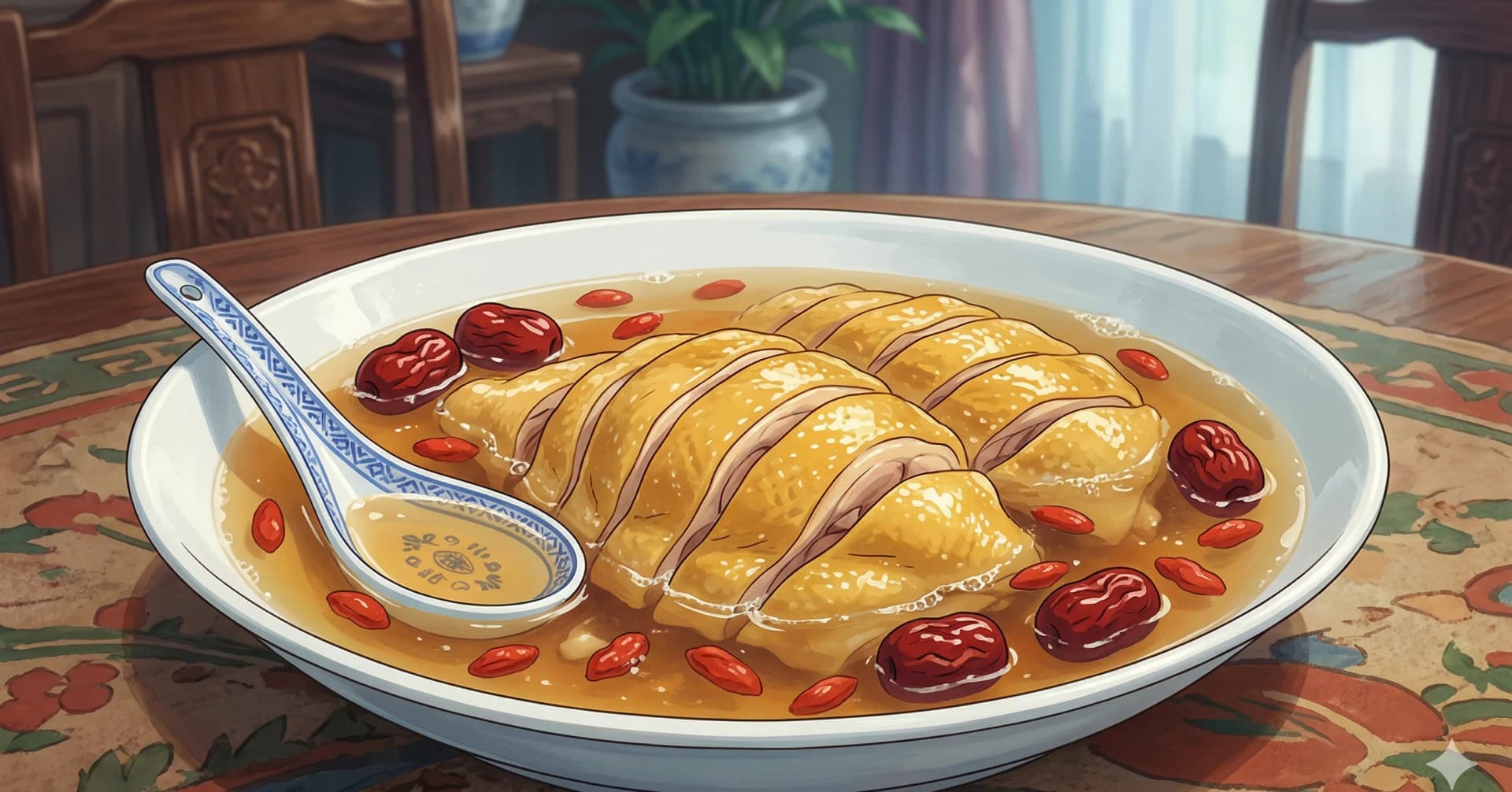
Cold poached chicken steeped in Shaoxing wine and golden broth
Drunken chicken is one of those dishes that reveals everything about Chinese cooking at its most restrained. There is no wok fire here, no sizzling oil, no dramatic toss of ingredients. Just chicken, wine, broth, salt, and time. The result is something you would be happy to eat on the hottest day of summer or as the first course of a proper banquet.
The technique is beautifully simple. Chicken legs are deboned, rolled tightly in foil, steamed until just cooked, then plunged into ice water to firm the meat and set the skin. While the chicken cools, you prepare a brine of homemade chicken broth and Shaoxing wine, sweetened with a little sugar and brightened with goji berries. The cold chicken goes into this brine and sits in the refrigerator overnight, soaking up the fragrance of the wine until every bite carries that distinct, slightly sweet, slightly boozy warmth.
The dish comes from the Jiangnan region, the area around Shanghai and Hangzhou, where cold dishes are taken seriously and Shaoxing wine is a kitchen staple. It is the kind of thing you will find at nearly every banquet table in that part of China, sliced into neat rounds and served chilled as a first course before the hot dishes arrive. The quality of the wine matters here more than in almost any other recipe. If you can find Hua Diao wine, a premium variety of Shaoxing, the difference in aroma is noticeable. Avoid cooking wines with added salt.
This is a make-ahead dish by nature. It needs at least twelve hours in the brine, and it only gets better over the next day or two. Plan ahead and you will be rewarded.
At a Glance
Yield
4 servings
Prep
30 minutes
Cook
25 minutes
Total
24 hours 55 minutes (includes overnight soaking)
Difficulty
Easy
Ingredients
Chicken Ingredients
- 2bone-in (about 900 g total), skin-on chicken leg quarters
- ½ tspsalt (for seasoning the chicken)
Brine Ingredients
- 1½ cuphomemade chicken broth (from step above)
- 1½ cupShaoxing Hua Diao wine
- 2½ tspsea salt
- 1⅓ tspsugar
- ¼ ozdried goji berries
- 5dried red dates, pitted (optional)
To Garnish
- 1scallion, thinly sliced
- —Extra goji berries and red dates from the brine
Method
- 1
Debone the chicken. Working with one leg quarter at a time, use a sharp paring knife to remove the thigh and drumstick bones while keeping the skin intact. Reserve the bones. Lay each deboned piece skin side down, score the thickest parts of the meat lightly to even out the thickness, then sprinkle each piece with 1/4 teaspoon salt. Roll each piece tightly into a cylinder, skin side out. Wrap snugly in aluminum foil, twisting the ends closed like a candy wrapper.
- 2
Make the broth. Place the reserved bones in a small pot with 2 1/2 cups water, the ginger slices, and the whole scallions. Bring to a simmer over medium-low heat and cook gently for at least 1 hour, skimming any foam that rises. You should end up with about 1 1/2 cups of light, golden broth. Strain and set aside to cool.
- 3
Steam the chicken. Set up a steamer with water at a rolling boil. Place the foil-wrapped chicken rolls on the steamer rack and steam over high heat, covered, for 20 minutes. Turn off the heat and let sit with the lid on for 5 more minutes. The residual heat will finish cooking the meat through without drying it out.
- 4
Ice bath. Prepare a large bowl of ice water. Transfer the chicken rolls directly into the ice bath and let them cool completely, about 10 to 15 minutes. This firms the meat, tightens the skin, and stops the cooking.
- 5
Prepare the brine. In a non-reactive container (glass or ceramic), combine the cooled chicken broth, Shaoxing wine, salt, sugar, goji berries, and red dates if using. Stir until the salt and sugar dissolve.
- 6
Soak overnight. Unwrap the cooled chicken rolls and place them in the brine. The liquid should fully cover the chicken. If it does not, top up with a little more broth. Cover tightly and refrigerate for at least 12 hours and up to 3 days. The flavor deepens with each passing day.
- 7
Slice and serve. Remove the chicken rolls from the brine. Slice crosswise into rounds about 1 cm (1/2 inch) thick. Arrange on a serving plate. Drizzle with a few spoonfuls of the brine and scatter with sliced scallion, goji berries, and red dates. Serve cold or at cool room temperature.
Key Ingredient Benefits
Shaoxing Wine (Hua Diao). Shaoxing wine is a fermented rice wine from Zhejiang province, central to Chinese cooking for centuries. Hua Diao is a premium grade, aged longer and with more complex floral and nutty notes. The alcohol in this dish is not cooked off. Standard cooking Shaoxing wine often contains added salt and will produce an inferior result here.
Goji Berries (Gou Qi Zi). Used in Traditional Chinese Medicine as a tonic for liver and kidney function. In this recipe, they contribute a mild sweetness and a pop of color. Modern research has explored their antioxidant content, but evidence remains preliminary. They are not a treatment for any condition.
Red Dates (Hong Zao). Dried jujubes add a subtle sweetness and are traditionally believed to support blood health in Chinese medicine. They also prevent the brine from tasting too sharp or one-dimensional.
Why This Works
The simmer-steep-ice bath method is a technique used across many Chinese cold chicken preparations, including Bai Qie Ji. By steaming to near-doneness and then letting residual heat finish the job, the meat stays juicy and tender rather than turning fibrous from prolonged high heat. The ice bath is equally important. It halts cooking immediately and contracts the proteins, giving the chicken a pleasant firmness and the skin a smooth, slightly gelatinous quality.
Rolling the deboned legs in foil serves two purposes. It shapes the chicken into a uniform cylinder, which produces those elegant rounds when sliced. It also traps the juices during steaming, keeping the meat moist.
The brine ratio of equal parts wine to broth is traditional, but the balance can be adjusted. More wine produces a more aromatic, boozy result. More broth gives a gentler, more savory flavor. Either way, the overnight soak allows the alcohol to penetrate the meat slowly and evenly, which is why this dish has a depth of flavor that quick-marinated versions cannot match.
Substitutions & Variations
No Hua Diao wine? Regular Shaoxing wine works, though the aroma will be less nuanced. Avoid cooking wines with added salt. In a pinch, dry sherry can substitute, but the character of the dish will change.
Bone-in preparation. If you prefer not to debone the chicken, you can poach whole leg quarters directly in water with ginger and scallions (simmer 15 minutes, steep 15 minutes), then submerge in the brine. The slicing will be less elegant but the flavor will be the same.
Sichuan peppercorn variation. The Omnivore's Cookbook version adds a quarter teaspoon of ground Sichuan peppercorn and a star anise to the broth for a lightly numbing, more aromatic brine. This is a worthwhile addition if you enjoy that flavor profile.
Chicken breast. Breast meat can be used, but reduce the steaming time to 12 to 15 minutes. It will be leaner and firmer than thigh meat.
Serving Suggestions
Drunken chicken is a cold appetizer by tradition, served at the start of a meal alongside other cold plates. It pairs naturally with Bai Qie Ji for a two-chicken spread, or with a bowl of Congee for a light supper. At a larger table, set it alongside Ginger Scallion Beef and a vegetable stir-fry like Yu Xiang Eggplant.
A small dish of the brine on the side lets guests add more liquid as they eat. Steamed jasmine rice rounds out the meal if you want something more substantial.
Storage & Reheating
Drunken chicken keeps beautifully in its brine in the refrigerator for up to 3 days. Keep it submerged and use clean utensils each time you serve from the container. The flavor continues to develop over the first two days.
This dish is meant to be served cold and does not benefit from reheating. If the chicken has been refrigerated and the brine has set into a soft jelly, that is normal and a sign of a good, collagen-rich broth. It will melt back to liquid at room temperature.
Do not freeze this dish, as the texture of the chicken changes significantly after thawing.
Cultural Notes
Zui ji (醉雞, "drunken chicken") is the Shanghai cold appetizer in which poached chicken is steeped in Chinese rice wine and herbs for several hours or overnight, served chilled and sliced as one of the cold dishes that traditionally open a Shanghai meal. The dish belongs to the broader Jiangnan tradition of zui (drunken) preparations, which use rice wine as both a flavor agent and a preservation method for delicate proteins. The technique applies to chicken, shrimp, and crab, all of which absorb the wine's aromatic compounds during the cold steep and emerge with a clean, slightly boozy fragrance that pairs naturally with the cold-dish format.
The technique is two-stage. A whole chicken (or chicken legs) is poached gently in water with ginger, scallion, salt, and Shaoxing wine until just barely cooked through, then chilled immediately in ice water to firm the skin and stop the cooking. The cooled chicken is sliced through the bone into pieces and submerged in a marinade of Shaoxing wine (or, in more luxurious versions, the rarer huadiao aged rice wine), salt, dried goji berries (gou qi zi), Chinese herbs (often dang gui angelica root and huang qi astragalus), and sometimes white peppercorns. The chicken steeps in this marinade in the refrigerator for at least four hours and ideally overnight, during which the wine and herbal compounds penetrate the meat and the skin takes on a glossy, slightly translucent quality. The chicken is served cold, still in some of its marinade, with the goji berries scattered on top for color.
The dish is a fixture of Shanghai family meals during summer, when the cold preparation is welcome relief from the city's notoriously humid heat. It also appears at Shanghai New Year banquets as one of the cold-dish opening lineup alongside shanghai-braised-gluten, smoked fish, and sweet-and-sour radish. The dish has spread to Shanghainese restaurants worldwide and is often presented as the appetizer that introduces diners to the Shanghai leng cai (cold dish) tradition, which is distinct from the warm-dish Cantonese opening of dim sum or the soup-first northern Chinese banquet structure.
Nutrition Facts
Calories: 386kcal (19%)|Total Carbohydrates: 10g (4%)|Protein: 40g (80%)|Total Fat: 13g (17%)|Saturated Fat: 3.4g (17%)|Cholesterol: 169mg (56%)|Sodium: 1921mg (84%)|Dietary Fiber: 0.7g (3%)|Total Sugars: 5.3g
You Might Also Like
Ratings & Comments
Ratings & Comments
Ratings
Share your thoughts on this recipe.
Sign in to rate and comment