Soaked Almonds and Memory: The Morning Ritual Every Indian Grandmother Swears By
Soaked Almonds and Memory: The Morning Ritual Every Indian Grandmother Swears By
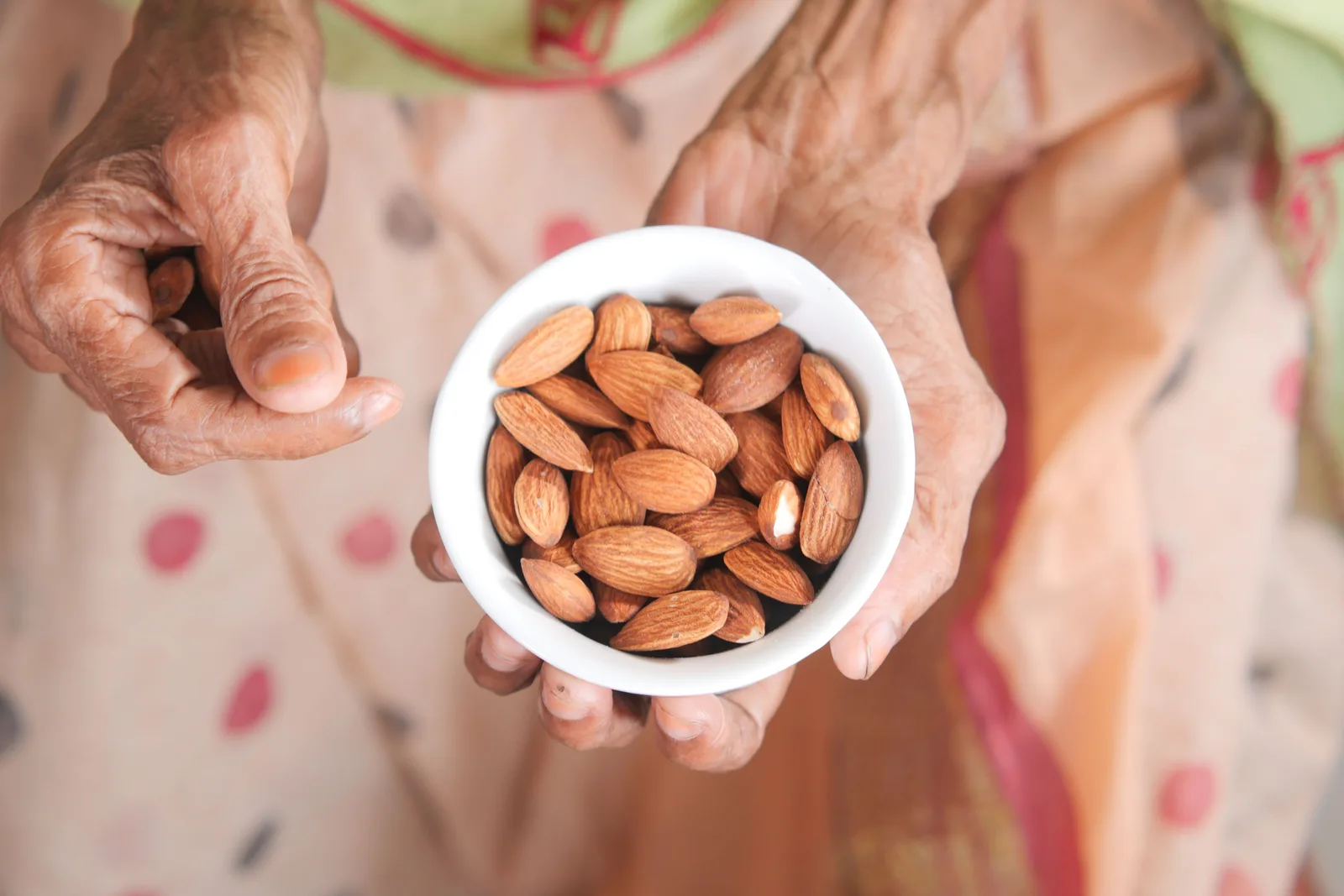
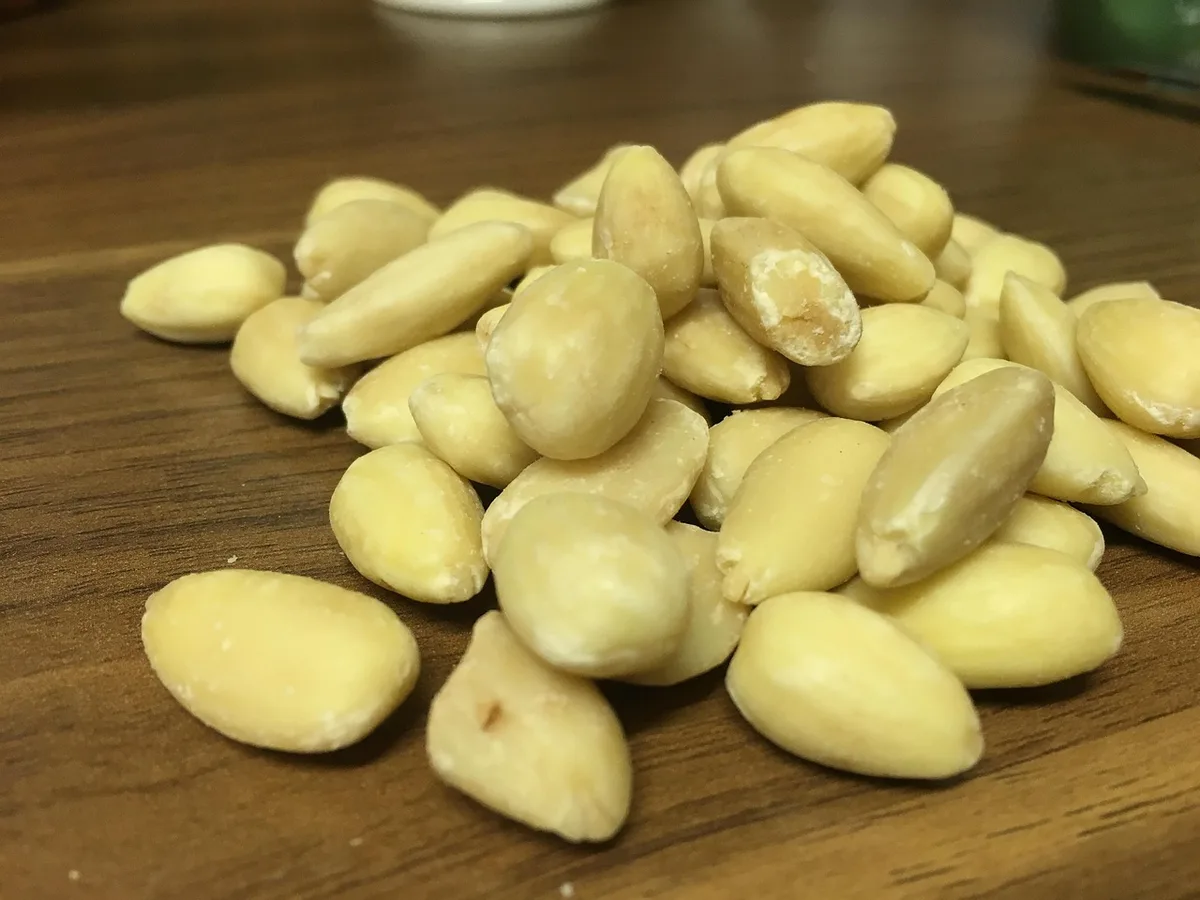
In Indian households across every region and class, the same scene plays out on countless evenings. Someone, usually the grandmother, the mother, or the cook, drops eight to ten almonds into a small bowl of water and covers it. The almonds sit overnight. In the morning, the same person fishes them out, slips the loosened brown skins off with a fingernail, and hands the peeled white kernels to whichever child has an exam, a long day at school, or just the general project of growing up well.
The instruction comes wrapped in a sentence that varies slightly in the wording but is identical in the substance across thousands of households: "Eat these every morning. They are good for the brain."
The grandmothers were not wrong. They were also not arguing from modern nutritional science, which did not exist when the practice began. The classical Ayurvedic texts describe almonds, peeled and soaked, as one of the foundational medhya foods, supporting medha (intellect) and ojas (vitality). The contemporary nutrition research has caught up to most of what the texts said, and the soaked-almond morning ritual turns out to be a remarkably effective and remarkably accessible cognitive support.
This post lays out what is actually in a soaked almond, what the modern research supports about the cognitive effects, and why the soaking step matters more than most modern Westerners realize.
What's Actually in an Almond
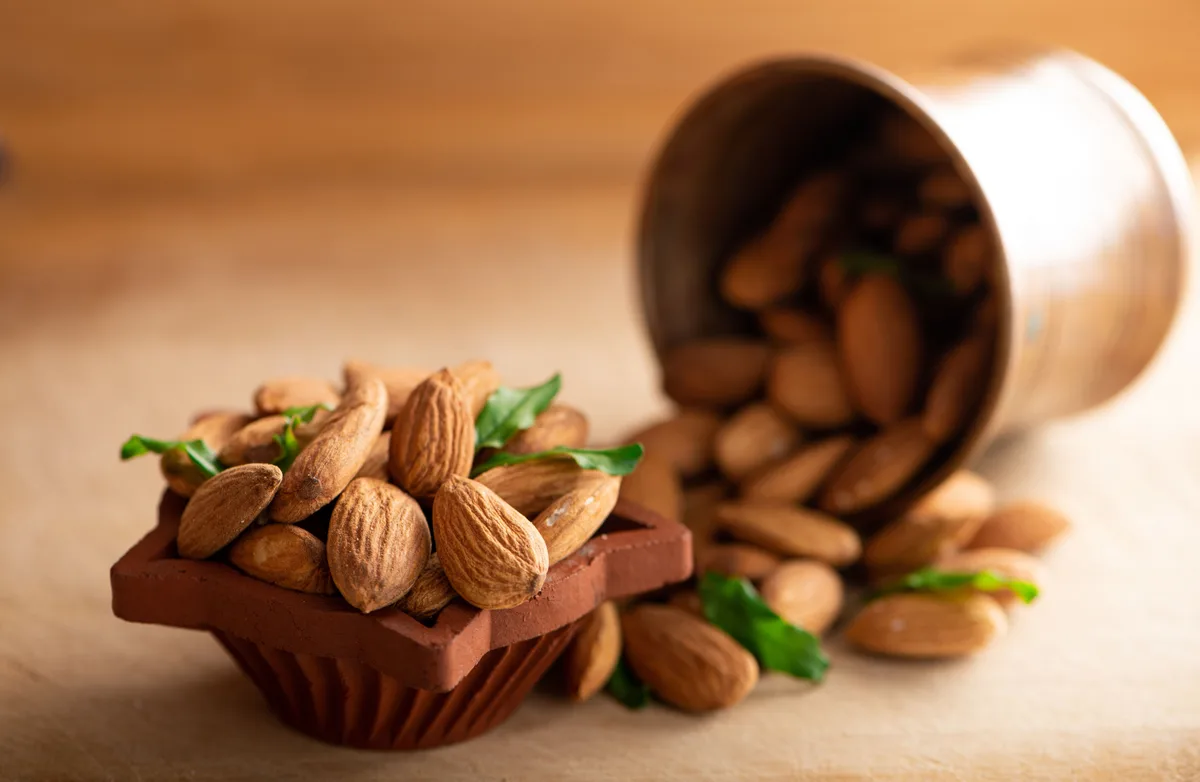
A 28-gram serving (roughly 23 almonds, or the daily handful) contains:
- 6 grams of protein
- 14 grams of fat (mostly monounsaturated)
- 6 grams of fiber
- 76 mg of magnesium (18% of daily value)
- 7.3 mg of vitamin E (almost half of daily value, the densest food source)
- 0.3 mg of copper (33% of daily value)
- 0.6 mg of manganese
- Small amounts of calcium, iron, zinc, and phosphorus
The vitamin E content is the standout. Most foods provide a few milligrams at most; almonds provide a meaningful daily fraction in a single handful. Vitamin E is one of the main fat-soluble antioxidants protecting neuronal cell membranes from oxidative damage.
The magnesium content is also notable. Magnesium is required for over 300 enzymatic reactions, including those involved in neurotransmission and ATP production in brain tissue. Most modern diets are mildly deficient in magnesium; almonds are one of the densest dietary sources.
What the Research Supports
The cognitive evidence for almonds and tree nuts in general is meaningful, though it is mostly correlational and gathered from large dietary studies rather than from isolated almond trials.
The PREDIMED trial. A 2013 cluster of analyses from the Spanish PREDIMED trial, including the paper by Valls-Pedret and colleagues in JAMA Internal Medicine, measured cognitive function in older adults randomized to either a Mediterranean diet supplemented with mixed nuts (30g daily, of which 15g was walnuts and 7.5g was almonds), a Mediterranean diet supplemented with olive oil, or a control low-fat diet. After 6.5 years of intervention, both Mediterranean groups outperformed the control on cognitive measures, with the nut-supplemented group showing the strongest gains in memory-related tasks.
Vitamin E and cognitive decline. A 2002 study by Morris and colleagues in Archives of Neurology followed over 2,800 older adults and found that higher dietary vitamin E intake (not supplements, food sources) was associated with slower cognitive decline. The food-source-but-not-supplement distinction matters: vitamin E in whole-food form (with the eight different tocopherols and tocotrienols, along with fat carriers and cofactors) appears to work in ways that isolated alpha-tocopherol supplements do not.
Tree nuts broadly. A 2021 systematic review by Theodore and colleagues in Advances in Nutrition pooled 22 studies on tree nuts and cognition in adults. The evidence was mixed overall, but observational data tended to associate regular nut consumption with better cognitive outcomes in older adults, with the potential benefit more pronounced in groups at higher risk of cognitive decline. The mechanism likely involves some combination of vitamin E, monounsaturated fat, polyphenols, and the magnesium-and-mineral profile.
The effect size in any individual study is modest. The effect compounds over years.
Why the Soaking Step Matters
Almonds, like most seeds, contain phytic acid in the seed coat (the brown outer layer). Phytic acid is a storage form of phosphorus that the seed needs for germination but that in the human gut binds minerals (especially iron, zinc, magnesium, and calcium) and reduces their absorption. The seed coat also contains tannins and enzyme inhibitors that the seed uses to delay digestion by predators until conditions are right for germination.
Soaking accomplishes three things mechanically and biochemically:
Phytate reduction. A 2003 review by Hurrell in the Journal of Nutrition summarized the phytate-mineral absorption literature. Soaking reduces phytate content by 10 to 30%, depending on time and conditions, with overnight soaking at room temperature producing meaningful reduction. The result: better absorption of the magnesium, zinc, iron, and calcium that the almond actually contains.
Tannin reduction. The brown skin contains tannins that contribute astringency and slightly inhibit iron absorption. Removing the skin after soaking removes most of these tannins.
Easier digestion. Soaked almonds are softer, with the cell-wall structures partially hydrated. The traditional Ayurvedic frame describes them as easier on agni (the digestive fire). The modern frame describes them as more digestible in a partially-rehydrated state.
The traditional Ayurvedic instruction is specific: soak overnight in plain water, peel before eating, eat in the morning on an empty stomach (or with a small amount of warm milk and a date or two), eat slowly and chew completely.
The Full Traditional Ritual
The classical version of the practice has several layers that modern adaptations sometimes simplify out:
Eight to ten almonds. Not more. The classical instruction is to eat a defined number, not a handful. The number 8 to 10 appears consistently across regional Indian traditions.
Soaked overnight. A bowl of water, almonds covered, lid or plate on top. Plain water is sufficient; some preparations add a few strands of saffron for an additional cognitive layer.
Peeled before eating. The brown skin is loosened by overnight soaking and slips off easily. Eating the white kernel only is the traditional form. (Some modern voices argue the skin contains beneficial polyphenols and should be eaten; the traditional system gives the digestive ease priority. Either choice is defensible.)
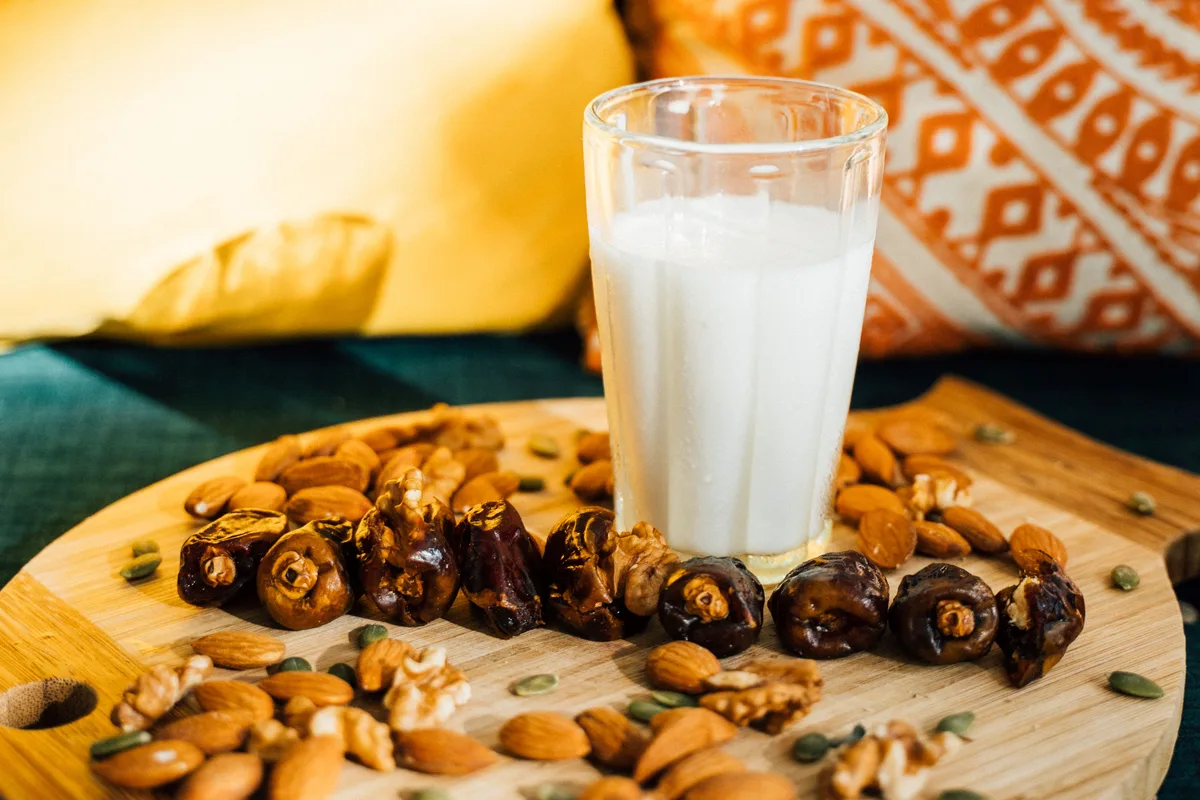
On an empty stomach or with warm milk. First thing in the morning, before breakfast. The classical version includes a small amount of warm milk and one or two dates to make a small first-meal preparation that is dense in ojas-building ingredients.
Chewed slowly and completely. The Ayurvedic emphasis on chewing matters here. The mechanical breakdown plus salivary processing improves nutrient extraction.
Daily, year-round. The Ayurvedic rasayana logic, covered in detail in the brahmi and ghee posts, applies. The cognitive effects build over months and years of consistent practice, not in a single morning.
Variations Across India
The basic ritual is universal across India. The variations are regional and intergenerational:
Saffron-and-almond preparation. Common in the Mughal-influenced cuisines of northern India and Kashmir. Four or five strands of saffron added to the soaking water; the saffron tints the water and adds a cognitive layer of its own (covered in the upcoming saffron for mood and memory post).
Almond-and-date preparation. Common in much of north India. The soaked almonds eaten with two soaked Medjool dates. The combination of the almond's vitamin E and magnesium plus the date's iron and B-vitamins is a small but real nutritional package.
Almond-and-cardamom milk. Soaked almonds ground with a small amount of milk and a pinch of cardamom, drunk as a paste. Common preparation for children and convalescents.
Almond ladoo. Less ritual, more food. Ground soaked almonds combined with ghee, jaggery, and cardamom into small balls. A more substantial preparation, traditionally given to growing children, convalescents, and elders.
Practical Notes
For people starting the practice in the modern Western kitchen:
Use raw almonds. Roasted or seasoned almonds defeat the purpose of the soak.
California or Spanish Marcona almonds work equally well. The traditional Indian preparation uses local almonds where available. Differences between varieties are real but small.
The "soaking water" can be drunk or used in cooking. It contains some leached phytates but also some water-soluble nutrients. The traditional Ayurvedic practice is to discard it.
Cost. A pound of almonds covers about 6 weeks of daily 10-almond servings. The cost-per-day is small compared to the cognitive supplement category.
Travel. The practice survives travel by pre-soaking and refrigerating, or by carrying the dry almonds and finding a glass of water for an overnight soak.
Frequently Asked Questions
Will I notice anything immediately?
No. This is a slow-build practice that the traditional system explicitly framed as cumulative. The cognitive effects build over months to years of consistency. The immediate effect, if any, is the mild satiety and sustained energy that follows a small fat-and-protein-rich morning bite.
What if I'm allergic to almonds?
Walnuts are the closest functional substitute, with a different but overlapping nutrient profile (higher omega-3, lower vitamin E). The same soaking-overnight principle applies. The PREDIMED trial actually weighted walnuts more heavily than almonds in its nut mixture; the cognitive evidence for walnuts is at least as strong.
Is this better than an almond butter spoon at breakfast?
Slightly. The soaking-and-peeling step provides incremental benefit through phytate reduction and improved digestion. An almond butter spoon (without added sugar or oils) is a perfectly fine alternative that captures most of the benefit at the cost of the ritual element.
What about almond milk?
Most commercial almond milk contains very little actual almond (often 2% or less). The nutritional profile is mostly water with added vitamins. For the cognitive benefit, eating actual almonds is meaningfully different from drinking the milk.
The Three-Thousand-Year Sample Size
The ritual of soaked almonds in the morning has been a household practice across Indian families for at least three thousand years. The intergenerational sample size is enormous; the practice has survived as a daily ritual because it was empirically valuable to the people who used it.
The modern nutrition research confirms the basics: a fat-soluble-vitamin-rich, magnesium-dense, fiber-and-protein-balanced small first meal is cognitively useful, particularly over years of consistent practice. The soaking step improves the bioavailability of what the almond contains. The ritual element supports the consistency that makes the cumulative effect possible.
For the broader cognitive-food picture, see ghee for the brain, brahmi: Ayurveda's brain tonic, and the gut-brain axis for clearer thinking. The grandmothers were right about the almonds. They were right about a lot of things.
Comments
Share your thoughts on this post.
Sign in to comment0 Comments