What Makes Korean Food Taste Korean
Ask someone what Korean food tastes like and you will usually get one word back: spicy. It is the least useful answer available. Plenty of Korean food has no chilli in it at all, and the dishes that do are not chasing heat for its own sake.
What actually makes Korean food recognisable is a short list of decisions, most of them about fermentation, texture and structure rather than about any single flavour. Once you can see them, the whole cuisine stops looking like a collection of dishes and starts looking like a system.
Everything rests on three fermented pastes
Korean cooking is built on jang. Three of them, to be precise: ganjang, the soy sauce; doenjang, the soybean paste; and gochujang, the chilli paste. Historically all three came out of the same process, blocks of fermented soybean called meju, split into different products.
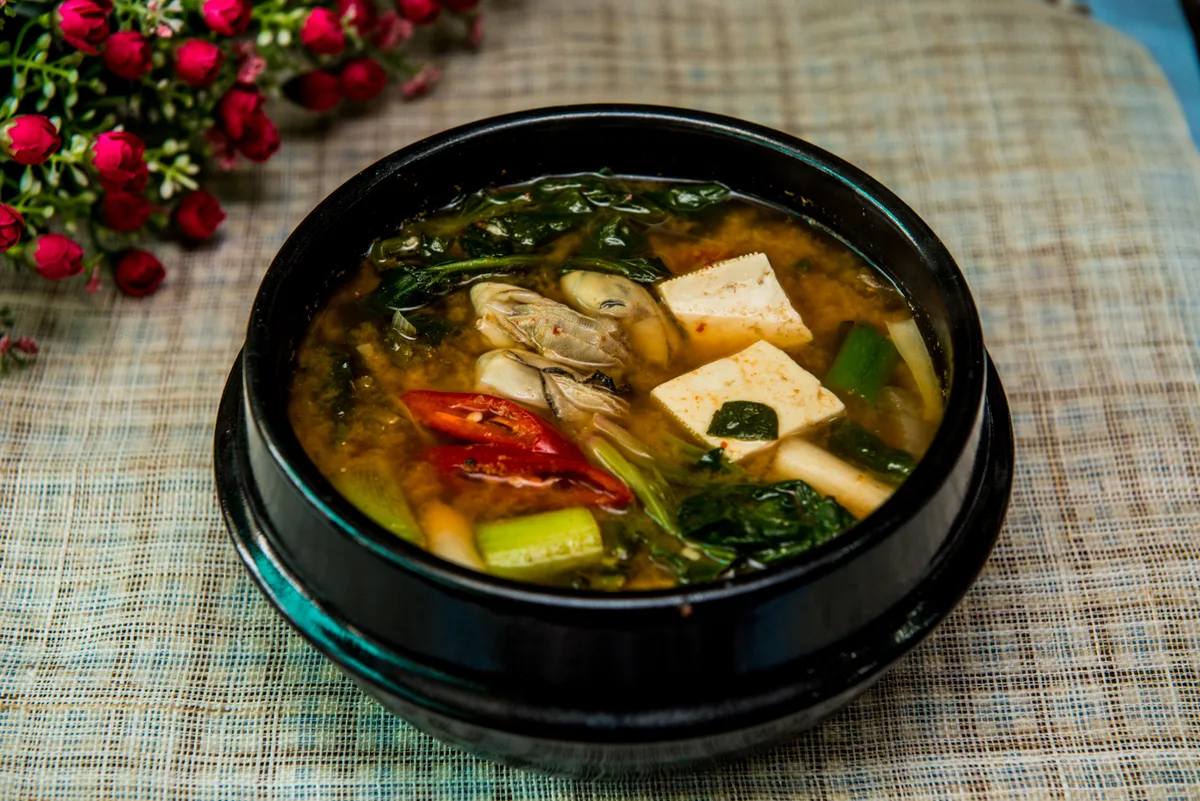
They are not interchangeable and they are not used the same way. Doenjang does the savoury heavy lifting, the deep salty funk under stews like doenjang jjigae. Gochujang brings colour, sweetness and a low rounded heat. Ganjang seasons without adding either.
A Korean cook reaching for two of them at once is the normal case, not the exception. That layering is a large part of why the food tastes the way it does, and it is the part that is hardest to fake with a bottle of something from a supermarket.
The chilli is fruity, not fiery
Gochugaru is sun-dried Korean chilli, coarsely ground, and it is a mild pepper by global standards. It brings a red that stains everything, a light fruitiness, and heat that sits well below Thai or Sichuan levels.
This is why Korean spicy food can be eaten in volume. A bowl of kimchi jjigae is hot, but it is a warmth you can sit inside for twenty minutes, not a hit you have to recover from. Swap in cayenne and the dish goes wrong immediately, too sharp and the colour turns orange.
Sesame oil is a finish, not a cooking fat
Walk past a Korean kitchen and the smell that reaches the street is toasted sesame. Sesame oil goes in at the end, off the heat, in small amounts, along with a scatter of toasted seeds crushed between the fingers.
It is on almost everything. Vegetables, rice bowls, grilled meat, soup. Cook with it and it burns and turns bitter, which is why Korean stir-fries start in a neutral oil and finish with a teaspoon of the toasted one.
Garlic in quantities that surprise people
Korea eats more garlic per person than almost anywhere. Not as a background note, either. Raw cloves go on the table alongside grilled pork, minced garlic goes into marinades by the tablespoon, and whole heads go into soups.
Paired with the sesame oil and a little sugar, garlic forms the base seasoning that Koreans call yangnyeom, and that base is the reason so many dishes taste related to each other despite using different main ingredients.
The meal is a layout, not a sequence
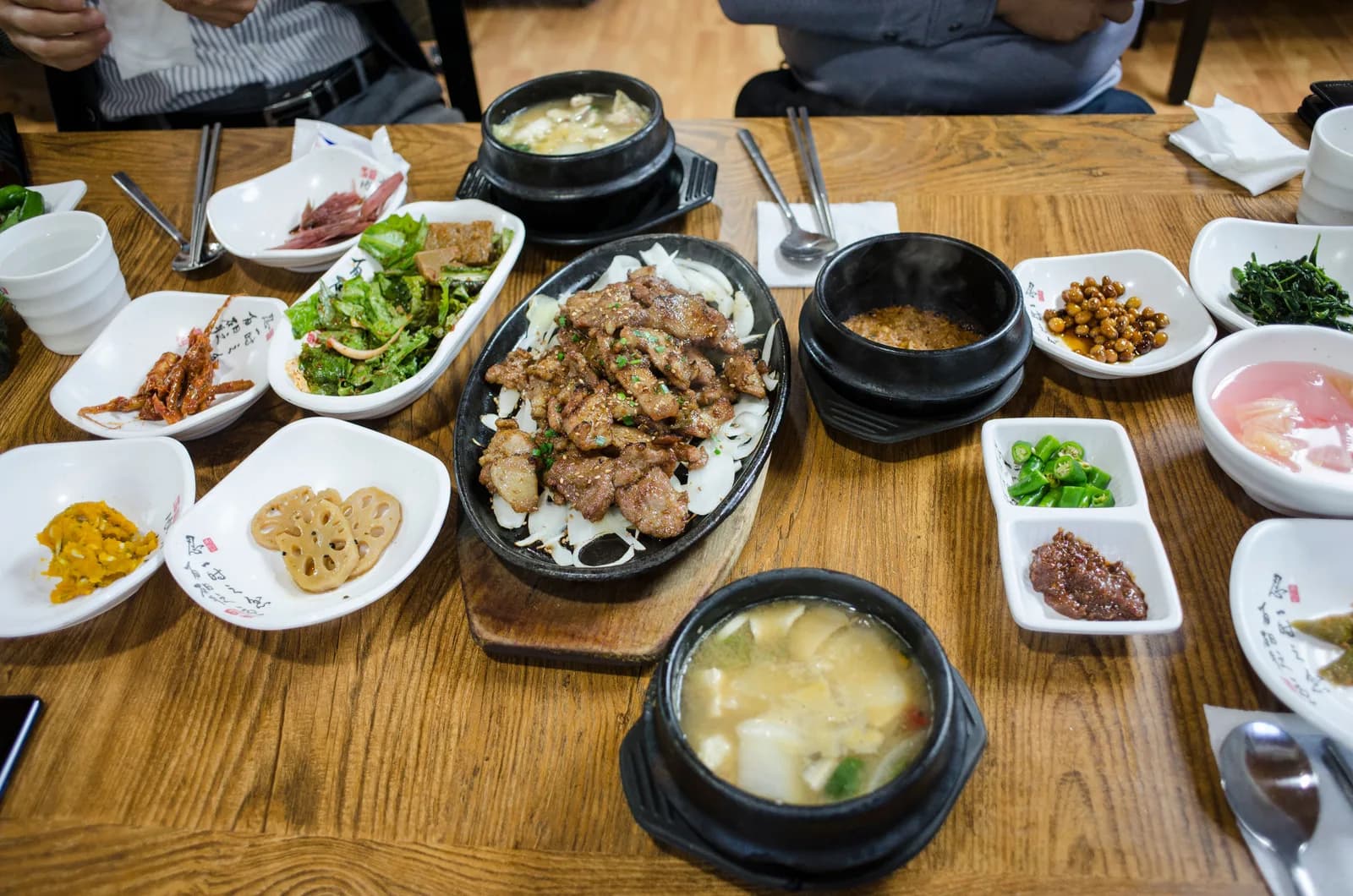
There is no starter and no main. A Korean meal arrives all at once: rice, a soup or stew, and banchan, the small dishes that surround them. Five banchan is ordinary, twelve is a nice restaurant, and they are refilled without being ordered.
This changes how each dish is seasoned. Nothing on the table is designed to be eaten alone, so individual dishes are saltier, sourer or spicier than they would be as a standalone plate, and rice is the neutral ground that makes them work. It also means vegetables arrive in quantity by default rather than as a side salad.
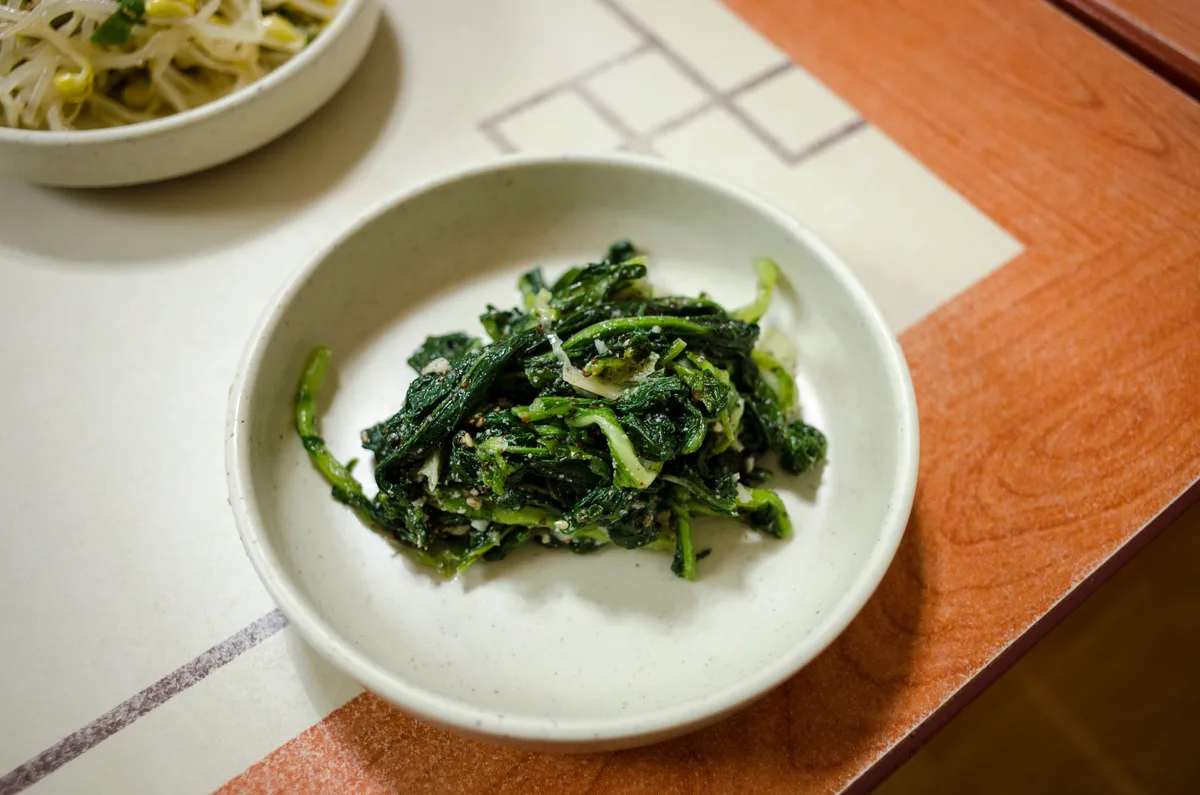
The simplest banchan are namul: a vegetable blanched, squeezed dry, and dressed while still warm. Seasoned spinach and bean sprout namul are the two you meet first, and the technique behind them covers a dozen more.
Texture counts as a flavour
Korean has a vocabulary for chewiness that English does not really have. Jjolgit-jjolgit describes a springy resistance that is actively sought out, in rice cakes, in cold noodles, in braised squid.
That preference explains dishes that otherwise look odd from outside. Rice cakes have almost no flavour of their own and exist entirely for the bounce. Cold buckwheat noodles are served with scissors because you are supposed to fight them a little.
What is largely absent
No dairy to speak of in traditional cooking. Very little deep frying compared to Chinese or Japanese food. Not much raw chilli heat, not much sugar used openly, and far less oil in the pan than a wok cuisine needs, because Korean technique leans on boiling, blanching, braising and grilling.
Sweetness does exist, but it usually arrives through rice syrup, grated pear or the gochujang itself rather than through a spoon of sugar you can taste as sugar. Bulgogi is the clearest example, a marinade that reads as savoury while being quietly sweet all the way through.
Frequently asked questions
Is all Korean food spicy?
No. Some of the most loved dishes have no chilli at all, including galbitang, seolleongtang, japchae, gimbap and most banchan. The red dishes photograph better, which skews the impression outside Korea.
What is the single most important ingredient?
Doenjang, if you have to pick one. Gochujang is more famous, but doenjang is in more everyday food and underpins the flavour that Koreans describe as tasting like home.
Why does Korean food taste different from Japanese food?
Different fermented bases mostly. Japanese cooking builds on dashi, miso and mirin, which push towards clean and subtly sweet. Korean cooking builds on doenjang, gochujang and garlic, which push towards deep and pungent.
What to cook
For the fermented backbone, cook doenjang jjigae and pay attention to how little else the stew needs. For the yangnyeom seasoning base, bulgogi shows what garlic, soy, sesame and pear do together. For the banchan habit, make sigeumchi namul once and you will have the technique for most vegetables in the fridge. And if the shelf is still empty, start with the eight Korean ingredients worth buying first.
Comments
Share your thoughts on this post.
Sign in to comment0 Comments