Chinese Cuisine
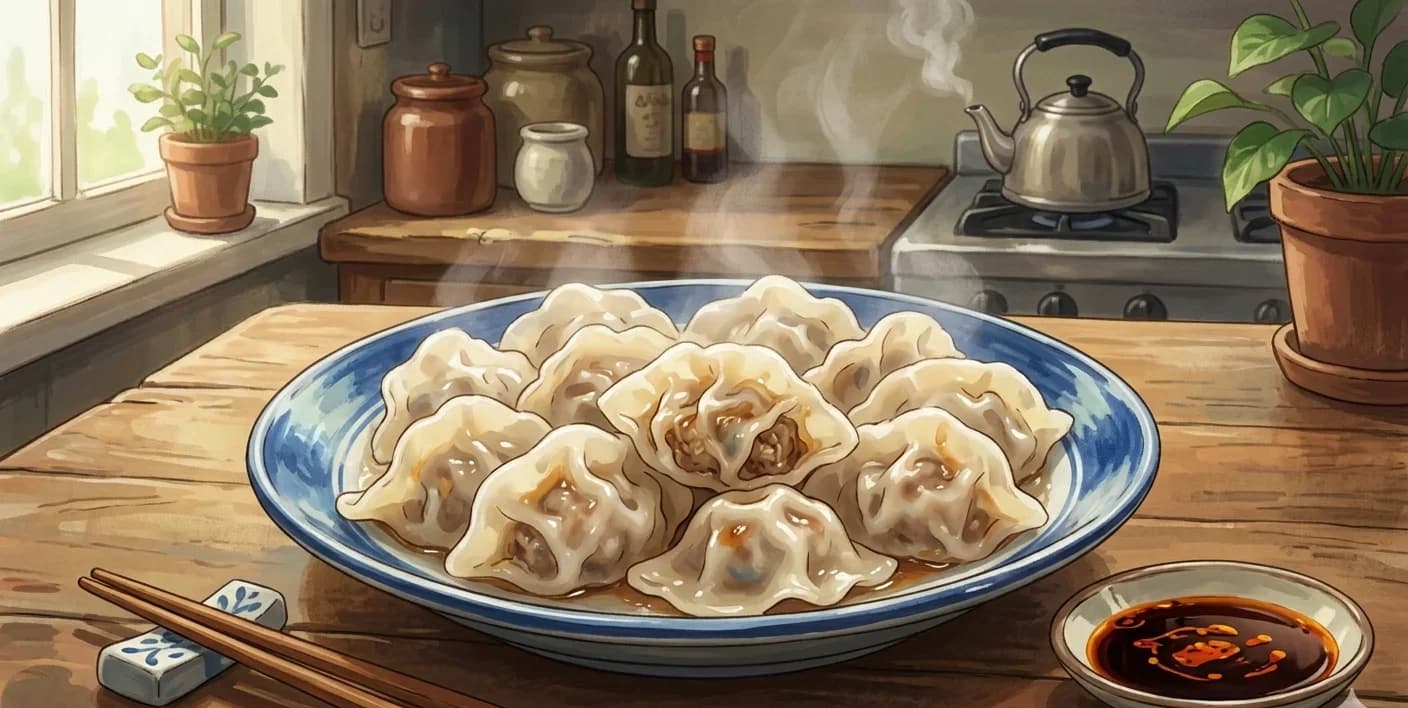
Niu Rou Yang Cong Jiaozi (Beef and Onion Dumplings)
Northern Chinese dumplings filled with seasoned beef, onion, and a hint of cumin and Sichuan peppercorn
Beef and onion dumplings have a character all their own. Where pork dumplings are gentle and subtle, these are bold. The beef filling is darker, more assertive, and carries the warm, almost smoky fragrance of toasted cumin and the gentle numbness of Sichuan peppercorn. The onion, chopped fine and mixed raw into the filling, softens during cooking and releases a sweet juice that keeps the dumplings moist and satisfying.
This combination reflects the influence of China's northwestern cooking traditions, where beef and lamb are the dominant meats and cumin is a defining spice. Muslim Hui communities across northern China have been making these dumplings for generations, and their influence has spread the combination into the broader Chinese dumpling repertoire. You will find beef and onion jiaozi served in dumpling houses from Xi'an to Harbin, always alongside the more common pork fillings.
The practical key to a great beef dumpling is managing the fat. Beef is leaner than pork, which means the filling can easily turn dry and crumbly if you are not careful. Beating water or stock into the meat in one direction creates a smoother, more emulsified texture that retains moisture during cooking. Adding a generous amount of sesame oil provides richness that the beef itself lacks. And the onion, which releases water as it heats, acts as an internal basting agent, keeping each dumpling juicy from the inside.
At a Glance
Yield
40 dumplings
Prep
50 minutes
Cook
10 minutes
Total
60 minutes
Difficulty
Medium
Ingredients
Dough Ingredients
- 2¾ cupall-purpose flour
- ¾ cupwarm water
- ½ tspsalt
Filling Ingredients
- ¾ lbground beef (not too lean, 80/20 is ideal)
- 7 ozyellow onion (about 1–1½ onions), finely diced
- 1¼ tbsplight soy sauce
- 2 tspdark soy sauce
- 1 tbspShaoxing wine
- 2 tspsesame oil
- 3 tbspwater or stock
- 2½ tbspfresh ginger, grated
- 1⅓ tspground cumin
- ⅔ tspground Sichuan peppercorn
- ½ tspsalt
- ⅞ tspwhite pepper
- 1 tbspvegetable oil
Dipping Sauce Ingredients
- 2 tbspChinkiang black vinegar
- 1 tbsplight soy sauce
- 1 tspchili oil
- 1 clovegarlic, minced
Method
- 1
Make the dough. Place the flour and salt in a large bowl. Add the warm water gradually while stirring with chopsticks until a shaggy dough forms. Knead for 10 minutes until the dough is smooth, elastic, and springs back when pressed. Cover with a damp cloth and rest for at least 30 minutes.
- 2
While the dough rests, prepare the filling. Place the ground beef in a large bowl. Add the light soy sauce, dark soy sauce, Shaoxing wine, sesame oil, grated ginger, ground cumin, ground Sichuan peppercorn, salt, and white pepper.
- 3
Add the water or stock to the beef one tablespoon at a time, stirring vigorously in one direction after each addition. This creates a paste-like consistency that will be juicy when cooked. The filling should feel slightly sticky and hold together when pressed.
- 4
Heat the vegetable oil in a small pan over medium heat. Add the diced onion and cook for 3 minutes, stirring occasionally, until softened and slightly translucent. This brief pre-cooking removes the harsh raw bite while preserving the onion's sweetness. Let cool completely.
- 5
Fold the cooled onion into the beef mixture. Mix gently but thoroughly. Refrigerate until ready to use.
- 6
Divide the dough into 4 portions. Roll each portion into a rope about 2 cm in diameter. Cut each rope into 10 equal pieces. Roll each piece into a ball and cover with a damp cloth.
- 7
Flatten each ball with your palm, then roll into a circle about 8 cm in diameter with the edges slightly thinner than the center.
- 8
Place about 15 g of filling in the center of each wrapper. Fold in half and pinch the top to seal. Create pleats along one side, pressing them against the smooth back to create a crescent shape. Ensure there are no gaps in the seal.
- 9
Place finished dumplings on a lightly floured surface. They can sit for up to 30 minutes before cooking.
- 10
Mix the dipping sauce ingredients in a small bowl. Set aside.
- 11
Bring a large pot of water to a rolling boil. Add the dumplings in batches of 15 to 20, stirring gently with a slotted spoon immediately after adding to prevent sticking.
- 12
When the water returns to a boil, add 100 ml of cold water. This is the traditional "three boils" method. Let the water return to a boil again and add another 100 ml of cold water. When it boils a third time, the dumplings should be floating at the surface and the wrappers should look translucent and slightly puffy.
- 13
Remove the dumplings with a slotted spoon, shaking off excess water, and transfer to a plate.
- 14
Serve immediately with the dipping sauce. The dumplings should feel heavy with juice when you pick them up.
Key Ingredient Benefits
Beef is an excellent source of heme iron, which is more readily absorbed than plant-based iron. It also provides B12, zinc, and complete protein. Choosing 80/20 ground beef ensures enough fat for flavor and moisture without being overly greasy.
Cumin has been traditionally used in Chinese and Middle Eastern cuisines for its digestive properties. Research suggests that cumin may support digestion by stimulating enzyme production, and it contains iron and antioxidant compounds.
Onions are rich in quercetin, a flavonoid associated with anti-inflammatory and antioxidant properties. They also contain prebiotic fibers that may support gut health.
Why This Works
The "three boils" method is a traditional Chinese technique for cooking dumplings that prevents the wrappers from bursting. Adding cold water each time the pot boils lowers the temperature, which slows the expansion of the filling inside. This gives the wrapper time to cook through evenly without the internal pressure causing it to split. It also ensures that the thick wrapper edges are fully cooked, not doughy.
Stirring water into the ground beef in one direction creates a process similar to making a forcemeat. The mechanical action aligns the protein strands and creates a matrix that traps water and fat, resulting in a filling that is cohesive but tender. Stirring in random directions produces a crumbly, dry filling because the proteins never form a stable network.
Pre-cooking the onion briefly is a small step that makes a noticeable difference. Raw onion releases moisture too quickly during cooking, which can make the filling watery and the wrapper soggy. Lightly softened onion releases its moisture more gradually, basting the filling from within.
Substitutions & Variations
- Beef: Ground lamb is a traditional alternative, particularly in Hui Muslim cooking. The cumin pairs even more naturally with lamb.
- Onion: Leeks or Chinese chives can substitute, though the flavor profile will shift. With chives, omit the cumin to let the chive flavor take center stage.
- Cumin: For a more traditional Chinese flavor without the northwestern influence, omit the cumin and add more ginger and scallion.
- Pan-fried: After boiling, pan-fry the dumplings in a little oil until the bottoms crisp for a potsticker-style finish.
- Soup dumplings: Drop boiled dumplings into a bowl of hot broth with a few drops of sesame oil and chili oil for a quick dumpling soup.
Serving Suggestions
Serve these dumplings as a main course with the dipping sauce and a few small side dishes: pickled garlic, shredded cucumber with vinegar, or a simple egg drop soup. In northern China, boiled dumplings are often the entire meal, eaten in generous quantities. A plate of raw garlic cloves on the table is traditional in some households, eaten between bites of dumpling.
Storage & Reheating
Uncooked dumplings freeze exceptionally well. Lay them in a single layer on a parchment-lined sheet pan and freeze until solid, then transfer to freezer bags. They keep for up to 2 months. Boil directly from frozen, adding 2 to 3 extra minutes of cooking time. Cooked dumplings can be refrigerated for 1 to 2 days and reheated by briefly dropping them back into boiling water or pan-frying them in a little oil until crispy on the bottom.
Cultural Notes
Beef and onion dumplings (牛肉洋蔥餃子, niu rou yang cong jiao zi) belong to the northern Chinese jiaozi family, with the specific filling combination drawing on the Hui Muslim culinary tradition of north and northwest China. The Hui Muslim communities of Xi'an, Beijing's Niu Jie neighborhood, and northwest China (Gansu, Ningxia, Qinghai) do not eat pork, and beef and lamb fill the protein role that pork plays in mainstream northern Han Chinese cooking. Beef-and-onion dumplings emerged from this tradition as the standard everyday dumpling, with the onion supplying the moisture, sweetness, and aromatic structure that pork fat and Chinese chives provide in pork dumplings.
The filling balance is the key technical point. Ground beef on its own tends toward dryness and tightness when cooked inside a dumpling wrapper, so the onion (typically yellow onion, finely diced rather than chopped) is added in a roughly 1:1 ratio with the beef and is salted briefly to draw out moisture before mixing into the meat. The released onion liquid is mixed back into the beef along with ginger juice, soy sauce, Shaoxing wine, white pepper, sesame oil, and a small amount of beef broth or water added gradually to keep the filling juicy. The cook works the mixture in one direction with chopsticks or a spoon for several minutes, which develops the protein bonds in the beef and makes the filling springy rather than crumbly inside the cooked dumpling.
The dumplings are typically boiled, though pan-fried (guo tie style) and steamed variations are also common. They are served with the standard dumpling dipping sauce: black vinegar (Chinkiang), soy sauce, chili oil, and slivers of ginger. In Xi'an, where the Hui Muslim quarter on Beiyuanmen Street is one of China's most concentrated halal food districts, beef-and-onion dumplings appear at dozens of dumpling shops alongside the famous Xi'an specialties of biang biang noodles, lamb soup with bread (pao mo), and persimmon cakes. The Beijing Niu Jie (Ox Street) neighborhood plays a similar role for Beijing's Hui community and offers its own regional variations of the basic beef-and-onion dumpling form.
Nutrition Facts
Calories: 420kcal (21%)|Total Carbohydrates: 49.4g (18%)|Protein: 17.2g (34%)|Total Fat: 16.2g (21%)|Saturated Fat: 5g (25%)|Cholesterol: 46mg (15%)|Sodium: 865mg (38%)|Dietary Fiber: 2.3g (8%)|Total Sugars: 1.9g
You Might Also Like
Ratings & Comments
Ratings & Comments
Ratings
Share your thoughts on this recipe.
Sign in to rate and comment