Vietnamese Cuisine
Fried Spring Rolls (Chả Giò)
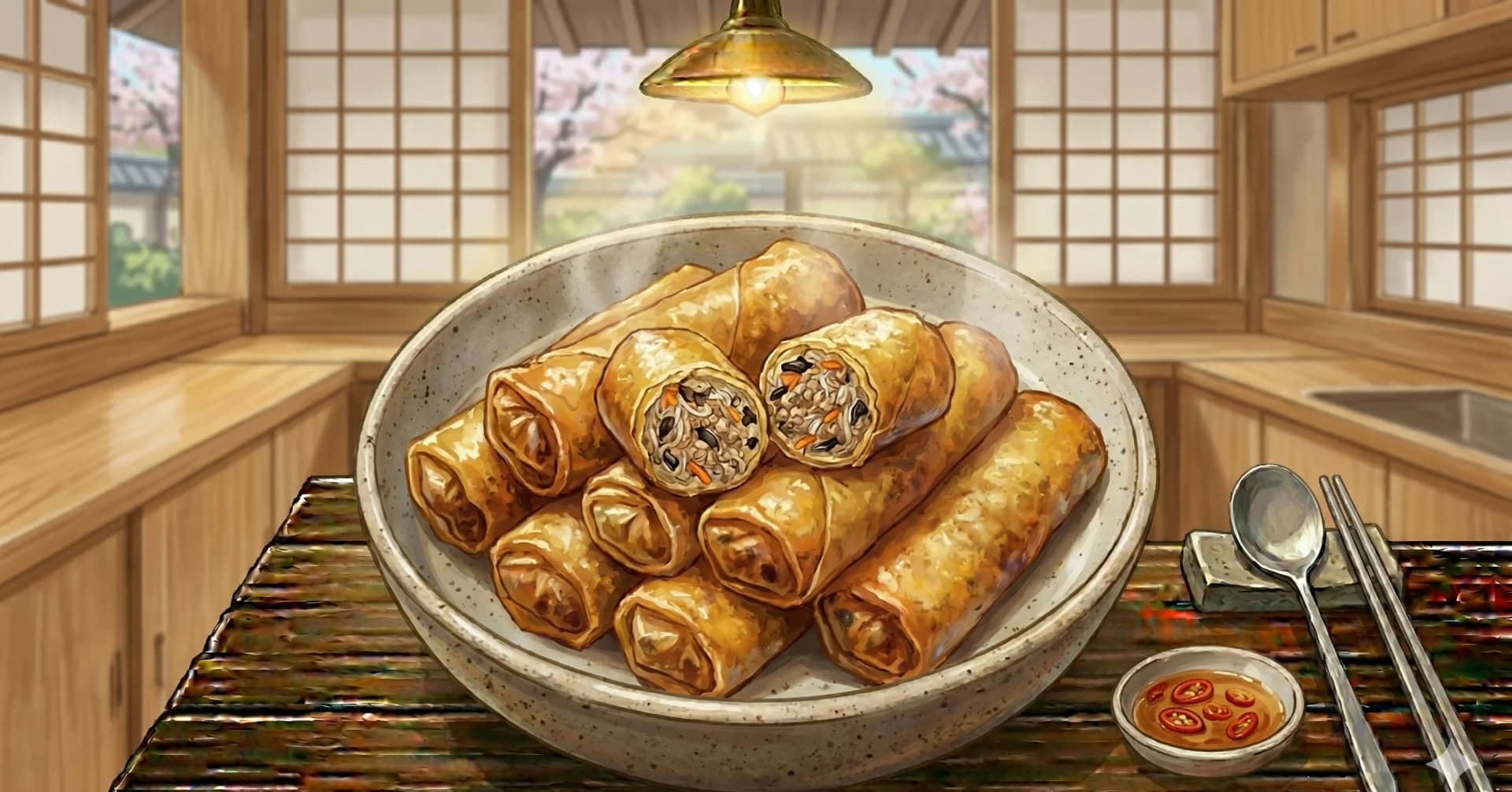
Shattering-crisp fried spring rolls filled with pork, shrimp, taro, and glass noodles
The sound is what announces them. Cha gio fresh from the oil produce a crackling so sharp and immediate that it borders on musical, the thin rice paper shell shattering at the slightest pressure into a thousand crisp shards. Inside, the filling is tender and juicy, a mixture of ground pork, chopped shrimp, taro root, glass noodles, and wood ear mushrooms bound together by egg and seasoned with fish sauce and pepper. The contrast between the ultra-crisp exterior and the savory, moist interior is the defining pleasure of a well-made Vietnamese spring roll.
Cha gio is the Southern Vietnamese name for fried spring rolls, known as nem ran in the North. While both regions claim their version is superior, the southern style is what most people outside Vietnam know best. It typically uses rice paper wrappers rather than wheat-flour wrappers, which produces a distinctively blistered, bubbly crust that is lighter and crispier than the smooth shell of a Chinese egg roll. The filling varies by family and region, but the combination of pork, shrimp, and taro is classic, with the taro adding a starchy sweetness that binds the filling and contributes to the satisfying density of each bite.
The Vietnamese way of eating cha gio is as important as the rolls themselves. You take a piece of butter lettuce, lay a roll on it, add a few leaves of mint and cilantro, wrap the lettuce around the roll, and dip the whole bundle into nuoc cham. The fresh lettuce and herbs provide a cool, crisp counterpoint to the hot, fried roll, and the dipping sauce ties everything together. This lettuce-wrap method is quintessentially Vietnamese, appearing across dozens of dishes, and it transforms cha gio from a fried snack into something surprisingly balanced.
At a Glance
Yield
24 rolls (6 servings)
Prep
45 minutes
Cook
20 minutes
Total
1 hour 5 minutes
Difficulty
Medium
Ingredients
Filling Ingredients
- ¾ lbground pork
- 5½ ozraw shrimp, peeled, deveined, and finely chopped
- 3½ oztaro root, peeled and finely grated (or jicama if taro is unavailable)
- 1 ozdried glass noodles, soaked in warm water for 10 minutes, drained, and cut into short lengths
- ½ ozdried wood ear mushrooms, soaked in warm water for 20 minutes, drained, and finely chopped
- 1medium carrot (about 80 g), finely grated
- 2shallots, finely minced
- 1egg
- 1¼ tbspfish sauce
- 1/2 tspsugar
- 1/2 tspblack pepper
Wrappers
- 24sheets rice paper (banh trang), 22 cm diameter
- —Warm water (for softening rice paper)
For Frying
- —Neutral oil for deep frying (about 1 litre)
Dipping Sauce Ingredients
- 3 tbspfish sauce
- 3 tbspwarm water
- 2½ tbspsugar
- 2 tbspfresh lime juice
- 1 clovegarlic, finely minced
- 1bird's eye chili, finely sliced
- 1 ozshredded daikon and carrot (optional garnish in the sauce)
To Serve
- 1head butter lettuce, leaves separated
- —Fresh mint leaves
- —Fresh cilantro sprigs
- —Fresh Thai basil (optional)
Method
- 1
Combine all filling ingredients in a large bowl: the ground pork, chopped shrimp, grated taro, glass noodles, wood ear mushrooms, carrot, shallots, egg, fish sauce, sugar, and pepper. Mix thoroughly with your hands until everything is evenly distributed. The mixture should hold together when squeezed but not be pasty.
- 2
Test the seasoning by frying a small teaspoon of the filling in a skillet. Taste it. The filling should be well-seasoned and savory, with the shrimp adding sweetness and the fish sauce adding depth. Adjust salt, pepper, or fish sauce as needed.
- 3
Prepare the rice paper wrappers. Dip one sheet briefly in warm water, just 2 to 3 seconds, enough to moisten but not fully soften it. Place it on a clean surface. The wrapper will continue to soften as you work. If it becomes too soft and sticky, it will tear during rolling.
- 4
Place about 2 tablespoons of filling in a log shape near the bottom edge of the wrapper, leaving about 3 cm of space on each side. Fold the bottom edge over the filling, tuck it tightly, fold in the sides like an envelope, and roll upward into a tight cylinder. The roll should be compact with no air pockets. Set it seam-side down on a plate. Repeat with the remaining wrappers and filling.
- 5
Make the nuoc cham while the rolls rest. Dissolve the sugar in the warm water, then add the fish sauce, lime juice, garlic, and chili. Add the shredded daikon and carrot if using. Stir well.
- 6
Let the wrapped rolls rest for 10 minutes before frying. This allows the rice paper to dry slightly, which produces a crispier result.
- 7
Heat the oil to 160C (320F) in a deep pot or fryer. The temperature should be moderate, not smoking hot. Rice paper wrappers cook best at lower temperatures that allow the entire roll to crisp evenly before the outside browns too deeply.
- 8
Fry the rolls in batches of 6 to 8, turning them occasionally for even browning. Cook for 8 to 10 minutes until the rolls are golden brown all over, with a blistered, bubbly surface. The bubbling will slow significantly when they are done, and the rolls will feel light when lifted from the oil.
- 9
Remove the rolls with a slotted spoon and drain on a wire rack set over a sheet pan. Let them rest for 3 minutes. The crust will continue to crisp as residual moisture escapes.
- 10
Serve the cha gio on a platter alongside the lettuce leaves, fresh herbs, and a bowl of nuoc cham. To eat, place a roll on a lettuce leaf, add a few herb leaves, wrap the lettuce around the roll, and dip the bundle into the sauce. Each bite should combine the crunch of the fried shell, the tender filling, the cool freshness of the lettuce and herbs, and the sweet-sour-salty dipping sauce.
Key Ingredient Benefits
Taro root: A starchy tuber rich in fiber, potassium, and resistant starch. Research suggests resistant starch may benefit gut health by feeding beneficial bacteria. In Vietnamese and Chinese traditional medicine, taro is considered mildly sweet and is associated with digestive support. It must always be cooked before eating, as raw taro contains calcium oxalate, which irritates the mouth and throat.
Wood ear mushrooms: Provide iron, fiber, and polysaccharides studied for immune-modulating and anticoagulant properties. Their primary contribution to cha gio is textural, adding a crunchy-chewy element to the tender filling.
Rice paper (banh trang): Made from rice flour and water, sometimes with tapioca starch. Naturally gluten-free and very low in fat before frying. The thin sheets produce a lighter fried result than thicker wheat wrappers.
Why This Works
Rice paper produces a completely different fried shell than wheat-flour wrappers. When submerged in hot oil, the thin rice paper blisters and puffs, creating a surface covered in tiny, crisp bubbles. This blistered texture is lighter and crunchier than the smooth, dense shell of a Chinese egg roll. The key is frying at a moderate temperature (160C), which gives the interior time to cook through while the rice paper crisps gradually and evenly.
Taro root serves as a binding agent in the filling, its starch absorbing excess moisture from the pork and shrimp during frying. This keeps the interior juicy without making the shell soggy from steam. The glass noodles perform a similar function, absorbing liquid and providing a chewy textural contrast to the tender meat.
The lettuce-and-herb wrap method is not just a serving suggestion. It fundamentally changes how the roll tastes. The raw lettuce provides a cooling temperature contrast and a crisp, watery crunch. The herbs add volatile aromatic compounds that brighten the fried, savory flavors. The nuoc cham provides acid and sweetness that cut through the oil.
Substitutions & Variations
Taro: Jicama, water chestnut, or finely grated potato can substitute. Each provides starch and mild sweetness.
Shrimp: Omit for a pork-only version, or replace with crab meat for a more luxurious roll.
Vegetarian: Use a filling of glass noodles, mushrooms (wood ear and shiitake), carrot, taro, and cabbage. Season with soy sauce instead of fish sauce.
Wheat wrapper version (nem ran): Use Chinese spring roll wrappers for the Northern Vietnamese style. Fry at 180C for a crispier, smoother shell.
Air fryer: Brush assembled rolls lightly with oil. Air fry at 190C (375F) for 12 to 15 minutes, turning halfway. The result is less bubbly than deep-fried but significantly lighter.
Baked: Brush with oil and bake at 200C (400F) on a wire rack for 20 to 25 minutes, turning once. Not traditional but acceptable for those avoiding deep frying.
Serving Suggestions
Cha gio appears at every Vietnamese celebration, from Tet (Lunar New Year) to family gatherings and dinner parties. It is both a standalone snack and a component of larger dishes.
For a Vietnamese party spread, serve cha gio alongside goi cuon (fresh spring rolls) for a fried vs. fresh contrast that showcases the two faces of Vietnamese roll-making.
Add halved cha gio to a bowl of bun thit nuong for the classic bun thit nuong cha gio combination, where the crispy rolls provide textural contrast to the cool noodles and grilled pork.
Storage & Reheating
Refrigerator: Store fried cha gio in a sealed container for up to 3 days. The shells will soften but can be recrisped.
Freezer: Freeze uncooked, assembled rolls in a single layer on a parchment-lined sheet pan until solid, then transfer to a freezer bag. Freeze for up to 2 months. Fry directly from frozen, adding 3 to 4 minutes to the cooking time.
Reheating: Place on a wire rack in a 190C (375F) oven for 8 to 10 minutes until the shell recrisps and the interior heats through. Air frying at 180C for 5 minutes also works well.
Filling ahead: The filling can be prepared 1 day in advance and refrigerated. Wrap and fry just before serving.
Cultural Notes
Chả giò, the fried Vietnamese spring roll, has two names depending on where you eat it. In the south (Saigon and the Mekong Delta), it is chả giò. In the north (Hanoi and the Red River Delta), the same fundamental dish is called nem rán. The two names reflect real regional differences. Southern chả giò tends to be slightly larger, often combines pork shoulder with shrimp and crab, and may include taro or jicama for extra crunch. Northern nem rán is typically smaller, uses wood ear mushrooms and glass noodles, and leans on pork rather than seafood.
The dish belongs to the broader East Asian fried-spring-roll tradition that also includes Chinese chūn juǎn (春卷), Filipino lumpiang shanghai, Thai por pia tod, and various Korean and Japanese variants. The Vietnamese version distinguishes itself in two specific ways. The wrapper is rice paper (bánh tráng), not the wheat-based wrapper that Chinese spring rolls use. And the rice paper, once fried, shatters into hundreds of tiny brittle flakes when you bite it, in a way wheat wrappers never do. The Vietnamese serving style also matters. You wrap the fried roll in a fresh lettuce leaf with a handful of herbs before dipping it in nước chấm, so the bite is hot, cold, crisp, and herbaceous at once.
Chả giò is the celebratory dish. It shows up at weddings, family gatherings, Tết (Lunar New Year) feasts, and major life-event banquets. The preparation is labor-intensive. Each roll has to be wrapped individually, and households making chả giò for a big occasion almost always do it as a group activity. Mother, daughters, aunts, grandmothers all sit around a tray and roll for an hour. The labor is the gesture, and that labor is part of what the dish means.
Outside Vietnam, chả giò has become the most universally recognized Vietnamese dish. It appears on virtually every Vietnamese-American restaurant menu and often serves as Western diners' introduction to Vietnamese cooking before they move on to phở, bánh mì, and the broader restaurant repertoire.
Nutrition Facts
Calories: 390kcal (20%)|Total Carbohydrates: 35g (13%)|Protein: 14g (28%)|Total Fat: 20g (26%)|Saturated Fat: 5g (25%)|Cholesterol: 107mg (36%)|Sodium: 850mg (37%)|Dietary Fiber: 0g (0%)|Total Sugars: 5g
You Might Also Like
Ratings & Comments
Ratings & Comments
Ratings
Share your thoughts on this recipe.
Sign in to rate and comment