Ayurveda · India
Chicken 65
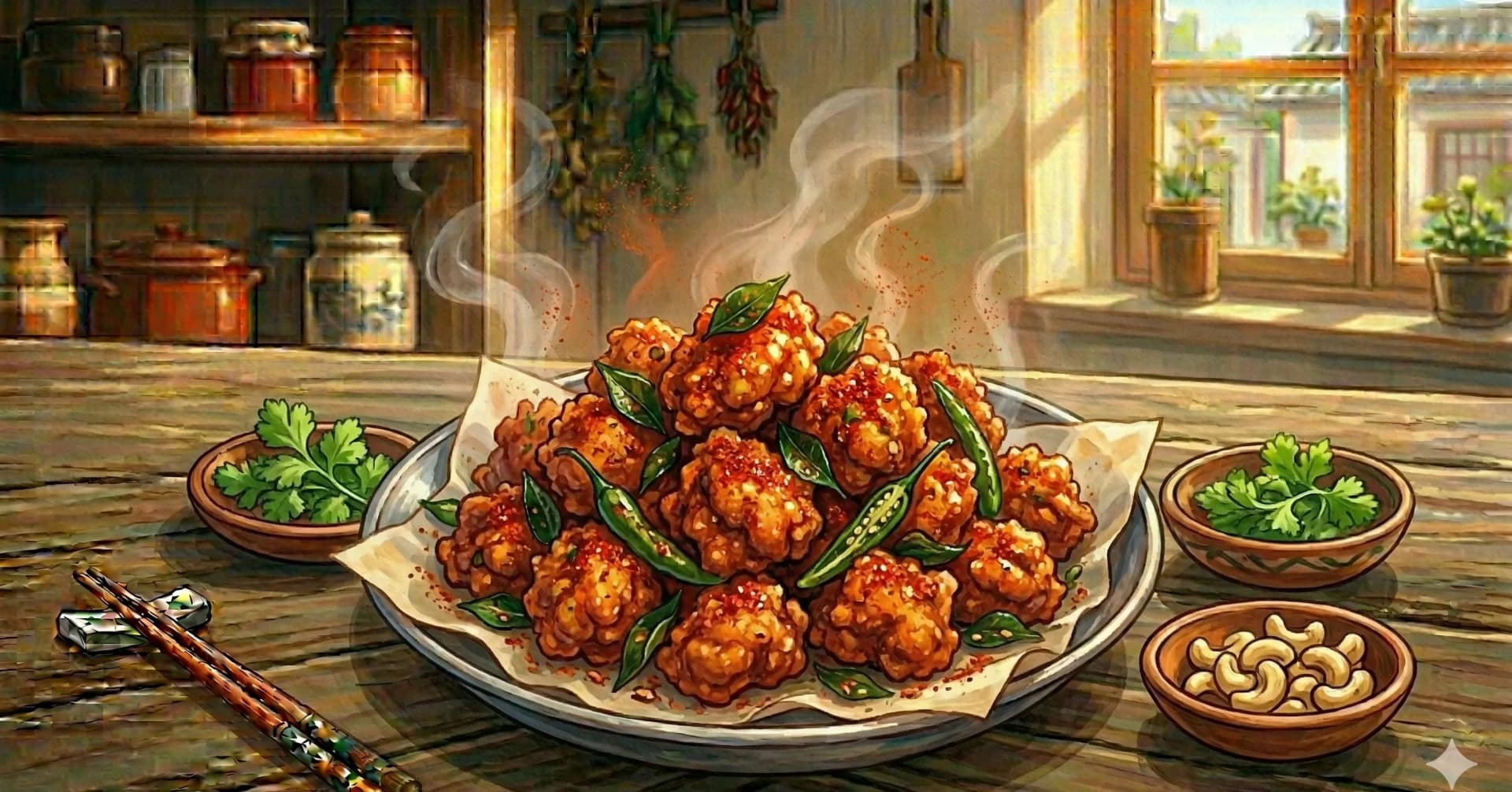
Chennai's famous deep-fried chicken tossed in a crackling tempering of curry leaves, mustard seeds, green chilies, and garlic
The story goes that Chicken 65 was invented in 1965 at Buhari Hotel on Mount Road in Chennai, and that the number was simply the item's position on the menu. The restaurant later added Chicken 78 and Chicken 82, following the same logic. Whether the origin story is precisely true matters less than the fact that the dish became one of the most popular appetizers in India, traveling from Chennai to Hyderabad to every Indian restaurant with a tandoor section and a drinks menu.
What makes Chicken 65 different from other fried chicken is what happens after the frying. The chicken comes out of the oil golden and crispy, looking like any good fritter. Then it goes into a wok with a small amount of oil where mustard seeds are crackling, curry leaves are crisping, green chilies are sizzling, and garlic is turning golden. This tempering, this tadka, is what transforms fried chicken into Chicken 65. The curry leaves shatter between your teeth with a nutty, citrusy intensity. The mustard seeds pop with sharp, pungent heat. The green chilies add a fresh, grassy fire that is completely different from the dried chili heat already in the marinade.
The marinade itself is yogurt-based, which is the South Asian solution to tender fried chicken. The lactic acid in the yogurt breaks down the surface proteins gently, making the chicken tender without the mushiness that vinegar or citrus can cause. A whole egg goes in to bind the coating, along with cornstarch for crunch and enough chili powder to turn everything a deep, warning red. The chicken marinates for at least a couple of hours, though overnight is better. Then it fries fast in small batches and finishes in the tadka. The whole second phase takes about two minutes. Serve it with sambar and rice and do not expect leftovers.
At a Glance
Yield
4 servings
Prep
2 hours
Cook
25 minutes
Total
2 hours 25 minutes
Difficulty
Medium
Ingredients
Marinade Ingredients
- 1.1 lbsboneless chicken (500 g), thighs preferred, cut into big chunks or strips
- 1 tbspplain yogurt
- 1 tbspred chili powder, Kashmiri for color, regular for heat
- —salt, to taste
- 2 tspginger-garlic paste
- 1 tspturmeric
- 1 tbspcornstarch
- 1 tspgaram masala
- 1large egg
For Frying
- —oil
Tempering Ingredients
- 1 tbspoil
- 1/2 tspmustard seeds
- 20-25fresh curry leaves, torn from the stem
- 5-6green chilies, slit lengthwise and cut into 2-inch pieces
To Finish
- 1 tbspfresh yogurt, curd, for finishing
- —red chili powder, optional, for extra color (optional)
Method
- 1
Marinate the chicken. Combine the chicken with yogurt, red chili powder, salt, ginger-garlic paste, turmeric, cornstarch, garam masala, and egg. Mix thoroughly until every piece is evenly coated. Cover and refrigerate for at least 2 hours, ideally overnight.
- 2
Deep fry the chicken. Heat oil for deep frying over medium-high heat. Fry in small batches, 5 to 6 pieces at a time, for 4 to 5 minutes per batch until golden and crispy. They should come out looking like golden fritters. Drain on paper towels. Repeat until all the chicken is fried.
- 3
Make the tempering. In the same pan with about 1 tablespoon of oil (pour out the excess), heat over high heat. Add the mustard seeds and wait for them to crackle. Add the torn curry leaves and slit green chilies. Toss for 15 to 20 seconds until the curry leaves are crisp.
- 4
Toss the chicken. Add all the fried chicken back into the pan. Toss vigorously to coat every piece with the tempering. Add the tablespoon of fresh yogurt and toss again. If not red enough, dust in more chili powder.
- 5
Serve immediately with sambar and rice, or on its own with onion rings and lemon wedges.
Key Ingredient Benefits
Curry Leaves: Rich in carbazole alkaloids studied for antioxidant and anti-inflammatory properties. In Ayurveda, curry leaves stimulate digestive fire (agni), relieve indigestion and nausea, and support liver function. Traditionally also used in hair oils to prevent premature graying. The brief frying preserves aromatic compounds while making them crisp enough to eat whole.
Mustard Seeds: When crackled in hot oil, they release isothiocyanates with antimicrobial and anti-inflammatory properties. In Ayurveda, mustard seeds are warming, used to stimulate digestion and circulation.
Yogurt: The lactic acid gently denatures surface proteins, tenderizing the chicken without harshness. Yogurt marinades have been used across South and Central Asia for thousands of years.
Why This Works
The yogurt marinade tenderizes the chicken while the egg and cornstarch create a crispy coating that sets during frying. Frying in small batches maintains oil temperature for a crispy result. The tempering (tadka) is what makes this Chicken 65 rather than generic fried chicken. Mustard seeds, curry leaves, and green chilies provide three different kinds of heat: sharp pungency, nutty warmth, and fresh grassy burn, layered on top of the dried chili heat in the marinade.
Substitutions & Variations
For bone-in, use drumsticks or wings and fry 7-8 minutes. Replace the egg with 2 tbsp rice flour for egg-free. Paneer or cauliflower can replace chicken for vegetarian versions. Kashmiri chili powder gives the deep red color without extreme heat.
Serving Suggestions
Serve with sambar and steamed rice for a South Indian meal, or on its own as a drinking snack with sliced raw onion and lemon wedges. Also excellent in a paratha wrap with onions and mint chutney.
Storage & Reheating
Store for up to 2 days. Reheat in oven at 400°F for 8-10 minutes. Freeze fried chicken (before tempering) for up to 2 months; do the tadka fresh when serving.
Cultural Notes
Chicken 65 was reportedly invented in 1965 at Buhari Hotel in Chennai. The number referred to its menu position. The restaurant later created Chicken 78, 82, and 90 following the same logic. The dish traveled from Chennai to Hyderabad, where it was adapted to local tastes with more yogurt and green chilies, becoming the most popular version nationwide.
Nutrition Facts
Calories: 414kcal (21%)|Total Carbohydrates: 9g (3%)|Protein: 26g (52%)|Total Fat: 30g (38%)|Saturated Fat: 6.5g (33%)|Cholesterol: 179mg (60%)|Sodium: 118mg (5%)|Dietary Fiber: 2g (7%)|Total Sugars: 1.1g
You Might Also Like
Ratings & Comments
Ratings & Comments
Ratings
Share your thoughts on this recipe.
Sign in to rate and comment