Cross-Cultural · China
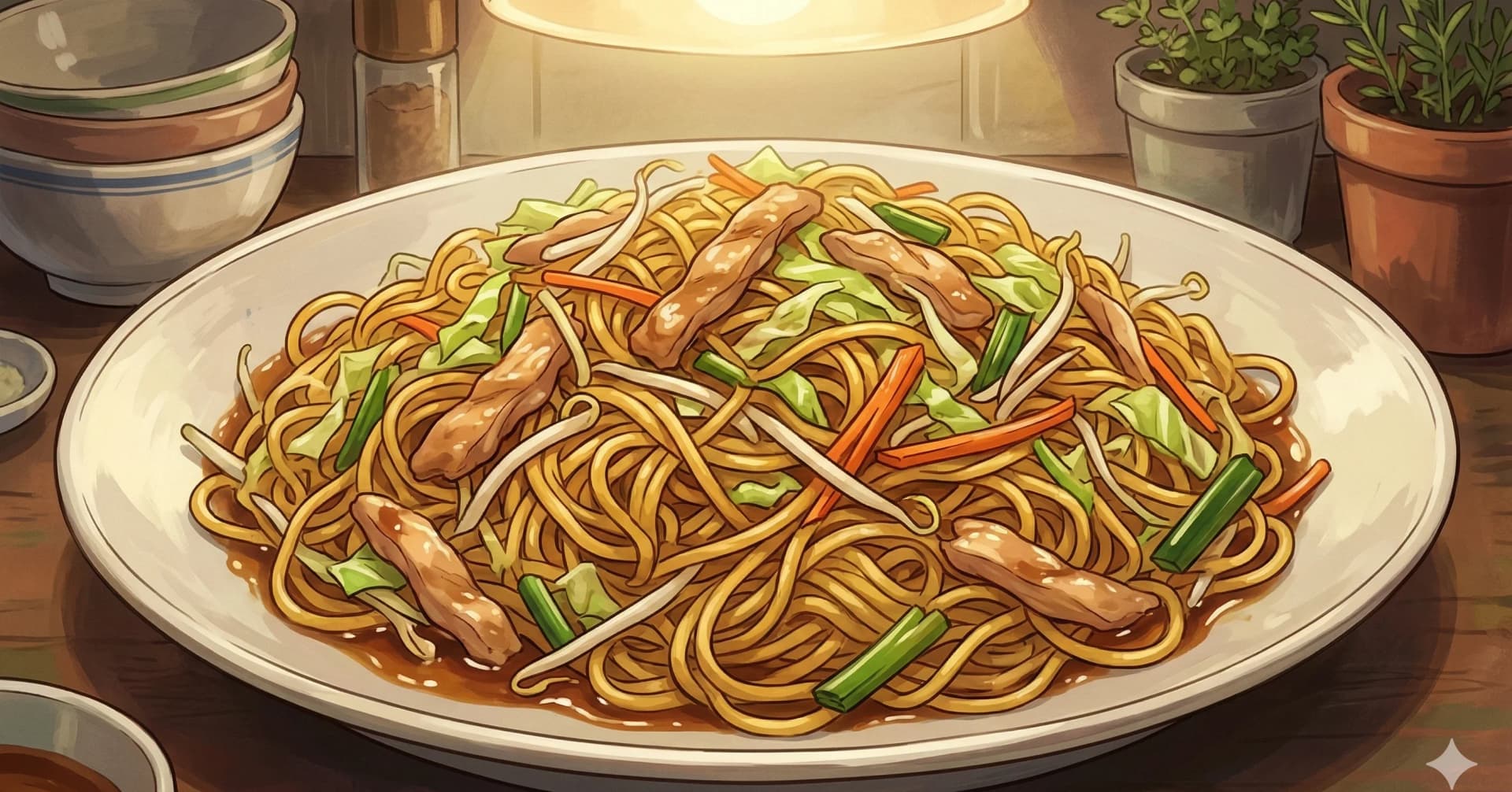
Chicken Chow Mein (鷄肉炒麵)
Thick egg noodles steamed then seared golden in a wok, tossed with chicken, cabbage, bean sprouts, and a soy-oyster sauce
Chow mein means "fried noodles," and the technique that makes good chow mein is not the frying of the toppings but the frying of the noodles themselves. The noodles go into a screaming-hot wok with oil and are left to sit undisturbed for a full minute, developing a golden-brown crust on the bottom. Then they are flipped and the other side gets the same treatment. This searing is what gives chow mein its signature color and texture: crispy and slightly chewy on the outside, soft and saucy on the inside.
The noodle preparation has a step that most recipes skip: steaming before boiling. Fresh thick chow mein noodles are steamed first for 12 to 15 minutes, which kickstarts the cooking without letting them absorb water. Then they go into boiling water for 2 to 3 minutes to finish. This two-stage process produces noodles that are cooked through but not waterlogged, which is essential for getting a good sear in the wok. Soggy noodles steam instead of frying and never develop that golden crust.
The chicken is marinated with oyster sauce and cornstarch, seared in the wok, and removed. The vegetables go in next: cabbage, carrots, and onion, all cut into long strips that match the noodle shape. Everything comes back together at the end with the sauce, a simple combination of oyster sauce, soy sauce, dark soy sauce, sugar, and sesame oil.
At a Glance
Yield
4 servings
Prep
20 minutes
Cook
15 minutes
Total
35 minutes
Difficulty
Medium
Ingredients
Stir-Fry Ingredients
- 18 ozthick fresh chow mein noodles (or pre-steamed chow mein noodles), 510g
- 12 ozboneless chicken thigh, cut into thin strips
- 6 ozcabbage, cut into 1/2-inch strips
- 4 ozbean sprouts, 115g
- 2 ozred onion, cut into strips
- 2 ozcarrot, cut into thin strips
- 1 ozgreen onion, cut into 1-inch pieces
- 4 tbspcooking oil, divided
Marinade Ingredients
- 1 tbspoyster sauce
- 3 tspcornstarch
- 3 tbspwater
- 1/4 tspwhite pepper
Sauce Ingredients
- 2 tbspoyster sauce
- 2 tbsplight soy sauce
- 2 tspdark soy sauce
- 1 tspsugar
- 1 tspchicken bouillon powder (optional)
- 1 tbspsesame oil
Method
- 1
Steam fresh noodles over boiling water for 12–15 min, then transfer them to the boiling water and boil 15–30 sec, stirring to loosen, and drain. (If using pre-steamed noodles, skip the steaming step and just boil them for 5 min, stirring to loosen, then drain.)
- 2
Marinate chicken strips with oyster sauce, cornstarch, water, white pepper.
- 3
Mix sauce: oyster sauce, soy sauces, sugar, chicken bouillon.
- 4
Add oil to marinated chicken. Sear in smoking-hot wok on medium, flip when browned. Remove when done.
- 5
Stir-fry onion until aromatic, add cabbage (20-30 sec), carrots (30 sec on high). Remove.
- 6
Add oil, spread noodles, sear 1 min for golden crust. Flip, sear 1 min. Lower heat, pour sauce over noodles. Add chicken, vegetables, bean sprouts. Toss. Finish with sesame oil.
Key Ingredient Benefits
Chow mein noodles (fresh egg noodles): Wheat noodles enriched with egg, typically thinner than lo mein and made for stir-frying rather than soup. The egg adds protein and richness; the wheat provides about 40 g of carbohydrate per serving for sustained energy. Fresh noodles produce the characteristic crispy-soft contrast that defines chow mein; dried noodles can be substituted but produce a different texture.
Chicken thigh: Dark meat from the leg has roughly 25% more fat than breast and stays juicy through the aggressive heat of wok stir-frying. Thigh meat is also more forgiving of slight overcooking, an excellent source of niacin and selenium, and noticeably more flavorful than breast meat in this fast-cooked context.
Oyster sauce: The defining sauce of Cantonese stir-fries, made from concentrated oyster extract, sugar, and salt. Contributes a glossy mouth-coating quality and savory umami that holds up to the high-heat technique. Lee Kum Kee, the dominant brand, was founded in Guangdong in 1888 — oyster sauce and chow mein have been linked for nearly as long as the bottled product has existed.
Cabbage and bean sprouts: The classic two-vegetable pairing. Napa cabbage (or green cabbage) adds sweet crunch and contributes vitamin C, vitamin K, and fiber. Bean sprouts add the fresh, watery snap that keeps the dish from feeling heavy — they contribute mostly water and small amounts of folate and vitamin C.
Shaoxing wine: A small splash during the chicken marinade helps tenderize the meat and contributes aromatic complexity. Shaoxing is the Chinese cooking wine equivalent of dry sherry — fermented from glutinous rice with a wheat-based starter.
Dark and light soy sauce together: Light soy provides salt and umami; dark soy provides the deep mahogany color that gives restaurant chow mein its visual appeal. Using both is essential for the authentic look.
Why This Works
Steaming the fresh noodles for a few minutes before boiling is the technique that separates restaurant chow mein from soggy home versions. The brief steam partially sets the noodle surface starch, making them resilient to subsequent boiling and high-heat stir-frying. Skipping this step produces noodles that go from undercooked to mushy with no middle ground.
The wok must be smoking hot before the noodles go in. Once they hit the metal, the urge to stir is overwhelming — resist it. Let the noodles sit against the hot surface for 30 to 60 seconds without moving. This is how you develop the golden, lightly crispy bottom layer that gives chow mein its name. Flip, let the other side sear, then start tossing. The same principle applies to fried rice — patience before stirring builds crust.
Cutting all ingredients into long thin strips that match the noodle shape matters more than it sounds. Uniform shapes mean every chopstick grab gets a balanced bite of noodle, vegetable, and protein. Cubes of chicken or chunks of vegetable would slide off the noodles instead of integrating with them.
Marinating the chicken with cornstarch (sometimes called velveting) creates a thin protective coating that holds in moisture during the aggressive wok heat. The cornstarch absorbs the marinade liquid and forms a gel-like layer around each piece of chicken, which then becomes silky and tender after cooking. This technique appears across Chinese stir-fry cooking and is what separates restaurant-quality protein from home versions.
The sauce is added near the end, just enough to coat. Pouring sauce in too early would steam the noodles and turn them soggy; adding it late allows the noodles to remain crispy in spots while still absorbing flavor. The toss is fast and the timing tight — restaurant cooks finish a plate of chow mein in under 90 seconds of wok time.
Substitutions & Variations
Noodles: Fresh chow mein is ideal but not always available. Lo mein noodles (slightly thicker) work but stay softer. Dried wheat noodles or even spaghetti can substitute in a real pinch — boil per package, drain, toss with oil to prevent sticking, then proceed. The result is acceptable but the texture is different.
Chicken: Chicken breast works but tends to dry out — slice thinner and reduce cooking time. Pork shoulder, beef sirloin, or shrimp all work with the same technique. For vegetarian, substitute pressed firm tofu cubes or sliced shiitake mushrooms.
Cabbage: Napa cabbage, green cabbage, or bok choy all work. Some versions use shredded carrots, snow peas, or sliced onion for color.
Bean sprouts: Can be omitted without ruining the dish. Snow peas, julienned bell pepper, or thin-sliced onion work as substitutes.
Oyster sauce: Vegetarian oyster sauce (mushroom-based) works for pescatarian or vegetarian versions. Hoisin sauce is too sweet and not a good substitute.
Shaoxing wine: Dry sherry is the closest substitute. Dry sake works. Skip entirely if needed — the dish loses some depth but remains good.
Dark soy sauce: Cannot really be substituted for color. A small amount of molasses + extra light soy approximates the look but not the flavor.
Spicy variation: A teaspoon of chili oil or a tablespoon of Sichuan chili oil added at the end produces a spicy chow mein — the version popular in Sichuanese-Cantonese fusion restaurants.
Serving Suggestions
Chow mein is a one-bowl meal in casual contexts and a banquet item in formal Cantonese dinners. For a quick weeknight meal, serve straight from the wok with no accompaniment — the dish provides protein, carbs, and vegetables in a single plate.
For a more elaborate Cantonese dinner, pair with steamed fish with ginger and scallion, salt and pepper squid, a stir-fried vegetable like gai lan, and a clear soup. Chow mein traditionally appears late in a multi-course Chinese banquet, after the main proteins.
In Cantonese tradition, noodles symbolize longevity, so chow mein is often served at birthday celebrations. Cutting the noodles is considered bad luck (it symbolically shortens life), so they are eaten whole, slurped from the bowl.
Pair with hot Chinese tea (jasmine, oolong, or pu-erh). Cold light beer (Tsingtao, Asahi) works well with the savory sauce. Avoid wine — the oyster sauce and soy notes clash with most reds and whites.
For a Western-leaning casual presentation, serve with chili crisp or chili oil on the side and let diners customize the heat.
Storage & Reheating
Refrigerator: Stores well for up to 3 days in an airtight container. The noodles will absorb additional sauce overnight, which actually improves flavor though textures soften slightly.
Reheating: A hot wok or large skillet with a splash of water for 2 to 3 minutes restores most of the original texture. Avoid microwaving when possible — it produces uneven hot spots and never fully recovers the crispy edges. If using a microwave, sprinkle a tablespoon of water over the noodles and cover loosely.
Make-ahead components: The chicken can be marinated up to 24 hours in advance. The vegetables can be prepped and stored separately in the fridge for up to 2 days. The sauce mixture can be combined a day ahead. The actual cooking goes faster with prep already done — call it a 5-minute weeknight meal once mise-en-place is ready.
Freezing: Not recommended. The noodles and vegetables suffer significantly on thawing — texture becomes mushy.
Restaurant trick: Many Cantonese restaurants par-cook the noodles in batches and refrigerate them oiled and loose, then finish to order. This is exactly the approach that works at home for entertaining: par-cook the noodles in the morning, finish in 90 seconds when guests arrive.
Cultural Notes
Chow mein (炒麵, chǎo miàn in Mandarin, cau min in Cantonese, literally "fried noodles") is one of the foundational dishes of Cantonese cooking and one of the most globally recognized Chinese dishes. The technique of stir-frying wheat noodles in a wok with vegetables and protein dates back centuries in southern China, and the modern version we know emerged in the Cantonese cooking tradition of Guangdong province.
In Hong Kong and Guangdong, two distinct styles dominate. Cantonese-style chow mein (港式炒麵) features pan-fried noodles formed into a crispy disc and topped with stir-fried protein and vegetables in sauce — sometimes called "Hong Kong style" or "crispy noodles" in Western restaurants. Soft chow mein (軟炒麵) is the version closer to this recipe, with noodles tossed throughout the stir-fry. Both are valid and beloved.
Chow mein traveled with the Cantonese diaspora and became one of the foundational dishes of Chinese-American, Chinese-British, and Chinese-Australian cuisines. The Americanized version, often made with crispy "fried noodles" served as a topping or side, is a different dish entirely — closer to the Cantonese restaurant tradition but adapted for American palates. The version in this recipe is closer to home-style Hong Kong chow mein than the take-out American version.
The dish is also closely tied to the cultural symbolism of noodles in Chinese tradition. Long noodles represent longevity, and chow mein appears at birthday celebrations, family gatherings, and Lunar New Year meals. The noodles should be eaten without cutting — slurping the full length is the proper way to honor the longevity symbolism.
Chow mein's global ubiquity has also produced regional adaptations. Indian-Chinese chow mein incorporates curry powder and ketchup. Filipino pancit canton uses similar noodles but with a sweeter, lighter sauce. Caribbean Chinese versions often include curry, scotch bonnet, and tropical vegetables. All trace back to Cantonese cooking but have evolved into distinct dishes in their own right.
Nutrition Facts
Calories: 693kcal (35%)|Total Carbohydrates: 83.6g (30%)|Protein: 29.1g (58%)|Total Fat: 27.3g (35%)|Saturated Fat: 6.4g (32%)|Cholesterol: 160mg (53%)|Sodium: 1202mg (52%)|Dietary Fiber: 5.1g (18%)|Total Sugars: 7g
You Might Also Like
Ratings & Comments
Ratings & Comments
Ratings
Share your thoughts on this recipe.
Sign in to rate and comment