Chinese Cuisine
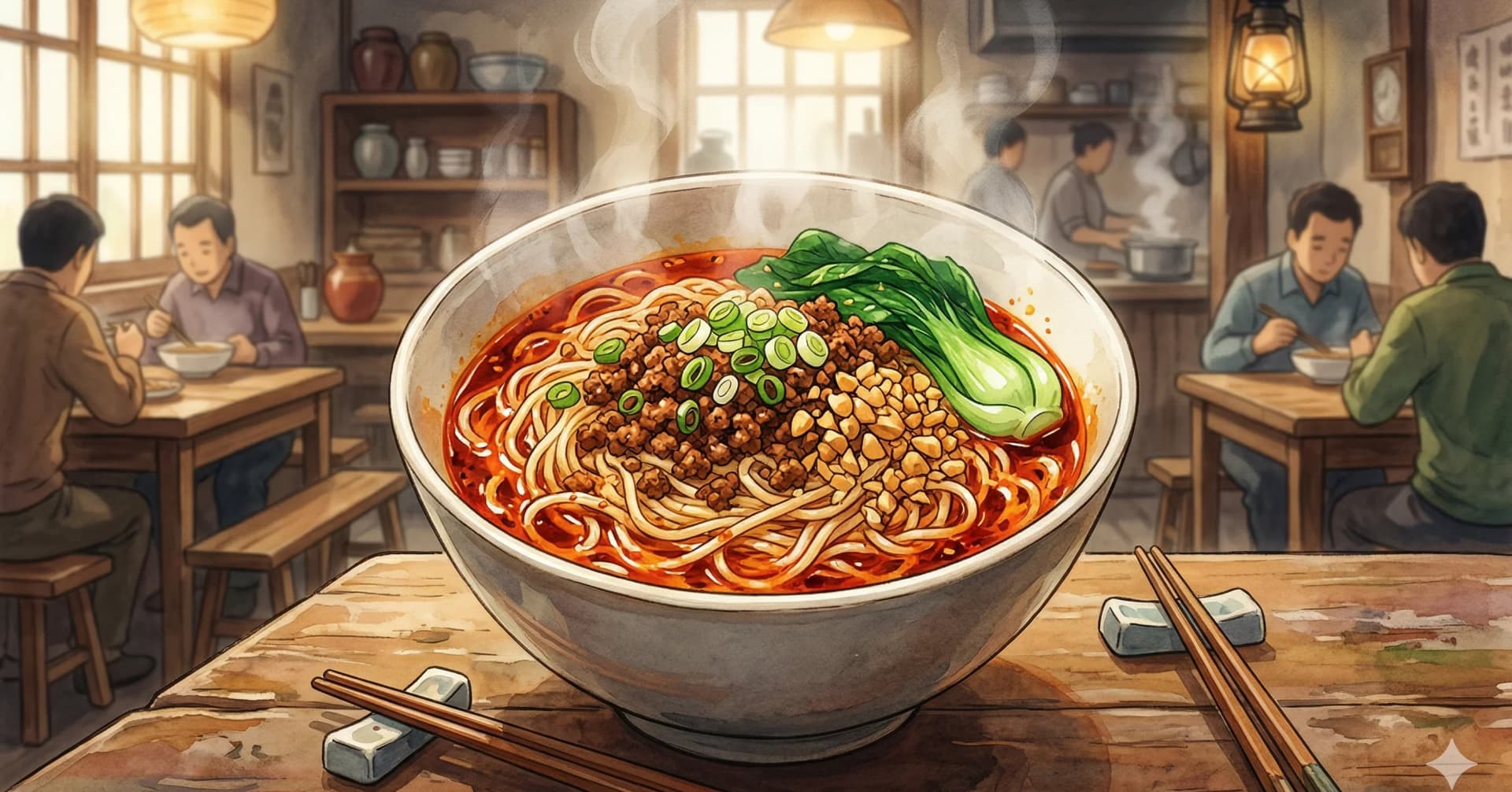
Dan Dan Noodles (担担面)
Sichuan street noodles tossed in a fiery sesame and chili oil sauce with crispy seasoned pork
The name comes from the carrying pole, the dan dan, that street vendors once balanced across their shoulders as they walked the alleys of Chengdu. On one end hung a pot of noodles, on the other a cabinet of sauces and toppings. Each bowl was assembled to order: a spoonful of sesame paste, a pour of chili oil, a pinch of preserved vegetables, a ladle of pork crumbles, and then noodles dropped from the pot, still dripping with starchy water. The vendor would hand you a tiny bowl, barely larger than a teacup, and you would eat it standing on the street in three or four bites.
Modern versions are bigger, but the principle remains the same. The sauce does the heavy lifting. It brings together the Sichuan flavor pillars of ma (numbing, from Sichuan peppercorn) and la (heat, from chili oil) with the rich nuttiness of sesame paste, the salt of soy sauce, and the sour edge of black vinegar. These five elements, layered in the bottom of each bowl, hit you simultaneously with the first bite. Nothing in the sauce is subtle, and that is the point.
The pork topping is seasoned with ya cai, a preserved mustard green unique to Sichuan cooking. It tastes salty, earthy, and faintly sweet. When fried until crispy with the ground pork, it adds texture and a savory depth that plain meat cannot achieve. If you cannot find it, zha cai (Sichuan preserved radish) is a reasonable substitute, though the flavor is sharper.
This is a dish that rewards keeping a jar of good chili oil in your refrigerator. Once you have that, the entire recipe comes together in under thirty minutes.
At a Glance
Yield
6 servings
Prep
20 minutes
Cook
30 minutes
Total
50 minutes
Difficulty
Easy
Ingredients
Chili Oil Ingredients
- 1 cupneutral oil
- 1¼ tbspSichuan peppercorns
- 1cinnamon stick
- 2star anise
- 5 tspcrushed red pepper flakes
Pork Ingredients
- 1 tbspneutral oil
- 8 ozground pork
- 2 tspsweet bean paste or hoisin sauce
- 2 tspShaoxing wine
- 1 tspdark soy sauce
- ¼ ozfive spice powder
- 1¾ ozsui mi ya cai (Sichuan preserved mustard greens)
Sauce Ingredients
- ¾ ozChinese sesame paste (or natural tahini)
- 1½ tbsplight soy sauce
- 1⅔ tspChinkiang (black rice) vinegar
- 1 tspsugar
- ¼ ozfive spice powder
- ⅓ tspground Sichuan peppercorn
- 2 tbspchili oil (from above or store-bought)
- 1 clovegarlic, finely minced
- 2 tbsphot noodle cooking water
Noodle Ingredients
To Garnish
- —Crushed roasted peanuts
- —Sliced scallions
Method
- 1
Make the chili oil. Combine the oil, Sichuan peppercorns, cinnamon stick, and star anise in a small saucepan. Heat slowly over medium-low heat until the oil reaches about 325 degrees F and the spices are fragrant, roughly 10 minutes. Remove from heat and let sit for 6 to 7 minutes. Fish out the whole spices with a slotted spoon and discard. Add the crushed red pepper flakes and stir gently. The residual heat will toast the flakes and the oil will turn a deep brick red. Let cool completely, then transfer to a glass jar. This makes more than you need, and keeps well.
- 2
Cook the pork topping. Heat 1 tablespoon of oil in a wok over medium-high heat. Add the ground pork and cook, breaking it into small crumbles with a spatula, until it is well browned and no longer pink. Add the sweet bean paste, Shaoxing wine, dark soy sauce, and five spice powder. Stir and cook until the liquid has evaporated and the pork is dark and slightly crispy, about 3 minutes. Transfer to a bowl. In the same wok, add the ya cai and stir-fry over medium heat for 2 minutes until fragrant. Set aside separately.
- 3
Mix the sauce. For each serving bowl, combine the sesame paste, soy sauce, vinegar, sugar, five spice, ground Sichuan peppercorn, chili oil, and garlic. The sesame paste will be thick, so it helps to loosen it first with the hot noodle cooking water (reserved in the next step). Stir until smooth and well combined.
- 4
Cook the noodles and greens. Bring a large pot of water to a rolling boil. Cook the noodles according to package directions. Before draining, reserve about 1 cup of the starchy cooking water. In the last 30 seconds of cooking, add the greens to the pot to blanch briefly. Drain the noodles and greens together.
- 5
Assemble the bowls. Add 2 tablespoons of hot noodle water to each sauce bowl and stir to loosen. Add a portion of noodles and blanched greens. Top with a generous spoonful of the pork crumbles and a scattering of ya cai. Garnish with crushed peanuts and sliced scallions.
- 6
Toss and eat. Mix everything together thoroughly at the table before eating. Every strand of noodle should be coated in the sauce.
Key Ingredient Benefits
Chinese sesame paste: Made from roasted white sesame seeds, this paste is darker and more intensely flavored than Middle Eastern tahini. The roasting process deepens the nutty aroma and produces a thicker consistency. Sesame seeds are high in calcium (about 88 mg per tablespoon), iron, and lignans (sesamin and sesamolin), which research associates with antioxidant activity. Tahini can substitute, though the flavor will be lighter.
Sui mi ya cai: A preserved mustard green specific to Yibin, Sichuan. The greens are sun-dried, salted, and fermented, producing a complex salty-sweet flavor. This is not the same as the more commonly available zha cai (preserved radish), though both are fermented Sichuan condiments.
Sichuan peppercorns: The numbing compound hydroxy-alpha-sanshool activates tactile receptors that detect vibration, which is why the sensation feels like buzzing rather than burning. Research from University College London confirmed this unique sensory mechanism. In traditional Chinese medicine, Sichuan peppercorn is classified as warm and pungent, associated with the spleen and stomach meridians.
Why This Works
The sauce is built in layers, and each ingredient plays a specific role. The sesame paste provides fat and nuttiness, acting as the base that clings to the noodles. The soy sauce brings salt and umami. The Chinkiang vinegar adds a mellow acidity that prevents the dish from feeling heavy. The chili oil contributes heat, color, and the toasty fragrance of fried red pepper. And the ground Sichuan peppercorn provides the numbing ma that makes your lips tingle and opens up your palate to receive all the other flavors more intensely.
Loosening the sauce with hot noodle water is essential. The starchy water acts as an emulsifier, binding the sesame paste and chili oil into a smooth, clingy coating. Without it, the sauce separates and pools at the bottom of the bowl instead of adhering to each strand.
Browning the pork past the point where most cooks would stop is deliberate. The meat should be dark, almost caramelized, and slightly crispy at the edges. This concentrated flavor stands up to the intense sauce. Soft, pale pork would disappear into the bowl.
The ya cai is cooked separately from the pork so it retains its own distinct texture and flavor. Mixed together, both would lose their individual contributions. Kept apart, they create two different layers of savory depth when scattered over the noodles.
Substitutions & Variations
Sesame paste: If Chinese sesame paste is unavailable, natural (unsweetened) peanut butter is a common Sichuan substitute. Some cooks mix equal parts tahini and peanut butter for a closer approximation.
Ya cai: Substitute zha cai (Sichuan preserved radish), rinsed and finely chopped. The flavor is sharper and less sweet, but it fills the same textural role.
Protein: Ground chicken or turkey will work, though they brown less deeply than pork. For a vegetarian version, crumbled firm tofu or chopped mushrooms fried until golden replicate the texture.
Cold version: Dan dan noodles can be served cold in summer. Cook and rinse the noodles under cold water, then toss with the sauce. This is common street food in Sichuan during hot weather.
Less spicy: Reduce the chili oil to 1 tablespoon per bowl and omit the ground Sichuan peppercorn. The dish will lose its signature ma la character but remain flavorful.
Serving Suggestions
Dan dan noodles are typically eaten as a small meal or snack, not part of a multi-dish dinner. In Sichuan, a single serving is quite small. For a fuller meal, pair with Wonton Soup for contrast: the clean, light broth of the soup refreshes the palate between bites of the rich, intense noodles.
For a Sichuan-themed dinner, serve alongside Mapo Tofu and a cooling side of Bai Qie Ji. The cold poached chicken balances the heat of both the noodles and the tofu. Hot and Sour Soup shares a similar vinegar-forward sensibility and makes a natural companion.
Storage & Reheating
Pork topping: Keeps in an airtight container in the refrigerator for up to 4 days. Reheat in a dry wok over medium heat to re-crisp before serving.
Chili oil: Keeps in a sealed glass jar in the refrigerator for up to 1 month. The flavor deepens over the first few days.
Sauce: Can be mixed in advance (minus the hot noodle water) and refrigerated for up to 3 days. Add the hot water just before serving.
Noodles: Cook fresh each time. Cold leftover noodles can be repurposed by tossing with sauce for a cold noodle variation.
Cultural Notes
Dan dan mian (担担面, "shoulder pole noodles") is the Sichuan street noodle dish named for the bamboo dan (carrying pole) that vendors once used to hawk the dish through Chengdu and Chongqing. A vendor would balance the pole across one shoulder with a basket of fresh noodles on one end and a charcoal-warmed pot of sauce on the other, calling out to customers in the street and assembling the dish to order from the contents of the two baskets. The shoulder pole vendors are gone from modern China, but the name stuck, and the dish remains one of the most recognized expressions of Sichuan noodle cooking.
The traditional Sichuan version is far drier and more concentrated than the soup-based dan dan noodles served in many American Chinese restaurants. The authentic preparation is built from a small pool of sauce at the bottom of the bowl (rather than a broth) into which the cooked noodles are dropped and tossed by the diner just before eating. The sauce stack includes Chinese black vinegar (Chinkiang), light soy sauce, sesame paste or zhi ma jiang, Sichuan chili oil, ground Sichuan peppercorn, finely minced garlic, and a small amount of stock. On top of the noodles goes a generous spoonful of sui mi ya cai (preserved mustard greens fried with ground pork until the pork is dark, crispy, and concentrated), chopped scallions, and crushed roasted peanuts. The diner tosses everything together so the noodles coat themselves in the sauce on the way up to the mouth.
The dish has been documented in Chinese cooking writing since at least the late nineteenth century, with the modern form crystallizing in Chengdu around the 1930s. Fuchsia Dunlop's The Food of Sichuan describes dan dan mian as the noodle dish that best demonstrates the xiao chi (small eats) tradition of Chengdu street food, where intense flavors are delivered in small portions designed for snacking between meals rather than as a full lunch or dinner. The Chongqing version of the dish often runs hotter and uses more chili oil, while the Chengdu version typically leans more on the vinegar-sesame-numbing flavor stack and uses less aggressive heat.
Nutrition Facts
Calories: 461kcal (23%)|Total Carbohydrates: 46.2g (17%)|Protein: 14.9g (30%)|Total Fat: 24.1g (31%)|Saturated Fat: 5.7g (29%)|Cholesterol: 49mg (16%)|Sodium: 634mg (28%)|Dietary Fiber: 2.7g (10%)|Total Sugars: 2.7g
You Might Also Like
Ratings & Comments
Ratings & Comments
Ratings
Share your thoughts on this recipe.
Sign in to rate and comment