Korean Cuisine
Gochujang Chicken (Spicy Korean Glazed Chicken)
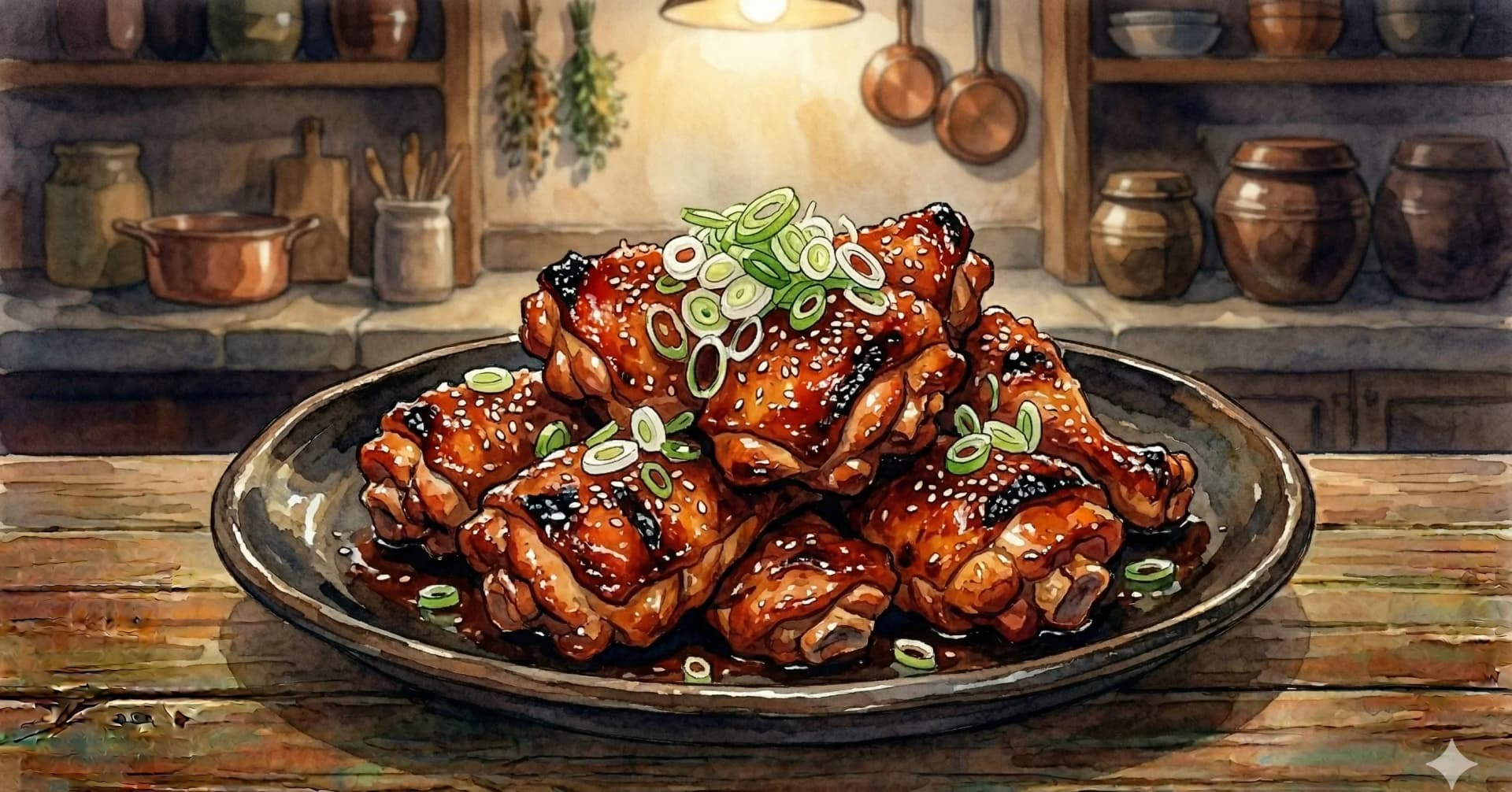
Chicken thighs roasted under a sticky, caramelized gochujang glaze until charred at the edges and impossibly tender within
The glaze pulls you in first, a deep, burnished red that catches the light with a sticky, lacquered shine. When you cut into the thigh, the knife slides through the caramelized surface into yielding, juicy meat, and the aroma that rises is an intoxicating blend of fermented chili, toasted garlic, and honey darkened by heat. The edges of each piece, where the glaze has concentrated and charred against the pan, are the prize.
Gochujang chicken is a relatively modern dish, part of the global wave of Korean flavors that has made gochujang one of the most sought-after condiments in kitchens around the world. While Korea has a deep tradition of marinated and grilled meats, this particular preparation, using gochujang as a roasting glaze, represents the ingredient's versatility beyond stews and sauces. The fermented paste's unique combination of sweetness, spice, and umami makes it a natural partner for roasted poultry.
What the dish delivers is weeknight simplicity with dinner-party results. The marinade comes together in minutes, the oven does the work, and the finished chicken looks and tastes far more impressive than the effort suggests. Bone-in, skin-on thighs are ideal because they stay moist during the high-heat roast and the skin renders and crisps under the glaze.
The practical insight is to start skin-side down and flip halfway through. This renders the fat from the skin into the pan, which then bastes the chicken from below, while the glaze on top caramelizes without burning. A final brush of fresh glaze in the last few minutes builds the sticky layers.
At a Glance
Yield
4 servings
Prep
15 minutes (plus 30 minutes marinating)
Cook
35 minutes
Total
1 hour 20 minutes
Difficulty
Easy
Ingredients
Glaze Ingredients
- ¼ cupgochujang
- 2 tbspsoy sauce
- 1 ozhoney
- 1 tbsprice vinegar
- 1 tbspsesame oil
- 2½ tbspminced garlic (about 4 cloves)
- 1¾ tbspminced fresh ginger
- 1 tbspvegetable oil
- 1½ tspgochugaru (optional, for extra heat)
Chicken Ingredients
- 8bone-in (about 1.2 kg), skin-on chicken thighs
- —Salt and black pepper
To Garnish
- —Toasted sesame seeds
- 2scallions, thinly sliced
- —Fresh red chili, thinly sliced (optional)
Method
- 1
Make the gochujang glaze. Whisk together the gochujang, soy sauce, honey, rice vinegar, sesame oil, garlic, ginger, vegetable oil, and gochugaru (if using) in a bowl. The mixture should be smooth and pourable, with a consistency like thick salad dressing.
- 2
Season the chicken thighs lightly with salt and black pepper on both sides. The glaze contains soy sauce, so go easy on the salt.
- 3
Place the chicken in a large bowl or resealable bag. Pour about two-thirds of the glaze over the chicken and turn to coat every surface. Reserve the remaining third for basting later. Marinate for at least 30 minutes at room temperature, or up to overnight in the refrigerator.
- 4
Preheat the oven to 220°C (425°F). Line a baking sheet with aluminum foil for easy cleanup. Place an oven-safe wire rack on the baking sheet if you have one, which allows air to circulate under the chicken.
- 5
Arrange the chicken thighs skin-side down on the prepared baking sheet or rack, spacing them at least 2 cm apart so they roast rather than steam.
- 6
Roast for 15 minutes skin-side down. The fat will begin to render from the skin and the underside will start to caramelize against the hot pan.
- 7
Flip the chicken thighs skin-side up. Brush generously with the reserved glaze. The skin should be starting to turn golden and the glaze should sizzle when it hits the hot surface.
- 8
Roast for another 15 minutes. The glaze will darken and become sticky, and the skin will render further and start to crisp around the edges.
- 9
Brush one more layer of the remaining glaze over the chicken during the last 5 minutes of cooking. This final coat builds the lacquered, sticky surface that defines the dish.
- 10
Check for doneness. The internal temperature should reach 75°C (165°F) at the thickest part of the thigh. The juices should run clear when pierced, and the glaze should look deeply caramelized, nearly charred in spots, but not black.
- 11
Remove from the oven and let the chicken rest for 5 minutes on the baking sheet. The glaze will continue to set and become stickier as it cools slightly.
- 12
Transfer to a serving platter. Scatter toasted sesame seeds, sliced scallions, and fresh chili slices over the top. Serve immediately while the glaze is warm and glossy.
Key Ingredient Benefits
Gochujang: Contains capsaicin, which research suggests may boost metabolism and have anti-inflammatory properties. The fermentation process creates beneficial enzymes and may improve the bioavailability of nutrients. The glutinous rice in gochujang provides the sugars that caramelize so effectively during roasting.
Chicken thighs: Higher in iron, zinc, and B vitamins compared to breast meat. The dark meat also contains more myoglobin and connective tissue, which keeps the meat moist during high-heat cooking.
Ginger: Contains gingerol, a bioactive compound that research suggests has anti-nausea and anti-inflammatory properties. Traditionally used across Asian medicine systems for digestive support.
Honey: Provides antioxidants and trace minerals. Local raw honey has been traditionally used for sore throats and seasonal allergies, though scientific evidence for the latter is limited.
Why This Works
Gochujang is a uniquely effective roasting glaze because it contains sugars from glutinous rice that caramelize beautifully at high heat, along with proteins from fermented soybeans that participate in the Maillard reaction. Together, these create the deep, complex browning that makes the finished chicken look and taste so compelling.
Honey amplifies the caramelization and provides additional stickiness. Rice vinegar balances the sweetness and adds brightness that keeps the glaze from becoming cloying. Sesame oil contributes a nutty background aroma that deepens as it heats.
Starting skin-side down allows the fat to render directly onto the hot pan, which crisps the skin more effectively than starting skin-side up. Flipping midway means both sides get time in direct contact with heat, and the glaze on top gets the benefit of the oven's radiant heat to caramelize.
The reserved glaze, applied as a fresh coat in the final minutes, ensures the surface looks freshly lacquered rather than dried out. Each layer of glaze adds flavor and builds the sticky, caramelized crust.
Substitutions & Variations
Chicken cut: Bone-in drumsticks or whole legs work well with the same method. Boneless, skinless thighs will cook faster (about 20 minutes total) but will not develop the same crispy skin. Wings are excellent for a party snack version.
Sweetener: Maple syrup or brown sugar can replace honey. Each will bring a slightly different flavor profile. Brown sugar creates a more molasses-like depth.
Lower heat: If the glaze is browning too quickly, reduce the oven to 200°C (400°F) and extend the cooking time by 5 to 10 minutes.
Sheet pan meal: Add cubed sweet potatoes, broccoli, or sliced onion to the baking sheet around the chicken for a complete one-pan dinner. Toss the vegetables in a little oil and salt before adding.
Grilled version: Grill the marinated thighs over medium heat, turning frequently and basting with the reserved glaze. Watch carefully, as the sugars in the glaze can burn over direct flame.
Serving Suggestions
Serve gochujang chicken over steamed white rice with the pan drippings spooned over the top. A simple sigeumchi namul or kongnamul muchim alongside provides a cool, clean contrast. For a more substantial spread, add kimchi and a bowl of doenjang-jjigae. The chicken also works beautifully sliced and tucked into lettuce wraps with pickled vegetables.
Storage & Reheating
Leftover chicken: Store in an airtight container in the refrigerator for up to 3 days. The glaze becomes even stickier when cold.
Reheating: Place on a baking sheet and warm in a 180°C (350°F) oven for 10 to 12 minutes. The oven restores the glaze's caramelized quality. Microwaving works in a pinch but softens the skin.
Meal prep: The raw marinated chicken can be stored in the refrigerator for up to 24 hours before cooking. This makes it an excellent prepare-ahead weeknight option.
Freezing: Marinate the raw chicken and freeze in a sealed bag for up to 2 months. Thaw overnight in the refrigerator and roast as directed.
Cultural Notes
Gochujang (고추장), the fermented red chili-soybean paste at the center of this dish, is one of the three foundational Korean jang (장, fermented pastes), alongside doenjang (see doenjang jjigae) and ganjang (soy sauce). Traditional gochujang is aged in earthenware onggi pots over months or years, developing a complex sweet-savory-funky depth that sets it apart from the simpler chili pastes of neighboring cuisines.
Using gochujang as a meat glaze rather than as a stew or stir-fry component is a relatively modern Korean cooking move. The technique took off in the 1990s and 2000s, partly inspired by the growing popularity of Korean fried chicken (chimaek, 치맥) and dishes like yangnyeom chicken, where the sticky lacquered sweet-spicy glaze became the defining textural experience. Gochujang-glazed chicken extended the same idea to oven-roasting and tabletop grilling, producing a less greasy, more weeknight-friendly version of the same pleasure.
Within the wider Korean chicken canon, gochujang chicken sits alongside dak galbi, dakdoritang, and the various dak preparations that use gochujang as their flavor engine. What sets the glazed-and-roasted version apart is its accessibility. No specialized griddle. No communal pot. No deep-frying setup. Just a sheet pan and an oven. The dish has spread widely through Korean-American kitchens and home-cooking blogs, where it has become one of the most popular gateway recipes to Korean flavors.
The crispy, slightly charred edges of the chicken where the glaze caramelizes deepest are universally agreed to be the best part.
Nutrition Facts
Calories: 768kcal (38%)|Total Carbohydrates: 16.1g (6%)|Protein: 60.5g (121%)|Total Fat: 50.2g (64%)|Saturated Fat: 12.3g (62%)|Cholesterol: 315mg (105%)|Sodium: 1095mg (48%)|Dietary Fiber: 1.4g (5%)|Total Sugars: 9.1g
You Might Also Like
Ratings & Comments
Ratings & Comments
Ratings
Share your thoughts on this recipe.
Sign in to rate and comment