Vietnamese Cuisine
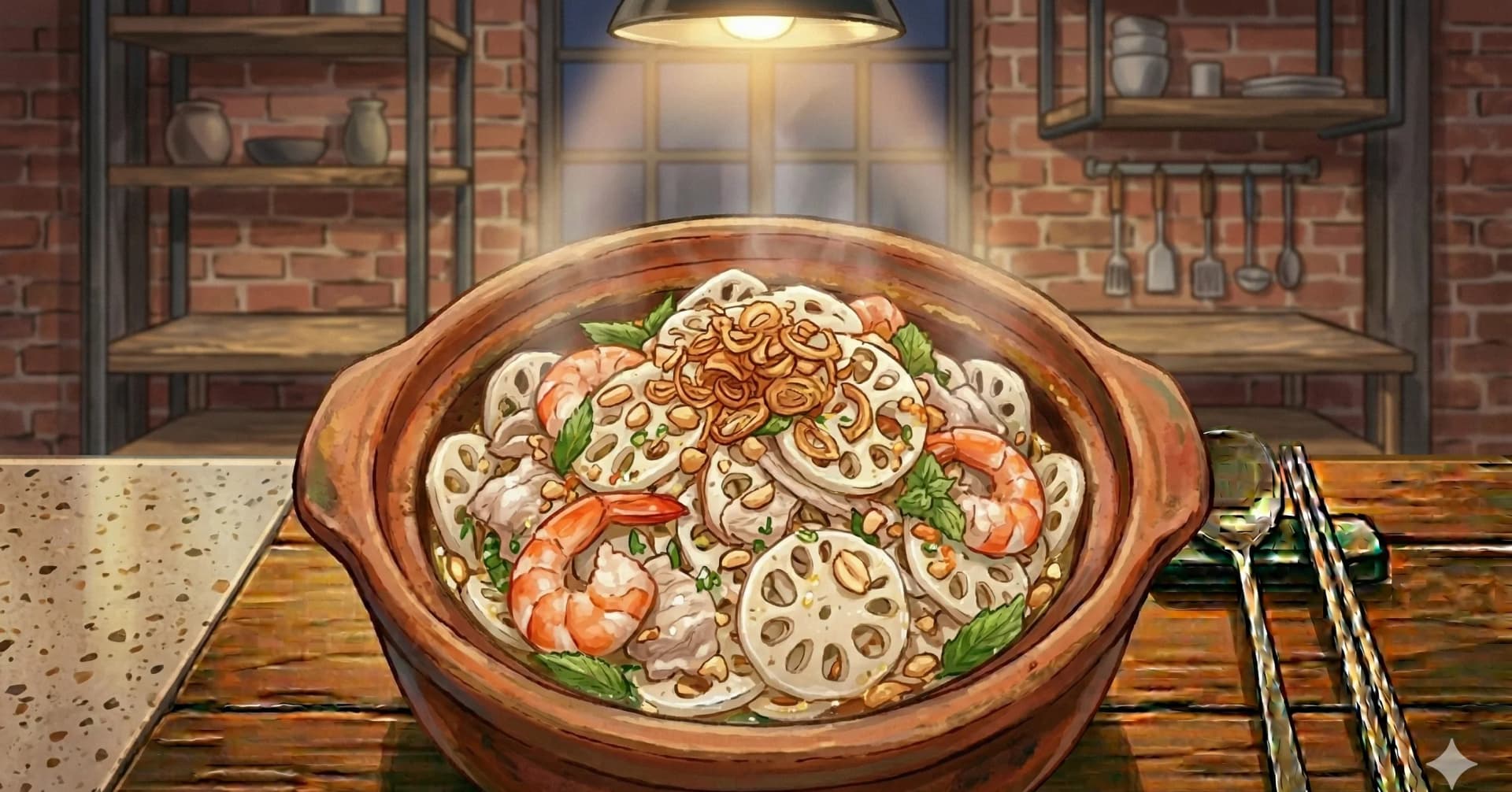
Lotus Root Shrimp Salad (Gỏi Ngó Sen Tôm Thịt)
Vietnamese lotus stem salad with shrimp, pork belly, pickled vegetables, and a tangy fish sauce dressing
Goi ngo sen is the kind of salad that rewards patience with texture. The lotus stems, harvested young from the rhizome of the lotus plant before they mature into the dense, starchy root used in Chinese and Japanese cooking, have a crunch that sits somewhere between celery and jicama but with a cleaner, more delicate sweetness. A brief pickle in vinegared water softens that crunch just enough to let the dressing soak in while keeping the stems snappy against your teeth.
The classic version pairs the stems with both shrimp and pork belly, a combination that appears across Vietnamese salad cookery and in dishes like goi cuon, where the two proteins serve the same role: the shrimp brings sweetness and a gentle chew, while the pork belly provides richness and a silky contrast. The dressing is a concentrated version of nuoc cham, the all-purpose fish sauce and lime mixture that ties together so much Vietnamese food. It leans sweet-sour with enough chili heat to keep you reaching for the next bite.
What makes goi ngo sen feel alive on the plate is the layering of textures. Pickled carrot and daikon add their own tang and snap. Vietnamese coriander (rau ram) contributes a peppery warmth that regular cilantro cannot replicate. Fried shallots and crushed peanuts go on last, so they stay crisp. The whole assembly takes on a quality that is common to the best Southeast Asian salads, from som tam to yam nua: every forkful delivers something crunchy, something soft, something sharp, something rich. It is best eaten the same day, ideally within an hour of tossing, while every element still holds its shape and the shallots have not yet gone limp.
At a Glance
Yield
4 to 6 servings
Prep
40 minutes
Cook
15 minutes
Total
55 minutes
Difficulty
Easy
Ingredients
Pickle Ingredients
- 2⅛ cupwarm water
- ½ cuprice wine vinegar
- ½ cupwhite sugar
- 1 lblotus stems (fresh or jarred in brine), cut into 5 cm lengths, thicker stems halved lengthwise
- 5½ ozcarrot (about 2–2½ carrots), peeled and julienned into matchsticks about 5 cm long
- 5½ ozdaikon, peeled and julienned into matchsticks about 5 cm long
Salad Ingredients
- ¾ lbpork belly, in one piece
- ¾ lbshrimp (size 31/40), shell on
- 3½ ozred onion (about ½–1 onion), thinly sliced
- 1 ozVietnamese coriander (rau ram), roughly chopped
- ½ ozfresh Thai chili, thinly sliced (adjust to taste)
Dressing Ingredients
- 2 tbspfish sauce
- 4 tbspwhite sugar
- 1 tbspfresh lime juice
- 1 tbspsriracha or other chili sauce
- 2 clovesgarlic, finely minced
To Serve
- 1 ozroasted peanuts, lightly crushed
- 1 ozfried shallots
- —Prawn crackers (banh phong tom) (optional)
Method
- 1
Combine the warm water, rice wine vinegar, and sugar in a bowl and whisk until the sugar dissolves completely. Divide the pickle liquid among three separate bowls. Add the lotus stems to one, the julienned carrot to another, and the julienned daikon to the third. Let the vegetables sit and pickle for at least 30 minutes or up to 2 hours. The lotus stems will soften slightly while keeping their signature crunch, and the carrot and daikon will turn pliable and tangy.
- 2
Soak the sliced red onion in ice water for 10 minutes to tame its raw sharpness. Drain well and set aside.
- 3
Bring a large pot of water to a rolling boil. Lower the pork belly into the water, reduce the heat to a steady simmer, and cook for 20 to 25 minutes, until the meat is tender throughout and the juices run clear when pierced with a skewer. Transfer the pork belly to an ice water bath and let it cool for 5 minutes. Once cool enough to handle, slice it into thin pieces, about 3 mm thick and 5 cm long.
- 4
Return the same pot of water to a boil. Add the shrimp and cook for 2 to 3 minutes, until they turn pink and the flesh is opaque. Transfer immediately to the ice water bath used for the pork. When cool, peel the shells and slice each shrimp in half lengthwise. You should have the coral backs visible on each half. Set aside.
- 5
Make the dressing. In a small bowl, combine the fish sauce, sugar, lime juice, sriracha, and minced garlic. Stir until the sugar has dissolved fully. Taste and adjust: it should read as a balanced blend of sweet, sour, salty, and gently spicy. Set aside.
- 6
When the vegetables have finished pickling, drain the lotus stems, carrot, and daikon. Gently squeeze each batch to release excess liquid. You want them damp but not dripping, so the dressing clings rather than pools at the bottom of the bowl.
- 7
Combine the drained lotus stems, carrot, daikon, red onion, sliced pork belly, shrimp halves, Vietnamese coriander, and sliced Thai chili in a large mixing bowl. Pour about two-thirds of the dressing over the top and toss thoroughly, lifting from the bottom so everything is evenly coated. Taste a lotus stem and a piece of shrimp together. Add more dressing if the salad needs it.
- 8
Transfer the salad to a serving platter. Scatter the crushed peanuts and fried shallots over the top. Serve the remaining dressing on the side for those who want more. If serving with prawn crackers, fry them just before serving: heat 5 cm of neutral oil in a skillet to 175C, drop in 3 or 4 crackers at a time, and remove them as soon as they puff and expand, roughly 10 seconds per batch. Drain on a wire rack or paper towels.
Key Ingredient Benefits
Lotus stems (ngo sen) are the young shoots of the lotus plant rhizome, harvested before they mature into lotus root. They are low in calories, high in dietary fibre, and a good source of vitamin C, potassium, and iron. Their hollow, segmented structure gives them a distinctive crunch. In Vietnam, fresh lotus stems are seasonal (summer and autumn), but jarred stems packed in brine are available year-round at most Asian supermarkets. Look for jars with thinner stems in a simple salt and water brine, which tend to be more tender and less stringy than thicker stems packed in sweetened or vinegared brine.
Pork belly provides richness and a silky fat-to-meat ratio that leaner cuts lack. The thin slicing keeps the saturated fat contribution per serving modest. Pork belly is a good source of B vitamins (particularly B1, B6, and B12), zinc, and selenium. Poaching rather than frying or braising keeps the preparation clean and light, appropriate for a cold salad.
Shrimp are a lean protein source with roughly 20 g of protein per 100 g and minimal fat. They are notably rich in selenium, iodine, and astaxanthin, the carotenoid responsible for their pink colour when cooked. Splitting them in half lengthwise doubles the visual impact in the salad while making each piece easier to pick up with chopsticks.
Vietnamese coriander (rau ram, Persicaria odorata) has a flavour profile distinct from regular cilantro: more peppery, with citrus and slightly numbing notes. It is the traditional herb for Vietnamese salads and pairs particularly well with seafood. In Southeast Asian folk medicine, rau ram has been used as a digestive aid and appetite stimulant, though clinical research remains limited. If unavailable, Thai basil or a mix of cilantro and mint provides a reasonable approximation of its aromatic complexity.
Fish sauce is the sodium backbone of the dressing. A single tablespoon contains roughly 1,400 mg of sodium, so it is worth measuring carefully and tasting before adding more. Quality fish sauce (look for bottles listing only anchovies and salt) provides a depth of umami that soy sauce or salt alone cannot replicate.
Why This Works
Pickling the lotus stems, carrot, and daikon separately rather than together allows each vegetable to absorb the vinegar mixture at its own rate. Lotus stems are denser and benefit from the full pickling time, while julienned carrot and daikon soften faster. Keeping them apart also prevents colour transfer, so the carrot stays orange and the daikon stays pale rather than everything turning a uniform light orange.
Soaking the red onion in ice water draws out the harsh sulfur compounds that make raw onion unpleasant in quantity. After 10 minutes, what remains is a mild, sweet onion flavour with enough bite to stand out against the other ingredients without dominating.
Cooling the pork belly and shrimp in an ice bath does two things. It stops the cooking immediately, preventing the shrimp from turning rubbery and the pork from overcooking at its edges. It also firms up the pork fat, making it much easier to slice thinly. Thin slices are important here because they integrate into the salad rather than sitting on top of it as thick, chewy chunks.
The dressing is a concentrated nuoc cham, deliberately stronger than a dipping sauce because the vegetables will dilute it as their residual moisture releases. Using sriracha rather than raw chili in the dressing gives a more even heat distribution and a smoother texture. The reserved portion served on the side lets each diner calibrate to their own preference.
Substitutions & Variations
Lotus stems: If lotus stems are unavailable, thinly sliced celery hearts or jicama cut into matchsticks provide a similar crunch, though neither replicates the lotus stem's delicate sweetness. Some cooks use shredded green papaya for a version closer to som tam.
Pork belly: Thinly sliced poached pork shoulder or pork loin work as leaner alternatives, though they will be firmer and drier. Poached chicken breast, shredded, is another option. For a fully seafood version, omit the pork and double the shrimp.
Shrimp: Poached squid rings, crab meat, or sliced poached chicken are all traditional Vietnamese alternatives. For a vegetarian version, use firm tofu sliced thin and pan-seared until golden.
Vietnamese coriander: Thai basil (hung que), Vietnamese perilla (tia to), or a combination of cilantro and mint will fill the herb role. Each brings a slightly different flavour, but all work within the salad's profile.
Daikon: If daikon is hard to find, use extra carrot or substitute with kohlrabi, peeled and julienned.
Dressing: For a more traditional approach, skip the sriracha and use finely minced fresh bird's eye chili and a clove of pounded garlic for a rawer, more aromatic dressing. Some cooks add a splash of rice wine vinegar to the dressing for additional tang.
Prawn crackers: Store-bought fried prawn crackers or shrimp chips are a common shortcut. Alternatively, serve the salad with steamed jasmine rice for a more substantial meal.
Serving Suggestions
Goi ngo sen is traditionally served as a starter or side dish at Vietnamese gatherings, celebrations, and Tet (Lunar New Year) meals. Its bright, acidic flavours make it an ideal opening to a heavier meal.
Serve alongside prawn crackers for scooping, letting guests use the crispy chips to pick up bundles of dressed lotus stems and shrimp. For a Vietnamese salad spread, pair it with goi cuon and banh xeo, where each dish brings a different texture and temperature to the table.
The salad's tangy, sweet-sour profile also works well as a palate cleanser between richer dishes. It sits comfortably next to grilled proteins, fried noodle dishes, and braised meats. For a broader Southeast Asian menu, consider pairing it with larb for a contrast between the cool, crunchy salad and the warm, herbaceous mince, or alongside yam nua for a theme of bright dressings and fresh herbs across different culinary traditions.
Storage & Reheating
Assembled salad: Goi ngo sen is best eaten within 1 to 2 hours of tossing. The dressing will gradually soften the lotus stems and draw water from the vegetables, causing the salad to become watery and lose its defining crunch. If you must hold it, refrigerate in a sealed container for up to 4 hours. Add the peanuts and fried shallots only at serving time so they stay crisp.
Prepared components: The poached pork belly and shrimp keep refrigerated for up to 2 days in sealed containers. The pickled vegetables (lotus stems, carrot, daikon) hold well in their pickle liquid in the refrigerator for up to 3 days, though they will soften further over time. The dressing keeps refrigerated for up to 5 days. Prepare everything in advance and toss just before serving for the best result.
Reheating: This is a cold salad and is not meant to be reheated. Bring refrigerated proteins to room temperature for 15 minutes before assembling, as cold pork belly and shrimp taste flat against the dressed vegetables.
Cultural Notes
Gỏi ngó sen tôm thịt, Vietnamese lotus root and shrimp salad, belongs to the broader Vietnamese gỏi (salad) tradition. Gỏi names a category of composed salads built on raw or briefly-blanched vegetables, tossed with a fish-sauce dressing, layered with fresh herbs and protein, and finished with crushed roasted peanuts. The category is one of the most distinctively Southeast Asian parts of Vietnamese cooking. Parallels exist in Cambodian, Thai, and Lao salad traditions, but the Chinese and Korean kitchens that influenced so much of the rest of Vietnamese cuisine rarely use raw vegetables in quite the same way.
Young lotus stems (ngó sen) are what make this specific gỏi distinct from the others. The stems get harvested while still tender and pale, before they mature into the dense starchy lotus root that Chinese cooking uses. The resulting texture is unusual. Something like the snap of fresh celery combined with the structural integrity of bamboo shoots, with a slight earthy-fresh flavor that pairs unusually well with the rich shellfish-and-pork-belly combination at the center of the dish. The Mekong Delta in southern Vietnam is the most prestigious regional source of fresh lotus stems, and the dish belongs most strongly to southern Vietnamese cuisine.
Gỏi ngó sen shows up most prominently as an appetizer at celebratory family meals, wedding banquets, and Tết (Lunar New Year) feasts. The preparation is labor-intensive. Each lotus stem has to be peeled, sliced thinly, and ice-bathed to keep the crispness alive. That kind of prep work is why the dish has become a marker of careful Vietnamese home cooking. It is the dish you make when the occasion justifies the effort.
Outside Vietnam, the dish is less common because fresh lotus stems are hard to source consistently. A handful of upscale Vietnamese restaurants in Los Angeles, Houston, and Sydney have made it a signature offering, but it is rarely a casual menu item.
Nutrition Facts
Calories: 310kcal (16%)|Total Carbohydrates: 22g (8%)|Protein: 16g (32%)|Total Fat: 16g (21%)|Saturated Fat: 5g (25%)|Cholesterol: 95mg (32%)|Sodium: 600mg (26%)|Dietary Fiber: 1g (4%)|Total Sugars: 14g
You Might Also Like
 Easy
EasyVietnamese Cuisine
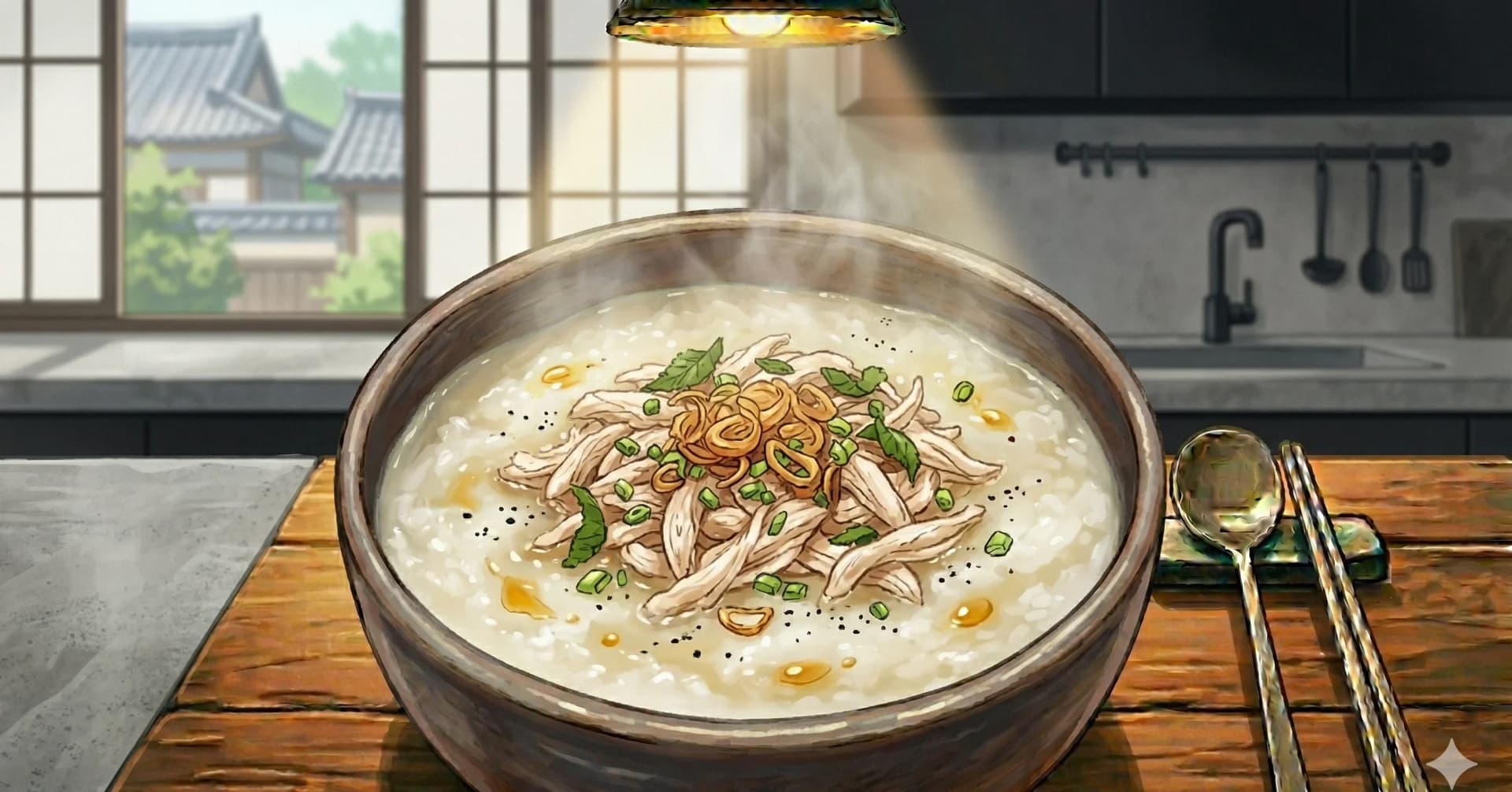
Cháo Gà (Vietnamese Chicken Rice Porridge)
1 hour 30 minutes
 Easy
EasyVietnamese Cuisine
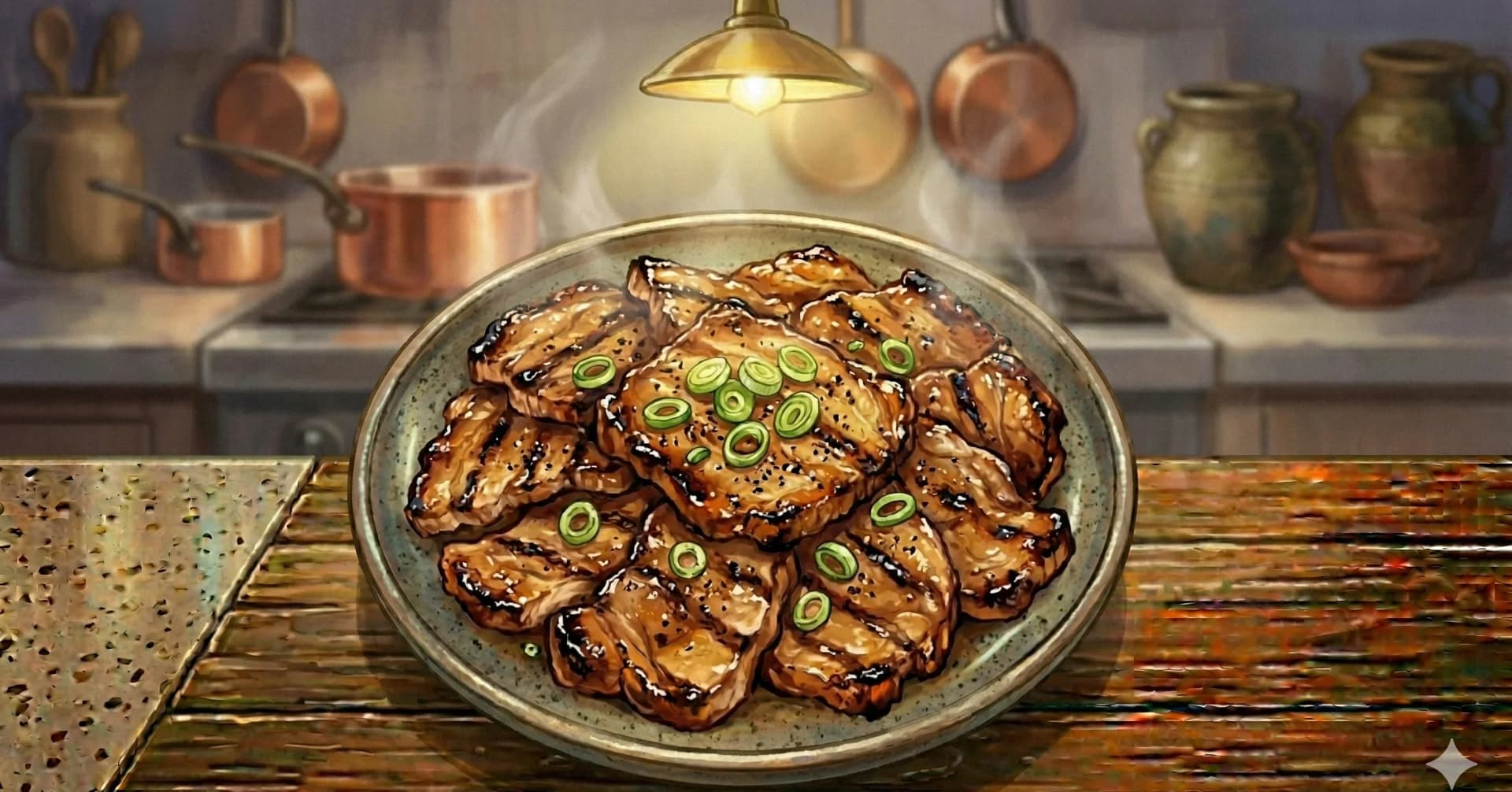
Grilled Lemongrass Pork (Thịt Nướng)
2 hours 30 minutes
 Easy
EasyVietnamese Cuisine
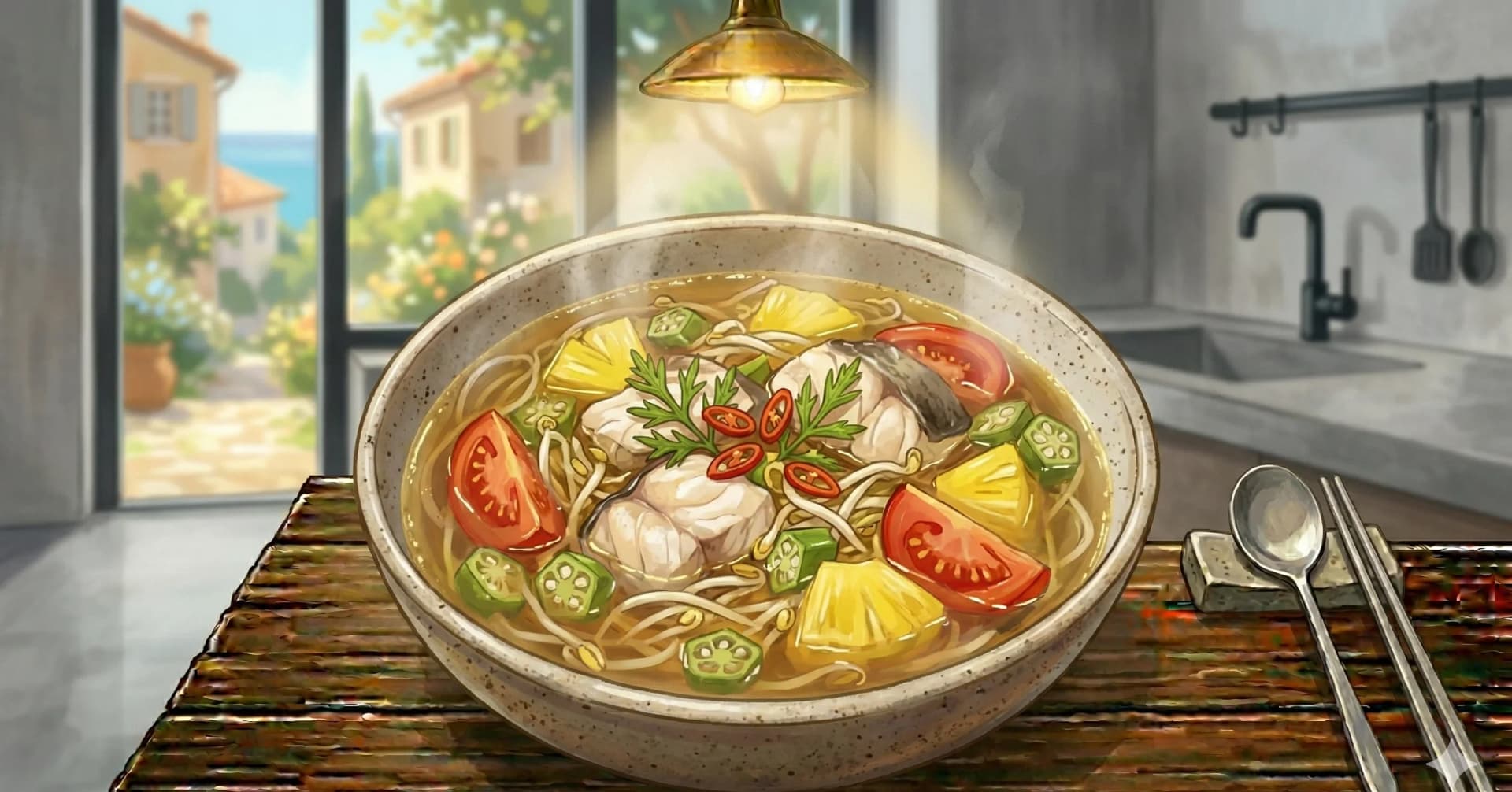
Canh Chua Cá (Vietnamese Sweet and Sour Fish Soup)
35 minutes
 Medium
Vietnamese Cuisine
Bun Rieu (Vietnamese Crab and Tomato Noodle Soup)
2 hours
Ratings & Comments
Ratings & Comments
Ratings
Share your thoughts on this recipe.
Sign in to rate and comment