Chinese Cuisine
Guo Tie (Potstickers)
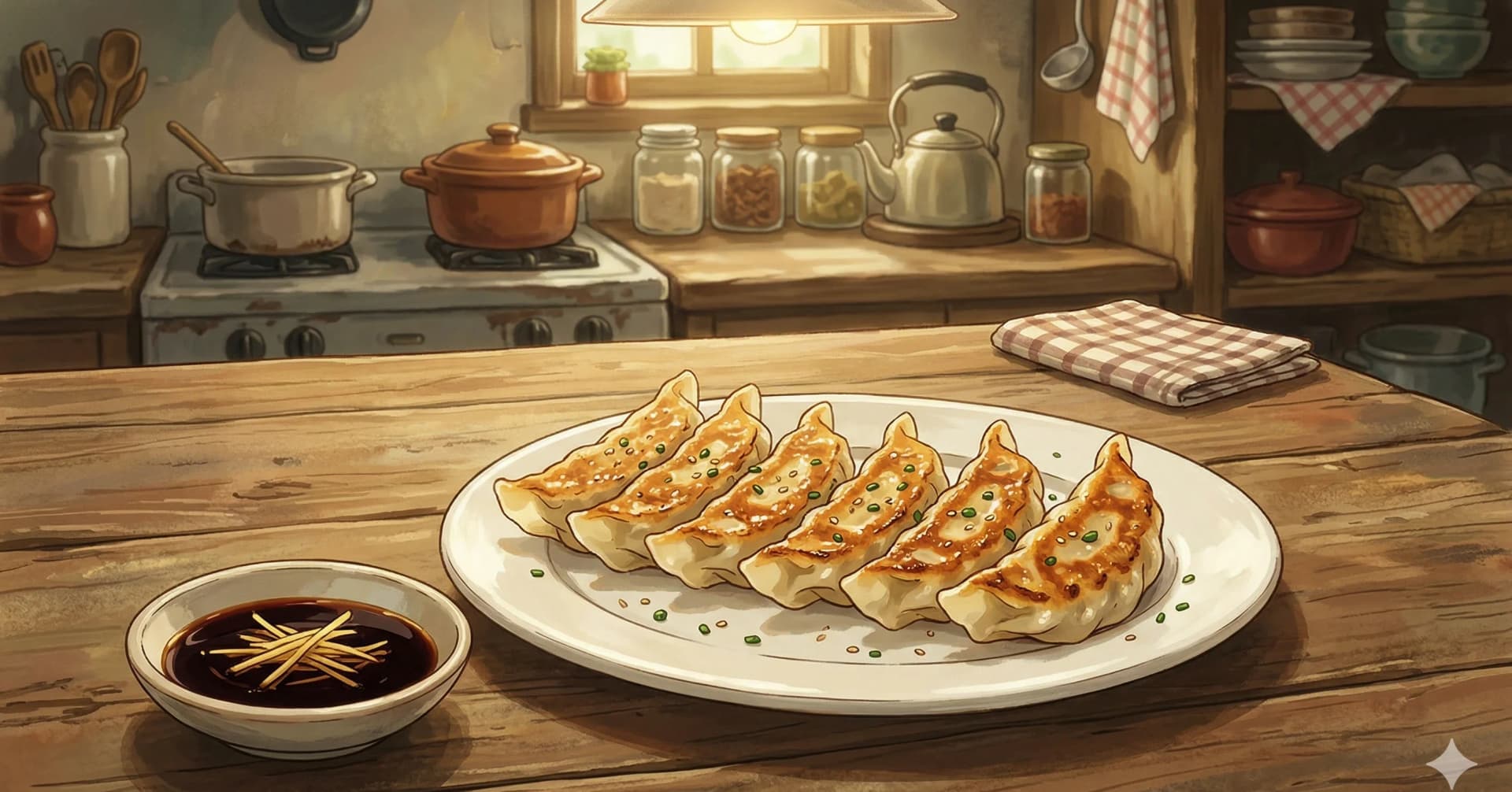
Pan-fried pork and cabbage dumplings with crispy golden bottoms and juicy, savory filling
The name says it all: guo tie, which translates to "pot stick," describes exactly what happens when these dumplings meet a hot, oiled pan. The bottoms fuse to the surface, turning golden and deeply crispy while the tops steam to a tender, translucent finish. Bite through that contrast and you reach the filling, a juicy mixture of seasoned pork and finely chopped napa cabbage that releases a burst of savory liquid when you break through the wrapper.
Potstickers are northern Chinese in origin, born in the wheat-growing regions where dumplings in all their forms are a daily staple. The legend credits their invention to an imperial chef who accidentally left a pot of dumplings on the fire too long, burning the bottoms but creating something so delicious that it became a dish in its own right. Whether or not this is true, guo tie occupy a specific place in the Chinese dumpling universe: they are a bridge between the fully boiled jiaozi of the north and the fully fried wan gok of the south.
The practical key is the filling's moisture balance. Napa cabbage, salted and squeezed to remove excess water, provides flavor and texture without making the filling soupy. The small amount of water beaten into the pork in one direction creates a smooth, emulsified texture that stays juicy during cooking. Too wet, and the filling makes the wrappers soggy. Too dry, and the dumplings taste mealy and dense.
At a Glance
Yield
30 dumplings
Prep
45 minutes
Cook
15 minutes
Total
60 minutes
Difficulty
Medium
Ingredients
Dough Ingredients
- 2⅓ cupall-purpose flour
- ¾ cupboiling water
- —Pinch of salt
Filling Ingredients
- ½ lbground pork
- 7 oznapa cabbage, finely chopped
- ⅞ tspsalt (for salting cabbage)
- 1 tbsplight soy sauce
- 2 tspShaoxing wine
- 1 tspsesame oil
- ¾ tspsugar
- ⅞ tspwhite pepper
- 2½ tbspfresh ginger, grated
- 2scallions, finely minced
- 2 tbspwater
For Frying
- 2 tbspvegetable oil
- ⅓ cupwater (for steaming)
Dipping Sauce Ingredients
- 2 tbspChinkiang black vinegar
- 1 tbsplight soy sauce
- 1 tspchili oil
- —Julienned fresh ginger
Method
- 1
Make the dough. Place the flour and salt in a large bowl. Pour the boiling water over the flour while stirring with chopsticks. The hot water will partially cook the starch, creating a softer, more pliable dough than cold water would. Once cool enough to handle, knead for 8 to 10 minutes until smooth and elastic. Cover with a damp cloth and rest for 30 minutes.
- 2
While the dough rests, prepare the filling. Toss the finely chopped napa cabbage with the 5 g of salt. Let it sit for 10 minutes, then squeeze firmly in a clean kitchen towel to extract as much water as possible. The cabbage should be reduced to about half its original volume.
- 3
In a large bowl, combine the ground pork with the light soy sauce, Shaoxing wine, sesame oil, sugar, white pepper, and grated ginger. Add the water one tablespoon at a time, stirring vigorously in one direction after each addition. This creates a smooth, slightly sticky paste that will be juicy when cooked.
- 4
Add the squeezed cabbage and minced scallions to the pork mixture. Fold together gently until evenly distributed. Refrigerate until needed.
- 5
Divide the rested dough into 30 equal pieces (about 16 g each). Roll each piece into a ball and cover with a damp cloth.
- 6
Roll each ball into a circle about 8 to 9 cm in diameter. The center should be slightly thicker than the edges.
- 7
Place about 15 g of filling (a heaping teaspoon) in the center of each wrapper. Fold the wrapper in half, pinching the top center to seal. Create 5 to 6 pleats along one side, pressing each pleat against the flat back side to seal securely. The dumpling should sit flat on its bottom with a pleated crescent shape.
- 8
Place the finished dumplings on a lightly floured sheet pan as you work. They can sit for up to 30 minutes before cooking, or be frozen at this point.
- 9
Mix the dipping sauce ingredients together in a small bowl. Set aside.
- 10
Heat a large non-stick skillet over medium-high heat. Add the vegetable oil and swirl to coat. Arrange the dumplings in the pan in a circular pattern, flat side down, leaving a small gap between each one.
- 11
Cook without moving for 2 to 3 minutes, until the bottoms are golden and crispy. Lift one with a spatula to check.
- 12
Carefully add the 80 ml of water to the pan. It will splatter vigorously, so pour from a distance or use a squeeze bottle. Immediately cover with a tight-fitting lid.
- 13
Reduce the heat to medium. Let the dumplings steam for 6 to 7 minutes. The water will gradually evaporate, and you will hear the sizzling sound return as the pan dries out.
- 14
Remove the lid. Continue cooking for another 1 to 2 minutes, until all the water has evaporated and the bottoms are deeply golden and very crispy.
- 15
Invert the skillet over a serving plate to present the dumplings golden side up. Serve immediately with the dipping sauce.
Key Ingredient Benefits
Napa cabbage is rich in vitamins C and K and contains glucosinolates, compounds that research suggests may support cellular health. Its high water content makes it an ideal dumpling filling ingredient once excess moisture is removed.
Ground pork provides complete protein, iron, and B vitamins. The fat content keeps the filling moist and flavorful during the high-heat cooking process.
Ginger has been traditionally used in Chinese cooking with pork to balance what is considered the meat's "heavy" quality. Modern research supports ginger's anti-inflammatory and digestive-supporting properties.
Why This Works
The hot water dough is the foundation of good potstickers. Boiling water partially gelatinizes the starch in the flour, which reduces gluten development and creates a softer, more pliable wrapper that is easier to pleat and less likely to crack. It also makes the dough slightly translucent when cooked, which is the characteristic look of properly made potsticker wrappers.
Salting and squeezing the cabbage removes excess moisture that would otherwise leak into the wrapper and make it soggy. The remaining cabbage provides texture and sweetness without waterlogging the filling.
The cooking method, frying then steaming then frying again, is what creates the signature textural contrast. The initial fry sets the bottom crust. The steam cooks the filling and top wrapper through. The final fry, after the water evaporates, re-crisps the bottom and can create the lacy "skirt" (if you add a thin flour-water slurry instead of plain water) that is a hallmark of excellent potstickers.
Substitutions & Variations
- Wrappers: Store-bought round dumpling wrappers save significant time. Look for the thicker "gyoza" style rather than thin wonton wrappers.
- Filling variations: Shrimp and chive, chicken and mushroom, or lamb and cumin are all popular alternatives.
- Vegetarian: A filling of finely diced firm tofu, glass noodles, wood ear mushrooms, and cabbage makes an excellent vegetarian potsticker.
- Crispy skirt: Mix 10 g of flour or cornstarch into the steaming water before adding it to the pan. This creates a lacy, crispy web connecting all the dumplings.
- Boiled version: Skip the frying entirely and boil the dumplings in water for 6 to 8 minutes for traditional jiaozi.
Serving Suggestions
Serve potstickers as a main dish with the dipping sauce, a bowl of simple soup (such as egg drop or seaweed soup), and perhaps a cold dressed vegetable. They also work as an appetizer or snack. In Chinese tradition, dumplings are a communal food, meant to be made and eaten together. Set up a wrapping station and involve everyone at the table.
Storage & Reheating
Uncooked dumplings freeze beautifully. Arrange them in a single layer on a parchment-lined sheet pan and freeze until solid, about 2 hours, then transfer to a freezer bag. They keep for up to 2 months. Cook directly from frozen, adding 2 to 3 extra minutes of steaming time. Cooked potstickers can be refrigerated for up to 2 days and reheated in a hot skillet with a little oil to re-crisp the bottoms. The texture will not be quite as good as fresh, but it remains satisfying.
Cultural Notes
Guo tie (鍋貼, "pot stickers") is the northern Chinese pan-fried dumpling that begins life as a jiaozi but is finished in a covered skillet with a small amount of water that steams as the bottom of the dumplings fries to a deep golden crust. The name describes the process: the dumplings literally stick to the bottom of the pot during the frying stage, and a properly cooked guo tie comes out of the pan in a single connected sheet with the crusty bottoms still attached at the edges, called the bing di (冰底, "ice base"). When the cook lifts the sheet from the pan and inverts it onto a plate, the diners see a golden lacework crust that is treated as the visual hallmark of well-cooked guo tie.
The technique is a three-stage process: pan-fry, steam, and uncover-and-finish. The shaped jiaozi (typically with the same pork-and-cabbage or pork-and-chive filling used for boiled jiaozi) are placed in a single layer in a hot oiled skillet and fried briefly until the bottoms turn golden. Water is poured in, the lid goes on, and the pan cooks at moderate heat for several minutes while the steam cooks the dumpling wrappers and filling through. When the water has nearly evaporated, the lid comes off and the heat goes up to crisp the bottoms one more time and to flash off the last of the moisture. A traditional variation called jian jiao (煎餃) adds a thin batter of flour and water to the pan during the steaming stage, which sets into a crisp lattice connecting the dumplings.
The dish is most associated with Beijing and the broader north China region, where it is eaten as breakfast, lunch, or a light dinner. Beijing's Tianjin Goubuli (狗不理) chain is most famous for its steamed baozi but also serves guo tie in its northern restaurants, and the dish appears at countless small breakfast and noodle shops across the north. In recent decades guo tie has spread internationally as the "potsticker" via Chinese-American restaurants, where the dish is often offered alongside Cantonese dim sum even though the form is fundamentally northern. The dim sum version jian dumpling (jian-jiaozi) borrows the pan-fry technique but uses smaller, more elegant pleating and a thinner skin, producing a closely related but visually distinct dumpling that sits comfortably alongside har gow and siu mai in a Cantonese dim sum lineup.
Nutrition Facts
Calories: 413kcal (21%)|Total Carbohydrates: 49.1g (18%)|Protein: 16g (32%)|Total Fat: 16.1g (21%)|Saturated Fat: 4.4g (22%)|Cholesterol: 40mg (13%)|Sodium: 459mg (20%)|Dietary Fiber: 2.4g (9%)|Total Sugars: 1.7g
You Might Also Like
Ratings & Comments
Ratings & Comments
Ratings
Share your thoughts on this recipe.
Sign in to rate and comment