Korean Cuisine
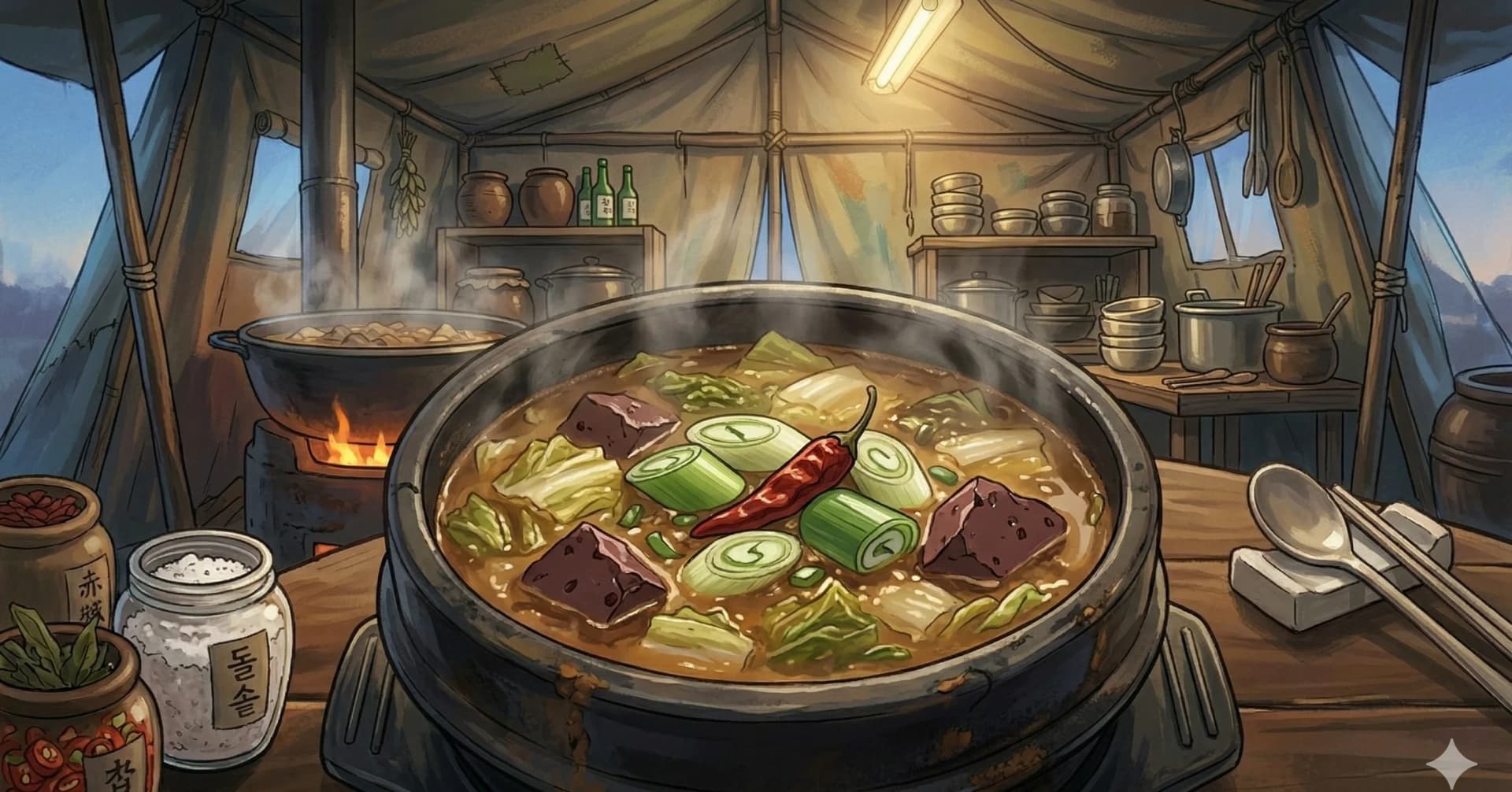
Haejangguk (Pork Bone Hangover Soup)
A deeply restorative Korean soup of pork bones, napa cabbage, and doenjang — the morning-after remedy that actually works
Haejangguk means, literally, "soup to chase a hangover." The name is perfectly honest about its purpose. Across Korea, from Seoul's Jongno district to Busan's Seomyeon, these soups anchor the early-morning restaurant scene — places that open at five or six a.m., catering to people who stayed out too late and need something to set them right before the workday begins.
But haejangguk is not a single recipe. It is a category. In Gyeongsang Province, they favor a version with coagulated ox blood and vegetables. In Jeonju, they make a bean sprout–heavy variation that overlaps with kongnamul guk. In Seoul and much of central Korea, the most common version is ppyeo haejangguk — built on pork spine bones simmered until the broth turns milky and rich, then loaded with napa cabbage, soybean sprouts, dried radish greens, and a generous spoonful of doenjang.
This pork bone version is the one you will find most often, and the one given here. The bones simmer for an hour or two, releasing collagen and marrow into the broth until it becomes thick and almost creamy. Doenjang goes in during the last stage of cooking, adding the deep fermented savoriness that is the soup's real backbone. Napa cabbage and soybean sprouts provide bulk and gentle sweetness. Dried radish greens (siraegi) add an earthy, slightly chewy texture that rounds out the bowl.
Whether or not the hangover science holds up, the combination of rich bone broth, fermented soybean paste, and a generous amount of vegetables is genuinely restorative. The broth rehydrates. The fat satisfies. The doenjang delivers amino acids and salt. And the warmth itself is a kind of medicine. Koreans have understood this for centuries, and they are not wrong.
At a Glance
Yield
4 servings
Prep
20 minutes
Cook
1 hour 40 minutes
Total
2 hours
Difficulty
Medium
Ingredients
- 2 lbpork spine bones or neck bones, about 2 lbs
- 2¾ qtwater, for the broth
- 7 oznapa cabbage, roughly chopped, preferably outer leaves
- 5½ ozsoybean sprouts (kongnamul), rinsed and drained
- 2¾ ozdried radish greens (siraegi) (about 1 radish), soaked in water for 30 minutes and drained, or 150 g fresh daikon cut into thin strips
- 3 tablespoonsdoenjang (Korean fermented soybean paste)
- 1 tablespoongochugaru (Korean red pepper flakes), adjust to taste
- 5garlic cloves, minced
- 2scallions, cut into 5 cm pieces
- 1 tablespoonsoy sauce
- —Salt and pepper to taste
- 1 tablespoonsesame oil, for finishing (optional)
Method
- 1
Blanch the bones. Place the pork spine bones in a large pot and cover with cold water. Bring to a boil over high heat and cook for 10 minutes. The water will turn murky with blood and impurities. Drain the bones, rinse them thoroughly under cold running water, scrubbing off any dark residue. Clean the pot.
- 2
Simmer the broth. Return the cleaned bones to the pot and add 2.5 L of fresh water. Bring to a boil over high heat, then reduce the heat to medium-low. Skim any foam that rises to the surface during the first few minutes. Simmer partially covered for 1 to 1.5 hours, until the broth is milky and the meat on the bones is tender enough to pull away easily. The longer you simmer, the richer the broth.
- 3
Prepare the vegetables. While the broth simmers, prepare the remaining ingredients. If using dried radish greens, soak them in warm water for 30 minutes, then drain and cut into 5 cm (2 inch) pieces. Roughly chop the napa cabbage. Rinse the soybean sprouts.
- 4
Add the doenjang and vegetables. Dissolve the doenjang in a ladleful of hot broth, then stir it into the pot. Add the napa cabbage and radish greens (or daikon strips). Cook for 10 minutes over medium heat until the cabbage is softened.
- 5
Add the sprouts and season. Add the soybean sprouts, minced garlic, gochugaru, and soy sauce. Cook for another 5 minutes. The sprouts should be cooked through but still have some bite. Taste and adjust the seasoning with salt and pepper.
- 6
Finish and serve. Add the scallion pieces and cook for 1 minute more. Drizzle with sesame oil if desired. Serve immediately in large bowls with steamed rice on the side. The bones can be served in the bowl — diners pull the tender meat off at the table.
Key Ingredient Benefits
Pork Spine Bones. The workhorse of this soup. Pork spine (or neck) bones are inexpensive, widely available at Korean and Asian grocery stores, and loaded with collagen. During the long simmer, the connective tissue breaks down into gelatin, giving the broth its characteristic body and slight viscosity. The marrow adds richness. Look for bones with a decent amount of meat still attached — you want enough to pull off and eat in the finished soup.
Doenjang. Korean fermented soybean paste, and the soul of this soup. It contributes a deep, earthy, almost funky savoriness that anchors the entire bowl. Unlike Japanese miso, which is typically lighter and more delicate, doenjang is fermented longer and has a more assertive flavor. It should be added in the last cooking stage so its flavor mellows but does not cook away entirely.
Napa Cabbage. The outer leaves of napa cabbage, often discarded when making kimchi, are traditionally used in haejangguk. They have a stronger, slightly more bitter flavor than the tender inner leaves, which works well against the rich broth. As they cook, they soften into silky ribbons that absorb the doenjang-laced broth.
Dried Radish Greens (Siraegi). The dried tops of Korean radishes, with a chewy texture and earthy, slightly bitter flavor. They are a classic haejangguk ingredient and add a dimension that fresh vegetables cannot replicate. If unavailable, fresh daikon strips work as a substitute, though the character of the soup changes slightly.
Why This Works
The long bone simmer extracts collagen, which converts to gelatin and gives the broth a rich, lip-coating body that water alone cannot achieve. This is the same principle behind seolleongtang and gamjatang, though haejangguk uses a shorter simmer and relies on doenjang for complexity rather than pure bone concentration alone.
Doenjang adds glutamic acid — the same compound responsible for the savory depth in aged cheeses and soy sauce. Combined with the inosinic acid naturally present in the pork bones, these two compounds create a synergistic umami effect that makes the soup taste far more complex than its ingredient list suggests.
Blanching the bones first is essential. The initial boil draws out blood proteins and impurities that would otherwise cloud the broth and give it an off-taste. Rinsing the bones after blanching removes any residue clinging to the surface, ensuring a clean-tasting final broth.
The vegetables are added in stages to preserve their individual textures. Cabbage and radish greens go in first because they need more time to soften. Soybean sprouts go in last because they overcook quickly and turn mushy if simmered too long.
Substitutions & Variations
Bones. Pork neck bones work identically to spine bones. Beef shin bones or oxtail can be used for a different but equally rich version — increase the simmering time to 2 hours. For a lighter version, use 900 g of pork belly sliced thin instead of bones, reducing the broth simmer to 30 minutes.
Siraegi (dried radish greens). If unavailable, substitute with 150 g of fresh daikon cut into thin matchsticks, or use extra napa cabbage. The texture will be different, but the soup will still be good.
Doenjang. In a pinch, use white or red miso paste, but use slightly more (4 tablespoons) to compensate for the milder flavor. The result will be gentler but still satisfying.
Gochugaru. For a non-spicy version, omit the gochugaru entirely. The soup is still deeply flavorful without it — many mild haejangguk versions exist.
Vegetarian version. Replace the pork bones with a broth made from dried shiitake mushrooms (6 to 8 large ones) and a piece of dried kelp (10 cm), simmered for 30 minutes. Increase the doenjang to 4 tablespoons. Add firm tofu cut into cubes for protein.
Serving Suggestions
Haejangguk is a meal in itself. Serve it in large, deep bowls with steamed white rice on the side — or drop the rice directly into the soup, which is the more common Korean practice. A small dish of kkakdugi (cubed radish kimchi) is the classic accompaniment.
For a full Korean table, pair with kimchi, a simple sigeumchi namul (spinach side dish), and a fried egg.
The soup is traditionally eaten very hot, first thing in the morning, but it is equally good as a cold-weather dinner. There are no wrong times to eat haejangguk — despite the name, you do not need a hangover to enjoy it.
Storage & Reheating
Haejangguk stores exceptionally well. The broth, if anything, improves overnight as the gelatin sets and the flavors deepen. Refrigerate in a sealed container for up to 4 days.
Reheat on the stovetop over medium heat, bringing it back to a gentle boil. Add a splash of water if the broth has thickened too much in the fridge — the gelatin solidifies when cold, which is normal and a sign of a well-made broth.
The soup can be frozen for up to 2 months. Freeze the broth and vegetables together, but leave the bones out if possible to save space. The soybean sprouts will soften after freezing and reheating, but the cabbage and radish greens hold up well.
Cultural Notes
Haejangguk (해장국) literally means "soup to chase the jang," where jang is shorthand for suk-chwi (숙취, hangover). The name is utterly direct about the dish's purpose. Hangover soup is its own recognized culinary category in Korean cuisine, with regional variations across the peninsula and a long historical lineage. The earliest written reference to a dish identifiable as haejangguk appears in the 17th-century cookbook Yokjeon Yorigi, under the name hyeonjotang (현조탕, "morning relief soup").
The category includes several distinct regional styles. Seoul-style haejangguk is made with napa cabbage, beef bones, and doenjang. Jeonju-style kongnamul gukbap (콩나물국밥) is built around soybean sprouts and a clear anchovy broth. Busan-style jaecheop guk is a translucent soup of tiny freshwater clams. Various pork-bone and intestine versions cluster in working-class neighborhoods across the country. Different cities and even different alleys within Seoul have their own loyalist devotees who argue passionately for their preferred style.
The cultural infrastructure around haejangguk is well developed. Seoul has dozens of dedicated 24-hour haejangguk restaurants in neighborhoods like Jongno and Euljiro, many of them operating continuously for more than 60 years. The Cheongjinok restaurant in Jongno, founded in 1937, is among the oldest, and its haejangguk recipe has been unchanged since opening. These restaurants peak in business between 5 and 9 in the morning, when post-drinking customers stream in for the morning recovery ritual.
The cultural assumption that a proper meal can repair the damage of the night before is one of the more pleasant features of Korean social life, and haejangguk is the dish that carries that assumption.
Nutrition Facts
Calories: 285kcal (14%)|Total Carbohydrates: 12g (4%)|Protein: 28g (56%)|Total Fat: 14.5g (19%)|Saturated Fat: 4.8g (24%)|Cholesterol: 72mg (24%)|Sodium: 980mg (43%)|Dietary Fiber: 3.2g (11%)|Total Sugars: 3.8g
You Might Also Like

Ratings & Comments
Ratings & Comments
Ratings
Share your thoughts on this recipe.
Sign in to rate and comment