Cross-Cultural · Korea
Spicy Fish Stew (Maeuntang / 매운탕)
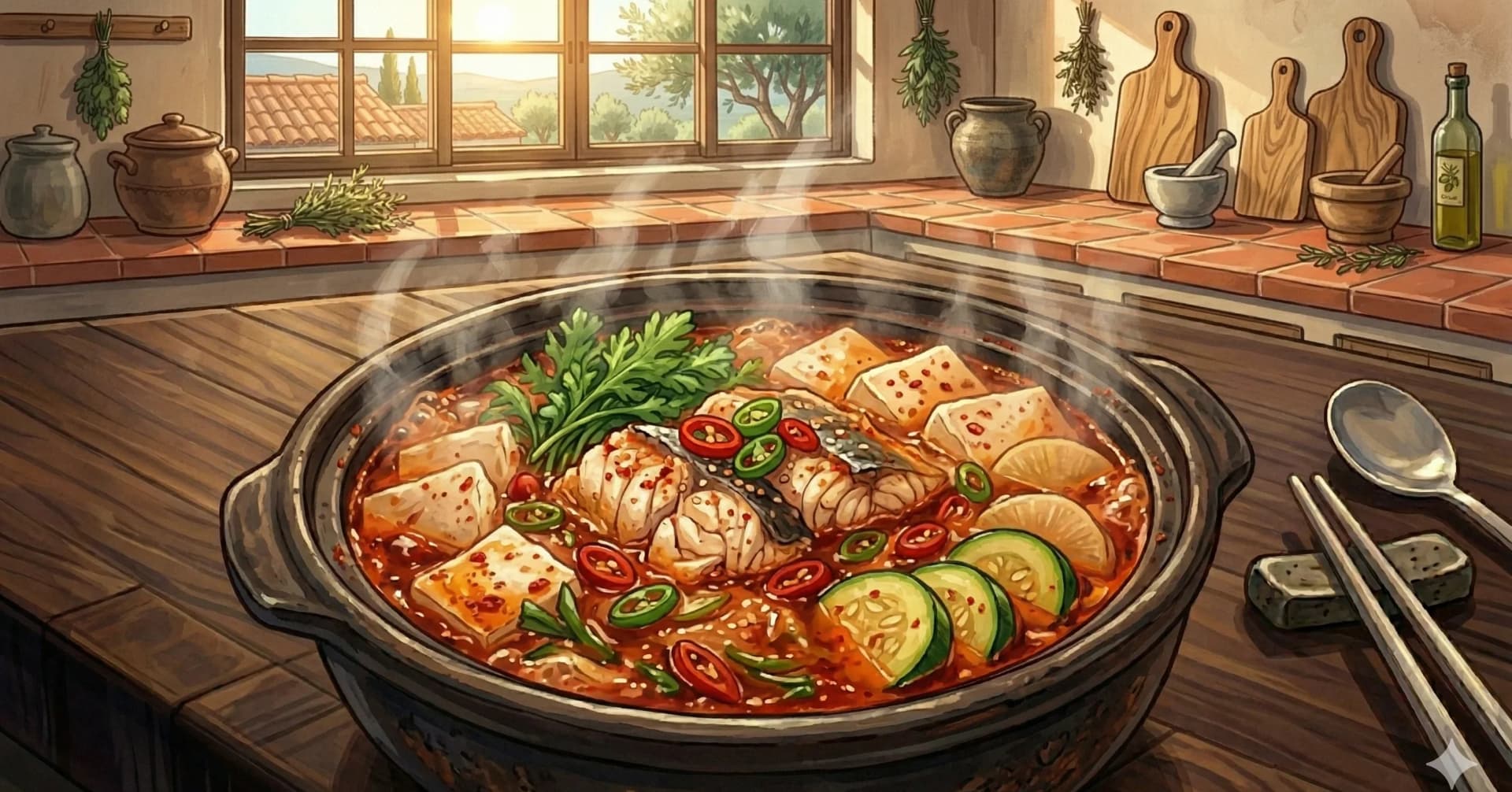
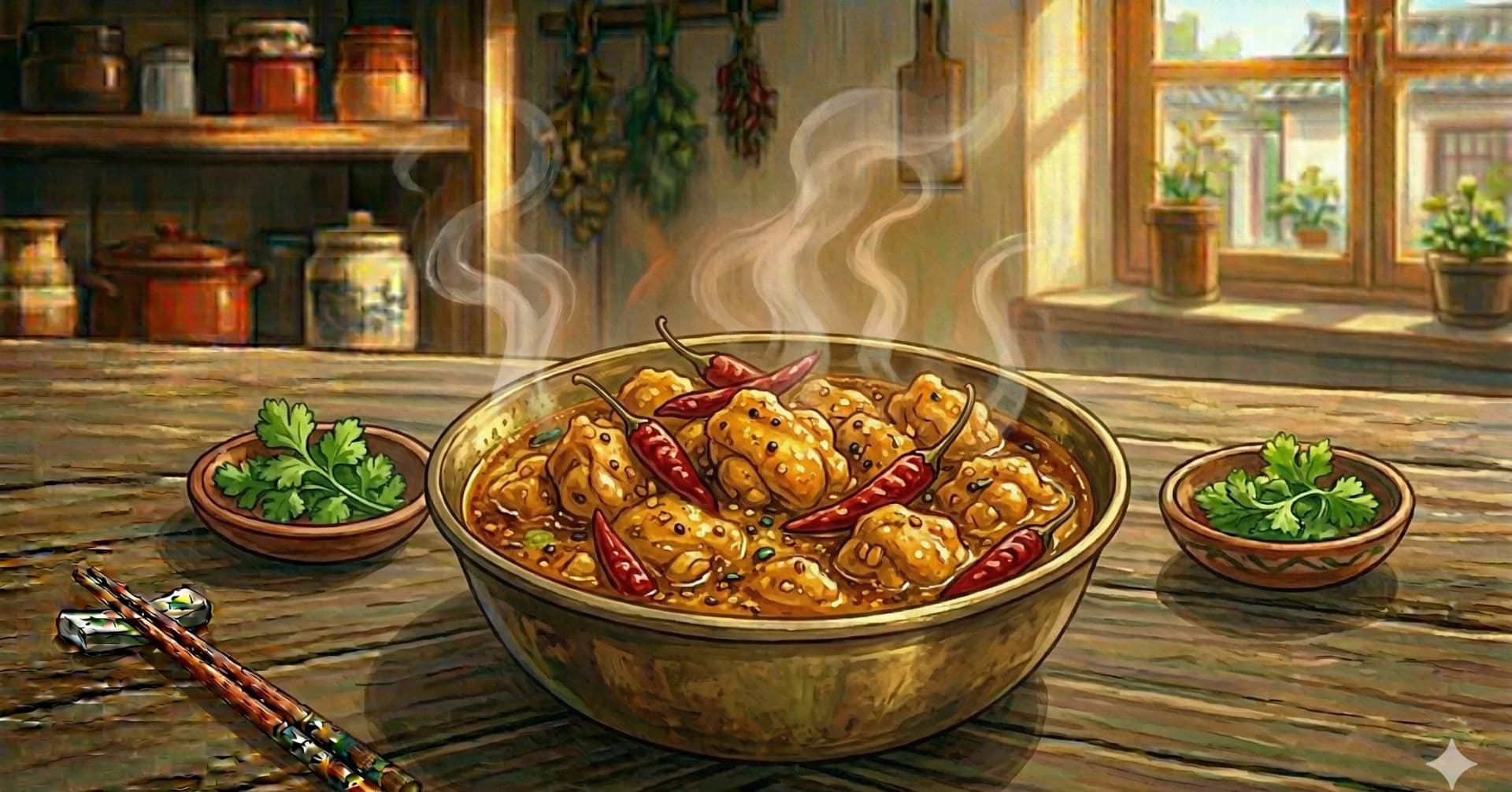
Korean spicy fish stew with flaky white fish, radish, and chrysanthemum greens in a gochugaru-doenjang broth
Maeuntang is Korean spicy fish stew, and it is built on a contradiction that works: the broth is fiery and bold, loaded with gochugaru and doenjang and garlic, but the fish inside is delicate and mild, flaking apart at a touch. The heat of the broth and the sweetness of the fish meet in every spoonful, and the combination is why this is one of the most comforting soups in Korean cooking.
The broth starts with dried anchovies and Korean radish simmered in water for twenty minutes. This creates a clean, mineral-rich base with a faint sweetness from the radish. Then the seasoning paste goes in: gochugaru for heat and color, doenjang for deep fermented funk, gochujang for sweetness and body, garlic for sharpness, fish sauce for umami, and mirim for a touch of sweetness. The fish goes in next, in large pieces that hold their shape during the second twenty-minute simmer.
Any flaky white fish works. Whiting is traditional and has a delicate sweetness that pairs beautifully with the spicy broth. Cod, snapper, sea bass, and red snapper all work well too. The fish should be cut into two-inch pieces, bone-in if possible, because the bones add body to the broth. Chrysanthemum greens go in at the very end, off heat, so they wilt without overcooking. Serve with rice, kimchi, and an empty bowl for the fish bones.
At a Glance
Yield
4 servings
Prep
20 minutes
Cook
45 minutes
Total
65 minutes
Difficulty
Medium
Ingredients
Stew Ingredients
- 8 cupswater
- 7-8large dried anchovies, heads and guts removed
- 1 lbKorean radish or daikon, sliced thin into bite-sized pieces
- 2.5 lbswhole white fish (whiting, cod, or snapper) (1.1 kg), cleaned and cut into 2-inch pieces
- 1large scallion or 4-5 small, sliced diagonally
- 1green chili pepper, sliced
- 1red chili pepper, sliced diagonally (optional)
- 4-5sprigs chrysanthemum greens (ssukgat)
Seasoning Paste Ingredients
- 1/2 cupgochugaru
- 10garlic cloves, minced
- 2 tbspdoenjang
- 1 tbspgochujang
- 1 tbspsoy sauce
- 2 tbspfish sauce
- 1/2 tspground black pepper
- 3 tbspmirim or soju
Method
- 1
Mix all seasoning paste ingredients in a bowl: gochugaru, garlic, doenjang, gochujang, soy sauce, fish sauce, black pepper, mirim. Set aside.
- 2
Combine radish, dried anchovies, and 8 cups water in a large pot. Cover and cook 20 minutes over medium-high until radish is slightly soft.
- 3
Add fish and about half the seasoning paste. Cover and cook 20 minutes over medium-high until fish is cooked through.
- 4
Remove anchovies. Add green chili and scallion. Taste broth, add more paste if you want it spicier. Cook 3-5 minutes.
- 5
Turn off heat. Add chrysanthemum greens and red chili. Serve with rice, kimchi, and a bowl for fish bones.
Key Ingredient Benefits
Whole white fish (whiting, cod, or snapper): Using a whole fish, bones and head included, is what gives maeuntang its body and depth. The bones release collagen and gelatin into the broth, producing a silky, slightly viscous quality that makes the soup feel substantial despite being a clear fish stew. Cod and whiting are also low in fat, which keeps the broth from becoming greasy.
Korean radish: A starchy, slightly sweet root that absorbs the spicy broth and releases its own subtle vegetable sweetness as it simmers. The radish softens the bold seasoning and provides bulk to the stew, often becoming the favorite component for many eaters.
Gochugaru: Provides the fiery red color and building heat that defines maeuntang (literally "spicy soup"). The coarse Korean grind also gives the broth a textural quality. Half a cup is a generous amount, which is necessary to achieve the characteristic heat level.
Doenjang and gochujang: Together, these fermented soybean and chili pastes provide the deep umami backbone of the broth. Doenjang contributes salinity and earthy fermented depth; gochujang adds sweetness and additional heat. The combination is what separates Korean spicy fish stews from generic chili-pepper soups.
Dried anchovies: Used to make the base broth before any other ingredients are added. Korean dried anchovies (myeolchi) are essential to almost every Korean soup and stock, providing umami depth that cannot be replicated with fish stock alone.
Why This Works
Making the anchovy broth first is non-negotiable. A 15-minute simmer of dried anchovies and kelp produces a clean, deeply savory base that elevates the entire stew. Skipping this step and using plain water produces a one-dimensional, flat-tasting result. The anchovies are removed before adding other ingredients so they do not muddy the broth or break apart into the soup.
Pre-simmering the radish before adding the fish is the technique that ensures the fish stays delicately cooked. Radish needs about 10 minutes to soften and absorb sauce; fish needs only 5 to 7. Starting the radish first means the fish goes in late and comes out perfectly cooked, flaky and tender rather than overdone.
The seasoning paste — gochugaru, doenjang, gochujang, garlic, soy sauce, fish sauce — is mixed and added together so the flavors meld into a unified backbone rather than presenting as separate notes. The salt sources (doenjang, soy sauce, fish sauce) are balanced so no single one dominates.
Adding fresh aromatics (scallion, green and red chili, chrysanthemum greens) only in the final minute or two preserves their brightness. Chrysanthemum greens (ssukgat) in particular wilt almost immediately and lose their aroma if simmered too long. Their slightly bitter, herbaceous flavor is part of what defines a proper maeuntang.
Substitutions & Variations
Whole white fish: Any firm-fleshed white fish works — cod, snapper, sea bream, grouper, or rockfish. The dish is traditionally made with a whole fish (head and bones included for broth body), but fillets can substitute; just use a more flavorful stock as the base since you lose the bone-based richness.
Korean radish (mu): Daikon is the most common substitute. Turnip works in a pinch but is sharper.
Dried anchovies (myeolchi): Available at Korean and Asian grocery stores. Japanese niboshi are similar and work as a substitute. Bonito flakes (katsuobushi) can substitute for the umami if dried anchovies are unavailable; use about 1/4 cup steeped for 5 minutes.
Doenjang: Japanese miso (red or barley) substitutes well, though slightly sweeter and less funky.
Gochugaru: A blend of sweet paprika and cayenne (3 to 1 ratio) approximates the color and heat. Reduce slightly since the heat is less rounded.
Chrysanthemum greens (ssukgat): Watercress, arugula, or even spinach can substitute for color and freshness, though the distinctive bitter-herbaceous flavor of ssukgat is hard to replace.
Serving Suggestions
Maeuntang is meant to be the centerpiece of a Korean meal, served bubbling at the table in a clay or ceramic pot (ddukbaegi) directly from the stove. A communal spoon for each diner is traditional. The fish, radish, and broth are eaten together with steamed short-grain rice on the side, and many people prefer to spoon broth over their rice as the meal progresses.
Round out the table with several banchan: kimchi, sigeumchi namul (seasoned spinach), kongnamul muchim (seasoned soybean sprouts), and a small dish of pickled or fresh vegetables. The cooling banchan provide relief from the spicy broth.
For drinks, a small bottle of chilled soju is the canonical pairing — Korean spicy fish stew and soju has a long history together, particularly in coastal port cities. For non-alcoholic, hot barley tea (boricha) cleanses the palate between spoonfuls.
Storage & Reheating
Refrigerator: Store in an airtight container for up to 3 days. The fish will continue to break down slightly in the broth, which is fine; many Koreans actually prefer maeuntang reheated, when the flavors have fully melded.
Reheating: Bring back to a gentle simmer in a covered pot over medium heat. Avoid hard boiling, which can toughen the fish. If the broth has reduced too much in storage, add a splash of water before reheating.
Make-ahead: The anchovy broth and the seasoning paste can both be made up to 3 days in advance and refrigerated separately. Assemble and cook the stew just before serving for the best fish texture. The broth alone freezes well for up to 3 months.
Freezing assembled: Possible but not ideal. The fish texture suffers significantly on thawing. If freezing, eat within 1 month and use the result as a starter for a new pot rather than serving as-is.
Cultural Notes
Maeuntang (매운탕) literally translates as "spicy soup," but the dish almost always refers specifically to spicy fish stew. The category is one of the foundational Korean jjigae-adjacent dishes — broths or stews seasoned heavily with gochugaru, doenjang, and gochujang, built around a protein and vegetables in a single pot.
The dish has deep roots in Korea's coastal regions, where fresh fish, particularly small white fish caught from local waters, was the most abundant protein. Coastal villages developed maeuntang as a way to use the day's catch, simmering whole fish with whatever vegetables and seasonings were on hand. The dish moved inland with refrigerated transport in the 20th century and is now a national dish, but the coastal versions of Pohang, Tongyeong, and Yeosu remain particularly prized.
A specific subtype called jirigutang exists — same fish stew, but milder, without gochugaru and gochujang, relying on the natural flavor of the fish and the broth. The two dishes are siblings, with maeun (spicy) and jiri (clear) being the defining contrast. Koreans tend to consume maeuntang in the colder months when the body wants warming spice and jirigutang in the warmer months when the body wants something lighter.
Maeuntang is also a famously good hangover food in Korea, falling into the category of haejang-guk (hangover stew). The spicy broth, hot temperature, and replenishing minerals from the fish stock are all considered restorative after a night of drinking.
Nutrition Facts
Calories: 258kcal (13%)|Total Carbohydrates: 17.9g (7%)|Protein: 30.2g (60%)|Total Fat: 2.9g (4%)|Saturated Fat: 0.5g (3%)|Cholesterol: 83mg (28%)|Sodium: 1142mg (50%)|Dietary Fiber: 6.2g (22%)|Total Sugars: 4.6g
You Might Also Like
Ratings & Comments
Ratings & Comments
Ratings
Share your thoughts on this recipe.
Sign in to rate and comment