Japanese Cuisine
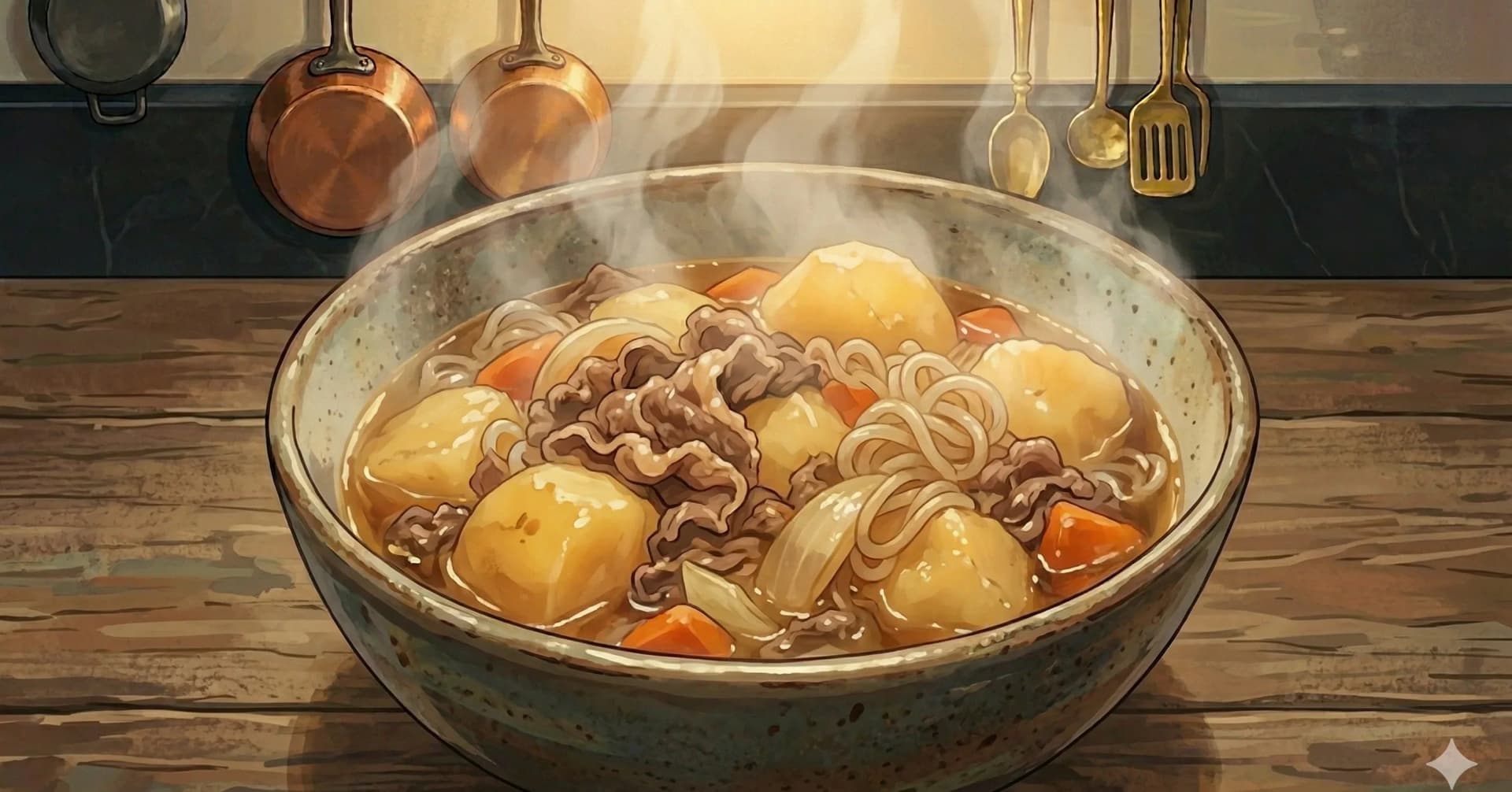
Nikujaga (Japanese Meat and Potato Stew)
Thinly sliced beef and waxy potatoes simmered in a savory-sweet dashi broth until tender and deeply seasoned
Nikujaga translates simply as "meat and potatoes," and in Japan it holds roughly the same emotional weight as a warm stew does in any home kitchen around the world. It is comfort food in the truest sense, the kind of dish that mothers teach their children to make and that grown adults still associate with the feeling of walking through the front door on a cold evening.
The dish belongs to a family of simmered preparations called nimono, where ingredients cook gently in a seasoned liquid until they absorb flavor all the way through. What sets nikujaga apart from a Western stew is the broth itself. Dashi provides a clean, oceanic backbone, and the combination of soy sauce, mirin, sake, and a small amount of sugar creates a savory-sweet glaze that clings to every surface. The potatoes turn creamy at their centers while holding their shape. The onion wedges soften into something almost silky. The beef, sliced thin in the Japanese style, cooks in minutes and takes on the flavor of the broth rather than fighting against it.
Two details make all the difference. The first is the otoshibuta, a drop lid that sits directly on the simmering ingredients rather than on the rim of the pot. It keeps everything submerged and prevents vigorous boiling from breaking the potatoes apart. A circle of aluminum foil with a small hole in the center works perfectly if you do not have one. The second is patience after cooking. Nikujaga tastes good right off the stove, but it tastes better after resting for 30 to 60 minutes, and better still the next day. As the stew cools, the potatoes and vegetables draw the seasoned liquid inward, and the flavors deepen and settle. This is a dish that belongs alongside a bowl of steamed rice and perhaps a cup of miso soup, and it pairs naturally with other home-style Japanese meals like oden and shogayaki.
At a Glance
Yield
4 servings
Prep
15 minutes
Cook
15 minutes (plus 30 to 60 minutes resting)
Total
1 hour to 1 hour 30 minutes
Difficulty
Easy
Ingredients
- ½ lbthinly sliced beef (chuck or rib eye), cut into 7 cm pieces
- 1¼ lbYukon gold potatoes (about 3 medium), peeled and quartered
- ½ lbonion (about 1 medium), cut into 1 cm wedges
- 4½ ozcarrot (about 1 medium), peeled and cut on the diagonal with a quarter turn between cuts (rangiri)
- 7 ozshirataki noodles (1 package), drained and blanched
- 8snow peas, strings removed, blanched for 1 minute
- 2 cupdashi (Japanese soup stock)
- ¼ cupmirin
- ¼ cupsoy sauce
- 2 tbspsake
- 1¼ tbspsugar
- 1 tbspneutral oil (such as vegetable or rice bran)
Method
- 1
Prepare the potatoes. Peel and quarter them, then use a paring knife to round off the sharp edges of each piece. This technique, called mentori, prevents the corners from crumbling during simmering. Place the potatoes in a bowl of cold water to soak while you prepare the remaining ingredients. The water will turn slightly cloudy as the surface starch releases.
- 2
Prepare the shirataki noodles. Drain the noodles from their packing liquid and place them in a small pot of boiling water for about 1 minute. This removes the faint alkaline smell that raw shirataki can carry. Drain and set aside. Cut them into shorter lengths if they seem unwieldy.
- 3
Blanch the snow peas. Drop them into boiling water for about 1 minute, until they turn a vivid bright green but still feel crisp when pressed. Transfer immediately to a bowl of cold water to stop the cooking, then drain and set aside. These will go in at the very end.
- 4
Heat the oil in a large pot or Dutch oven over medium heat. Add the onion wedges and cook, stirring occasionally, until they soften and turn translucent at the edges, about 2 minutes.
- 5
Add the beef slices and spread them out in the pot. Cook, turning gently, until the pink color disappears and the meat turns a light grayish brown, about 1 to 2 minutes. There is no need to brown the beef deeply here. You are looking for it to just lose its raw color.
- 6
Drain the potatoes and add them to the pot. Stir to coat them with the cooking liquid. Add the carrots and shirataki noodles and stir everything together.
- 7
Pour in the dashi. It should nearly cover the ingredients. If your pot is wide, you may need a little more. Bring the liquid to a boil over medium-high heat. As the broth heats, a gray foam will collect on the surface. Skim it away with a spoon or fine mesh skimmer until the broth looks relatively clear.
- 8
Add the sugar, sake, soy sauce, and mirin. Stir gently to distribute the seasonings. The broth should smell fragrant and slightly sweet, with the clean depth of dashi underneath.
- 9
Place an otoshibuta (drop lid) directly on the surface of the ingredients. If you do not have one, press a sheet of aluminum foil loosely over the surface and poke a small hole in the center to allow steam to escape. The lid keeps the ingredients submerged and simmering evenly while preventing the potatoes from jostling and breaking apart.
- 10
Reduce the heat to low and simmer gently for 12 to 14 minutes. The stew is ready when a chopstick or skewer slides into the center of a potato piece with no resistance and the carrots feel tender but not mushy. The broth will have reduced slightly and taken on a rich amber color.
- 11
Remove the pot from the heat and let it rest, uncovered, for 30 to 60 minutes. This is where nikujaga transforms. As the stew cools, the potatoes and vegetables absorb the seasoned broth from the outside in, and the flavors become more unified and concentrated. Do not skip this step.
- 12
When ready to serve, gently reheat the stew over low heat. Add the blanched snow peas and warm them through for about 30 seconds. Ladle the nikujaga into shallow bowls, making sure each serving has a generous share of potatoes, beef, and vegetables, with some of the broth pooled at the bottom.
Key Ingredient Benefits
Dashi (Japanese soup stock): Made from kombu seaweed and bonito flakes, dashi is naturally rich in umami compounds. Kombu contains significant iodine, which supports thyroid function, and provides a clean flavor base without added fat. Bonito flakes contribute protein and B vitamins.
Shirataki noodles: Made from the konjac yam, shirataki are composed almost entirely of glucomannan, a water-soluble dietary fiber. Research has explored glucomannan's potential role in supporting digestive regularity and healthy cholesterol levels. They add texture to the stew with very few calories.
Potatoes (Yukon gold): Provide vitamin C, potassium, and vitamin B6. The resistant starch content of potatoes increases after cooling and reheating, which may benefit gut microbiome health by acting as a prebiotic.
Mirin: A sweet rice wine used in Japanese cooking. True hon-mirin (as opposed to mirin-style seasoning) contains natural sugars produced during fermentation, which contribute a gentle sweetness and glossy finish to simmered dishes.
Why This Works
The nimono technique relies on time and gentle heat rather than aggressive browning. Because the beef is sliced thin and cooks quickly in the broth, it stays tender instead of turning tough. The dashi provides a foundation of umami from kombu (glutamates) and bonito flakes (inosinates), and these two types of umami compounds have a synergistic effect, amplifying each other far beyond what either contributes alone.
The savory-sweet seasoning balance is central to this dish. Sugar and mirin add sweetness that tempers the salt of the soy sauce, while sake contributes a subtle acidity and aroma that rounds out the flavor. The otoshibuta keeps the liquid in contact with all surfaces of the ingredients, ensuring even seasoning penetration. And the resting period allows the potatoes, which are essentially sponges of starch and water, to exchange some of their internal moisture for the seasoned broth through osmosis. This is why nikujaga genuinely tastes better the next day.
Substitutions & Variations
Beef: Thinly sliced pork shoulder or pork belly is used in Kansai-style nikujaga and is equally traditional. Chicken thigh, thinly sliced, also works well. For a vegetarian version, omit the meat entirely and increase the potatoes and carrots, using kombu dashi for the stock. The dish remains satisfying because the broth carries most of the flavor.
Potatoes: Yukon gold holds its shape best during simmering. Russet potatoes absorb more flavor but may break apart, which gives a thicker, more stew-like consistency that some cooks prefer. Japanese waxy potatoes (such as May Queen) are traditional.
Shirataki noodles: If unavailable, simply omit them. Some versions use harusame (glass noodles) or no noodles at all. The noodles add texture but are not essential to the dish.
Dashi: Instant dashi granules (such as hondashi) dissolved in hot water are a common shortcut in Japanese home kitchens. For a deeper flavor, make dashi from scratch with kombu and katsuobushi. If you enjoy the richer profile of kare raisu, you might appreciate a version of nikujaga with a splash of Worcestershire sauce stirred in near the end, a modern home-cook variation.
Sugar: Some cooks use honey or a small amount of brown sugar for a slightly more complex sweetness.
Serving Suggestions
Nikujaga is a main dish served with steamed short-grain Japanese rice and a simple side or two. A bowl of miso soup alongside completes a classic home dinner. If you want something more substantial, a plate of shogayaki (ginger pork) or teriyaki chicken makes a natural partner for a larger spread.
The stew also fits into a broader Japanese table. Serve it as one of several small dishes alongside pickled vegetables, a green salad with sesame dressing, or cold tofu with grated ginger. In winter, nikujaga pairs well with the warming, brothy comfort of oden. In the same family of savory-sweet simmered dishes, sukiyaki shares a similar flavor profile but takes a more celebratory, tableside approach.
Storage & Reheating
Refrigerator: Store in a sealed container for up to 3 to 4 days. Nikujaga improves with time as the ingredients absorb the broth. Reheat gently over low heat, adding a splash of water or dashi if the liquid has reduced too much.
Freezer: Freeze for up to 1 month. However, the potatoes may become grainy or mealy after thawing. If you plan to freeze nikujaga, consider removing the potatoes before freezing and adding freshly cooked potatoes when reheating.
Reheating: Warm over low to medium-low heat on the stove. Stir gently to avoid breaking the potatoes. Avoid high heat, which can cause the sugars in the broth to scorch on the bottom of the pot.
Cultural Notes
Nikujaga (肉じゃが) means simply "meat and potatoes." It is the dish most often named when Japanese people are asked about ofukuro no aji (お袋の味), "mother's flavor," the idea of the cooking you grew up with at home. By any measure it sits at the center of Japanese katei ryōri (家庭料理), or home cooking. Which is interesting, because its origin story traces straight back to the British Royal Navy.
The most repeated version of that story credits Admiral Tōgō Heihachirō, the Japanese naval commander who studied at the Royal Naval College Greenwich in the 1870s. He reportedly loved British beef stew during his time there, and when he came home he asked the navy's chefs to recreate it. They did not have wine, beef stock, or butter, so they reached for what they did have: soy sauce, dashi, sesame oil. The substitution produced a dish that became the prototype of modern nikujaga, then drifted from naval kitchens into home cooking through sailors carrying the recipe back to their villages. Food historians have been arguing about the specifics for years and the details may be apocryphal, but the broader pattern fits. Nikujaga belongs to the same Japanese-British naval cooking lineage as kare raisu.
The dish has carried a complicated gender weight in Japanese cultural narratives. For most of the 20th century, making good nikujaga was treated as evidence of competent Japanese home-making, and the phrase "nikujaga ga jōzu" ("she makes good nikujaga") was used as practical praise of a young woman's potential as a wife. That expectation has thinned as Japanese gender norms shifted, though it still surfaces in older or more traditional contexts.
Regional habits vary. Tokyo cooks usually reach for beef, Osaka cooks for pork, and individual households range widely on how sweet the broth gets.
Nutrition Facts
Calories: 371kcal (19%)|Total Carbohydrates: 46g (17%)|Protein: 12g (24%)|Total Fat: 13g (17%)|Saturated Fat: 4g (20%)|Cholesterol: 40mg (13%)|Sodium: 880mg (38%)|Dietary Fiber: 5g (18%)|Total Sugars: 12g
You Might Also Like
Ratings & Comments
Ratings & Comments
Ratings
Share your thoughts on this recipe.
Sign in to rate and comment