Korean Cuisine
Sigeumchi Namul (Seasoned Spinach)
Blanched spinach dressed with sesame oil, garlic, and a whisper of soy sauce
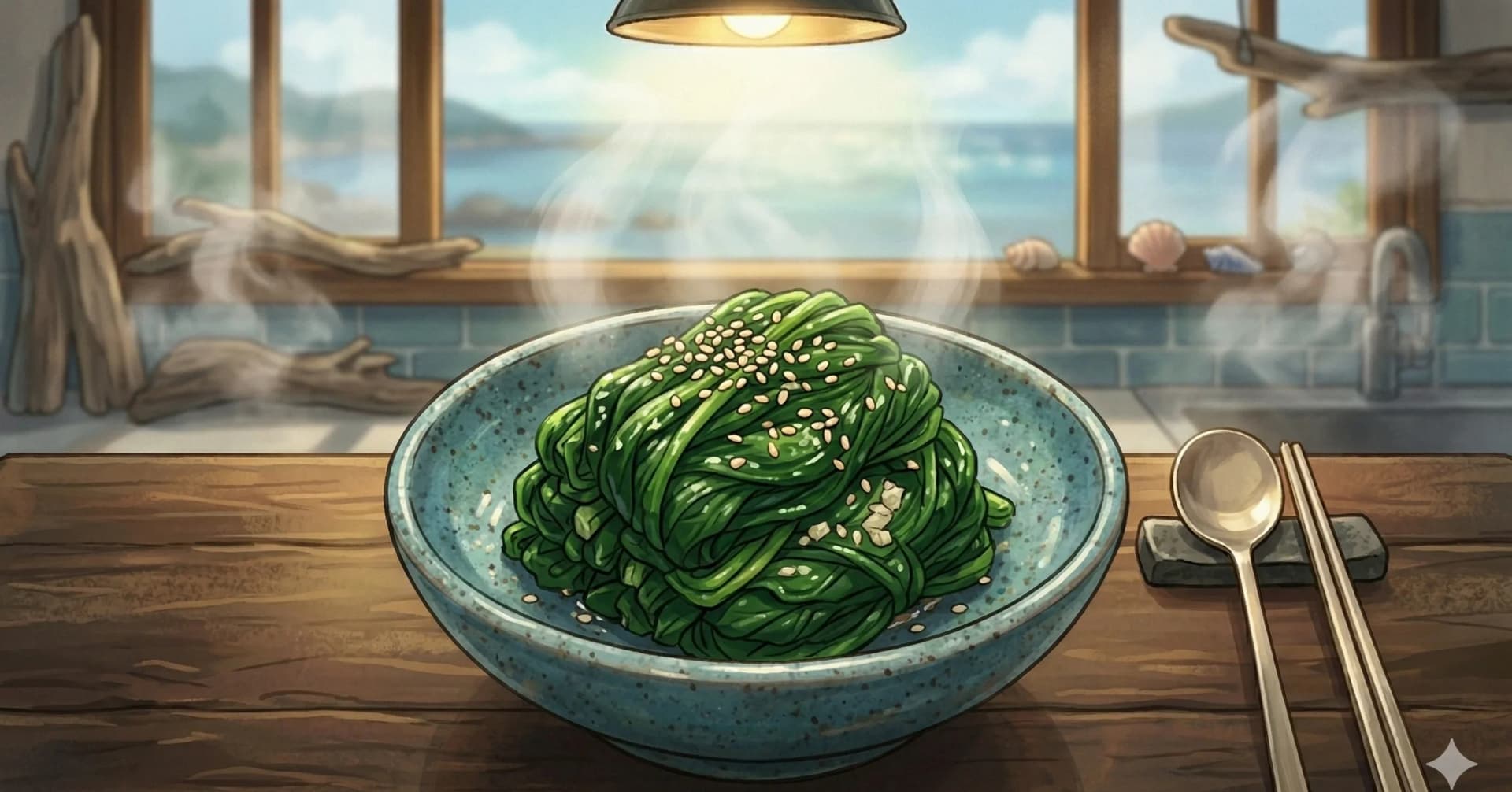
The first thing you notice is the aroma: the deep, nutty warmth of toasted sesame oil lifting off the dark green leaves. Then the taste, clean and vegetal from the spinach, sharp from the raw garlic, and savory from the soy sauce, all held together by that unmistakable sesame fragrance. Sigeumchi namul is one of the simplest dishes in the Korean kitchen and one of the most essential.
Namul refers broadly to seasoned vegetable dishes, a cornerstone of the banchan tradition that accompanies every Korean meal. Among the dozens of namul preparations, sigeumchi namul holds a special place. It appears on nearly every table, from simple home dinners to elaborate holiday spreads. It is one of the five-colored toppings in bibimbap, a constant presence in lunchboxes, and a dish that Korean children learn to prepare early.
What sigeumchi namul delivers is concentrated, clean vegetable flavor. There is no heavy sauce, no heat, no complexity beyond the perfectly balanced relationship between spinach, sesame, and garlic. The spinach is blanched just long enough to wilt and turn vivid green, then shocked in cold water to stop the cooking and preserve its color and texture. The seasoning is applied while the spinach is still cool, allowing the leaves to absorb the flavors as they rest.
The practical insight is in the squeezing. After blanching and cooling, the spinach must be squeezed thoroughly to remove excess water. Wet spinach dilutes the seasoning and turns the dish watery and bland. Properly squeezed spinach concentrates the flavor and produces a namul with the right intensity in every bite.
At a Glance
Yield
4 servings (as banchan)
Prep
10 minutes
Cook
5 minutes
Total
15 minutes
Difficulty
Easy
Ingredients
- ¾ lbfresh spinach (about 1 large bunch)
- 2 tsptoasted sesame oil
- 1 tspsoy sauce
- 2½ tspminced garlic (about 1–2 cloves)
- ⅓ tspfine salt, or to taste
- 1⅔ tsptoasted sesame seeds
Method
- 1
Trim the spinach. If using bunched spinach with roots, trim off the root ends but keep the stems attached. If using baby spinach, it can be used as is. Wash thoroughly in several changes of cold water, as spinach often carries sand and grit in the leaves.
- 2
Bring a large pot of water to a rolling boil. Add a generous pinch of salt to the water.
- 3
Submerge the spinach in the boiling water. Push it down with tongs or a spoon to ensure all leaves are submerged. Blanch for 30 to 40 seconds, no longer. The spinach should wilt completely and turn a vivid, bright green. Overblanching dulls the color and turns the leaves mushy.
- 4
Drain immediately and plunge into a bowl of ice water or rinse under cold running water until the spinach is completely cool. This stops the cooking instantly and locks in the bright green color.
- 5
Squeeze the cooled spinach firmly between your palms, extracting as much water as possible. Form it into a tight ball as you squeeze. You should be able to wring out a surprising amount of liquid. This is the most important step.
- 6
Place the squeezed spinach on a cutting board. Cut it into 5 to 7 cm lengths. If the spinach was pre-trimmed baby spinach, a rough chop is sufficient.
- 7
Transfer the cut spinach to a mixing bowl. Add the sesame oil, soy sauce, garlic, salt, and sesame seeds.
- 8
Toss everything together using your hands or chopsticks. Using your hands allows you to separate any clumps and ensure every leaf is evenly coated in the seasoning. The spinach should glisten with sesame oil.
- 9
Taste and adjust. The flavor should be clean and balanced. The sesame oil should be prominent, the garlic should be present but not overwhelming, and the soy sauce should enhance the spinach without making it salty.
- 10
Mound the namul neatly on a small serving plate. Sprinkle a few more sesame seeds on top.
- 11
Serve at room temperature or slightly chilled. Sigeumchi namul does not need to be warm.
- 12
This dish benefits from resting for 10 to 15 minutes before serving, as the flavors meld and the spinach absorbs the seasoning more thoroughly.
Key Ingredient Benefits
Spinach: Among the most nutrient-dense vegetables, providing significant amounts of iron, folate, vitamin K, vitamin A (from beta-carotene), and lutein. The brief blanching in this recipe reduces oxalic acid content, which may improve the bioavailability of iron and calcium. Research suggests that the lutein and zeaxanthin in spinach may support eye health.
Toasted sesame oil: A defining flavor in Korean cuisine. Contains vitamin E and the lignans sesamin and sesamol, which research suggests have antioxidant properties. Toasting the sesame seeds before pressing the oil intensifies the flavor without significantly changing the nutritional profile.
Garlic: Contains allicin, a sulfur compound that research suggests may support cardiovascular health and immune function. Traditionally used across many cultures as both a culinary and medicinal ingredient.
Why This Works
Blanching for exactly 30 to 40 seconds wilts the spinach completely while preserving its nutrients, color, and a slight amount of texture. Spinach cooks very quickly, and the difference between 30 seconds and 2 minutes is dramatic. The brief blanch also reduces oxalic acid, which can give raw spinach a slightly astringent, chalky quality and inhibit the absorption of iron and calcium.
Shocking in cold water immediately after blanching is essential for two reasons: it stops the residual heat from continuing to cook the spinach, and it sets the chlorophyll, which keeps the leaves vivid green rather than olive drab.
Squeezing out the water concentrates the flavor and allows the seasoning to adhere directly to the spinach rather than sliding off in a pool of liquid. Think of it as creating space for the sesame oil and soy sauce to be absorbed into the leaves.
Using raw garlic rather than cooked garlic gives the dish its characteristic sharpness. The garlic is not mellowed by heat, so its flavor cuts through the nutty sesame and vegetal spinach clearly.
Substitutions & Variations
Other greens: The same technique and seasoning work beautifully with water spinach (ong choy), chard, kale (blanch for 1 to 2 minutes), or crown daisy (ssukgat).
Without soy sauce: Some traditional versions use only salt, sesame oil, and garlic. This produces a cleaner, more purely vegetal flavor and is the preferred method for bibimbap toppings.
With gochugaru: A pinch of gochugaru added to the seasoning gives the namul a mild warmth and a reddish tint. Not traditional for the classic version but common in some households.
Doenjang version: Replace the soy sauce with 5 g of doenjang (Korean fermented soybean paste) for a deeper, funkier seasoning.
Serving Suggestions
Sigeumchi namul is one of the most versatile banchan, appearing at virtually every Korean meal. It pairs naturally with rice and soup, and is an essential topping for bibimbap. Serve it alongside other namul preparations like kongnamul muchim and oi-muchim for a colorful banchan spread. It is also delicious on its own as a healthy snack.
Storage & Reheating
Leftover sigeumchi namul: Stores well in an airtight container in the refrigerator for up to 3 days. The garlic flavor intensifies slightly over time.
Serving temperature: Best served at room temperature or cold. There is no need to reheat.
Freezing: Not recommended, as the spinach becomes watery and loses its texture when thawed.
Meal prep: This is an excellent banchan to prepare in advance. Make a large batch on a Sunday and enjoy it throughout the week.
Cultural Notes
Sigeumchi namul (시금치나물) is one of the foundational banchan in the Korean namul (나물) tradition, the broad category of seasoned, lightly cooked vegetable preparations that also includes kongnamul muchim (soybean sprouts), doraji namul (bellflower root), gosari namul (fernbrake), chwinamul (aster), and dozens of other wild and cultivated vegetables. Namul is more than a category of dishes. It is a philosophy of Korean cooking that emphasizes simple, respectful preparation of vegetables (brief blanching, minimal seasoning, careful tossing) to preserve the integrity of the ingredient.
Spinach itself was a relative latecomer to Korean cuisine. It arrived from China during the Goryeo dynasty (918-1392) and naturalized as a cool-season green grown in Korean gardens by the Joseon period. The dish's pairing with sesame oil, garlic, and a whisper of soy sauce is the canonical Korean namul preparation, and sigeumchi namul is one of the most universally appearing banchan on Korean tables. It is comparable in ubiquity to kongnamul muchim and oi muchim, but distinguished by its deeper earthy-sweet flavor and dark green color.
Sigeumchi namul plays an essential structural role in bibimbap, where the dark green spinach provides one of the five colors traditionally arranged in the bowl alongside white rice, yellow egg, brown beef, and red gochujang. The five-color principle in Korean cooking, called obangsaek (오방색), reflects a traditional cosmological balance and is observed in many royal-court and ceremonial preparations.
Beyond bibimbap, sigeumchi namul appears on virtually every formal Korean spread, on ancestral memorial tables (jesa, 제사), in Korean temple cuisine, and in the everyday rotation of weekday banchan in millions of Korean homes.
Nutrition Facts
Calories: 49kcal (2%)|Total Carbohydrates: 3.5g (1%)|Protein: 2.6g (5%)|Total Fat: 3.4g (4%)|Saturated Fat: 0.5g (3%)|Cholesterol: 0mg (0%)|Sodium: 322mg (14%)|Dietary Fiber: 1.8g (6%)|Total Sugars: 0.3g
You Might Also Like



Ratings & Comments
Ratings & Comments
Ratings
Share your thoughts on this recipe.
Sign in to rate and comment