Japanese Cuisine
Soy Butter Enoki Mushrooms (Enoki no Bata Shoyu)
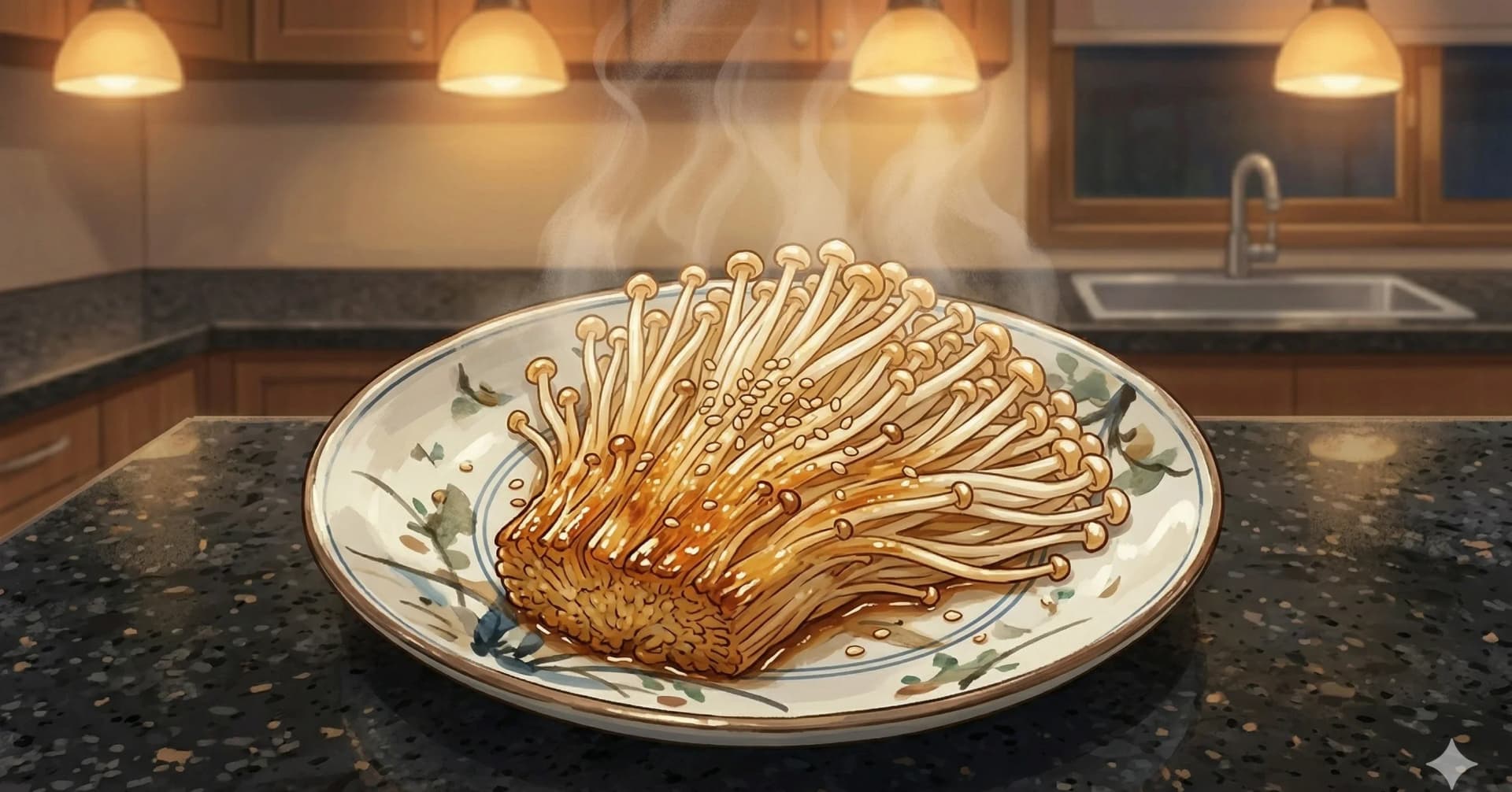
Three ingredients, five minutes: enoki mushrooms seared golden in butter and finished with a splash of soy sauce
There are dishes that take all day and reward the effort, and then there are dishes like this one. Three ingredients. Five minutes. A result that makes you wonder why you ever bothered with anything more complicated on a weeknight.
Bata shoyu (butter and soy sauce) is one of those Japanese flavor combinations that feels inevitable once you taste it. Butter brings richness and a gentle sweetness. Soy sauce brings salt, depth, and the dark savory quality that the Japanese call umami before the rest of the world borrowed the word. Together they create a sauce that needs nothing else.
Enoki mushrooms are the ideal vehicle for this combination. They grow in tight clusters of long, thin stems topped with tiny caps, and when you sear them in butter without moving them, something wonderful happens. The bottoms caramelize into a golden, crispy sheet while the tops stay tender and slightly slippery. You get two textures in one ingredient. That crispy bottom is the whole point of the dish, so resist the urge to stir.
The soy sauce goes in at the very end, just a tablespoon, and it sizzles when it hits the hot butter. That sizzle is the sound of the Maillard reaction kicking in one more time, deepening the flavor in the final seconds of cooking. A minute of tossing and it is done.
If you want to push it slightly further, a pinch of garlic powder adds warmth without requiring you to mince anything. And aonori, the green seaweed flakes sold in Japanese markets, gives a subtle oceanic note and a beautiful green fleck against the golden mushrooms. But even without those, just butter, enoki, and soy sauce, this is a perfect small dish.
At a Glance
Yield
2 servings
Prep
3 minutes
Cook
5 minutes
Total
8 minutes
Difficulty
Easy
Ingredients
- 7 ozenoki mushrooms, root end trimmed, gently separated into 3 to 4 small bundles
- 2 tbspunsalted butter
- 1 tbspsoy sauce
- —pinch of garlic powder (optional)
- 0.5 tspaonori (green seaweed flakes) (optional)
Method
- 1
Trim the root end from the enoki mushrooms and gently separate them into 3 to 4 small bundles. You do not need to pull them apart into individual strands. Keeping them in loose clusters gives you a better sear and makes them easier to handle in the pan.
- 2
Melt the butter in a medium skillet over medium heat. When the butter is foaming, lay the enoki bundles flat in the pan in a single layer. Press them down gently with a spatula. Do not stir or move them. Let them sear undisturbed for 2 minutes until the bottoms turn golden brown and slightly crispy.
- 3
Flip the bundles (or toss with the spatula if they have merged into one sheet). Add the soy sauce directly to the pan. It will sizzle and bubble immediately. Toss the mushrooms in the soy-butter sauce for about 1 minute, until every strand is coated and the sauce has reduced to a glossy film.
- 4
If using, sprinkle the garlic powder over the mushrooms during the final toss. Transfer to a plate and scatter aonori flakes over the top if desired. Serve immediately while the bottom is still crispy.
Key Ingredient Benefits
Enoki mushrooms: These slender mushrooms are low in calories (about 37 per 100g) and provide a surprising amount of B vitamins, particularly niacin and pantothenic acid. They contain a unique protein called FVE (Flammulina velutipes extract) that has been studied in laboratory settings for potential immune-modulating activity, though clinical applications have not been established. Enoki are also a source of dietary fiber and antioxidants including ergothioneine.
Butter: Provides fat-soluble vitamins A and K2. The fat in butter helps with absorption of the fat-soluble compounds in the mushrooms. Used in moderation here, with 1 tablespoon per serving.
Soy sauce: Naturally fermented soy sauce contains hundreds of flavor compounds produced during fermentation, including amino acids and organic acids. It provides a small amount of iron and some B vitamins. The sodium content is the main nutritional consideration, though the amount per serving here (about half a tablespoon) is moderate.
Why This Works
This dish is an exercise in controlled simplicity, and the technique is everything.
Enoki mushrooms are about 90% water, which normally makes them difficult to brown. The key is laying them flat in a single layer and leaving them completely alone. As the water evaporates from the bottom layer, the proteins and sugars concentrate at the surface where they contact the pan. The butter provides the fat needed for the Maillard reaction, and after 2 minutes, the bottom transforms from pale and soft to golden and crispy. Moving the mushrooms would redistribute the moisture and prevent this crust from forming.
The soy sauce is added to the hot pan, not drizzled on at the end, for a reason. When liquid soy sauce hits butter at cooking temperature, the sugars in the soy sauce caramelize instantly and the amino acids undergo another round of Maillard browning. This creates a more complex, deeper flavor than cold soy sauce added after cooking. The bubbling also reduces the sauce to a concentrated glaze rather than a watery pool.
Keeping the bundles in small clusters rather than separating individual strands gives you a range of textures. The outer strands get crispy and caramelized. The inner strands stay tender and saucy. This textural contrast is what makes the dish satisfying despite having so few components.
Substitutions & Variations
Enoki mushrooms: There is no real substitute that gives you the same crispy-sheet effect. Shimeji mushrooms (seared in clusters) are the closest alternative and take well to butter-soy treatment. Thinly sliced king oyster mushrooms also work but give a completely different, meatier texture.
Butter: Salted butter works (reduce or omit the soy sauce slightly). For dairy-free, use a neutral oil and add a drop of sesame oil for richness, though the bata shoyu character will be lost.
Soy sauce: Tamari for a gluten-free option. Coconut aminos will work but are sweeter and less salty, so you may need a touch more.
Aonori: Furikake (Japanese rice seasoning) sprinkled on top adds similar visual appeal and umami. Toasted sesame seeds are another option.
Serving Suggestions
This is the ultimate side dish. It takes less time to cook than rice takes to steam. Serve alongside any Japanese main: grilled fish, Teriyaki Chicken, or a bowl of ramen as an extra topping. It also works beautifully on top of steamed rice as a simple lunch, or as part of a bento box. For a Western context, it is an unexpectedly good side for a simple steak or roast chicken.
Storage & Reheating
Best fresh: This dish loses its defining crispy texture within minutes of cooking. It is best eaten immediately.
Refrigerator: If you have leftovers, store in an airtight container for up to 1 day. The texture will be soft, not crispy.
Reheating: Reheat in a dry skillet over medium-high heat for 1 to 2 minutes to partially restore some crispness. Microwave reheating will make the mushrooms rubbery.
Freezing: Not recommended. Enoki mushrooms do not freeze well.
Cultural Notes
Bata shoyu (バター醤油) ranks among the most iconic flavor pairings in modern Japanese home cooking. The combination emerged during the Meiji era (1868-1912) as Japan adopted certain Western ingredients, and butter was among the first to find a permanent home in Japanese kitchens. The genius of the pairing is its simplicity: butter provides the fat and sweetness that Japanese cuisine traditionally sourced from other ingredients, while soy sauce provides the fermented depth that defines Japanese flavor. Enoki mushrooms (えのき茸) are native to Japan and have been cultivated since at least the 17th century. The cultivated white variety most commonly sold today looks very different from wild enoki, which are darker, shorter, and sturdier. The dish reflects a broader Japanese cooking philosophy: when ingredients are good, the best technique is the one that gets out of the way.
Nutrition Facts
Calories: 120kcal (6%)|Total Carbohydrates: 6g (2%)|Protein: 3g (6%)|Total Fat: 10g (13%)|Saturated Fat: 6.5g (33%)|Cholesterol: 25mg (8%)|Sodium: 480mg (21%)|Dietary Fiber: 1.5g (5%)|Total Sugars: 2g
You Might Also Like

Ratings & Comments
Ratings & Comments
Ratings
Share your thoughts on this recipe.
Sign in to rate and comment