Thai Cuisine
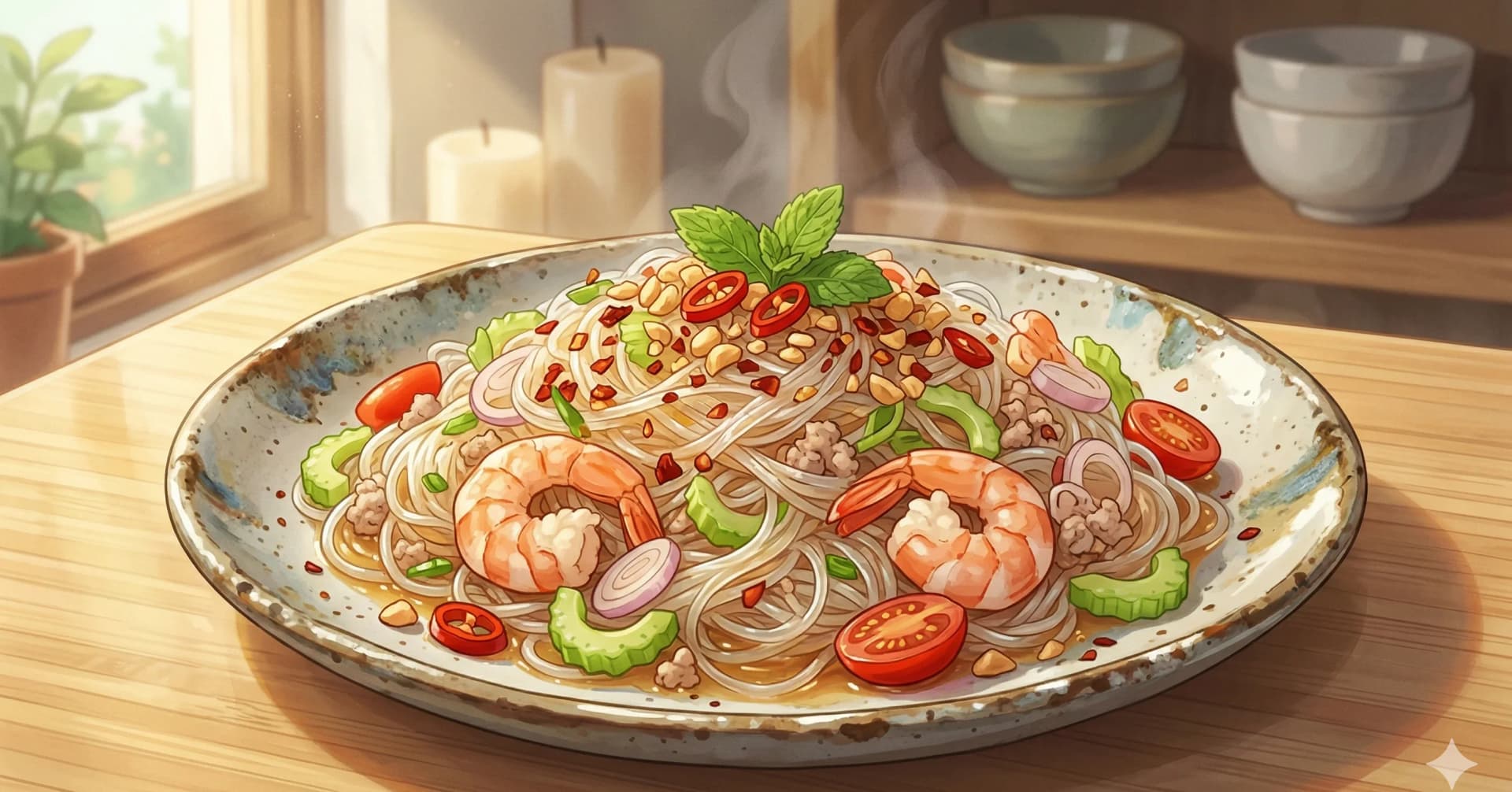
Glass Noodle Salad (Yum Woon Sen / ยำวุ้นเส้น)
Tangy glass noodle salad with minced pork, shrimp, and a bright lime-chili-fish sauce dressing
The first taste is a punch of lime, sharp and immediate, followed by the warm salt of fish sauce and a slow build of chili heat that settles at the back of the throat. Then comes the texture: slippery glass noodles, tender shrimp, crumbly minced pork, and the clean snap of raw celery and shallots. Yum woon sen is Thai salad at its most direct and satisfying, a cold dish with a dressing so vivid that each bite feels like a reset.
Thai yum salads are a category of their own, distinct from Western salad traditions. They are not about leafy greens and vinaigrette but about the interplay of strong, unambiguous flavors: sour, salty, spicy, and just barely sweet, all applied at full volume. Yum woon sen belongs to this family alongside yum nua (beef salad), yum pla duk fu (catfish salad), and dozens of others. What makes this version particularly popular is its approachability. Glass noodles are mild and neutral, absorbing whatever dressing they sit in, which makes them the ideal vehicle for the intense lime-chili-fish sauce combination.
The dish works because every ingredient has a clear role. The minced pork and shrimp provide protein and savoriness. The shallots add a sharp, sulfurous bite that mellows slightly in the acid. The celery contributes crunch and a clean, herbal note. The dried shrimp, if included, layer in concentrated umami beneath the brighter flavors. And the roasted chili powder, the quiet powerhouse of the dressing, adds a smoky depth that straight chili flakes cannot match. The result is a salad that feels light on the palate but is deeply satisfying as a full meal.
At a Glance
Yield
4 servings
Prep
20 minutes
Cook
10 minutes
Total
30 minutes
Difficulty
Easy
Ingredients
Dressing Ingredients
- 3 tbspfresh lime juice (about 3 limes)
- 2 tbspfish sauce
- 2⅓ tspsugar
- 1to 2 tsp roasted chili powder (prik pon), or dried chili flakes
- 2bird's eye chilies, finely sliced (optional, for extra heat)
Salad Ingredients
- 3½ ozdried glass noodles (mung bean vermicelli)
- 5½ ozminced pork
- 5½ ozmedium shrimp, peeled and deveined
- 4shallots (about 60 g), thinly sliced
- 2 stalkscelery, thinly sliced on the diagonal, leaves reserved
- 8cherry tomatoes, halved
- ½ ozdried shrimp, roughly chopped (optional)
To Garnish
- 1 ozroasted peanuts, roughly chopped
- —Fresh cilantro leaves
- —Chinese celery or regular celery leaves
Method
- 1
Soak the glass noodles in room temperature water for 10 minutes until softened. Drain. Bring a pot of water to a boil, add the noodles, and cook for 1 to 2 minutes until they turn translucent and slippery. Drain immediately and rinse under cold water to stop the cooking. Cut the noodles once or twice with scissors to shorten them. Long glass noodles are difficult to toss and serve.
- 2
In the same boiling water, cook the minced pork by crumbling it into the water in small pieces. Stir gently for 2 minutes until the pork is just cooked through and no pink remains. Remove with a slotted spoon and drain well.
- 3
Add the shrimp to the same water and cook for 1 to 2 minutes until they curl and turn pink. Do not overcook. Remove and drain. If the shrimp are large, halve them lengthwise. Set the pork and shrimp aside to cool slightly.
- 4
Make the dressing. Combine the lime juice, fish sauce, sugar, roasted chili powder, and sliced bird's eye chilies in a bowl. Stir until the sugar dissolves completely. Taste the dressing. It should be bracingly sour, well-salted, noticeably spicy, and just barely sweet. The sweetness should lift the other flavors, not compete with them.
- 5
Combine the glass noodles, cooked pork, and shrimp in a large mixing bowl. Pour the dressing over everything and toss gently but thoroughly. The noodles will absorb some of the dressing immediately, so work quickly.
- 6
Add the sliced shallots, celery, cherry tomatoes, and dried shrimp if using. Toss to distribute evenly.
- 7
Taste the salad. Adjust lime for sourness, fish sauce for salt, sugar for sweetness, or chili for heat. The balance should lean sour and salty, with the sweetness and heat playing supporting roles.
- 8
Transfer to a serving plate or shallow bowl. Top with chopped peanuts, cilantro leaves, and celery leaves. Serve immediately at room temperature. The salad is best within an hour of assembly, before the noodles absorb too much dressing and become soft.
Key Ingredient Benefits
Glass noodles (woon sen): Made from mung bean starch, these noodles are naturally gluten-free and lower in calories than wheat or rice noodles (about 330 calories per 100 g dried). They have a low glycemic index and are easily digestible. In traditional Chinese and Thai medicine, mung beans are considered cooling and mildly detoxifying.
Roasted chili powder (prik pon): Made by dry-roasting dried red chilies until darkened and fragrant, then grinding them to a coarse powder. The roasting creates pyrazines and other Maillard compounds that give the powder a smoky depth that raw chili flakes lack. It is a pantry staple in Thai cooking.
Lime juice: Fresh lime juice provides citric acid and vitamin C. The acidity acts as a mild preservative and a flavor brightener. In Thai traditional medicine, lime is considered stimulating and digestive.
Why This Works
The dressing follows the fundamental Thai salad formula: sour leads, salt follows, sweet supports, and heat finishes. Lime juice provides a sharper, more volatile acidity than vinegar, which is why Thai yum salads taste so immediately vivid. The fish sauce contributes both salt and umami, creating a savory depth that pure salt cannot achieve. The sugar is there not for sweetness but to round the sharp edges of the lime and fish sauce, making the dressing feel balanced rather than aggressive.
Glass noodles are the ideal base for a yum salad because they are essentially flavor sponges. Made from mung bean starch, they have almost no flavor of their own, which means they absorb the dressing completely and deliver it with each bite. Their slippery, slightly bouncy texture also contrasts beautifully with the crisp raw vegetables and the tender proteins.
Boiling the pork and shrimp rather than searing them is deliberate. The proteins need to be clean-tasting and tender, not caramelized, because browning would add flavors that compete with the bright dressing. Gentle poaching preserves the mild, sweet character of both the pork and the shrimp.
Substitutions & Variations
Protein: Use only shrimp or only pork for a simpler version. Squid, sliced thin and quickly blanched, is another classic option. For vegetarian, use crumbled firm tofu blanched briefly, and replace fish sauce with soy sauce mixed with lime juice.
Glass noodles: Rice vermicelli (thin rice noodles) can substitute, though the texture is different. Cook them slightly firmer than usual, as they will soften further in the dressing.
Vegetables: Add thinly sliced red onion instead of shallots, or include bean sprouts and shredded carrot for extra crunch.
Yum woon sen talay (seafood version): Replace the pork with squid and mussels, blanched briefly. The seafood version is popular along Thailand's coastal areas.
More savory depth: Add 1 tablespoon of roasted rice powder (khao khua) for a nutty, toasty flavor that bridges this dish toward larb.
Serving Suggestions
Yum woon sen is a complete light meal on its own, especially in warm weather when a cold, bright salad is more appealing than a heavy, hot dish.
For a Thai salad spread, serve alongside som tam and larb for three distinct interpretations of the yum principle. Each one is sour, salty, and spicy, but the base ingredients create completely different eating experiences.
As part of a larger meal, yum woon sen pairs well with richer dishes like khao kha moo or massaman curry, where its acidity cuts through the heaviness of braised meat or coconut cream.
Storage & Reheating
Refrigerator: The salad can be refrigerated for up to 1 day, but the noodles will absorb the dressing and soften considerably. Add a fresh squeeze of lime and a splash of fish sauce before serving leftovers to revive the flavors.
Prep ahead: The dressing can be made several hours ahead. The proteins can be cooked and cooled. Assemble just before serving for the best texture.
Not suitable for freezing.
Cultural Notes
Yum woon sen (ยำวุ้นเส้น, "spicy glass noodle salad") is the lighter, noodle-based member of the broader Thai yum family, built around woon sen (cellophane noodles made from mung bean starch). The noodles are nearly translucent, slippery, and almost flavorless on their own, which makes them an ideal carrier for the bright dressing and the assortment of proteins and herbs that define the dish. The contrast between the cool slippery noodles and the sharp hot-sour-salty dressing is the signature sensory quality.
The dish is built quickly. The dried glass noodles are soaked in warm water until pliable, then briefly blanched in boiling water and immediately drained. The drained noodles go into a large bowl with ground pork (cooked separately in a small amount of water), poached shrimp, dried shrimp, sliced shallot, halved cherry tomatoes, Chinese celery, cilantro, mint, sawtooth coriander, sliced bird's eye chilies, fish sauce, lime juice, palm sugar, and crushed peanuts. Everything is tossed at the table while still warm, so the noodles pick up the dressing thoroughly and the herbs stay vivid green.
Yum woon sen is one of the standard items on the Thai aharn tem peu (composed salad) menu, sold at street stalls, at sit-down Thai restaurants, and at the khao rad gaeng one-plate counter. The dish is also a fixture of Thai home cooking, since the technique is fast and forgiving and the ingredients are available year-round. Within the broader yum family, yum woon sen is treated as a relatively gentle introduction to the category for diners new to the hot-sour Thai flavor profile, since the cellophane noodles absorb and soften the dressing in a way that fresh vegetables alone do not.
Nutrition Facts
Calories: 351kcal (18%)|Total Carbohydrates: 41g (15%)|Protein: 21.4g (43%)|Total Fat: 12.5g (16%)|Saturated Fat: 3.5g (18%)|Cholesterol: 104mg (35%)|Sodium: 822mg (36%)|Dietary Fiber: 3.9g (14%)|Total Sugars: 12.3g
You Might Also Like
Ratings & Comments
Ratings & Comments
Ratings
Share your thoughts on this recipe.
Sign in to rate and comment