Chinese Cuisine
Zhajiangmian (Fried Sauce Noodles)
Beijing's iconic noodle dish with a rich pork and fermented bean paste sauce over hand-pulled noodles
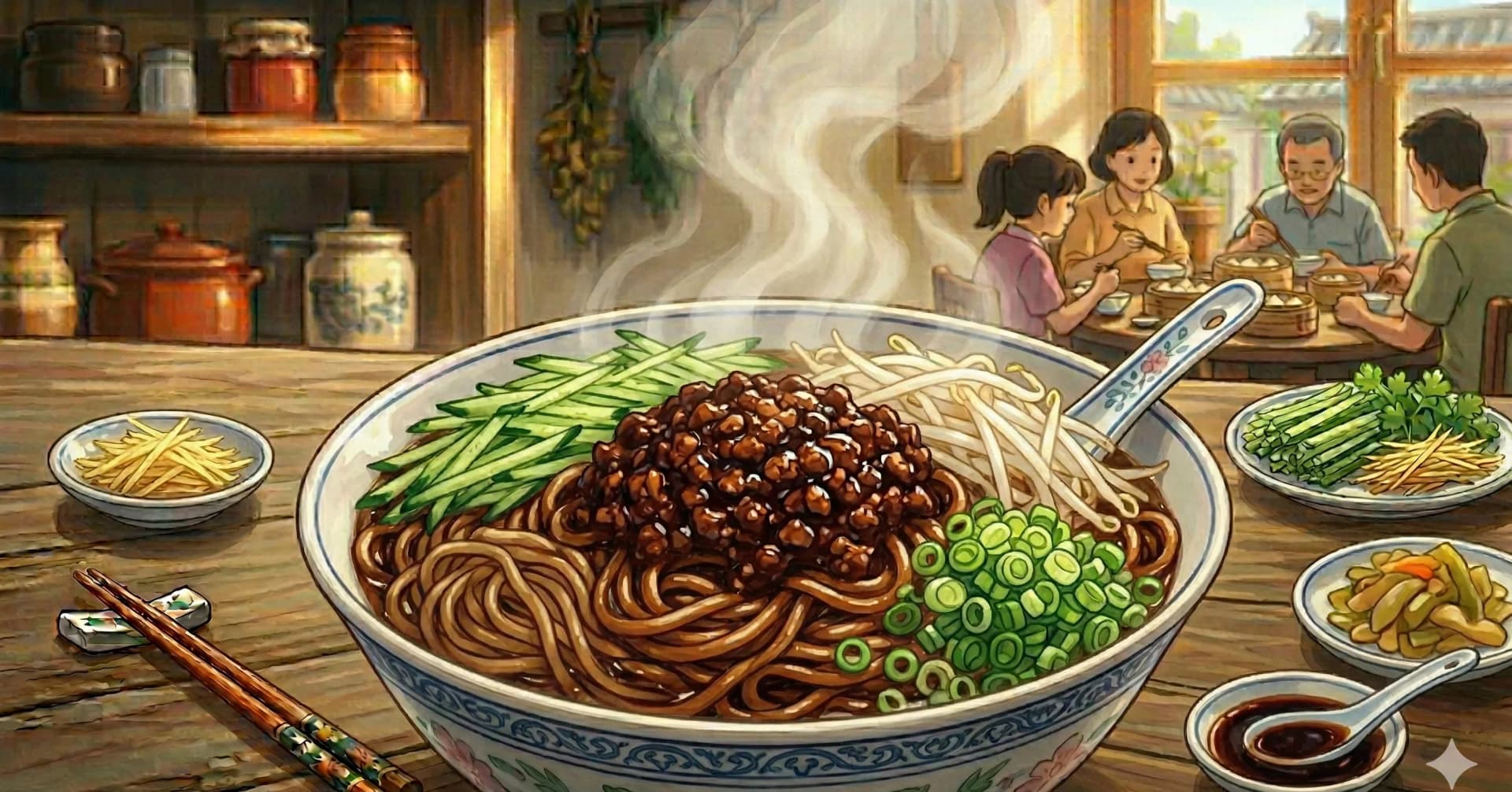
A proper bowl of zhajiangmian arrives with its components carefully arranged: a mound of thick, chewy wheat noodles at the base, a generous ladle of dark, glossy meat sauce in the center, and a colorful array of fresh vegetables fanned out around the edges. Then you mix. The sauce, warm and intensely savory, coats each strand of noodle, and the cool crunch of julienned cucumber and crisp bean sprouts provides contrast with every bite. It is one of those dishes where the eating is as important as the cooking, where the act of tossing everything together at the table is part of the experience.
Zhajiangmian is Beijing's most famous noodle dish, a staple of the city's street food stalls and home kitchens alike. The name translates roughly to "fried sauce noodles," and the sauce, called zha jiang, is the heart of the dish. It is made by cooking ground pork (or sometimes diced pork belly) in tianmianjiang, a sweet fermented wheat paste that gives the sauce its distinctive dark color and complex, slightly sweet savoriness. Some recipes add a portion of doubanjiang for a hint of heat, but the Beijing classic leans toward the sweeter side.
The practical key is cooking the sauce long enough. Tianmianjiang straight from the jar can taste raw and one-dimensional. It needs time in a hot wok with the pork fat to bloom, developing a rounder, more complex flavor. Ten minutes of gentle frying transforms it from paste to sauce, and the difference is unmistakable.
At a Glance
Yield
4 servings
Prep
15 minutes
Cook
20 minutes
Total
35 minutes
Difficulty
Easy
Ingredients
Sauce Ingredients
- ¾ lbground pork (not too lean, 70/30 is ideal)
- 2 tbspvegetable oil
- 3½ oztianmianjiang (sweet wheat paste)
- ½ ozdoubanjiang (optional, for a hint of heat)
- 3 clovesgarlic, minced
- 2½ tbspfresh ginger, minced
- ⅓ cupwater
- 2 tsplight soy sauce
- 1¼ tspsugar
Noodle Ingredients
- 1 lbfresh thick wheat noodles (or dried wheat noodles)
To Serve
- 1medium cucumber, julienned
- 3½ ozbean sprouts, blanched briefly
- 2¾ ozedamame (shelled), blanched
- 3scallions, julienned into thin strips
- 2radishes, julienned (optional)
Method
- 1
Bring a large pot of water to a boil for the noodles. While it heats, prepare all the toppings: julienne the cucumber, blanch the bean sprouts for 30 seconds and drain, blanch the edamame for 2 minutes and drain, and julienne the scallions. Arrange the toppings on a plate or in individual small bowls.
- 2
Heat a wok over medium-high heat. Add the vegetable oil and swirl to coat.
- 3
Add the ground pork, breaking it into small pieces with your spatula. Cook for 3 to 4 minutes, stirring frequently, until the pork has lost its pink color and rendered some of its fat. The meat should be in small crumbles, not large chunks.
- 4
Add the garlic and ginger. Stir for 15 seconds, just until the raw smell dissipates and you can smell their sharp fragrance.
- 5
Reduce the heat to medium. Add the tianmianjiang (and doubanjiang if using). Stir the paste into the pork, coating every piece. The mixture will look thick and dark.
- 6
Cook the paste and pork together over medium heat for 5 to 6 minutes, stirring frequently to prevent sticking and burning. The paste will darken further, the oil will separate from the solids, and the aroma will shift from raw and sharp to round and deeply savory. This frying step is essential.
- 7
Add the water gradually, stirring to create a smooth sauce. The consistency should be like a thick gravy, loose enough to coat noodles but not soupy.
- 8
Add the light soy sauce and sugar. Stir to combine. Simmer for another 2 to 3 minutes to meld the flavors.
- 9
Taste the sauce. It should be savory with a gentle sweetness and a rich, fermented depth. Adjust with soy sauce for salt or sugar for sweetness. Remove from heat and keep warm.
- 10
Cook the noodles in the boiling water according to the package instructions, or until they are chewy but cooked through. Fresh thick noodles typically take 3 to 4 minutes; dried noodles may take longer.
- 11
Drain the noodles and rinse briefly under cold running water to stop the cooking and remove excess starch. This gives the noodles a firmer, chewier texture that holds up better under the heavy sauce. Shake off excess water.
- 12
Divide the noodles among 4 large bowls. Spoon a generous portion of the warm sauce over the center of each bowl.
- 13
Arrange the julienned cucumber, blanched bean sprouts, edamame, scallion strips, and radish around the sauce. The presentation should be colorful and inviting.
- 14
Serve immediately. Each diner mixes the sauce and toppings into the noodles at the table.
Key Ingredient Benefits
Tianmianjiang is made from fermented wheat and soybeans. Like other fermented soy products, it contains isoflavones and amino acids produced during fermentation. It is high in sodium, so additional salt is rarely needed.
Edamame provides plant-based protein, fiber, and a range of micronutrients including folate, vitamin K, and manganese. They have been traditionally associated with bone health and cardiovascular support in East Asian dietary patterns.
Cucumbers contribute hydration and a modest amount of vitamin K. In Chinese food culture, they are considered a cooling food, which balances the warming nature of the fried sauce.
Why This Works
Tianmianjiang is a fermented paste, and like all fermented ingredients, it benefits enormously from cooking. Raw, it tastes flat and paste-like. Fried in oil with pork fat for several minutes, the Maillard reaction creates new flavor compounds, the fermentation flavors bloom, and the paste transforms into a complex, rounded sauce. This is the same principle that makes cooking doubanjiang essential in Sichuan dishes.
The pork fat is not just a cooking medium; it is a flavor carrier. Many of the aromatic compounds in tianmianjiang are fat-soluble, meaning they dissolve into and are carried by the rendered pork fat. This is why a leaner pork produces a less flavorful sauce.
The cold, raw toppings serve a critical role beyond aesthetics. The contrast between the warm, rich, heavy sauce and the cool, crisp, light vegetables is what makes zhajiangmian so satisfying to eat bowl after bowl. Without them, the sauce would quickly become cloying.
Substitutions & Variations
- Tianmianjiang: If unavailable, a mix of hoisin sauce and miso paste (2:1 ratio) can approximate the flavor, though it will be sweeter and less complex.
- Noodles: Any thick wheat noodle works. In Beijing, hand-pulled noodles (la mian) are preferred. Dried udon, thick spaghetti, or fresh Chinese egg noodles are all acceptable alternatives.
- Pork: Diced pork belly (5 mm cubes) is a more traditional option than ground pork and produces a chunkier sauce. Ground chicken or turkey can substitute for a lighter version.
- Vegetarian: Replace the pork with finely diced firm tofu, pressed and crumbled, and add an extra tablespoon of tianmianjiang for depth.
- Korean cousin: Korean jajangmyeon uses a black bean paste (chunjang) instead of tianmianjiang, producing a darker, more savory sauce.
Serving Suggestions
Zhajiangmian is a complete meal in a bowl, needing nothing else. If you want to round out the table, a simple egg drop soup or a bowl of hot and sour soup pairs well. In summer, the noodles can be served cold, rinsed and chilled, with the sauce at room temperature and extra cold toppings. Some families serve a clove of raw garlic alongside each bowl, to be eaten between bites.
Storage & Reheating
The sauce stores well in an airtight container in the refrigerator for up to 5 days and freezes for up to 2 months. Reheat in a small pot over medium heat, adding a splash of water to restore the consistency. Cook fresh noodles to order, as they do not store well once dressed. Prepare the toppings fresh for the best texture and color. The sauce actually improves after a day in the refrigerator, making this an excellent make-ahead weeknight dinner component.
Cultural Notes
Zha jiang mian (炸醬麵, "fried sauce noodles") is the Beijing noodle dish in which thick hand-pulled wheat noodles are tossed at the table with a dark, salty pork-and-soybean-paste sauce and a scatter of fresh raw vegetables. The dish is among the foods most strongly associated with the Beijing food identity, alongside Peking duck and jiaozi, and it represents the wheat-based northern Chinese cooking tradition rather than the rice-based southern one. The dish has been documented in Beijing cooking writing since at least the late Qing dynasty and reached its modern standard form in the early twentieth century.
The sauce is the technical and flavor anchor. The Beijing version uses tianmianjiang (sweet flour sauce, a dark fermented wheat paste) as the base, mixed with huangjiang (yellow soybean paste) in roughly equal parts. Diced pork belly is rendered in oil first to release fat, then the sauces are added and slowly fried over low heat for fifteen to twenty minutes, during which the mixture darkens, the bean pastes lose their raw sharpness, and the pork softens into the sauce. The finished sauce is thick, dark brown, salty-savory with a fermented depth, and just sweet enough from the tianmianjiang to balance the salt.
The serving is highly specific. Cooked thick wheat noodles go into individual bowls. A spoonful of the sauce is placed on top. Around the sauce, the cook arranges small piles of fresh raw garnishes: julienned cucumber, julienned radish, shredded raw cabbage, blanched soybean sprouts, blanched celtuce, and fresh-shelled green soybeans (or edamame). The diner mixes everything at the table, breaking the sauce into the noodles and the vegetables until the strands carry a coating of sauce and bits of crunchy vegetable in every bite. The Tianjin and Shandong variations of the dish use different sauce ratios and different vegetable garnishes, but the Beijing form with its eight standard raw vegetables remains the canonical reference. Old Beijing restaurants like Haiwanju (海碗居), which has served zha jiang mian since 1999 in its current form but draws on much older neighborhood recipes, are reliable references for the form.
Nutrition Facts
Calories: 630kcal (32%)|Total Carbohydrates: 78g (28%)|Protein: 27g (54%)|Total Fat: 22g (28%)|Saturated Fat: 6.8g (34%)|Cholesterol: 54mg (18%)|Sodium: 925mg (40%)|Dietary Fiber: 5.1g (18%)|Total Sugars: 8.8g
You Might Also Like
Ratings & Comments
Ratings & Comments
Ratings
Share your thoughts on this recipe.
Sign in to rate and comment