Korean Cuisine
Gamja Jorim (Soy-Braised Potatoes)
Small potatoes glazed in a sweet soy sauce until glossy and tender to the core
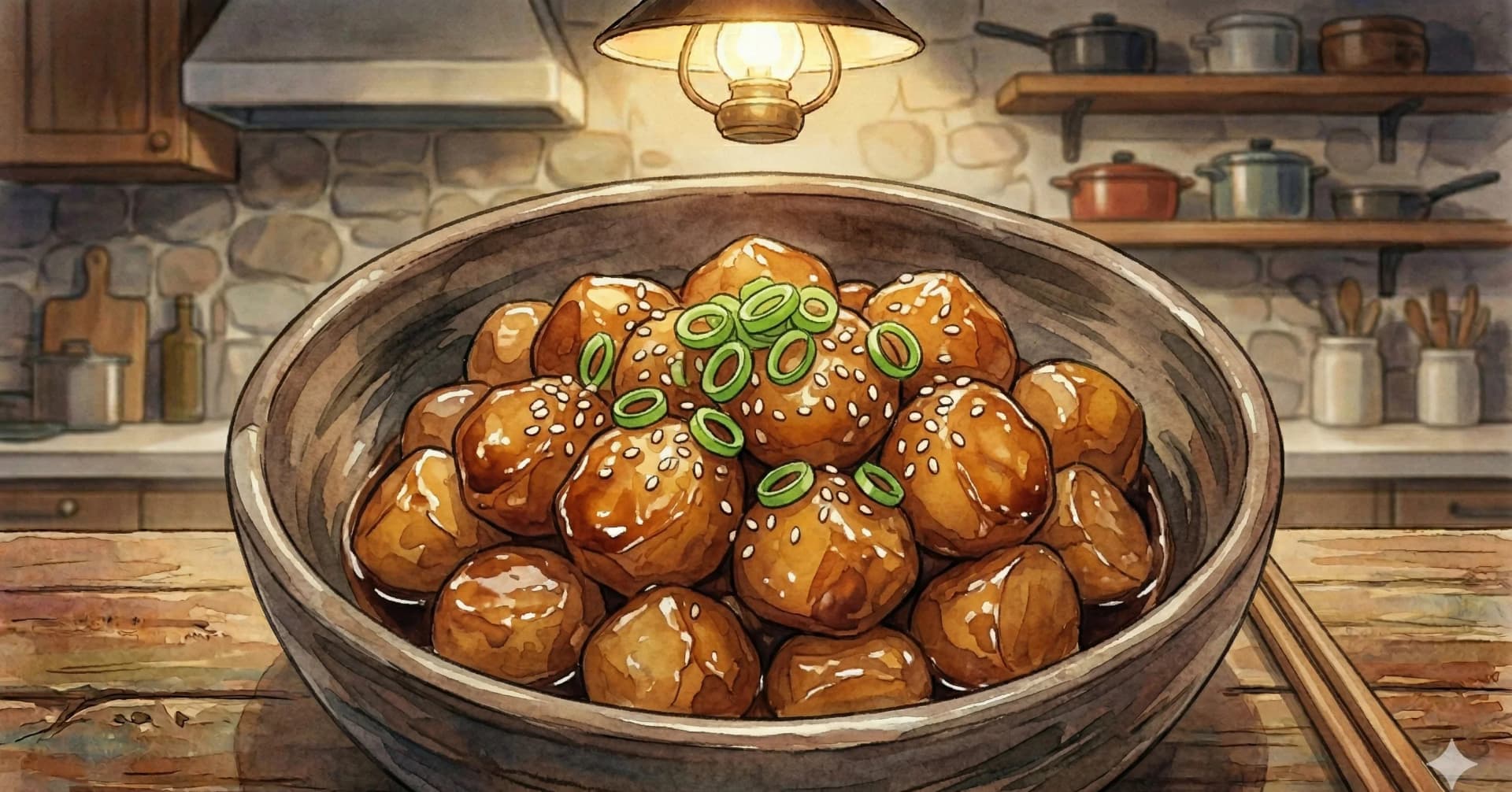
Each piece of potato gleams with a deep, mahogany-brown glaze that catches the light, the surface sticky and sweet with caramelized soy sauce, the interior soft and almost creamy. Pop one in your mouth and the glaze dissolves into a wave of sweet, salty, garlicky warmth while the potato itself is tender enough to break apart on the tongue. This is gamja jorim, one of the most common and most comforting banchan in the Korean kitchen.
Jorim is a Korean cooking technique that translates roughly to "braising in seasoned liquid." It applies to tofu, eggs, fish, and most commonly to root vegetables. Gamja jorim, the potato version, is a dish that nearly every Korean has grown up eating, found in school lunch trays, packed in dosirak (lunchboxes), and served at home as part of the daily banchan spread. Its ubiquity speaks to its perfection as a side dish: inexpensive, easy to prepare, keeps well, and universally appealing.
What this dish delivers is a study in the power of reduction. The potatoes are simmered in a mixture of soy sauce, sugar, water, and garlic until the liquid reduces to a thick, clinging glaze. No cream, no butter, no complexity of technique, just the patient concentration of simple flavors into something deeply satisfying.
The practical insight is to cut the potatoes into similar-sized pieces and to resist stirring too often. Frequent stirring breaks the softened potatoes apart. Gentle swirling of the pan, or spooning the sauce over the top, keeps the pieces intact while ensuring even coating. The final product should be whole, glossy pieces, not a mashed potato situation.
At a Glance
Yield
4 servings (as banchan)
Prep
10 minutes
Cook
25 minutes
Total
35 minutes
Difficulty
Easy
Ingredients
- 1 lbpotatoes (Yukon Gold or similar waxy variety) (about 3–3½ potatoes), peeled and cut into 3 cm chunks
- 3 tbspsoy sauce
- 1½ tbspsugar
- 1 tbsprice syrup or corn syrup (mulyeot)
- ⅞ cupwater
- 1¾ tbspminced garlic
- 1 tspsesame oil
- 2 tspvegetable oil
- 1small dried red chili (optional)
- 1⅔ tsptoasted sesame seeds
- 1scallion, thinly sliced
Method
- 1
Peel the potatoes and cut them into chunks of roughly equal size, about 3 cm. If using small potatoes, halving or quartering them is sufficient. Soak the cut potatoes in cold water for 5 minutes to remove surface starch, then drain well.
- 2
Heat the vegetable oil in a medium saucepan or skillet over medium heat. Add the drained potato pieces and stir gently for 1 to 2 minutes, coating them in the oil. This brief step helps the surface set slightly, which means the pieces will hold their shape better during braising.
- 3
Add the water, soy sauce, sugar, rice syrup, garlic, and the dried red chili if using. Stir gently to distribute the seasonings.
- 4
Bring the liquid to a boil over medium-high heat. Once boiling, reduce the heat to medium-low. The liquid should maintain an active, gentle simmer with steady small bubbles.
- 5
Cover the pan and simmer for 10 minutes. The potatoes will begin to soften and the liquid will start to reduce. Do not stir during this phase. Let the potatoes cook undisturbed.
- 6
Remove the lid and increase the heat to medium. The sauce needs to reduce further, concentrating into a thick glaze. Gently swirl the pan or use a spoon to baste the potatoes with the liquid, being careful not to break them.
- 7
Continue cooking uncovered for 8 to 10 minutes, basting occasionally. The liquid will darken and thicken. You will see it transition from a watery soy sauce broth to a thick, syrupy glaze that coats the potatoes.
- 8
Test a potato by piercing it with a toothpick or knife. It should slide through without resistance. The center should feel uniformly tender.
- 9
When the sauce has reduced to a thick glaze that clings to the potatoes, remove from heat. Add the sesame oil and swirl the pan gently to distribute it. The sesame oil adds a final layer of aroma and a slight sheen.
- 10
Transfer to a serving dish, taking care to keep the potato pieces intact.
- 11
Sprinkle with toasted sesame seeds and sliced scallion. Remove the dried chili if you added one.
- 12
Serve warm or at room temperature. Gamja jorim is one of the banchan that actually improves slightly as it cools and the flavors settle.
Key Ingredient Benefits
Potatoes: An excellent source of potassium (more than bananas per serving), vitamin C, and vitamin B6. The resistant starch in cooked and cooled potatoes may serve as a prebiotic, according to research on gut microbiome function.
Soy sauce: Provides sodium, amino acids, and flavonoids from the soybean and wheat fermentation process. Naturally brewed soy sauce contains more complex flavors and a wider range of amino acids than chemically hydrolyzed versions.
Sesame seeds: Contain calcium, iron, magnesium, and the lignans sesamin and sesamol, which research suggests may have antioxidant properties.
Rice syrup (mulyeot): A traditional Korean sweetener made from malted barley and rice. It provides a more complex sweetness than refined sugar and creates a distinctive glossy finish in jorim and other glazed dishes.
Why This Works
Soaking the potatoes briefly removes surface starch, which would otherwise cloud the sauce and potentially make it gluey. Clean potato surfaces absorb the soy glaze more evenly and develop a more attractive finish.
The combination of sugar and rice syrup creates a glaze with the right consistency. Sugar provides sweetness but dissolves into a thin liquid. Rice syrup (mulyeot) adds viscosity and a subtle sheen, helping the sauce cling to the potatoes in a thick, glossy coat. Together they produce the signature lacquered look.
Using waxy potatoes (like Yukon Gold) rather than starchy ones (like russets) ensures the pieces hold their shape during the long simmer. Starchy potatoes would break apart into the sauce, losing the satisfying whole-piece presentation that defines gamja jorim.
Reducing the sauce with the potatoes in the pan, rather than making a separate glaze, allows the flavors to penetrate the potato as the liquid concentrates. By the time the sauce is thick, the potato has absorbed the seasoning throughout.
Substitutions & Variations
Sweet potato jorim: Sweet potatoes can replace regular potatoes for a sweeter version that is equally traditional.
With protein: Add hard-boiled eggs (scored on the surface to absorb the sauce) or cubed firm tofu during the last 10 minutes of cooking.
Spicy version: Add 10 g of gochugaru to the sauce along with the soy sauce for a spicier variation called maeun gamja jorim.
Without rice syrup: Honey or corn syrup can substitute. Brown sugar alone also works but produces a less glossy result.
Quail eggs and potato jorim: A popular version adds peeled, hard-boiled quail eggs to the pot alongside the potatoes. They absorb the soy glaze beautifully.
Serving Suggestions
Gamja jorim is a banchan side dish, served as part of a Korean meal alongside rice, soup, and other small dishes. It pairs well with virtually any Korean main course, from bulgogi to doenjang-jjigae. It is especially good in a lunchbox (dosirak) because it holds up well at room temperature. For a simple, satisfying meal, serve gamja jorim with steamed rice, sigeumchi namul, kimchi, and a fried egg.
Storage & Reheating
Leftover gamja jorim: Stores exceptionally well. Refrigerate in an airtight container for up to 5 days. The potatoes absorb more of the glaze over time, making leftovers even more flavorful.
Reheating: Warm gently in a small pan over low heat, adding a splash of water if the glaze has become too thick. Microwaving also works well for this dish.
Freezing: Not recommended, as the potato texture becomes grainy after freezing and thawing.
Cultural Notes
Gamja jorim (감자조림) belongs to the broad jorim (조림) family of Korean braised dishes, where a primary ingredient gets simmered in a soy-sweet-aromatic liquid until the sauce reduces to a thick glossy glaze. Other classics in the family include dubu jorim (tofu), yeon-geun jorim (lotus root), eundaegu jorim (black cod), and the meat-based jangjorim (slow-braised soy beef). The technique is one of the foundational Korean methods for turning humble ingredients into deeply seasoned, shelf-stable banchan.
Potato banchan was a relatively late entry into Korean cooking. Potatoes themselves did not reach Korea until the early 19th century, brought through China during the late Joseon dynasty, but they took quickly to the cool mountainous regions of Gangwon province in the northeast. By the early 20th century, gamja jorim had established itself as one of the reliable everyday Korean home banchan. Cheap to make. Satisfying in any season. Holds up in the refrigerator for nearly a week. Equally welcome in a child's school lunch box or alongside a glass of soju.
The dish is one of the first things many Korean cooks learn to make. The technique is forgiving, and the result is so disproportionately rewarding that it builds confidence early. In modern Korean home repertoires, gamja jorim is part of the rotating cast of three or four banchan that sit on the table at every meal, alongside kimchi and rice.
Regional variations exist. Some cooks add small dried anchovies (jamyeolchi) for extra umami. Others throw in green or red chili rings for heat. The soy, sugar, garlic, and sesame core is the through-line that holds the dish together across kitchens.
Nutrition Facts
Calories: 171kcal (9%)|Total Carbohydrates: 31.4g (11%)|Protein: 3.9g (8%)|Total Fat: 3.6g (5%)|Saturated Fat: 0.4g (2%)|Cholesterol: 0mg (0%)|Sodium: 630mg (27%)|Dietary Fiber: 3.2g (11%)|Total Sugars: 7.6g
You Might Also Like

Ratings & Comments
Ratings & Comments
Ratings
Share your thoughts on this recipe.
Sign in to rate and comment