Thai Cuisine
Gaeng Phet Gai (Thai Red Curry with Chicken)
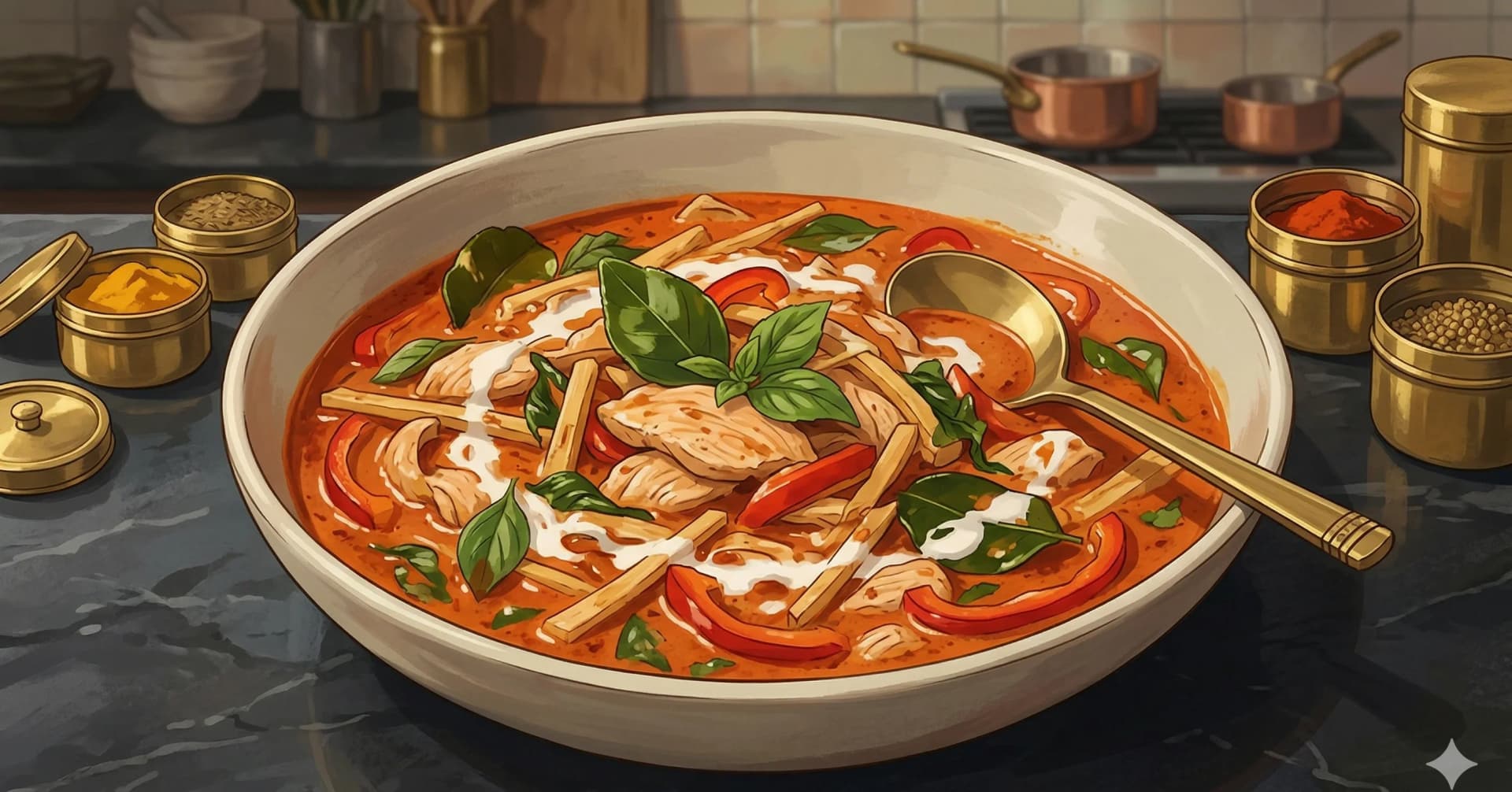
Chicken thighs braised in a fragrant coconut curry of red chili paste, kabocha squash, and Thai basil
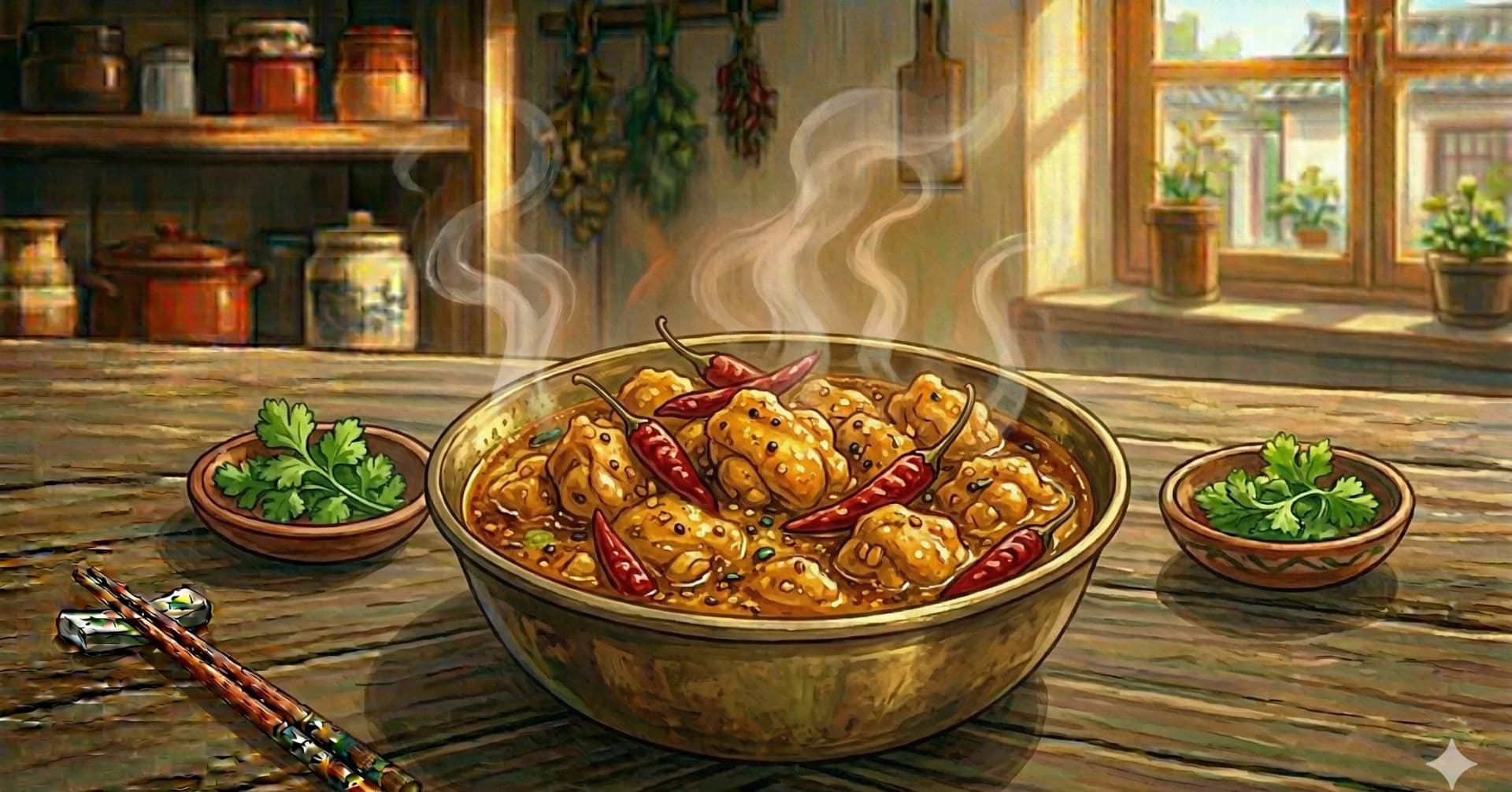
Open the lid of a simmering pot of gaeng phet and you are hit with a wave of warm, aromatic steam, rich with coconut fat and the layered heat of dried chilies, galangal, and lemongrass. The color is somewhere between brick red and burnt orange, deeper than you expect, with pools of coconut oil glistening on the surface. This is the smell of home cooking across Thailand, the curry that appears on dinner tables more often than any other.
Red curry holds a foundational position in Thai cuisine. Where Massaman curry borrows warmly from Indian spice traditions and Panang curry tends toward thick, peanut-laced richness, gaeng phet is the straightforward expression of the Thai curry pantry: chili paste, coconut milk, fish sauce, sugar, and whatever protein and vegetables are on hand. It is the curry most Thai cooks learn first and the one they return to most often. The paste itself, whether store-bought or pounded by hand, contains dried red chilies, lemongrass, galangal, garlic, shallots, cilantro root, kaffir lime zest, and shrimp paste, each ingredient contributing a layer that no single element could deliver alone.
This version pairs chicken thighs with kabocha squash, a combination Pailin Chongchitnant calls one of her absolute favorites. The squash softens into creamy, sweet pieces that absorb the spiced coconut sauce, while the dark meat chicken stays tender through the braise. The single most important technique is blooming the curry paste in a small amount of coconut cream until the oil visibly separates, a step that deepens flavor and transforms the paste from raw to fragrant in minutes.
At a Glance
Yield
4 servings
Prep
20 minutes
Cook
25 minutes
Total
45 minutes
Difficulty
Easy
Ingredients
- 2large garlic cloves, finely minced
- 1¾ tbspfresh ginger, finely grated
- ½ ozlemongrass paste or 1 stalk fresh lemongrass, finely chopped
- 1¾ cupfull-fat coconut milk (do not shake the can, see Method step 1)
- 55to 80 g red curry paste, store-bought (Maeploy or Aroy-D recommended)
- 1 lbboneless, skinless chicken thighs, cut into 3 cm pieces
- 1 cupunsalted or low-sodium chicken stock
- 2 tbspfish sauce, divided
- 25to 40 g palm sugar, finely chopped (or light brown sugar)
- ¾ lbkabocha squash, seeded and cut into bite-sized pieces, skin on
- 3½ ozgreen beans, trimmed and cut into 5 cm lengths
- 6kaffir lime leaves, lightly torn
- 1¼ cupThai basil leaves
- 1/4red bell pepper, julienned (optional, for color)
- 1fresh red chili, sliced, for garnish
Method
- 1
Open the coconut milk without shaking the can. Scoop the thick cream from the top into a wok or large deep skillet, about 120 ml worth. Set the remaining thinner milk aside. Place the pan over medium-high heat and bring the cream to a gentle boil. You will see it begin to separate, the surface turning glossy as the fat releases from the solids.
- 2
Add the curry paste to the bubbling coconut cream. If using the garlic, ginger, and lemongrass boost, add those at the same time. Stir continuously and cook for 2 to 3 minutes, pressing the paste against the pan to break up any lumps. The mixture will thicken considerably and darken in color. When you see red-tinted oil pooling around the edges of the paste, the paste is properly bloomed. The kitchen will smell intensely of lemongrass and dried chili. If the oil does not separate, do not worry, simply proceed once the paste looks thick and fragrant.
- 3
Add the chicken pieces to the pan and toss them through the paste until each piece is coated. Cook for 1 minute, turning once, so the outside of the chicken picks up the color and flavor of the paste.
- 4
Pour in the remaining coconut milk and the chicken stock. Add the torn kaffir lime leaves, half of the fish sauce (about 15 ml), and the palm sugar. Stir until the sugar dissolves. Bring the liquid to a simmer, then reduce the heat to medium-low. Let the curry cook uncovered for about 8 minutes. The chicken will cook most of the way through and the sauce will reduce slightly, turning a deeper shade of orange-red.
- 5
Add the kabocha squash pieces, pressing them gently into the liquid so they are mostly submerged. Continue simmering on low heat for 6 to 8 minutes. The squash is done when a fork slides through a piece easily but the cubes still hold their shape. Add the green beans in the last 3 minutes.
- 6
Taste the sauce. It should be rich, slightly sweet, and salty enough to stand up to plain rice. Adjust with the remaining fish sauce as needed, keeping in mind that different paste brands vary widely in salt content. The sauce should taste a touch stronger than you want, since the jasmine rice will mellow everything.
- 7
Remove the pan from the heat. Stir in the Thai basil leaves and the red bell pepper strips if using. The residual heat will wilt the basil within 30 seconds, releasing its anise-like perfume into the sauce. Ladle into bowls over steamed jasmine rice. Scatter sliced fresh chili over the top for those who want extra heat.
Key Ingredient Benefits
Coconut milk: Full-fat coconut milk is essential for both the blooming technique and the body of the sauce. The fat carries flavor compounds that water-based liquids cannot. Coconut milk provides MCTs (medium-chain triglycerides), which are metabolized more quickly than long-chain fats. It is naturally lactose-free and works well for dairy-free diets. Light coconut milk will produce a thinner, less flavorful curry.
Red curry paste: Good store-bought paste contains dried red chilies, garlic, shallots, lemongrass, galangal, cilantro root, kaffir lime zest, white peppercorns, cumin, coriander, and shrimp paste. Maeploy is widely available and well-balanced but tends toward the saltier side. Aroy-D is vegan (no shrimp paste) and slightly milder. Capsaicin from the dried chilies has documented anti-inflammatory and pain-relieving properties in clinical research, and it may temporarily boost metabolic rate.
Fish sauce: Fermented anchovy liquid that provides the primary salt and umami in Thai cooking. It contains naturally occurring glutamates and is rich in protein-derived amino acids. High in sodium, so always taste before adding extra. See the Soy Sauce ingredient guide for an alternative if allergic to fish.
Kabocha squash: A dense winter squash with a chestnut-like sweetness. High in beta-carotene, vitamin C, and potassium. The skin is edible once cooked and adds fiber. Butternut squash or pumpkin are acceptable substitutes, though kabocha's drier, starchier flesh holds up better in a braise.
Thai basil: Distinguished from Italian basil by its purple stems, pointed leaves, and pronounced anise flavor. It is more heat-stable than sweet basil, which is why it is added off-heat but holds its character. Contains eugenol, which has mild antibacterial properties.
Why This Works
The technique of blooming curry paste in coconut cream before adding the remaining liquid is the single step that separates flat-tasting curries from deeply flavored ones. Coconut cream is roughly 24% fat, and heating the paste in that fat extracts and distributes the oil-soluble flavor compounds from the dried chilies, galangal, and lemongrass. The Maillard reaction also comes into play as the paste fries, creating toasted, complex notes that dissolve into the coconut but could never develop if the paste were simply stirred into simmering liquid.
Chicken thighs are the right protein here. Unlike breast meat, thighs contain enough connective tissue and intramuscular fat to remain tender and juicy through a 15-minute braise. They also contribute gelatin to the sauce, giving it body without the need for any thickener.
Kabocha squash brings natural sweetness and a starchy, creamy texture that absorbs the curry sauce into each bite. The skin softens during cooking and is entirely edible, so there is no need to peel, which also helps the cubes hold their shape.
The optional paste boost of fresh garlic, ginger, and lemongrass is a technique from Nagi Maehashi at RecipeTinEats. Store-bought pastes lose some aromatic brightness during processing, and these three fresh additions restore the top notes without changing the fundamental character of the curry. It is not necessary with high-quality paste, but it reliably improves mid-range brands.
Substitutions & Variations
Protein: Prawns need only 2 to 3 minutes of cooking, so add them when the squash is nearly done. Firm tofu, cut into cubes and pan-fried until golden before adding, makes a solid vegetarian version. Thinly sliced beef flank works well but should simmer for closer to 20 minutes. For a quick weeknight version similar to Pad Krapow, use ground chicken and reduce the simmer time.
Vegetables: Thai eggplant (quartered) and bamboo shoots are the most traditional additions. Bamboo shoots should be rinsed well if canned. Baby corn, snow peas, or zucchini all work and should be added in the last 3 minutes. Pineapple chunks add a sweet-tart dimension that pairs well with the chili heat.
Paste: For a milder curry, reduce the paste to 40 g and omit the fresh chili garnish. For more heat, increase to 80 g or add 1 to 2 sliced Thai bird chilies in step 4. To make Green Curry, swap the red paste for green curry paste and use Thai eggplant in place of the squash.
Dairy-free and vegan: Replace chicken stock with vegetable stock, swap fish sauce for soy sauce or vegan fish sauce, use tofu or chickpeas for protein, and confirm the curry paste brand contains no shrimp paste (Aroy-D is a reliable vegan option).
Richer sauce: For a thicker, more concentrated sauce in the style of Panang Curry, use only 120 ml of stock and stir in 30 g of ground roasted peanuts during the final minutes.
Serving Suggestions
Steamed jasmine rice is not optional. The curry is salty, rich, and intense by design, and it needs the plain sweetness of rice to balance every bite. For a more complete Thai meal, serve alongside Tom Yum Goong as a bright, sour counterpoint and a simple stir-fried green vegetable such as morning glory or Chinese broccoli. Pad Thai makes a good companion if you want noodles on the table as well. A plate of fresh cucumber slices and raw long beans provides a cooling crunch between bites of curry. If serving this as part of a larger spread, Khao Soi from northern Thailand offers an interesting contrast, bringing turmeric and egg noodles into the coconut curry family.
Storage & Reheating
Refrigerator: Store in an airtight container for up to 4 days. The flavors develop further overnight as the squash absorbs more sauce and the spice levels mellow slightly.
Reheating: Warm gently in a saucepan over medium-low heat, adding a splash of coconut milk or water to loosen the sauce, which will have thickened from the squash starch. Stir carefully to avoid breaking the squash cubes. The curry reheats very well and many prefer it the second day.
Freezing: Freeze without the basil for up to 2 months. Thaw overnight in the refrigerator and reheat on the stove. Stir in fresh basil after reheating. The squash may soften slightly but the overall quality holds up well. Chicken pieces maintain their texture through freezing better than in most curries because the coconut fat helps insulate the meat.
Cultural Notes
Gaeng phet (แกงเผ็ด, "spicy curry") is the foundational red curry of central Thai cooking, the parent dish from which a wide family of regional and specialized red curries descends. The paste is built on dried red chilies (which give the dish its color) pounded together with shallots, garlic, lemongrass, galangal, kaffir lime peel, coriander root, white peppercorns, and kapi (Thai shrimp paste). Variations swap or emphasize certain ingredients to produce more specific curries: panang curry concentrates the paste and adds peanut, gaeng kari adds turmeric and curry powder for a yellow color, gaeng som drops the coconut milk for a sour tamarind-based broth, and jungle curry (gaeng pa) of the highlands also drops the coconut milk but keeps the heavily spiced paste.
What separates gaeng phet from these descendants is its everyday central role in Thai home cooking. Most Thai households keep a jar of red curry paste in the refrigerator, either homemade or from one of the major commercial brands (Mae Ploy, Aroy-D, Mae Anong), and the paste is used as a starting point for quick weeknight curries with whatever protein and vegetables are on hand. The dish takes well to nearly any combination: gaeng phet ped yang (with roast duck and lychee), gaeng phet gai (chicken), gaeng phet neua (beef), or vegetarian preparations with mushrooms and squash.
The technique of frying the paste in cracked coconut cream before adding the broth and protein is the same foundation as for green curry: a hot pan, the thick first-press coconut cream cooked until the oil separates from the solids, then the paste added and fried until aromatic and the oil turns red, then the remaining coconut milk and stock added. Skipping this step produces a flatter, less developed curry. Thai cooks treat the depth of the fried-paste stage as the single most reliable indicator of whether a Thai curry was made properly.
Nutrition Facts
Calories: 512kcal (26%)|Total Carbohydrates: 22.5g (8%)|Protein: 30g (60%)|Total Fat: 35.6g (46%)|Saturated Fat: 24.3g (122%)|Cholesterol: 119mg (40%)|Sodium: 1113mg (48%)|Dietary Fiber: 4.1g (15%)|Total Sugars: 12.7g
You Might Also Like
Ratings & Comments
Ratings & Comments
Ratings
Share your thoughts on this recipe.
Sign in to rate and comment