Japanese Cuisine
Tamago Kake Gohan (Japanese Egg Rice)
Steaming rice stirred with a raw egg and soy sauce, Japan's simplest and most satisfying breakfast
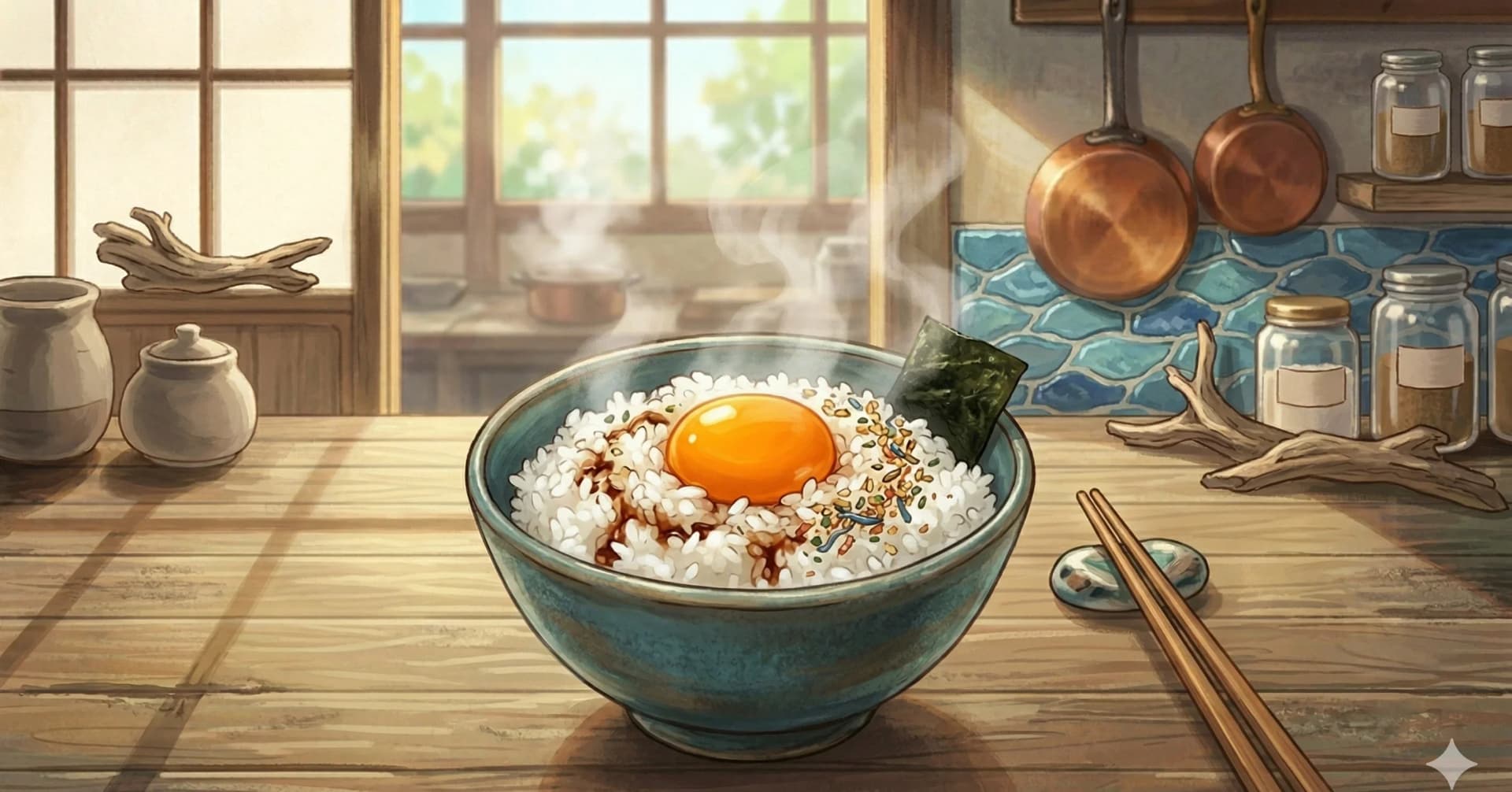
Tamago kake gohan, often shortened to TKG, translates directly to "egg over rice." It is exactly what it sounds like: a raw egg cracked into a bowl of freshly cooked, steaming hot rice, seasoned with soy sauce, and stirred vigorously with chopsticks until every grain is coated in a silky, pale gold sheen. In Japan, this is breakfast at its most fundamental, a dish that appears in home kitchens every morning with the regularity of coffee in the West.
The appeal is in the texture. The heat of the rice gently warms the egg without fully cooking it, creating a custard-like coating that clings to each grain. The soy sauce adds salt and depth without overwhelming the egg's gentle sweetness. A handful of katsuobushi (bonito flakes) on top adds a wisp of smoke and umami, and the flakes dance and curl from the steam as if the bowl itself is breathing.
TKG belongs to a tradition of Japanese rice dishes that treat the grain as the center of the meal rather than a side. It sits comfortably alongside onigiri, where rice is shaped and filled, and takikomi-gohan, where rice absorbs the flavors of seasonal ingredients during cooking. Where those recipes require planning, TKG asks for almost nothing. If you have cooked rice, a fresh egg, and soy sauce, you have a meal.
In Japan, the quality of the egg matters deeply. Japanese eggs are raised under strict hygiene protocols and are safe to eat raw, which is why raw egg preparations appear across the cuisine, from TKG to chawanmushi dipping sauces. Outside Japan, pasteurized eggs are the safest choice for this recipe.
At a Glance
Yield
1 serving
Prep
5 minutes
Cook
0 minutes (rice pre-cooked)
Total
5 minutes
Difficulty
Easy
Ingredients
- ¾ lbcooked Japanese short-grain rice, freshly made and steaming hot
- 1large egg (about 50 g without shell), at room temperature
- 1to 2 teaspoons soy sauce, preferably a good-quality Japanese soy sauce (koikuchi shoyu)
- ¼ ozkatsuobushi (bonito flakes)
- 1small scallion, thinly sliced
- —Toasted white sesame seeds
- —Shichimi togarashi (seven-spice powder)
- —Shredded nori
- —Furikake seasoning
Method
- 1
Cook or reheat the rice so it is very hot and freshly steaming. Transfer one serving to a rice bowl. The rice must be hot enough to gently warm the egg on contact; lukewarm rice will not create the right texture.
- 2
Make a small well in the center of the rice. Crack the egg directly into the well. The yolk should sit nestled in the rice, surrounded by the white pooling around the grains.
- 3
Drizzle 1 teaspoon of soy sauce over the egg and rice. Add katsuobushi or any desired toppings at this point.
- 4
Using chopsticks (or a fork), stir the egg into the rice vigorously for about 30 seconds. Work in small circular motions, lifting and folding the rice to incorporate the egg evenly. The rice will turn a glossy, pale golden color and take on a silky, slightly sticky consistency. Each grain should feel coated and slippery.
- 5
Taste the rice and add more soy sauce if needed, a few drops at a time. The flavor should be gently savory, with the egg's richness at the forefront. Too much soy sauce will mask the egg's natural sweetness.
- 6
Eat immediately while the rice is still warm and the texture is at its smoothest.
Key Ingredient Benefits
Raw eggs: In Japan, eggs sold for raw consumption undergo rigorous washing, inspection, and refrigeration protocols, making them safe to eat uncooked. Outside Japan, pasteurized shell eggs (heated to a temperature that kills bacteria without cooking the egg) are the safest option for TKG. In the United States, look for cartons labeled "pasteurized." Immunocompromised individuals, pregnant people, young children, and older adults should use pasteurized eggs or avoid raw egg preparations.
Japanese short-grain rice: The Koshihikari and Akitakomachi varieties are prized for TKG because of their soft, slightly sticky texture and natural sweetness. The starch composition (higher amylopectin relative to amylose) gives the cooked grains their characteristic cling, which is ideal for holding the egg coating.
Soy sauce: Japanese koikuchi (dark) soy sauce is the standard choice. It is less intensely salty than Chinese soy sauce and has a rounder, more balanced flavor with a touch of sweetness from the wheat in its fermentation. A few drops of tamari or a dedicated TKG soy sauce (sold in Japan specifically for this dish) also work well.
Katsuobushi: Shaved dried bonito (skipjack tuna) that has been smoked and fermented. It is one of the foundational umami ingredients in Japanese cooking, rich in inosinate, which amplifies the savory perception of the soy sauce and egg together.
Why This Works
The high temperature of freshly cooked rice is the only "cooking" this dish needs. When the raw egg meets the hot grains, the proteins in the white begin to set just enough to form a thin, custard-like coating without scrambling. This partial denaturation is what creates the characteristic silky mouthfeel that distinguishes TKG from simply mixing a cold egg into rice.
Japanese short-grain rice is essential because its higher starch content and slightly sticky texture hold the egg coating in place. Long-grain varieties like basmati or jasmine lack the adhesion needed, and the egg slides off rather than clinging to each grain.
Stirring vigorously with chopsticks introduces air into the mixture, which lightens the texture and helps the egg distribute evenly. In Japan, some cooks separate the egg, whip the white to a froth first, fold it into the rice, then drop the yolk on top at the end for an even more luxurious result.
Substitutions & Variations
Egg method: Some cooks crack the egg into a separate small bowl, beat it lightly with soy sauce, then pour the mixture over the hot rice. This produces a more uniform coating. Others separate the yolk and white, whisk the white until frothy, fold it into the rice, then nestle the intact yolk on top for a richer, more dramatic presentation.
Butter TKG: A popular modern variation adds a small knob (about 5 g) of cold butter to the hot rice along with the egg. The butter melts into the mixture and adds richness and a faint dairy sweetness. Season with soy sauce as usual.
Mentaiko TKG: Top with a spoonful of mentaiko (spicy pollock roe) for a briny, spicy variation. The roe adds a pop of texture against the smooth egg-coated rice.
Natto TKG: Stir a packet of natto (fermented soybeans) into the egg and rice. The combination of slippery egg and sticky natto creates a particularly rich bowl. This is a common breakfast combination in eastern Japan.
Shirasu TKG: Top with a small handful of shirasu (tiny dried whitebait fish) for added calcium and a mild ocean flavor.
For egg-free diets: There is no true substitute for the raw egg in TKG. The dish is defined by it. Consider miso-shiru with rice as an equally simple Japanese breakfast alternative.
Serving Suggestions
TKG is a complete breakfast on its own, but it is traditionally served alongside a bowl of miso-shiru, a few slices of pickled vegetables (tsukemono), and perhaps a small piece of grilled fish. Together, these form a classic Japanese breakfast set (asa gohan).
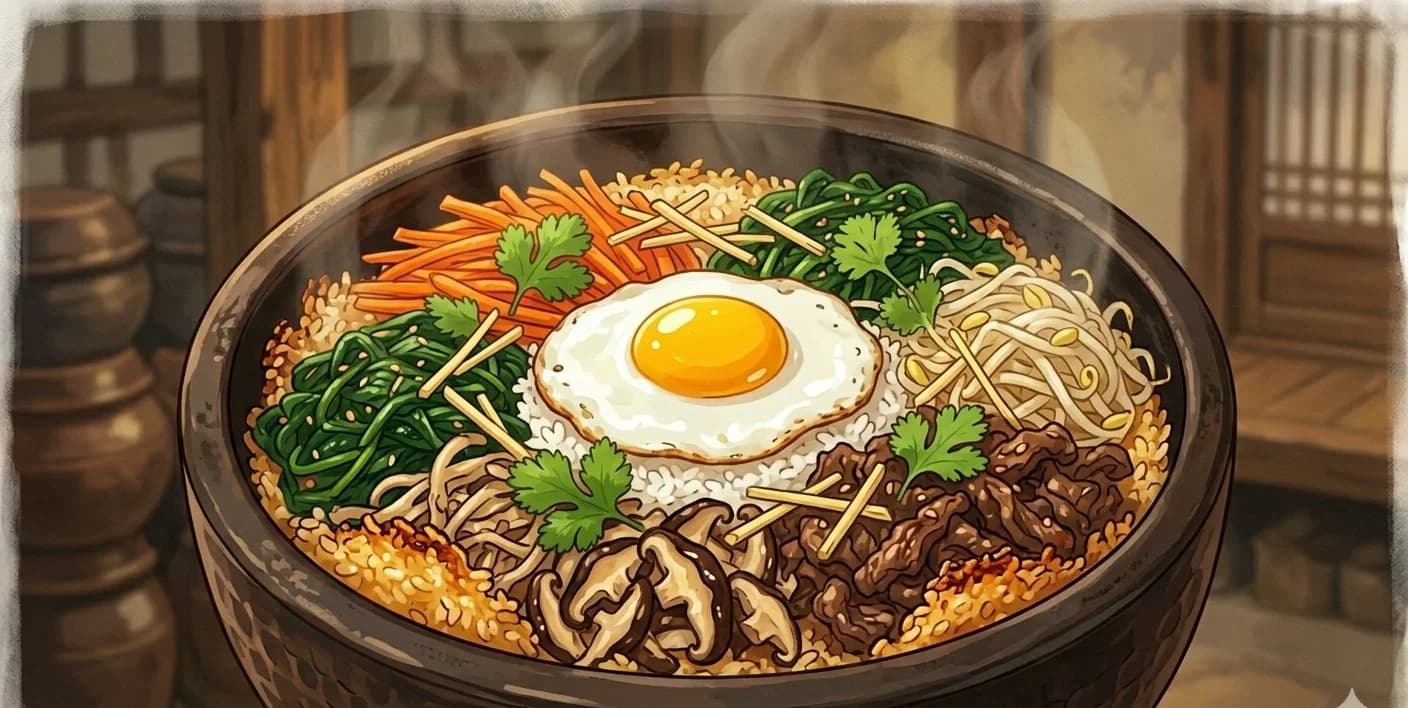
For a heartier meal, pair TKG with leftover side dishes. A few pieces of onigiri filled with salmon or umeboshi make a satisfying accompaniment if you are feeding a group. The simplicity of TKG also makes it a natural partner for more elaborately seasoned dishes like bibimbap, where the two rice bowls can share a table and offer contrasting approaches to the same idea: egg meets rice.
A small dish of kimchi or Japanese pickled cucumbers (kyuri no shiozuke) alongside adds a bright, acidic contrast to the richness of the egg.
Storage & Reheating
Assembled TKG: This dish cannot be stored or reheated. The egg coating changes texture as it cools, becoming dense and gummy rather than silky. Always eat TKG immediately after preparing it.
Cooked rice: Leftover rice can be stored in the refrigerator for up to 2 days or frozen for up to 1 month. To use for TKG, reheat the rice until it is piping hot and steaming before cracking the egg over it. Microwave reheating works if you sprinkle a few drops of water over the rice and cover the bowl.
Raw eggs: Store eggs in the refrigerator and bring to room temperature for about 10 minutes before using. A room-temperature egg incorporates more smoothly into the rice and does not cool it down as quickly.
Cultural Notes
Tamago kake gohan (卵かけご飯), shortened to TKG in modern Japanese casual usage, is one of the most stripped-down preparations in the entire Japanese kitchen. Raw egg cracked over a bowl of hot freshly-cooked rice, seasoned with soy sauce, mixed and eaten immediately. That is the whole dish. It is also a foundational Japanese breakfast, beloved across every generation and region.
The apparent simplicity hides a real technical foundation. Eating raw eggs safely in Japan depends on egg-production standards that almost no other country matches. Salmonella testing is required at the producer level. Refrigerated storage is mandatory from the farm through the grocery shelf. Permitted shelf life is typically 14 days from packaging, compared to 30 to 45 days in most Western countries. Those rules make raw egg consumption noticeably safer in Japan than elsewhere, and the cultural tradition grew up around them. Most Japanese cookbooks include specific guidance about which brands and which dates are appropriate for raw use.
The dish has attracted an unlikely amount of cultural commentary and modern reinvention. Japanese food magazines run annual TKG taste tests comparing soy-sauce brands, premium egg producers, and rice varieties. Specialty TKG restaurants have opened in Tokyo and Osaka focused entirely on this one dish, with elaborate menus offering different egg species (chicken, quail, duck), boutique soy sauces, and seasonal rice options. Egg Stand in Tokyo's Tsukiji area pulls real tourist traffic.
All of which is interesting, but it misses the point a little. Tamago kake gohan remains a humble home preparation. Millions of Japanese people eat it for breakfast every single morning without thinking about brand, vintage, or producer.
Nutrition Facts
Calories: 517kcal (26%)|Total Carbohydrates: 97g (35%)|Protein: 15g (30%)|Total Fat: 6g (8%)|Saturated Fat: 2g (10%)|Cholesterol: 186mg (62%)|Sodium: 420mg (18%)|Dietary Fiber: 0g (0%)|Total Sugars: 0g
You Might Also Like
Ratings & Comments
Ratings & Comments
Ratings
Share your thoughts on this recipe.
Sign in to rate and comment