What Is Gochujang, and What to Actually Do With It
Open a tub of gochujang and the first thing that hits you is not heat. It is sweetness, dense and slightly malty, the way barley sugar smells. The heat arrives a second later, low and round, more like a warm floor than a flame.
That order matters, because most people meet gochujang expecting a Korean sriracha and then cook with it accordingly. It is not a hot sauce. It is a fermented paste in the same family as doenjang and miso, closer to a seasoning base than a condiment, and the food improves enormously once you treat it that way.
What is actually in the tub
Four things, in varying proportions: chilli powder, glutinous rice, fermented soybean and barley malt. Salt holds it all together.
The chilli is gochugaru, the coarse Korean flake that is sun-dried rather than smoked and carries more fruit than fire. The rice is glutinous rice, cooked down to a porridge. The soybean arrives as meju, blocks of soybean that have already been fermented and dried, then crumbled to powder. The barley malt is the part nobody expects and the part that explains everything.
Malted barley is full of amylase, the enzyme that breaks starch into sugar. Stir it into rice porridge and the porridge turns sweet on its own, without a spoonful of sugar going in. That is where gochujang's sweetness comes from in a properly made batch, and it is why good gochujang tastes sweet in a deep, slightly caramel way rather than a candy way.
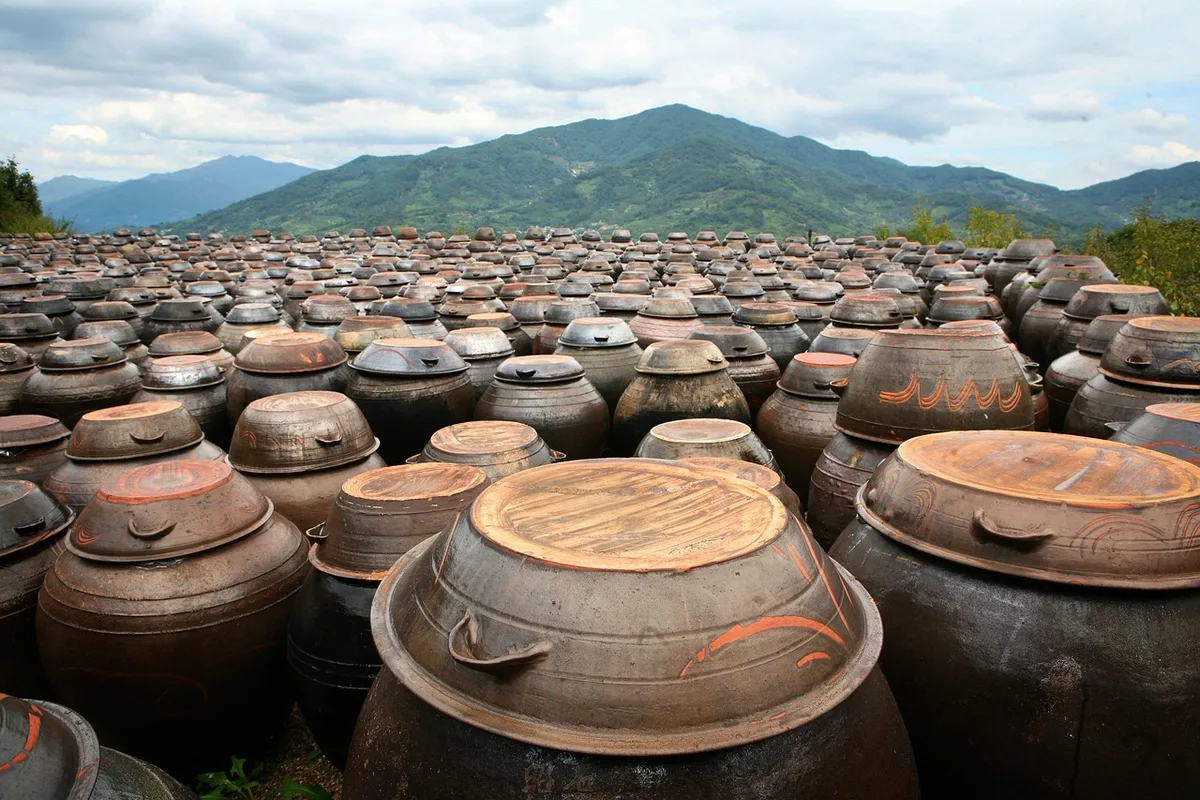
Traditionally the mixed paste goes into onggi, unglazed earthenware crocks, which sit outdoors on a raised stone platform called a jangdokdae. The crocks breathe. The paste ferments through the cold months, gets opened to the sun on dry days, and comes out somewhere between six months and several years later, darker and more complex every season.
It is younger than you think
Korean jang, the broad family of fermented soybean pastes, is ancient. Gochujang is not, because chillies are not native to Asia. They reached Korea around the turn of the seventeenth century, and the first clear written recipes for a chilli-based jang appear roughly a hundred and fifty years after that.
So the paste is perhaps three or four centuries old, which in the context of Korean food is recent. Sunchang county in North Jeolla province became its famous production centre, and tubs still carry the name the way a cheese carries a region.
How to buy it
Read the label for the sweetener. A tub built on rice and malt will taste layered. A tub built on corn syrup will taste like sweet chilli sauce and will scorch the moment it meets a hot pan.
Korean tubs often print a GHU number, the gochujang hot taste unit, usually on a scale of one to five. Two is mild enough for children, four is what most Korean households buy, five will make itself known. If you are starting out, three is the useful default.
Most commercial gochujang contains wheat, so it is not gluten free unless the tub says so explicitly.
Once opened it lives in the fridge, where it keeps for the better part of a year and slowly darkens. Darkening is fermentation continuing, not spoilage. A thin white film is not a problem either. Green or black fuzz is.
What to actually do with it
Four modes cover almost everything.
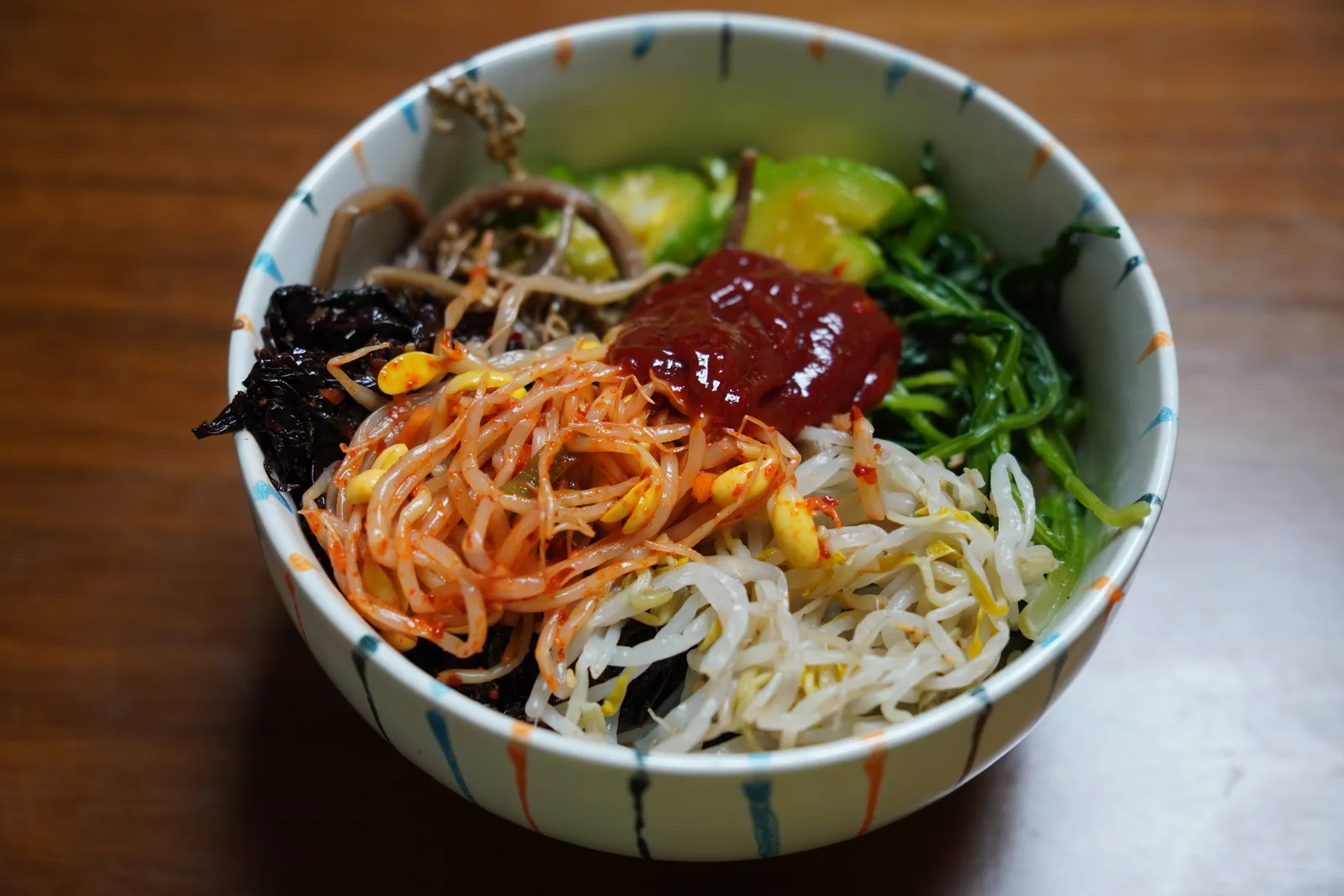
The first is as the base of a sauce, cut with something sharp. Straight gochujang is too thick and too sweet to go on food as it is. The standard Korean move is to loosen it: sesame oil, garlic, a little sugar, sometimes vinegar, and you have the sauce that goes over bibimbap. Push the vinegar up and you get chogochujang, the bright pink dressing that Koreans serve with raw fish and cold noodles.
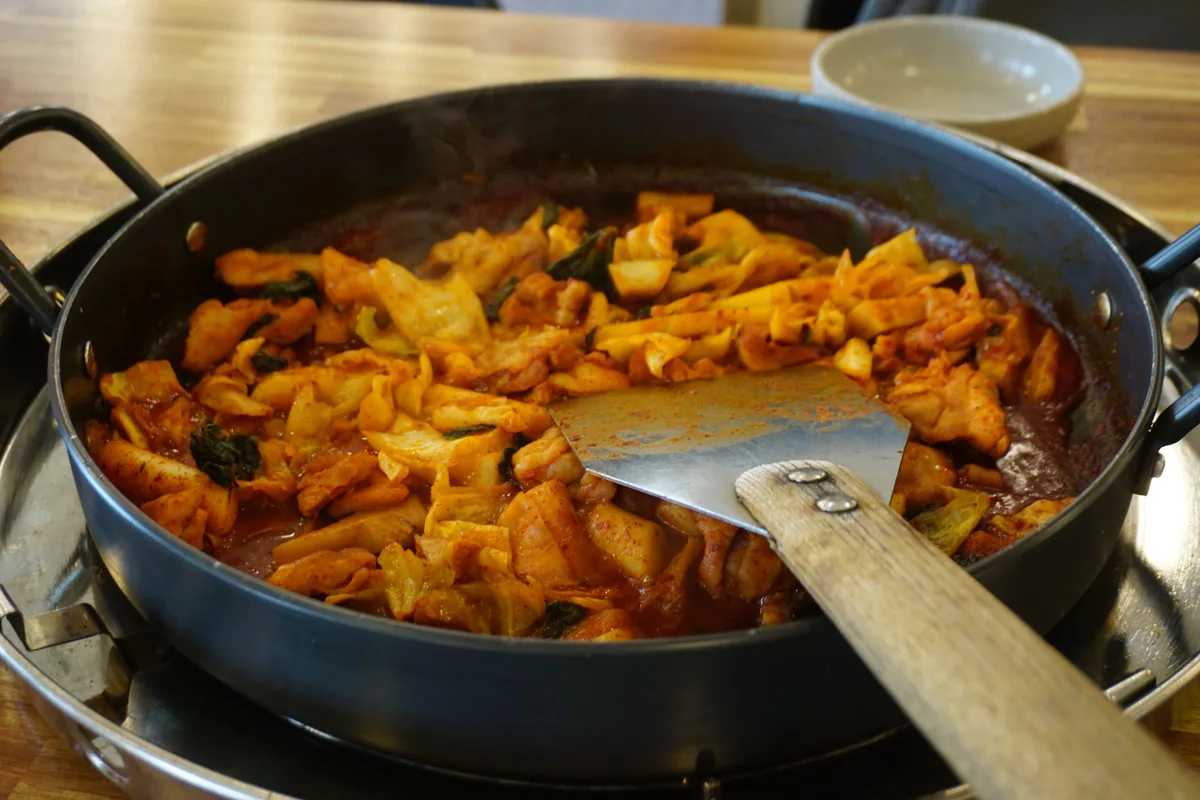
The second is the braise, where it gets to cook down. Heat changes it. The sugars caramelise, the raw ferment edge softens, and the paste turns glossy and clings to whatever is in the pan. This is dak galbi and tteokbokki, and it is the mode where cheap corn-syrup gochujang fails most obviously, because it burns before it browns.
The third is a marinade, backed up by fruit or sugar. Korean marinades almost always carry something sweet, grated pear or apple or a spoonful of rice syrup. That sweetness is not just flavour. It helps the surface caramelise under high heat, which is how yangnyeom chicken gets its lacquer.
The fourth is a spoonful stirred into a stew. A tablespoon deepens a soup and reddens it without making it a chilli dish. Korean cooks often use doenjang and gochujang together here, the first for savoury depth and the second for colour and a rounded heat.
The thing to avoid is using it neat as a table sauce. It is too concentrated, and it flattens whatever it lands on.
Frequently asked questions
Is gochujang very spicy?
Less than most people expect. The sweetness and the fermented soybean take up most of the room, and the heat sits underneath. A mild tub is comparable to a medium salsa. Check the GHU number on the label if the tub has one.
What can I substitute for gochujang?
Nothing matches it, because nothing else is simultaneously sweet, salty, fermented and mildly hot. The closest approximation is miso mixed with gochugaru and a little honey, in roughly equal parts miso to chilli with honey to taste. Sriracha alone is the wrong direction entirely, since it is sour and sharp where gochujang is round.
Does gochujang go bad?
It is salty and fermented, so it resists spoilage well. Refrigerated after opening, it stays good for many months. It darkens and gets funkier over time, which is normal and arguably an improvement.
Can I make it at home?
You can, but it needs meju powder and barley malt powder, both of which you would be buying from a Korean grocer anyway. Buying a good tub is the sensible choice unless fermenting is the point.
What to cook
Start with tteokbokki if you want to understand the braising mode in fifteen minutes, or bibimbap if you want the raw sauce version. Dak galbi is the one that converts people, chicken and cabbage and rice cakes cooked down in gochujang on a flat pan at the table. And if the tub is the only Korean thing in your kitchen so far, the rest of the shelf is worth building: we laid out the eight Korean ingredients to buy first.
Comments
Share your thoughts on this post.
Sign in to comment0 Comments