Vietnamese Cuisine
Steamed Rice Rolls (Bánh Cuốn)
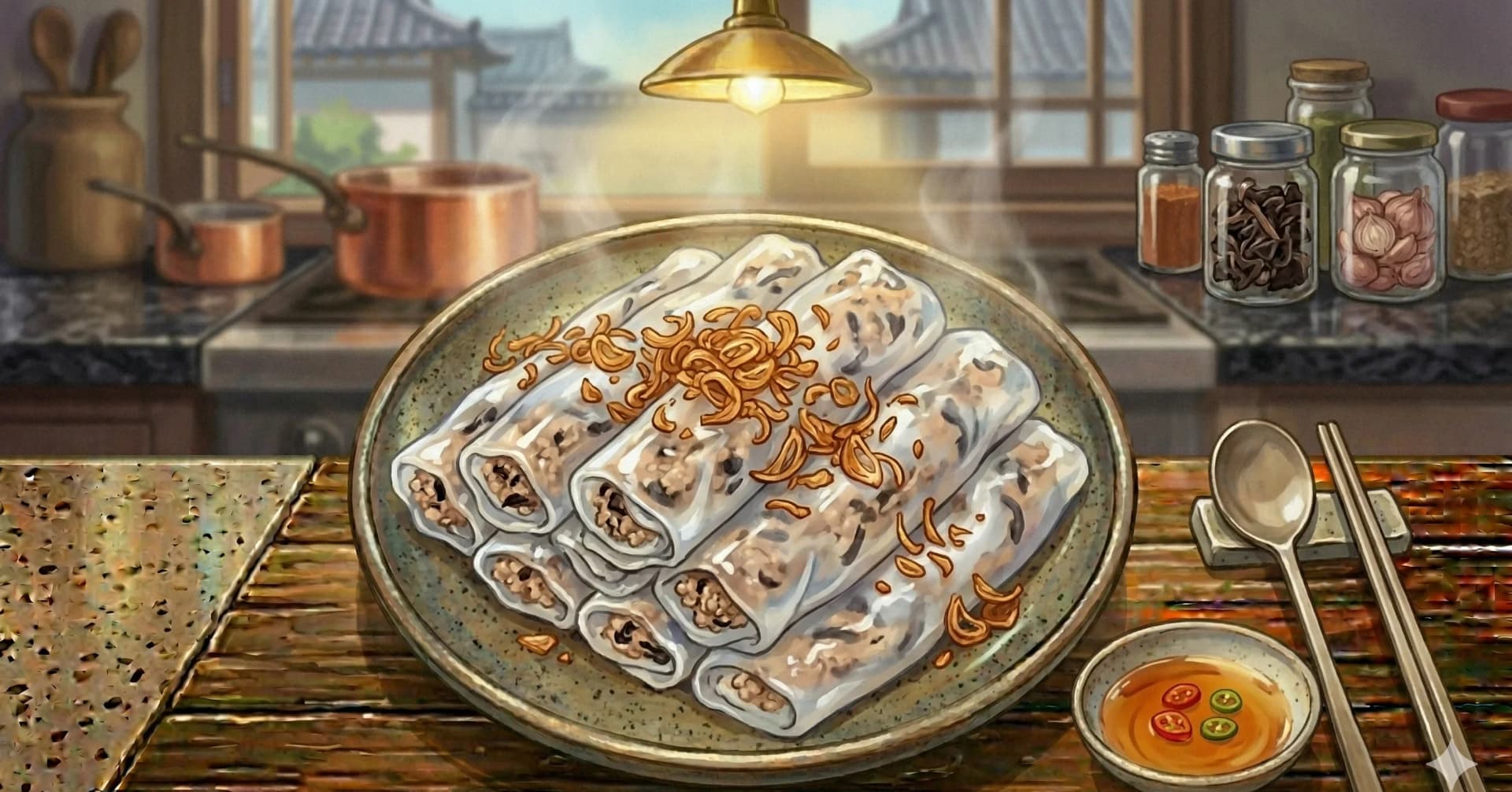
Silky steamed rice crepes filled with seasoned pork and wood ear mushrooms, served with herbs and dipping sauce
The crepes are so thin you can nearly see through them. Banh cuon at its best is an exercise in delicacy, each sheet of steamed rice batter barely thicker than a sheet of paper, soft and slippery on the tongue, wrapped around a filling of seasoned pork and finely chopped wood ear mushrooms that adds just enough substance to anchor the ethereal texture. You eat them at room temperature, dipped into a bowl of nuoc cham, with crispy fried shallots scattered on top and a plate of fresh herbs and bean sprouts alongside.
Banh cuon is a Hanoi breakfast tradition with roots that stretch back centuries. In the old quarter, dedicated banh cuon shops open before dawn, and the cooks work over custom steamers stretched with a thin cloth across the top. A ladle of rice batter is spread across the cloth in a single fluid motion, the lid drops, and within 30 seconds the crepe is done, peeled off with a bamboo stick and filled while still warm. The process is mesmerizing to watch, each crepe appearing and disappearing in under a minute.
At home, the technique is simpler. A non-stick skillet substitutes for the cloth steamer, producing crepes that are slightly thicker but still beautifully thin and tender. The batter is just rice flour, tapioca starch, and water, with a small amount of oil to prevent sticking. The filling is quick and savory. What makes banh cuon special is the restraint of the dish itself. There is nothing heavy, nothing aggressive. Every element is gentle, from the silky crepe to the subtle filling to the balanced nuoc cham. It is food that feels nourishing in a quiet, almost meditative way.
At a Glance
Yield
4 servings
Prep
30 minutes (plus 2 hours for batter resting)
Cook
40 minutes
Total
3 hours 10 minutes
Difficulty
Involved
Ingredients
Batter Ingredients
- 7 ozrice flour
- 1 oztapioca starch
- 2⅛ cupwater
- 1/2 tspsalt
- 1 tbspneutral oil
Filling Ingredients
- 7 ozground pork
- 1 ozdried wood ear mushrooms, soaked in warm water for 20 minutes, drained, and finely chopped
- 3shallots, finely minced
- 1 tbspfish sauce
- 1/2 tspsugar
- 1/4 tspblack pepper
- 1 tbspneutral oil
Dipping Sauce Ingredients
- 3 tbspfish sauce
- 3 tbspwarm water
- 2½ tbspsugar
- 2 tbspfresh lime juice
- 1 clovegarlic, finely minced
- 1bird's eye chili, finely sliced
To Serve
- —Fried shallots (about 30 g)
- —Fresh cilantro and mint leaves
- 4 ozbean sprouts
- —Sliced cucumber
- —Cha lua (Vietnamese pork roll), sliced (optional)
- —Extra fish sauce for dipping
Method
- 1
Make the batter. Combine the rice flour, tapioca starch, water, salt, and oil in a bowl. Whisk until completely smooth with no lumps. The batter should be very thin, about the consistency of heavy cream. Cover and let rest at room temperature for at least 2 hours. The resting allows the starches to hydrate fully, which produces a smoother, more tender crepe.
- 2
Make the filling while the batter rests. Heat 15 ml of oil in a skillet over medium heat. Add the minced shallots and cook until softened and fragrant, about 2 minutes. Add the ground pork and break it into fine pieces with a spatula. Cook for 3 to 4 minutes until no pink remains.
- 3
Add the chopped wood ear mushrooms, fish sauce, sugar, and pepper. Stir and cook for another 2 minutes until the mushrooms are heated through and the seasoning is evenly distributed. The filling should be well-seasoned and relatively dry, not wet. Set aside.
- 4
Make the nuoc cham. Dissolve the sugar in the warm water, then add the fish sauce, lime juice, garlic, and chili. Stir well and set aside.
- 5
When the batter has rested, stir it well (it may have separated slightly). Heat a large non-stick skillet over medium-low heat. Brush the surface very lightly with oil. The pan should be warm but not smoking.
- 6
Pour about 60 ml of batter into the center of the pan. Immediately tilt and swirl the pan so the batter spreads into a thin, even circle covering the entire surface, just as you would make a French crepe. The layer should be paper-thin.
- 7
Cover the pan with a lid. Cook for 1 to 2 minutes. The crepe is done when it turns from opaque white to translucent and pulls away from the edges of the pan. Do not flip it. The top surface will cook from the trapped steam.
- 8
Carefully loosen the crepe with a thin spatula or silicone spatula, starting at the edges and working underneath. Transfer to an oiled plate or cutting board. The crepe will be soft, delicate, and slightly sticky.
- 9
Place a tablespoon of the pork filling along one edge of the crepe. Roll it up gently into a cylinder, similar to a spring roll. Set aside seam-side down. Repeat with the remaining batter and filling. You should get 12 to 16 crepes depending on the size of your pan.
- 10
Arrange the rolled banh cuon on a serving plate. Scatter fried shallots generously over the top. Serve with the nuoc cham in individual dipping bowls, a plate of fresh herbs, bean sprouts, cucumber, and sliced cha lua if using.
- 11
To eat, pick up a rolled crepe with chopsticks, dip one end into the nuoc cham, and take a bite. The crepe should be silky and soft, the filling savory and subtly earthy from the mushrooms, the fried shallots adding a crispy crunch, and the dipping sauce tying everything together with its sweet-sour-salty balance.
Key Ingredient Benefits
Rice flour: Naturally gluten-free and the foundation of many Vietnamese staples including pho noodles, banh xeo, and various cakes. It is easily digestible and provides primarily starch-based energy.
Wood ear mushrooms (nam meo): A common ingredient in Vietnamese and Chinese cooking. They contain polysaccharides that research has associated with immune-modulating properties and anticoagulant effects in laboratory studies. They are also a source of iron and dietary fiber. In traditional Chinese medicine, wood ear mushrooms are considered cooling and blood-nourishing.
Tapioca starch: Extracted from cassava root, tapioca starch is gluten-free and provides the elastic, slightly chewy quality that characterizes many Southeast Asian rice-based preparations.
Why This Works
The combination of rice flour and tapioca starch creates a batter with specific textural properties. Rice flour provides the delicate, slightly gritty character of the crepe, while tapioca starch adds elasticity and a subtle translucency. Without the tapioca starch, the crepes would be too fragile to roll. Without the rice flour, they would be too chewy and lack the characteristic softness.
Resting the batter for 2 hours allows the starch granules to hydrate fully. Fully hydrated starch gelatinizes more evenly when heated, producing a crepe with a uniform, silky texture rather than one with chalky, undercooked spots.
Wood ear mushrooms are chosen for texture, not flavor. They are nearly tasteless on their own, but their crunchy-chewy texture provides contrast to the soft crepe and the fine-grained pork. This textural interplay, soft against crunchy, is one of the hallmarks of Vietnamese cooking.
Substitutions & Variations
Filling: Shrimp (finely chopped) can replace the pork. Tofu crumbled and sauteed with mushrooms works for a vegetarian version.
Wood ear mushrooms: Finely diced shiitake mushrooms provide a similar earthy note with more pronounced flavor. The texture will be softer.
Steamer method: For a more traditional approach, stretch a thin cloth over a pot of boiling water. Ladle batter onto the cloth, cover, and steam for 1 minute. Peel off with a thin stick or spatula. This produces thinner, more authentic crepes but requires practice.
Banh cuon with egg: Crack a small egg onto the batter in the pan before covering. The egg cooks into the crepe, creating a richer version.
Pre-made option: Some Asian grocery stores sell fresh or frozen banh cuon wrappers. Defrost and fill with the pork mixture for a shortcut.
Serving Suggestions
Banh cuon is traditionally a breakfast or light meal in Hanoi, served simply with the nuoc cham and herbs. It is rarely part of a multi-course dinner.
For a Vietnamese breakfast spread, serve alongside pho ga for a combination of steamed and soupy, delicate and robust.
The rolled crepes can also be served as an elegant appetizer before a main course like bun cha or ca kho to, where their lightness prepares the palate for the richer dish to follow.
Storage & Reheating
Batter: The rested batter keeps in the refrigerator for up to 2 days. Stir well before using, as it will separate.
Filling: Refrigerate the cooked filling for up to 3 days.
Assembled crepes: Best eaten immediately. Refrigerated banh cuon become slightly firm and lose their silky texture. If storing, brush with a thin layer of oil to prevent drying and reheat briefly by steaming for 1 to 2 minutes.
Freezer: Not recommended for assembled crepes. The batter and filling can be frozen separately.
Cultural Notes
Bánh cuốn, "rolled cake," is the iconic breakfast of northern Vietnam, and the strongest associations are with Hanoi and the Red River Delta around it. The dish is also one of the oldest documented Vietnamese rice preparations. Records of similar steamed-rice-sheet dishes go back to the Ly dynasty (1010-1225), which makes bánh cuốn older than most of the dishes Vietnamese cooks now consider foundational.
The technique is unusual. You ferment a rice batter overnight, then steam it as a thin sheet on stretched fabric pulled tight over a pot of boiling water. The wrapper that comes off is something no other Asian dumpling tradition produces. It should be translucent enough that you can read through it when held to the light. The overnight rest gives it a faint fermented funk that you cannot mistake for anything else. Bánh cuốn belongs to the broader Vietnamese rice-flour family that includes bánh xèo, the southern crispy crepe, the Hue specialty bánh khoái, and bánh tráng, the rice paper used for gỏi cuốn. What sets bánh cuốn apart is the extreme thinness and the soft fermented body.
Bánh cuốn shops in Hanoi typically specialize in this one dish and nothing else. The technique is hard. The rhythm of pouring batter, swirling it across the steaming cloth, lifting the cooked sheet, and rolling it around the filling takes years to do at speed. Master cooks can do it for hours without breaking the cadence.
Thanh Trì district is the historic center, and bánh cuốn Thanh Trì is the gold-standard version. The Thanh Trì style is served at room temperature without any filling, garnished with nothing more than crispy fried shallots, and eaten by dipping into nước chấm, the standard Vietnamese fish-sauce dip. The Saigon-style filled version, with seasoned pork and wood-ear mushroom rolled inside the wrappers and served warm, is the form most non-Vietnamese diners encounter abroad. Both versions appear at breakfast across the country. The best-known Hanoi bánh cuốn shops open at 6 AM and sell out by 10.
Nutrition Facts
Calories: 443kcal (22%)|Total Carbohydrates: 62.3g (23%)|Protein: 14.1g (28%)|Total Fat: 15.2g (19%)|Saturated Fat: 4.7g (24%)|Cholesterol: 36mg (12%)|Sodium: 1454mg (63%)|Dietary Fiber: 2g (7%)|Total Sugars: 12.3g
You Might Also Like
 Easy
EasyVietnamese Cuisine
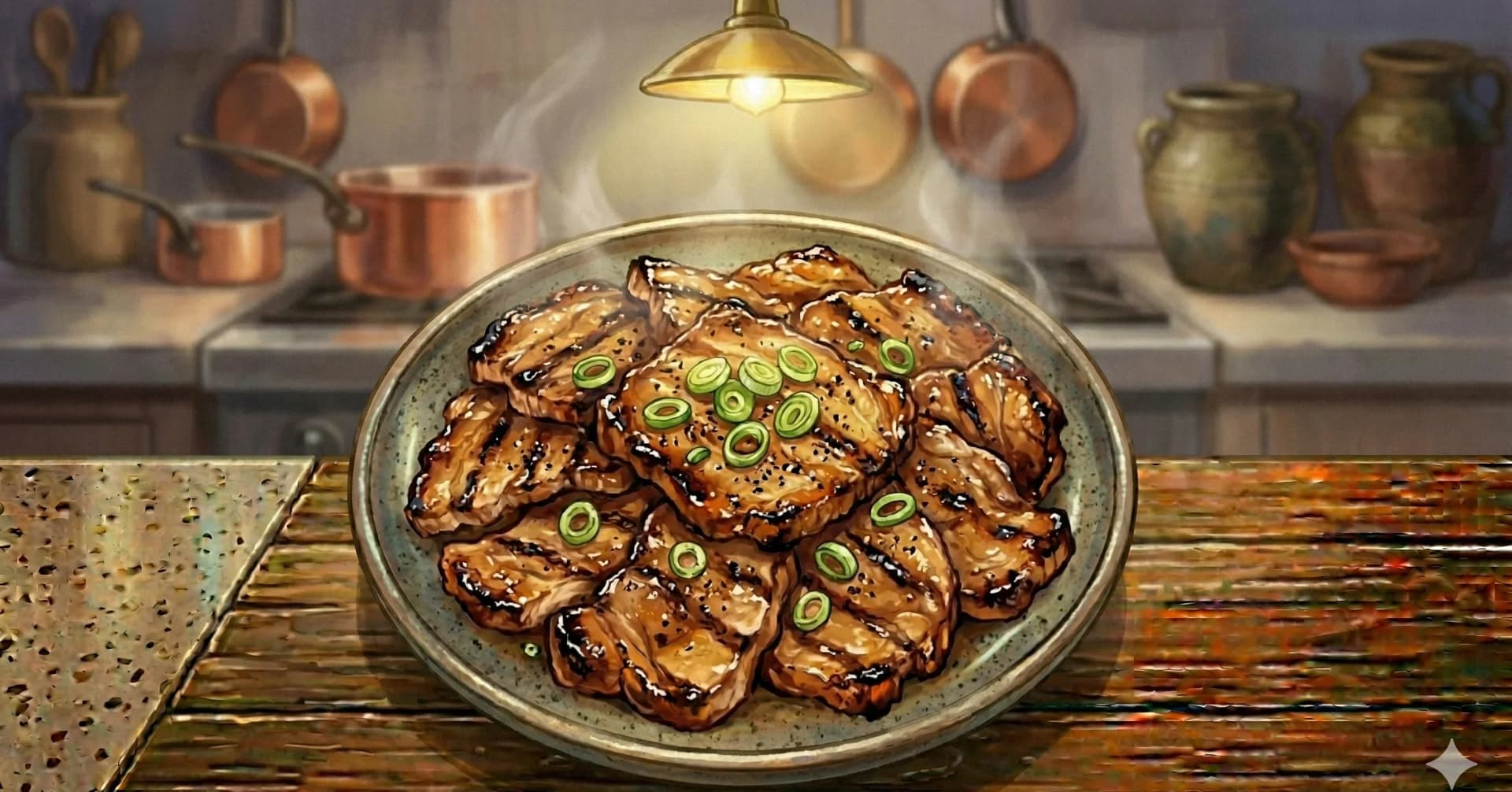
Grilled Lemongrass Pork (Thịt Nướng)
2 hours 30 minutes
 Easy
EasyVietnamese Cuisine
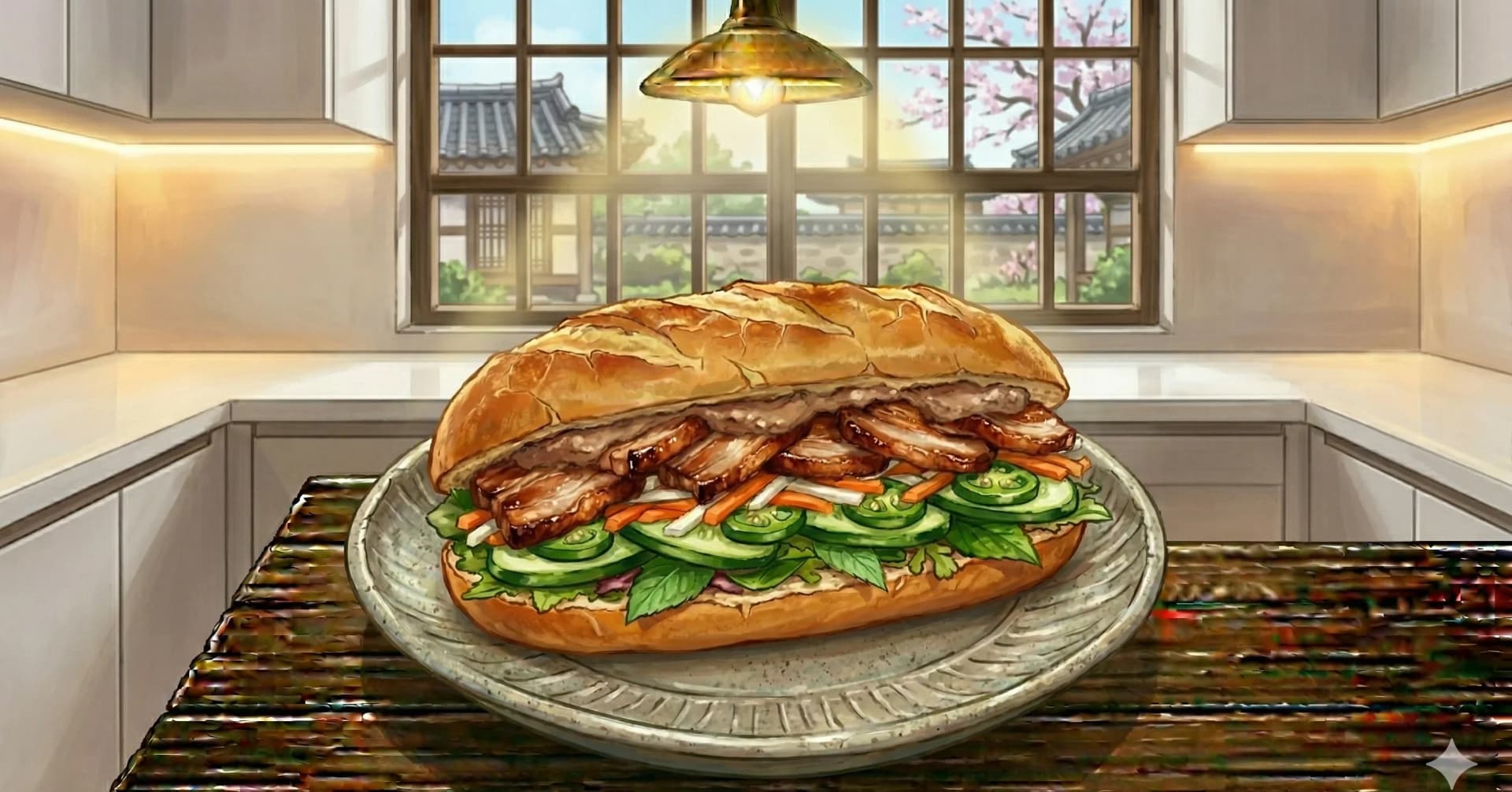
Banh Mi (Bánh Mì)
1 hour 50 minutes
 Medium
Vietnamese Cuisine
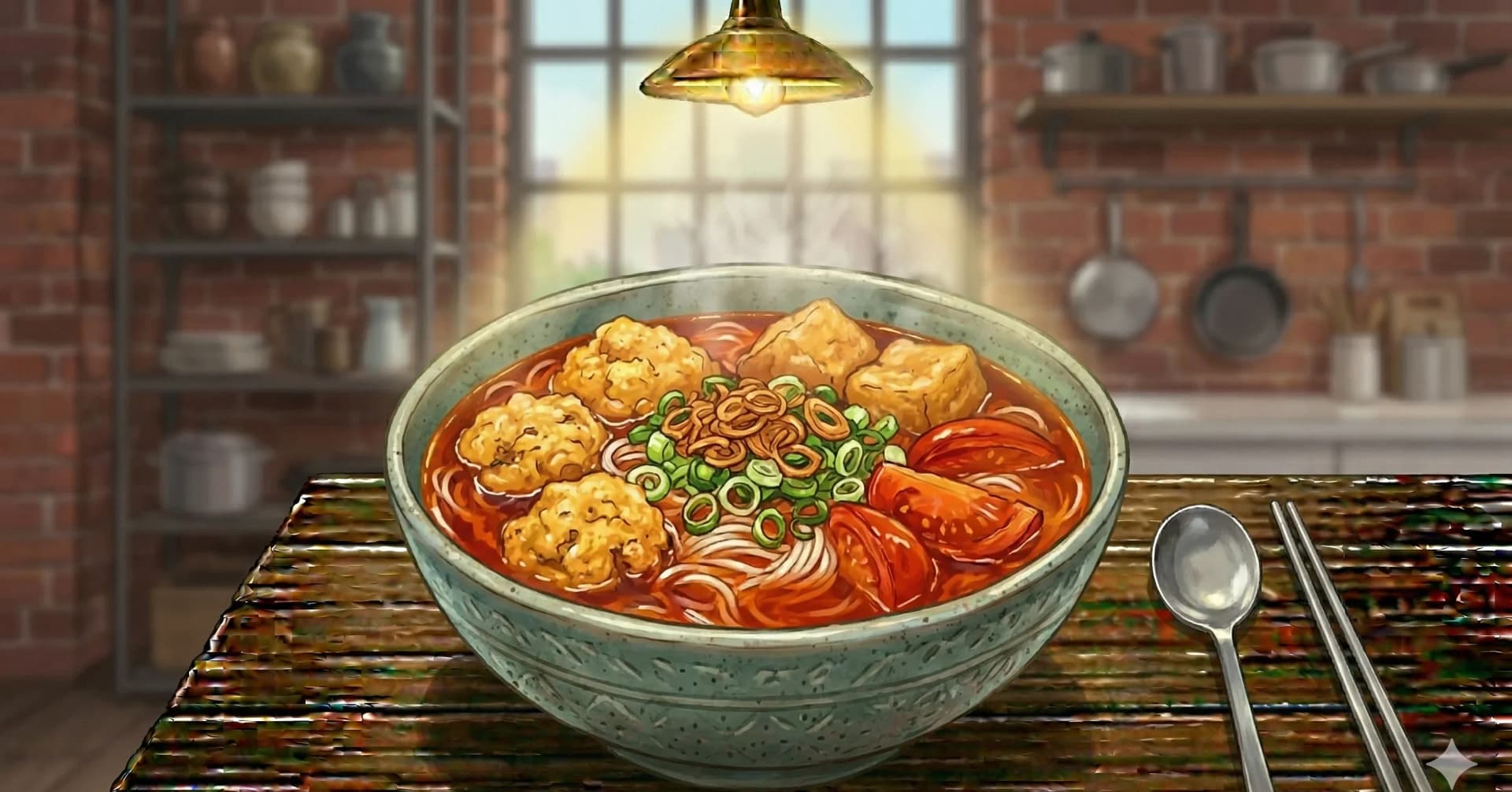
Bun Rieu (Vietnamese Crab and Tomato Noodle Soup)
2 hours
 Medium
Vietnamese Cuisine
Cháo Lòng (Vietnamese Pork Organ Rice Porridge)
2 hours 15 minutes
Ratings & Comments
Ratings & Comments
Ratings
Share your thoughts on this recipe.
Sign in to rate and comment