Chinese Cuisine
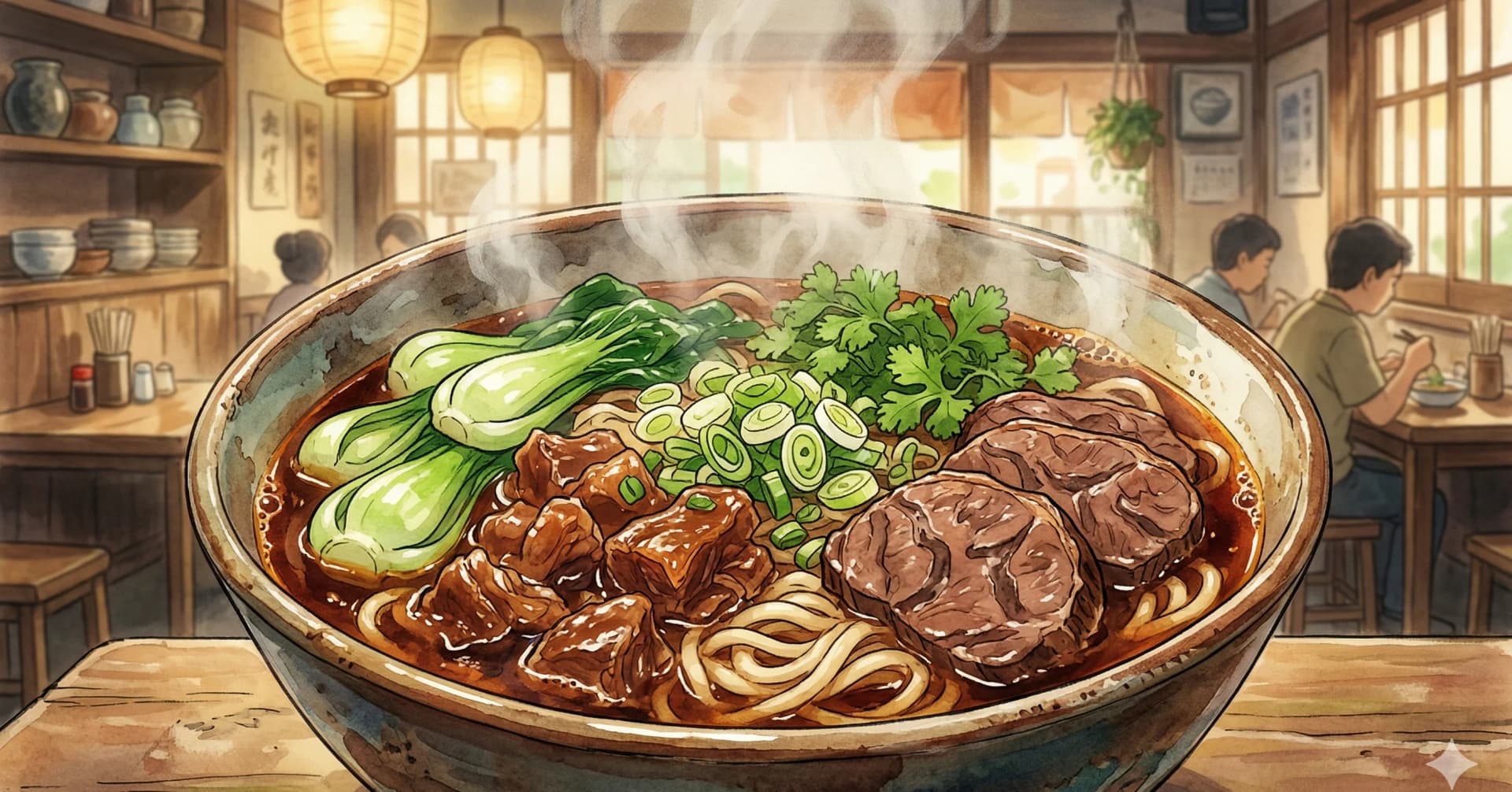
Beef Tendon Noodle Soup (牛筋面)
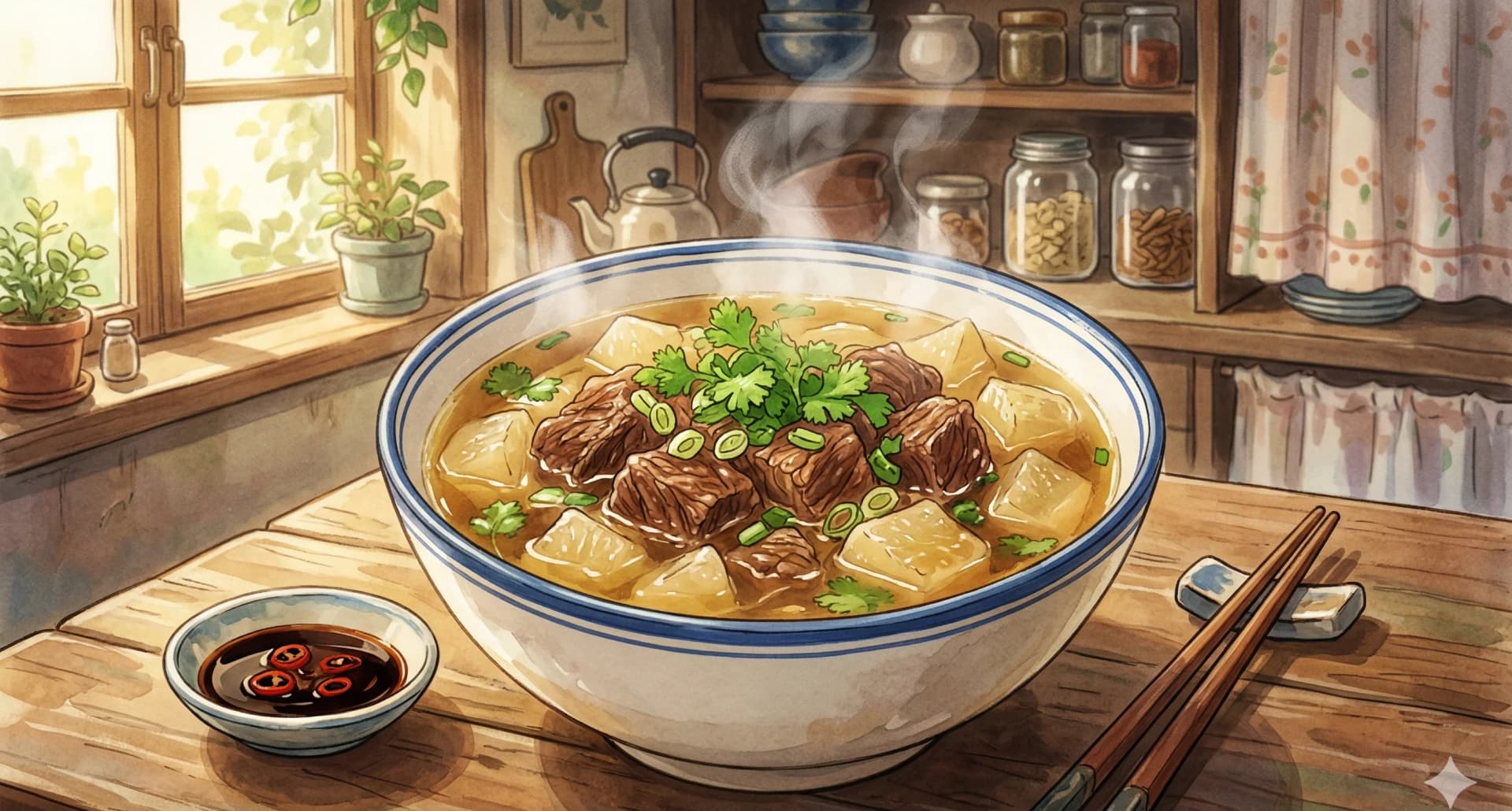
A collagen-rich noodle soup with meltingly soft braised beef tendon in a deeply spiced broth
The first time you encounter a properly braised beef tendon, it may surprise you. What begins as a tough, white, rubbery cord transforms over hours of slow cooking into something almost unrecognizable: soft, amber, and tremblingly gelatinous. It yields to your teeth with no resistance, leaving behind a richness that coats your mouth the way butter does. The texture is unique in Chinese cooking, prized precisely because there is nothing else quite like it.
Beef tendon noodle soup occupies a special place in the noodle soup family. Where Lanzhou Beef Noodle Soup is clean and spice-driven, and Taiwanese Beef Noodle Soup is bold and braised, beef tendon noodle soup is about patience and collagen. The broth becomes almost viscous from the gelatin the tendons release, with a body that no amount of stock reduction can fully replicate. When refrigerated, it sets into a firm jelly.
This recipe braises the tendon alongside beef shank, which provides sliceable meat to complement the tendon's softer texture. The braising liquid doubles as the soup broth, building flavor in a single pot over three hours. The spice profile borrows from both the Sichuan and northern Chinese traditions: star anise, cinnamon, and Sichuan peppercorn provide warmth, while soy sauce and a touch of doubanjiang bring color and umami.
The only real requirement is time. The tendon cannot be rushed. Undercooked tendon is chewy and unpleasant. Properly braised tendon, the kind that wobbles on the spoon, is one of Chinese cooking's great textural pleasures.
At a Glance
Yield
6 servings
Prep
30 minutes
Cook
3 hours
Total
3 hours 30 minutes
Difficulty
Medium
Ingredients
Broth Ingredients
- 1½ lbbeef tendon, rinsed
- 1½ lbbeef shank, in 2 large pieces
- 2 tbspneutral oil
- 7 ozonion (about 1–1½ onions), roughly chopped
- 6 clovesgarlic, smashed
- 5 cmpiece fresh ginger, sliced
- 4scallions, cut into 8 cm pieces
- ½ ozdoubanjiang (chili bean paste)
- ⅓ cupShaoxing wine
- ⅓ cuplight soy sauce
- 1 tbspdark soy sauce
- 2 tbsprock sugar (or 18 g brown sugar)
- 2½ qtwater
- 4star anise
- 1cinnamon stick
- 3bay leaves
- 1 tspSichuan peppercorns
- 1½ tspfennel seeds
- 2dried red chilies
Method
- 1
Blanch the tendon and shank. Place the beef tendon and shank in a large pot and cover with cold water. Bring to a boil over high heat. Let it boil vigorously for 5 minutes, skimming the heavy foam that rises. Drain, rinse the meat under cold running water, and scrub the pot clean. This step is especially important for tendon, which releases a significant amount of impurities during the initial boil.
- 2
Build the aromatic base. Heat the oil in a large Dutch oven or heavy-bottomed pot over medium heat. Add the onion, garlic, ginger, and scallion pieces. Cook for 3 to 4 minutes until softened and fragrant. Add the doubanjiang and stir for 30 seconds until the oil turns red and the paste is aromatic.
- 3
Deglaze and combine. Pour in the Shaoxing wine and scrape up any browned bits. Add the blanched tendon and shank, soy sauces, rock sugar, and 10 cups of water. Place the spice bag ingredients in a piece of cheesecloth, tie securely, and add to the pot.
- 4
Braise low and slow. Bring the liquid to a boil, then immediately reduce the heat to the lowest setting. Cover with a lid slightly ajar and simmer gently. After 1 hour 30 minutes, check the beef shank. It should be tender enough to pierce easily with a chopstick. If so, remove the shank and set it aside, covered. Continue simmering the tendon for another 1 hour 30 minutes (3 hours total for the tendon), or until it is completely soft and gelatinous. When you press a piece between your fingers, it should compress easily with no rubbery bounce.
- 5
Finish the broth. Remove the tendon and set aside with the shank. Remove and discard the spice bag. Strain the broth through a fine mesh strainer into a clean pot, discarding the aromatics. Skim any fat from the surface if desired. Taste and adjust with salt or soy sauce. The broth should be deeply savory and slightly sweet, with a noticeable body from the dissolved gelatin.
- 6
Slice the meat. Cut the cooled beef shank against the grain into slices about 1/4 inch thick. Cut the tendon into pieces about 1/2 inch thick. The tendon will be soft and slightly slippery, so use a sharp knife.
- 7
Cook the noodles and bok choy. Bring a large pot of water to a rolling boil. Cook the noodles according to package directions and drain. In the same water, blanch the bok choy halves for 30 to 45 seconds until bright green. Drain.
- 8
Assemble the bowls. Divide the noodles among 6 bowls. Arrange several slices of beef shank and pieces of tendon over the noodles. Ladle the hot broth over everything. Add the blanched bok choy. Top with sliced scallions, cilantro, and a drizzle of chili oil if desired.
Key Ingredient Benefits
Beef tendon: One of the most concentrated dietary sources of collagen, containing primarily type I collagen, which is the same type found in skin, bones, and connective tissue. Some clinical studies have reported modest improvements in joint comfort and skin elasticity from collagen supplementation, though the relationship between eating collagen and its absorption in functional form is still debated. Traditional Chinese medicine strongly associates tendon consumption with strengthening the body's own tendons and ligaments, a concept rooted in the "like nourishes like" principle.
Rock sugar: Also called rock candy or bing tang, this is crystallized sugar made from a supersaturated solution. It dissolves more slowly than granulated sugar and is preferred in Chinese braising for the way it integrates into sauces without creating cloying sweetness. It is nutritionally similar to white sugar.
Star anise: The dominant aromatic in many Chinese braised dishes. It contains anethole, also found in anise and fennel, which provides the characteristic licorice-like flavor. In traditional Chinese medicine, star anise is classified as warm and associated with the spleen, kidney, and liver meridians.
Why This Works
Beef tendon is almost entirely collagen, a structural protein that is indigestible and unpleasant when raw or undercooked. Extended cooking at a gentle simmer converts this collagen into gelatin through hydrolysis. The process requires sustained heat above 160 degrees F over several hours. Rushing with high heat toughens the exterior of the tendon before the interior has time to convert, producing pieces that are soft on the outside but still chewy at the center.
Braising the tendon alongside beef shank serves two purposes. The shank contributes its own collagen and marrow to the broth, creating a richer liquid than tendon alone would produce. And because the shank finishes cooking sooner, removing it at the 90-minute mark ensures you have tender, sliceable meat without overcooking it while the tendon continues its longer transformation.
The small amount of doubanjiang is deliberate. Unlike Taiwanese Beef Noodle Soup, where doubanjiang drives the flavor, here it provides background warmth and a faint reddish tint without overwhelming the natural beefiness. The tendon itself is so rich and gelatinous that the broth needs a lighter hand with the seasonings.
Rock sugar dissolves slowly and produces a clean, gentle sweetness that rounds off the salt and soy without tasting obviously sweet. It also contributes a subtle gloss to the broth. Combined with the natural gelatin, this gives each spoonful a silky, almost syrupy quality on the lips.
Substitutions & Variations
Tendon only: If you prefer all tendon and no shank, increase the tendon to 3 lb and extend the cooking time to 3 to 3 1/2 hours. The broth will be even more gelatinous.
Pressure cooker method: Beef tendon responds very well to pressure cooking. After building the aromatic base on saute mode, pressure cook the tendon and shank together on high for 50 to 60 minutes with a natural release. The tendon should be fully soft. If not, seal and cook for an additional 15 minutes.
Beef cut: Oxtail can partially or fully replace the shank for an even richer, more gelatinous broth. Lions Head Meatballs use a similarly patient braising approach with pork.
Spice profile: For a cleaner, less Sichuan-inflected broth, omit the doubanjiang and Sichuan peppercorns. The result will be closer to a Cantonese clear-braised style.
Noodles: Thick knife-cut noodles from Dao Xiao Mian are excellent here, as their dense chew matches the rich, heavy broth. Hand-pulled noodles or wide flat noodles also pair well.
Serving Suggestions
This is a hearty, rich soup that works best as the center of a meal. The gelatinous tendon and meaty shank, combined with noodles and broth, provide a complete and filling dish. A side of pickled vegetables or a light cucumber salad dressed with vinegar and garlic helps cut the richness.
For a fuller Chinese dinner, pair with Ginger Scallion Beef or Black Bean Chicken for a lighter stir-fried contrast. Congee made with leftover broth the next morning is an exceptionally satisfying way to extend the meal.
Storage & Reheating
Broth and meat: Store separately in airtight containers. The broth will set to a firm jelly when refrigerated, which is normal and desirable. It keeps in the refrigerator for up to 4 days and freezes for up to 3 months. The sliced tendon and shank keep refrigerated for 3 days. The flavor of the broth deepens significantly on the second day.
Reheating: Warm the broth gently on the stovetop. The jelly will liquify quickly over medium heat. Add the sliced tendon and shank for the last 2 to 3 minutes to warm through. Avoid vigorous boiling, which can break up the softened tendon pieces.
Noodles: Always cook fresh. Cooked noodles stored in broth become waterlogged and lose their texture.
Cultural Notes
Niu jin mian (牛筋麵, "beef tendon noodles") is the Cantonese and broader southern Chinese noodle soup of slow-braised beef tendon served over wheat or rice noodles in a clear or red-braised broth. The dish takes advantage of beef tendon (niu jin, the white fibrous connective tissue from the leg and hoof of cattle), which is treated in Chinese cooking as a prized cut rather than a discard. When properly braised for several hours, tendon transforms from a tough rubbery state into a translucent, gelatinous, almost custard-like texture that diners describe as q-q (the Taiwanese onomatopoeia for the springy-yielding mouthfeel that the cuisine prizes).
The traditional braise is a multi-hour process. Whole beef tendons are blanched briefly to remove blood, then transferred to a pot with the standard southern Chinese braising aromatics: rock sugar, soy sauce, Shaoxing wine, ginger, scallion, star anise, cassia, and sometimes orange peel. The tendons simmer at the lowest possible heat for three to four hours (or are pressure-cooked for forty-five minutes to an hour, which has become the modern home method), during which the tough collagen breaks down into gelatin and the tendons become tender enough to cut with chopsticks. The braising liquid concentrates into a deeply flavored sauce that doubles as the broth for the noodle bowl.
The dish appears in several regional traditions. The Cantonese version typically pairs the braised tendon with thin wheat noodles in a clear broth, served at noodle shops as a complete meal. The Sichuan and Taiwanese versions often combine the tendon with braised beef shank for a mixed-cut bowl, with the same red-braising sauce providing the broth. The dish has gained particular fame at Hong Kong's heritage noodle shops including Kau Kee (九記) in Central, which has served beef tendon and brisket noodles since 1933 and is widely cited as one of the city's reference points for the form. The combination of bouncy noodles, gelatinous tendon, rich broth, and tender beef makes the dish a winter favorite in cold-weather months and a comfort food across the broader Cantonese cultural region.
Nutrition Facts
Calories: 809kcal (40%)|Total Carbohydrates: 74.4g (27%)|Protein: 89.3g (179%)|Total Fat: 15.9g (20%)|Saturated Fat: 4.2g (21%)|Cholesterol: 184mg (61%)|Sodium: 1434mg (62%)|Dietary Fiber: 3.3g (12%)|Total Sugars: 7.5g
You Might Also Like
Ratings & Comments
Ratings & Comments
Ratings
Share your thoughts on this recipe.
Sign in to rate and comment