Chinese Cuisine
Char Siu (Chinese BBQ Pork)
Cantonese roast pork with a sticky, caramelized maltose glaze
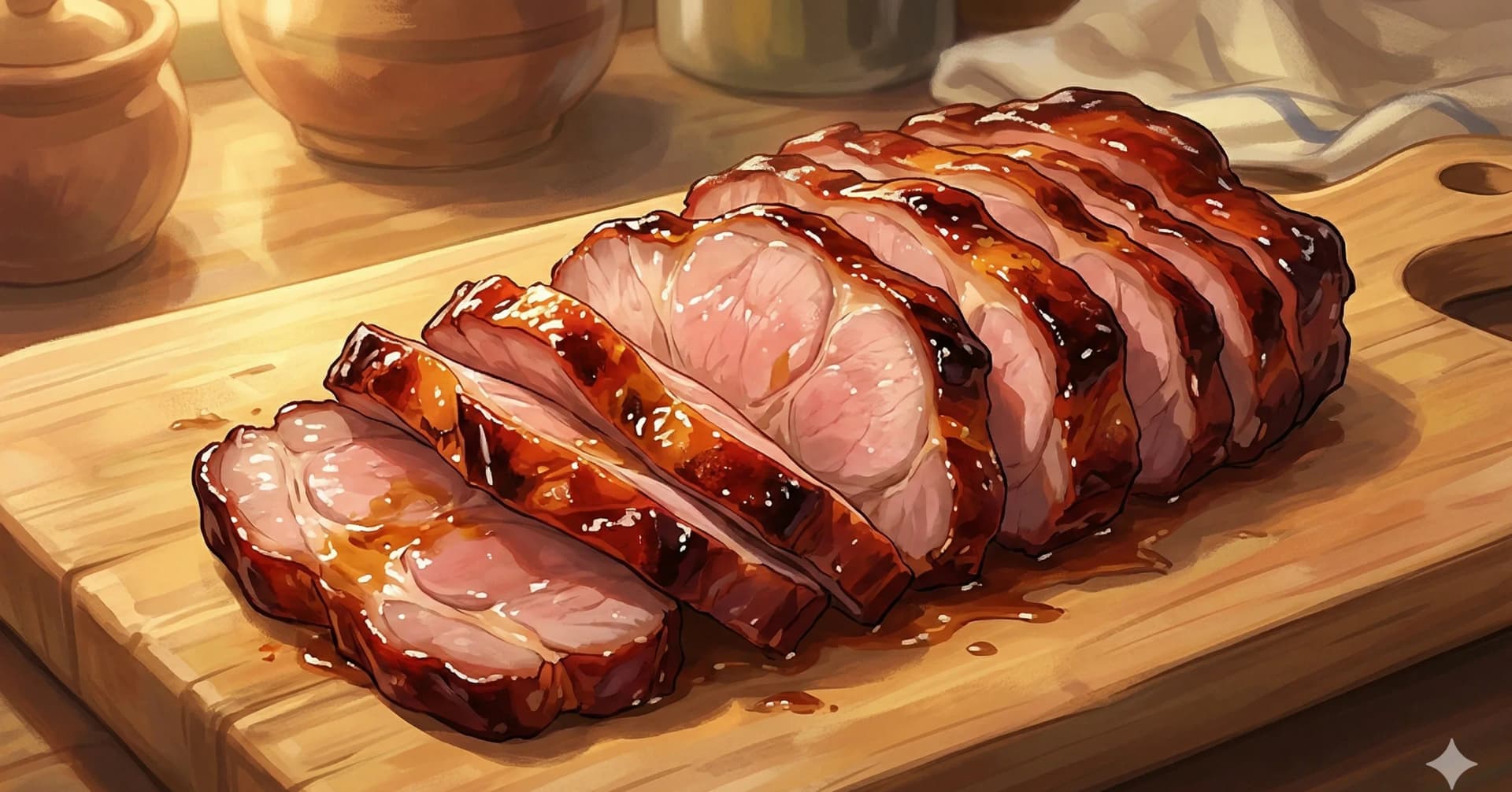
Walk past any Cantonese barbecue shop and you will see them: strips of roast pork hanging in the window, their surfaces gleaming with a lacquer so deeply red-brown it looks almost painted. That color comes partly from the long marination, partly from the sugars caramelizing under high heat, and partly from tradition. Char siu means "fork-roasted," a reference to the old method of skewering meat on long forks and roasting it over an open fire. Modern kitchens have traded the fire for an oven, but the essential character of the dish remains. It should be sweet and savory in equal measure, sticky on the outside, and tender to the point where the pork almost pulls apart when you slice it.
The cut matters. Pork shoulder, sometimes labeled pork butt, has the right balance of lean meat and intramuscular fat. Leaner cuts like tenderloin or loin will cook faster and can be used if you prefer a cleaner bite, but they dry out more easily and will not develop the same meltingly rich texture. Keep the fat on the shoulder. It renders as the pork roasts, basting the meat from within.
The marinade is a balance of salty, sweet, and aromatic. Hoisin sauce brings body and a hint of fermented soybean depth. Soy sauce and Shaoxing wine contribute savory backbone. Five spice powder and sesame oil add fragrance. The overnight rest is not optional. The pork needs time to absorb these flavors fully, right to its center.
The final basting with maltose dissolved in the reserved marinade is what creates the signature glaze. Maltose caramelizes slowly and evenly, producing a thick, glossy coating that crackles slightly at the edges. Brush it on in the last minutes of roasting, and you will understand why Cantonese barbecue shops guard their glaze recipes so carefully.
At a Glance
Yield
8 servings
Prep
10 minutes (plus overnight marinating)
Cook
50 minutes
Total
9 hours (including marinating)
Difficulty
Medium
Ingredients
Pork Ingredients
- 3 lbboneless pork shoulder (pork butt), with fat
Marinade Ingredients
- 4 tbspgranulated sugar
- 2 tspsalt
- ¼ ozfive spice powder
- ¼ tspwhite pepper
- 0 tbspsesame oil
- 1 tbspShaoxing rice wine
- 1 tbspsoy sauce
- ½ ozhoisin sauce
- 2 tspmolasses
- 3 clovesgarlic, finely minced
Glaze Ingredients
- 1½ ozmaltose (or honey)
- 1 tbsphot water
- 2 tbspreserved marinade
Method
- 1
Cut the pork. Slice the pork shoulder into long strips about 2 to 3 inches thick, following the grain. Keep the fat intact. Thicker strips roast more evenly and stay juicier than thin ones.
- 2
Make the marinade. In a bowl, combine the sugar, salt, five spice powder, white pepper, sesame oil, Shaoxing wine, soy sauce, hoisin sauce, molasses, and minced garlic. Stir until the sugar and salt dissolve.
- 3
Marinate the pork. Reserve 2 tablespoons of the marinade in a small container and refrigerate. Rub the remaining marinade thoroughly over all surfaces of the pork strips. Place in a shallow baking dish, cover tightly, and refrigerate for at least 8 hours or overnight. Turn the pieces once or twice if you remember.
- 4
Set up for roasting. Remove the pork from the refrigerator 30 minutes before cooking. Preheat the oven to 475F (245C) with a rack in the upper third. Line a baking tray with aluminum foil and set a metal roasting rack on top. Pour about 1 1/2 cups of water into the tray beneath the rack. This water catches drippings and prevents smoking.
- 5
Roast, first stage. Arrange the pork strips on the rack with space between them. Roast at 475F for 25 minutes. The surface will begin to color and the edges will start to caramelize.
- 6
Flip and continue. Reduce the oven temperature to 375F (190C). Carefully flip each piece of pork. Add more water to the tray below if it has evaporated. Rotate the tray 180 degrees for even browning. Roast for another 15 minutes. Check every 10 minutes to prevent burning.
- 7
Prepare the glaze. While the pork roasts, combine the reserved 2 tablespoons of marinade with the maltose and hot water in a small bowl. Stir until the maltose dissolves. If using maltose from a jar, microwave it briefly to soften before measuring.
- 8
Glaze and finish. After about 40 minutes of total roasting, brush the glaze generously over both sides of the pork. Return to the oven for a final 10 minutes. For an extra layer of caramelization, switch to the broiler for 1 to 2 minutes at the very end. Watch closely, as the sugars can burn in seconds.
- 9
Rest and slice. Remove from the oven and brush with any remaining glaze. Let the pork rest for 10 minutes, then slice across the grain into pieces about 1/4 inch thick. An instant-read thermometer should read at least 145F (63C) with a 3-minute rest.
Key Ingredient Benefits
Pork shoulder: A well-marbled cut with a good ratio of intramuscular fat, which makes it forgiving during long roasting. It provides significant B vitamins, particularly thiamine, which supports energy metabolism. The fat composition is roughly 40% saturated, 45% monounsaturated, and 15% polyunsaturated.
Five spice powder: A blend of star anise, cloves, cinnamon (usually cassia), Sichuan peppercorn, and fennel seeds. Each component has been studied individually for bioactive compounds. Star anise contains shikimic acid, the precursor to certain antiviral medications, though consuming star anise as a spice does not deliver therapeutic doses. In Chinese culinary tradition, five spice represents a balance of all five flavor elements.
Maltose: Derived from fermented grains, maltose browns more gradually than sucrose and does not crystallize as it cools, which is why it produces a smooth, glossy glaze rather than a crunchy sugar shell. Traditional Chinese confections and roasted meats rely on this property extensively.
Why This Works
The overnight marination allows the salt and sugar to penetrate deep into the pork, seasoning it throughout rather than just on the surface. Sugar is not only a flavor agent here. It is essential for the Maillard reaction and caramelization that produce the characteristic lacquered crust. Five spice powder contains volatile aromatic compounds that need time to permeate the meat.
Starting at a high temperature sets the exterior quickly, creating a crust that locks in moisture. Dropping the heat for the middle stage allows the interior to cook through without the outside burning. The final glaze with maltose and reserved marinade builds the sticky, glossy coating in the last minutes, when the oven is hot enough to caramelize the sugars but not so prolonged as to scorch them.
Keeping the fat on the pork shoulder is functional. As the fat renders in the oven, it bastes the surrounding lean meat continuously. Trimming the fat before roasting is the single most common cause of dry, tough char siu at home.
Substitutions & Variations
Pork cut: Pork tenderloin or boneless pork loin can be used for a leaner result. Reduce total roasting time by about 15 minutes and watch closely, as these cuts dry out faster. Omnivore's Cookbook recommends cutting loin into 2-inch-wide strips along the grain for even roasting.
Maltose: Honey is the most common substitute. Use the same amount. The glaze will be slightly thinner and sweeter.
Hoisin sauce: If hoisin is unavailable, use 1 tablespoon of sweet bean sauce (tian mian jiang) with a pinch of sugar. See the sauce notes in Peking Duck for more on this family of fermented wheat sauces.
Oven-free method: Char siu can be grilled over medium-high indirect heat, turning and glazing frequently, for about 30 minutes. This produces a more smoky character closer to the original open-fire method.
Color: A few drops of red food coloring in the marinade replicate the vivid red of shop-bought char siu. This is purely cosmetic and can be omitted without affecting flavor.
Serving Suggestions
Char siu is endlessly versatile. Serve it sliced over steamed jasmine rice with blanched Chinese broccoli for a classic one-plate Cantonese meal. It is also the traditional filling for char siu bao (barbecue pork buns) and appears in Claypot Rice and fried rice preparations.
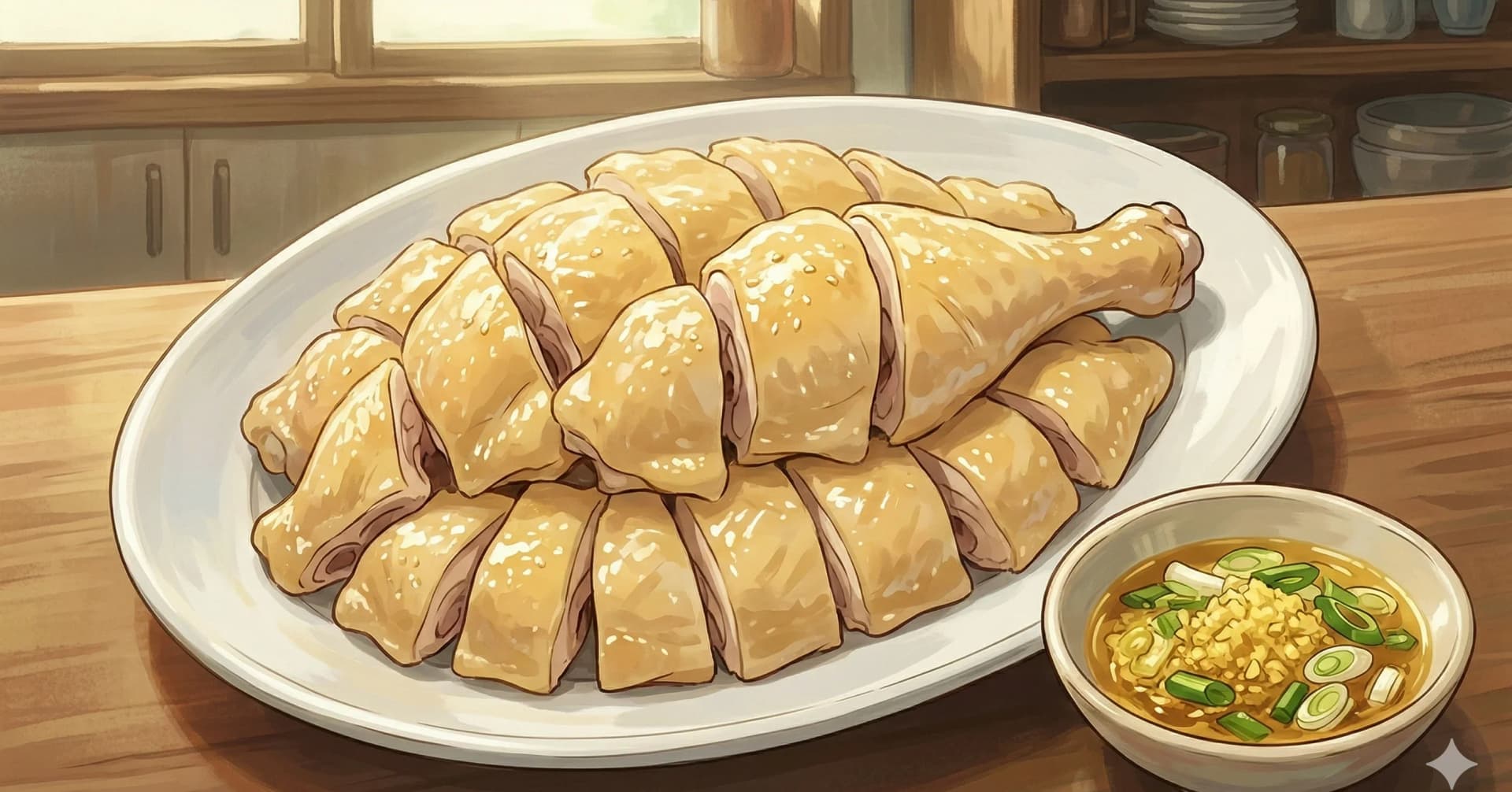
Cold char siu, sliced thin, makes an excellent addition to a platter alongside Soy Sauce Chicken and Siu Yuk for a Cantonese-style siu mei spread. For a noodle dish, pair with Dan Dan Noodles or toss with egg noodles, scallion oil, and oyster sauce.
Storage & Reheating
Refrigerator: Store sliced or unsliced char siu in a sealed container for up to 4 days. The glaze will keep the surface moist.
Freezer: Wrap individual portions tightly in plastic wrap, then place in a freezer bag. Freeze for up to 1 month. Thaw overnight in the refrigerator.
Reheating: For the best results, place slices on a foil-lined baking sheet and warm in a 350F oven for 5 to 7 minutes. Brush with a little honey or maltose dissolved in water before reheating to refresh the glaze. Microwaving works for convenience but will soften the caramelized edges.
Cultural Notes
Char siu (叉烧, "fork roast") is the lacquered, sweet-savory Cantonese roast pork that takes its name from the traditional cooking method: long strips of marinated pork were threaded onto long forks (char) and roasted (siu) over an open fire. The dish belongs to the broader Cantonese siu mei (roast meats) category, which also includes siu yuk (crispy roast pork belly), roast duck, soy sauce chicken, and siu ngo (roast goose). All of these are typically prepared at specialized roast meat shops and hung in glass-fronted display windows visible from the street, a sight that defines the streetscape of Hong Kong, Guangzhou, and Cantonese diaspora neighborhoods worldwide.
The marinade is what gives char siu its signature flavor and color. The base is a combination of soy sauce, hoisin sauce, oyster sauce, Chinese rose wine (mei kuei lu chiew), five-spice powder, white pepper, garlic, sugar, and either honey or maltose for the lacquer. Red fermented bean curd (nam yu) is sometimes added for additional umami and the slight pinkish color that older traditional char siu carries. Many modern shops also add red food coloring to deepen the surface color, though high-end traditional shops avoid the practice. The pork shoulder (mei tou) is cut into long strips, marinated for at least a few hours and ideally overnight, then roasted at high heat with periodic basting in honey or maltose to build up the lacquered surface.
The cultural integration of char siu into Cantonese cuisine extends well beyond the standalone dish. The roast pork is the headlining ingredient in char siu bao (steamed barbecue pork buns), char siu fan (char siu over rice), char siu noodles, and the Cantonese fried rice variation that pairs the diced pork with eggs and scallions. In Hong Kong, the multi-generation roast meat shops that supply the city's diners cluster in neighborhoods like Sham Shui Po, Sai Ying Pun, and Wan Chai, with some establishments such as Joy Hing Roasted Meat in Wan Chai operating continuously since the 1930s. The dish's spread through the Cantonese diaspora has made it a global reference point, with established roast meat shops in every major North American Chinatown.
Nutrition Facts
Calories: 469kcal (23%)|Total Carbohydrates: 12.8g (5%)|Protein: 32.7g (65%)|Total Fat: 30.9g (40%)|Saturated Fat: 10.9g (55%)|Cholesterol: 128mg (43%)|Sodium: 847mg (37%)|Dietary Fiber: 0.1g (0%)|Total Sugars: 12g
You Might Also Like
Ratings & Comments
Ratings & Comments
Ratings
Share your thoughts on this recipe.
Sign in to rate and comment