Thai Cuisine
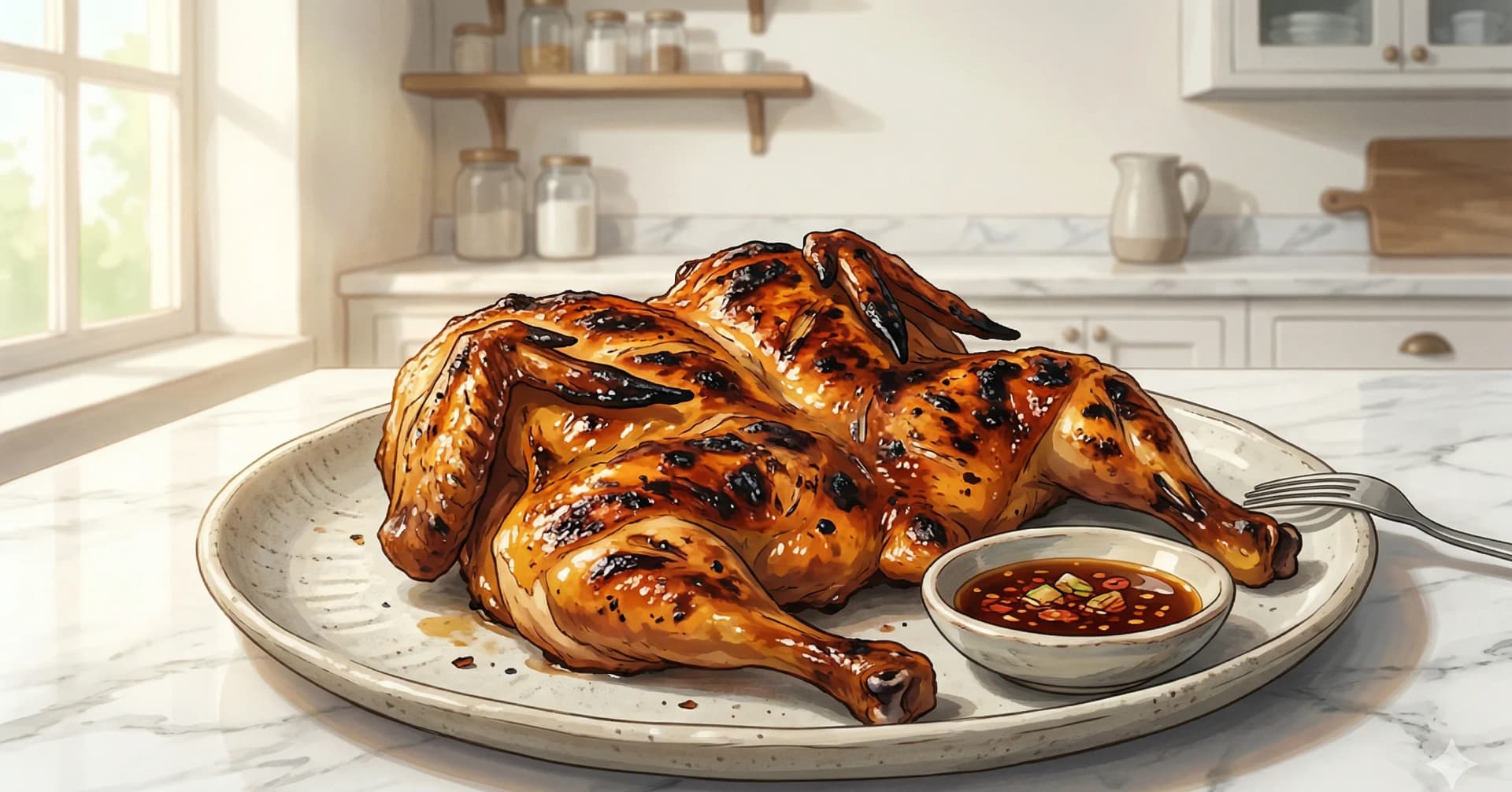
Gai Yang (Thai BBQ Chicken)
Lemongrass-marinated grilled chicken with nam jim jaew dipping sauce
Gai yang translates simply as "grilled chicken," but in Thailand the words carry a very specific meaning. They point to the version sold at roadside stalls and open-air markets across the Isaan region and, eventually, everywhere else in the country. A whole chicken, butterflied or spatchcocked, is rubbed with a marinade built on garlic, white pepper, coriander seeds, and lemongrass, then grilled slowly over coals until the skin turns deeply bronzed and the meat stays thoroughly juicy. It is one of the most popular street foods in Thailand, and one of the simplest to reproduce at home.
The marinade is modest in its ingredient count but surprisingly layered in result. Fish sauce and soy sauce provide a double source of salt and umami. White peppercorns and toasted coriander seeds add a warm, floral spice that sits underneath rather than on top of the chicken flavor. Lemongrass ties everything together with its earthy citrus note. Some cooks add cilantro roots for an extra herbal dimension, and a small amount of coconut milk can enrich the marinade, helping the surface brown more evenly on the grill.
What transforms gai yang from good to memorable, though, is not the chicken alone. It is the pairing with nam jim jaew, a sharp, tangy, spicy dipping sauce made from tamarind, fish sauce, lime juice, chili flakes, shallots, and toasted rice powder. The sauce is bright where the chicken is rich, rough-textured where the skin is smooth. Together with sticky rice and a plate of som tam, they form one of the essential meals of Thai cooking. Bring larb to the table and you have a full Isaan feast, the kind of spread that turns a weeknight grill session into something worth remembering.
At a Glance
Yield
4 servings
Prep
30 minutes (plus 2 hours marinating)
Cook
30 minutes
Total
3 hours
Difficulty
Easy
Ingredients
Chicken Ingredients
- 1 wholebone-in, skin-on chicken breast (both sides on the rib cage), about 700 g
- 2bone-in, skin-on chicken hindquarters (thigh and drumstick), about 800 g total
Marinade Ingredients
- 1 1/2 tspwhite peppercorns
- 2 tspcoriander seeds, lightly toasted
- 1 stalklemongrass, bottom half only, thinly sliced
- 5 clovesgarlic, peeled
- 4cilantro roots or 30 g cilantro stems, roughly chopped
- 3 tbspsoy sauce
- 3 tbspfish sauce
- 1 tbspdark soy sauce
- 1¼ tbspsugar
- 2 tbspcoconut milk
- 2 tbspneutral oil
- ½ cupwater
Dipping Sauce Ingredients
- 2 tbspThai tamarind paste (not Indian concentrate)
- 1¼ tbsppalm sugar, finely chopped, or light brown sugar
- 1 tbspfish sauce
- 1 tbspfresh lime juice
- 1to 3 tsp chili flakes (Thai dried chili flakes preferred), to taste
- 1medium shallot (about 15 g), finely diced
- 1 tbspchopped green onion
- 3 sprigscilantro, leaves and tender stems chopped
- 1 tbsptoasted rice powder (see method)
- 2 tbspraw glutinous rice or jasmine rice
Method
- 1
Toast the coriander seeds in a dry pan over medium heat, shaking occasionally, until fragrant and a shade darker, about 2 minutes. The scent should shift from raw and grassy to warm and almost citrus-like. Tip them out of the pan immediately so they do not continue to darken.
- 2
Grind the white peppercorns and toasted coriander seeds to a fine powder using a mortar and pestle or spice grinder. Add the sliced lemongrass, garlic, and cilantro roots. Pound until the mixture forms a rough, fibrous paste with no large chunks remaining. The lemongrass takes the most effort here, so slice it thin before pounding.
- 3
Transfer the paste to a bowl. Add the soy sauce, fish sauce, dark soy sauce, sugar, coconut milk, neutral oil, and water. Stir until the sugar dissolves completely.
- 4
Separate the chicken breast into two halves by cutting down the center of the breastbone. Separate each hindquarter into a thigh and a drumstick. Trim any loose flaps of skin from the thighs. You should have 6 pieces total.
- 5
Place the chicken in a large zip-top bag or a shallow dish. Pour the marinade over the pieces and work it into every surface, tucking some paste under the skin where possible. Press out excess air if using a bag. Refrigerate for at least 2 hours, or overnight for the best flavor. Flip the bag or turn the pieces halfway through. Pull the chicken from the fridge 45 minutes before grilling so it loses its chill.
- 6
While the chicken marinates, make the toasted rice powder. Add the raw rice to a dry skillet over medium-high heat. Stir constantly as the grains pop and color, about 3 to 4 minutes. The rice should turn an even deep golden brown with some darker speckles. It will smell nutty, almost like popcorn. Remove immediately to a plate to cool. Once cool, grind to a coarse powder in a mortar or spice grinder. Set aside.
- 7
Prepare a two-zone fire on a charcoal grill, banking the coals to one side, or preheat a gas grill with one burner on medium and the other on low. You want an area of moderate direct heat and a cooler zone for slower cooking. A grill surface temperature around 135 to 150C (275 to 300F) on the cooler side is ideal.
- 8
Place the chicken pieces skin-side up on the cooler side of the grill. Close the lid. The sugar in the marinade burns easily, so resist the urge to start over high heat. Flip the pieces every 5 minutes. The skin will gradually turn from pale to golden to a mottled brown with some charred spots. Total cooking time is about 18 to 30 minutes depending on the size of each piece.
- 9
Check doneness with an instant-read thermometer. Breasts are done at 72C (160F) measured at the thickest point. Thighs and drumsticks should reach 80C (175F). If the skin needs more color at the end, move pieces briefly to the hot zone for 30 to 60 seconds per side. Watch carefully, as the dark soy and sugar char quickly.
- 10
Transfer the chicken to a cutting board and let it rest for 10 to 15 minutes. The juices will redistribute and the internal temperature will climb a few more degrees. Use the resting time to finish the dipping sauce.
- 11
Make the nam jim jaew. Combine the tamarind paste, palm sugar, fish sauce, and lime juice in a bowl. Stir until the sugar dissolves. Add the chili flakes and diced shallot. Taste and adjust the balance of sour, salty, sweet, and spicy. Just before serving, fold in the green onion, cilantro, and toasted rice powder. The rice powder thickens the sauce slightly and adds a sandy, nutty texture that is essential to the finished dish.
- 12
Chop the rested chicken into smaller pieces through the bone using a cleaver, or serve the pieces whole for guests to pull apart. Arrange on a plate with the nam jim jaew alongside.
Key Ingredient Benefits
Lemongrass: The lower stalk contains the highest concentration of citral, the compound responsible for its bright, lemony aroma. Citral has been studied in laboratory settings for antimicrobial and anti-inflammatory activity, though dietary amounts from culinary use are far below therapeutic doses. In Thai traditional practice, lemongrass tea is considered calming and digestive.
White peppercorns: These are fully ripened berries with the outer husk removed, giving a milder, more floral heat than black pepper. They contain piperine, the same alkaloid found in black pepper, which some research suggests may improve the bioavailability of other nutrients, including the curcumin found in turmeric.
Coriander seeds: The dried seeds of the cilantro plant have a flavor profile quite different from the fresh leaves. They are warm, citrusy, and slightly sweet. The dominant compound, linalool, is shared with lavender and has been associated with calming and digestive properties in traditional herbalism across many cultures.
Tamarind: The pulp is rich in tartaric acid, which gives it its distinctive sharp sourness. It provides modest amounts of potassium, magnesium, and iron. In Thai cooking, tamarind paste appears in curries, soups, and sauces as a souring agent, serving a similar role to vinegar or citrus in other cuisines.
Toasted rice powder (khao khua): A staple condiment in Isaan and Lao cooking. The toasting process triggers Maillard reactions that produce hundreds of new flavor compounds, transforming bland raw rice into something fragrant and complex. It also acts as a natural thickener in sauces and salads like larb.
Why This Works
Pounding the aromatics in a mortar rather than processing them in a blender releases more of their essential oils while keeping the texture coarse enough to cling to the chicken. The lemongrass, coriander seeds, and white pepper form a flavor base that permeates the meat during marination, not just coating the surface.
The combination of fish sauce and soy sauce provides two different types of umami. Fish sauce delivers nucleotide-based depth, while soy sauce contributes amino acid richness. Dark soy sauce adds a small amount of caramelized sugar and a deeper color to the skin. The coconut milk, borrowed from some regional variations, adds fat that helps the marinade adhere to the skin and promotes more even browning through its lactose and proteins.
Grilling over moderate, indirect heat is the key to avoiding a charred exterior and raw interior. The sugar in the marinade begins to caramelize well below the temperatures that would scorch protein, so patience on the grill is essential. Flipping every 5 minutes ensures both sides render and color evenly without any one surface sitting too long over heat.
Toasted rice powder in the nam jim jaew is not a garnish. It absorbs excess liquid, thickens the sauce to a spoonable consistency, and contributes a deeply nutty, almost smoky flavor that echoes the char on the chicken itself.
Substitutions & Variations
Chicken cut: Boneless, skin-on chicken thighs are the easiest alternative. Reduce marinating time to 1 hour and grilling time to about 10 to 12 minutes. Boneless skinless breasts can work if sliced horizontally to an even thickness, but they dry out more easily and benefit from a shorter time on the grill.
Lemongrass: If fresh lemongrass is unavailable, use 1 tablespoon of frozen sliced lemongrass or 2 teaspoons of lemongrass paste from a tube. The flavor will be milder, so consider adding a strip of lemon zest to supplement.
Cilantro roots: Not widely available outside Asian grocers. Cilantro stems are the best substitute, using the lower portion where the stems are thickest. The flavor is milder but still in the right family.
Dark soy sauce: If you cannot find dark soy sauce, use an additional tablespoon of regular soy sauce and a half teaspoon of molasses. The color will be lighter but the flavor will be close.
Tamarind paste: In a pinch, use equal parts lime juice and a small amount of brown sugar to approximate the sweet-sour balance. The flavor will not be identical, but the sauce will still work.
Coconut milk: This addition is optional. Some traditional recipes omit it entirely. Leaving it out produces a slightly leaner marinade that chars a bit more aggressively on the grill.
Oven method: Bake at 200C (400F) on a rack set over a sheet pan. After 20 minutes, brush the skin with a thin coating of oil. Check breasts at 30 minutes and thighs at 40 minutes. The result lacks smoke but the marinade still delivers.
Spice variations: Some cooks skip the coriander seeds, others add a pinch of turmeric for color, and some include a small amount of curry powder. The garlic, white pepper, and ratio of soy sauce to fish sauce are the constants.
Serving Suggestions
The classic Isaan presentation is gai yang with sticky rice, som tam, and a plate of raw vegetables: cabbage wedges, long beans, Thai basil, and sliced cucumber. The sticky rice is essential. It is how you pick up pieces of chicken and scoop up the nam jim jaew, all in one bite.
For a larger spread, add larb and sai krok Isaan to the table for a proper northeastern Thai feast. The sour, herbal notes of larb and the tangy, fermented flavor of the sausages complement the smoky sweetness of the grilled chicken.
Gai yang also pairs well with dishes from other Thai traditions. Serve alongside pad thai for a more familiar combination, or offer it as a protein alongside green curry with steamed jasmine rice. For a Southeast Asian grill night, set it next to ga nuong xa, the Vietnamese lemongrass grilled chicken, and let guests compare two related but distinct approaches to the same idea.
If you prefer a milder dipping option for children or those who avoid spice, Thai sweet chili sauce (nam jim gai) works well alongside the nam jim jaew.
Storage & Reheating
Refrigerator: Store cooked chicken in a sealed container for up to 3 days. Keep the nam jim jaew in a separate container, as the toasted rice powder will continue to absorb liquid and soften over time. Add fresh rice powder when reseriving.
Freezer: Wrap individual portions of cooked chicken tightly in plastic wrap, then place in a freezer bag. Freeze for up to 1 month. Thaw overnight in the refrigerator before reheating.
Reheating: For the best texture, reheat on a hot grill or in a skillet over medium heat, skin-side down, until the skin crisps again, about 3 to 4 minutes per side. Alternatively, place on a rack over a sheet pan in a 190C (375F) oven for 8 to 10 minutes. Microwaving will warm the chicken through but will soften the skin.
Marinade: The raw marinade (before it touches chicken) can be made up to 2 days ahead and refrigerated. This makes weeknight grilling easier if you plan ahead.
Cultural Notes
Gai yang (ไก่ย่าง, "grilled chicken") is the Isan and Lao charcoal-grilled chicken that anchors nearly every Northeastern Thai meal. The dish is a roadside fixture along Thailand's eastern and northeastern highways, where vendors set up entire blocks of grills, butterfly whole chickens into flat splayed pieces, marinate them in coriander-root paste with garlic, white pepper, and fish sauce, and grill them slowly over charcoal until the skin lacquers and the meat stays juicy. The smell of gai yang grilling is one of the defining roadside smells of the Isan region.
The traditional Isan marinade is built on a paste of garlic, coriander root, white peppercorns, salt, fish sauce, and sometimes a small amount of sugar. The chicken is left to marinate for at least 4 hours and ideally overnight, then butterflied flat and clamped between two bamboo skewers in a frame that holds the bird open for even grilling. The grilling itself is slow over indirect charcoal heat, sometimes taking 45 minutes to an hour for a whole bird, with the cook brushing on additional marinade as the meat cooks. The finished chicken is chopped or torn into bite-sized pieces and served at room temperature with jaew, an Isan dipping sauce of dried chili, toasted rice powder, fish sauce, and lime.
Gai yang is almost never eaten alone. The traditional Isan meal centers on gai yang, som tam (green papaya salad), and khao niao (sticky rice), eaten together in the hand: a piece of chicken, a small ball of sticky rice rolled between the fingers, a bite of papaya salad. The three dishes are sold as a set at virtually every Isan restaurant and street stall across Thailand, and ordering them together is the most reliable shortcut to a real Isan meal anywhere outside the region.
Nutrition Facts
Calories: 485kcal (24%)|Total Carbohydrates: 22g (8%)|Protein: 53.8g (108%)|Total Fat: 20.2g (26%)|Saturated Fat: 6.8g (34%)|Cholesterol: 200mg (67%)|Sodium: 1685mg (73%)|Dietary Fiber: 2.2g (8%)|Total Sugars: 8.5g
You Might Also Like
Ratings & Comments
Ratings & Comments
Ratings
Share your thoughts on this recipe.
Sign in to rate and comment