Vietnamese Cuisine
Hu Tieu Nam Vang (Phnom Penh Noodle Soup)
Southern Vietnam's beloved pork and seafood noodle soup with a clear, sweet broth built on dried shrimp and squid
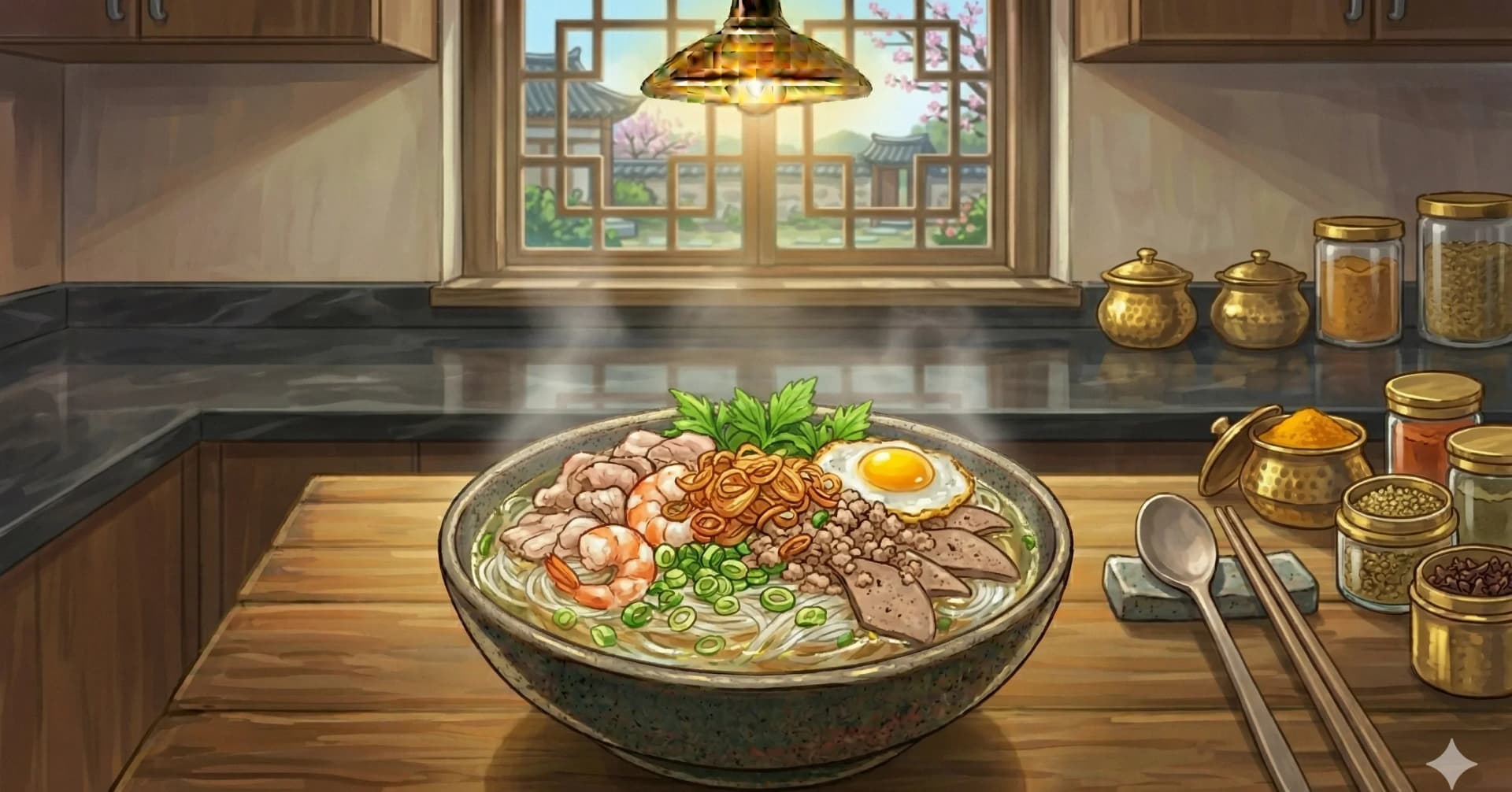
If pho belongs to Hanoi and bun bo hue to the central coast, then hu tieu is the noodle soup of Saigon and the Mekong Delta. Walk through any neighbourhood in Ho Chi Minh City before sunrise and you will find a cart or a small shop with a tall stockpot sending steam into the still air, the cook arranging a spread of toppings across the counter. Hu tieu is the breakfast soup of the south, and it may be the most generous bowl in all of Vietnamese cooking.
The name tells you where it came from. "Nam Vang" is the Vietnamese name for Phnom Penh, and the dish traces its roots to the Chinese-Cambodian community there, where Teochew and Cantonese cooks adapted their noodle soups to local ingredients. Chinese immigrants carried it into the Mekong Delta in the early twentieth century, and from there it spread to Saigon. Along the way, the broth picked up dried shrimp and dried squid, ingredients that give it a sweetness and depth that sets it apart from pho's warm-spice clarity or the lemongrass fire of bun bo hue. Where pho bo relies on star anise and charred ginger, hu tieu reaches for the sea.
What makes this soup so appealing is its openness. You choose your noodles: chewy tapioca, thin rice vermicelli, egg noodles, or a combination. You choose your toppings: char siu pork, shrimp, ground pork, quail eggs, fish balls, squid. You even choose your format: wet with broth ladled over everything, or dry (kho) with noodles tossed in a dark sauce and broth served on the side. If you enjoy a noodle soup that invites you to build your own bowl from a shared table, hu tieu is the place to start.
At a Glance
Yield
6 servings
Prep
45 minutes
Cook
2 hours 30 minutes
Total
3 hours 15 minutes
Difficulty
Medium
Ingredients
Broth Ingredients
- 3 lbpork neck bones
- 3¼ qtwater
- 1 ozdried shrimp (about 1/4 cup)
- 1small dried squid (about 30 g)
- 1medium yellow onion, halved
- 1small daikon radish (about 300 g), peeled and cut into 5 cm chunks
- 2½ tspsea salt (about 1 tablespoon plus 1 teaspoon)
- ½ ozchicken bouillon powder, optional
- 1½ tbspgranulated sugar (about 1 tablespoon plus 2 teaspoons), or rock sugar
- 1 tspfish sauce, plus more to taste
To Assemble
- 7 ozChinese BBQ pork (char siu), sliced
- 7 ozwhole shrimp, shell on, boiled until pink and curled (about 3 minutes)
- 5½ ozground pork, cooked (see method)
- 3½ ozfish balls, halved and briefly simmered
- 12hard-boiled quail eggs, halved
- 5½ ozcooked squid, sliced into rings (optional)
Pork Ingredients
- 5½ ozground pork
- 1 tspfish sauce
- ⅞ tspwhite pepper (about 1/2 teaspoon)
- 1¼ tspsugar
- 1 clovegarlic, minced
Noodle Ingredients
- 1 lbdried tapioca noodles (hu tieu noodles), or dried egg noodles, or dried rice vermicelli
To Serve
- 1 bunchgarlic chives (about 100 g), cut into 5 cm segments
- 7 ozbean sprouts
- 3to 4 scallions, thinly sliced
- 1 ozfried shallots
- —Pickled chilies or sliced fresh red chilies
- —Freshly ground black pepper
- —Lime wedges
- —Hoisin sauce and sriracha (optional)
Method
- 1
Place the pork neck bones in a large stockpot and cover with cold water. Bring to a rolling boil over high heat and let it bubble for 8 minutes. The water will turn cloudy and grey as impurities rise to the surface, which is exactly what you want. Drain through a colander, then rinse each bone under cold running water, scrubbing away any clinging foam. Clean the pot thoroughly before continuing. This blanching step is essential for a clear broth.
- 2
While the bones boil, prepare the aromatics. Place the dried shrimp and dried squid on a small baking sheet along with the halved onion. Roast in a toaster oven or conventional oven at 200C (400F) for about 15 to 20 minutes, turning once, until the shrimp darken a shade and the squid curls and releases a toasty, oceanic smell that fills the kitchen. Alternatively, place them in a dry skillet over medium-high heat and toast for 3 to 4 minutes per side, pressing down on the squid with a spatula. The onion should be lightly charred on its cut face. Scrape off any blackened bits from the onion to prevent darkening the broth.
- 3
Return the cleaned bones to the clean pot. Add the 3 litres of fresh water, the roasted dried shrimp, roasted dried squid, charred onion, and daikon chunks. Bring to a boil over high heat, then reduce to a gentle simmer with only a few lazy bubbles breaking the surface every few seconds. Cover with the lid slightly ajar. Simmer for 2 hours, skimming any foam or fat that rises to the surface during the first 30 minutes. The broth will gradually turn a pale gold and take on a subtle sweetness from the dried seafood and daikon.
- 4
While the broth simmers, prepare the ground pork. Combine the ground pork with the fish sauce, white pepper, sugar, and minced garlic in a small bowl. Mix until just combined. Bring a small saucepan of water to a gentle simmer, then crumble the seasoned pork into the water, breaking it into small pieces as it cooks. Simmer for 5 to 6 minutes until fully cooked through. Drain and set aside. Cooking the ground pork separately in water keeps it tender and prevents it from clumping into a dense mass.
- 5
Prepare the remaining toppings while the broth works. Boil the shrimp in salted water until they curl and turn pink, about 3 minutes, then drain and set aside. Halve the fish balls and simmer them briefly in a little broth or water until heated through. Slice the char siu pork. Hard-boil the quail eggs (about 4 minutes in boiling water), peel, and halve. Arrange all the toppings on a large platter or in individual small dishes.
- 6
After 2 hours, remove and discard the bones, onion, daikon, dried shrimp, and dried squid. Strain the broth through a fine mesh strainer into a clean pot. You should have roughly 2 to 2.5 litres of clear, pale golden broth. If you have more, simmer uncovered to concentrate the flavour. Season with the salt, sugar, bouillon powder (if using), and fish sauce. Taste carefully. The broth should taste clean and gently sweet, with a savoury depth from the pork and a subtle marine note from the dried seafood underneath. It should not taste fishy. Adjust salt and sugar until the broth feels balanced and full. Keep at a gentle simmer while you assemble the bowls.
- 7
Cook the noodles according to the package directions. Tapioca noodles (hu tieu noodles) typically need a 5 to 8 minute soak in boiling water until they are translucent and chewy but not mushy. Egg noodles cook faster, usually 3 to 4 minutes. Rice vermicelli needs only a brief blanch. Drain thoroughly.
- 8
Assemble each bowl. Place a portion of drained noodles into a deep bowl. Arrange your chosen toppings over the noodles: slices of char siu, a few shrimp, a spoonful of crumbled ground pork, quail egg halves, fish ball halves, and any other toppings you have prepared. Scatter garlic chive segments and sliced scallions over the top. Bring the broth to a rolling boil, then ladle about 350 to 400 ml directly over the toppings. The boiling broth will warm everything through and wilt the garlic chives slightly. Finish with a pinch of fried shallots, a crack of black pepper, and a few pickled chilies. Serve immediately with bean sprouts and lime wedges on the side.
Key Ingredient Benefits
Dried shrimp are whole shrimp that have been salted and sun-dried, concentrating their protein, calcium, and naturally occurring glutamate. They are a staple across Southeast Asian, Chinese, and Brazilian cooking. In traditional Vietnamese medicine, dried shrimp are considered a warming ingredient that supports the kidneys. They are also a notable source of astaxanthin, the carotenoid pigment responsible for their orange-pink colour, which has been studied for its antioxidant properties. Look for dried shrimp that are bright orange-pink and smell sweet and oceanic, not fishy or ammonia-like.
Dried squid (Khô Mực) adds inosinate, a nucleotide that amplifies umami when combined with glutamate-rich ingredients like the dried shrimp. In Chinese and Vietnamese culinary tradition, dried squid is valued for the complexity it brings to broths. Choose whole dried squid with tentacles intact for soup stock, not the shredded, seasoned variety sold as snacks.
Pork neck bones are inexpensive cuts with a high ratio of collagen-rich connective tissue to meat. During a long simmer, the collagen converts to gelatin, which gives the broth a satisfying body that you feel on your lips. The bones also release small amounts of calcium and phosphorus into the liquid.
Daikon radish (Raphanus sativus) is a mild, white radish common throughout East and Southeast Asian cooking. It contains vitamin C and the enzyme myrosinase, which participates in the breakdown of glucosinolates, compounds that have attracted research interest for their potential health-protective properties. In the broth, daikon contributes natural sweetness and a clean, vegetal quality.
Garlic chives (Allium tuberosum) have a mild garlic flavour and are a signature garnish for hu tieu. They contain allicin precursors similar to those found in garlic, which have been associated with cardiovascular and immune-supporting properties in traditional herbal medicine. Added to the bowl just before the hot broth is ladled over, they soften slightly while retaining their green colour and gentle bite.
Fish sauce (nuoc mam) provides the savoury backbone. In hu tieu, it is used more sparingly than in pho bo or bun rieu, because the dried seafood already contributes significant umami. Fish sauce is high in sodium (roughly 1,500 mg per tablespoon), so add gradually and taste as you go.
Why This Works
The combination of pork neck bones, dried shrimp, and dried squid is the foundation of hu tieu and the reason the broth tastes different from any other Vietnamese noodle soup. Pork neck bones contain a high proportion of connective tissue relative to their size, which releases gelatin steadily over the simmer and gives the broth a silky body. The dried shrimp and squid contribute umami compounds (naturally occurring glutamate from the shrimp, inosinate from the squid) that work synergistically, meaning their combined savoury impact is far greater than either ingredient alone. This is the same principle that makes dashi (kombu plus katsuobushi) so effective in Japanese cooking. The roasting step intensifies these dried seafood flavours by driving off residual moisture and triggering Maillard reactions on the surface, creating new aromatic compounds that dissolve into the broth during the long simmer.
Blanching the bones before building the broth removes blood proteins and surface impurities that would otherwise cloud the liquid and leave a murky, slightly metallic taste. Starting with cleaned bones in fresh water produces the characteristic clarity of hu tieu broth, which should look almost translucent in the bowl.
The daikon serves a double purpose. It adds a gentle sweetness to the broth (daikon contains naturally occurring sugars that release during long cooking), and its mild flavour rounds out the marine notes from the dried seafood without competing with them. Many hu tieu cooks in Saigon consider the daikon essential to balancing the broth.
Cooking the ground pork separately in simmering water, rather than adding it raw to the broth or stir-frying it, keeps the pieces loose, tender, and clean-tasting. This technique is standard in southern Vietnamese noodle shops and prevents the ground pork from muddying the broth.
Substitutions & Variations
Bones: Chicken carcasses or a combination of pork and chicken bones can replace the pork neck bones. Chicken produces a lighter, more delicate broth. Some cooks add a few pork ribs for extra meaty flavour.
Dried seafood: If you cannot find dried squid, double the dried shrimp. The broth will lose some complexity but will still taste distinctly like hu tieu. Dried scallops (conpoy) are a luxurious addition that some Chinese-Vietnamese cooks use to deepen the sweetness.
Noodles: The soup works with three noodle types. Tapioca noodles (the original hu tieu noodle) have a distinctive chewiness. Egg noodles turn it into "hu tieu mi," a popular variation. Thin rice vermicelli is the lightest option. Many shops offer a combination bowl with both tapioca and egg noodles.
Dry version (Hu Tieu Kho): Instead of ladling broth over the noodles, toss the drained noodles with a dark sauce made from 15 ml soy sauce, 10 ml oyster sauce, 5 ml sesame oil, 5 g sugar, and a splash of the pork broth. Arrange the toppings on the sauced noodles and serve a small bowl of clear broth on the side for sipping. This is how many Saigonese prefer their hu tieu.
Toppings: The topping list is a suggestion, not a requirement. A simple bowl with just ground pork, a few shrimp, and garlic chives is satisfying. A fully loaded bowl (thap cam) might include all of the above plus sliced pork liver and kidney, blood pudding, and crab meat. Build it to your taste.
Spicier broth: For those who want more heat, look to bun bo hue, which brings lemongrass and chili oil into the equation, or boat noodles, the Thai pork and beef noodle soup that uses dark soy, dried spices, and sometimes blood for a bolder, darker bowl.
Richer broth: For a coconut-enriched Southeast Asian noodle soup experience, explore khao soi, which takes the idea of a pork or chicken broth and wraps it in a rich curry-coconut base.
Serving Suggestions
Hu tieu is a complete meal that needs little alongside it. The traditional way to serve it is family-style: the broth stays on the stove at a simmer, the noodles are cooked fresh per bowl, and all the toppings are arranged on a shared platter so that each person can build their own bowl. Set out the bean sprouts, garlic chives, lime wedges, pickled chilies, fried shallots, hoisin, and sriracha and let people compose as they like.
For a larger Vietnamese meal, pair hu tieu with goi cuon (fresh spring rolls) as a light starter. The cool, herby freshness of the rolls makes a natural counterpoint to the hot, savoury broth. A plate of banh trang nuong (Vietnamese rice paper pizza) or cha gio (fried spring rolls) adds crunch.
If you are exploring Vietnamese noodle soups more broadly, hu tieu sits in interesting contrast to pho bo, which relies on warm spices and beef rather than dried seafood and pork, and to bun rieu, which replaces the clear broth with a tangy tomato-and-crab base. Together, these three soups illustrate the remarkable range of the Vietnamese noodle soup tradition, each built on a different foundation of flavour.
Storage & Reheating
Broth: Keeps in a sealed container in the refrigerator for up to 5 days. A thin layer of fat may solidify on the surface when cold, which you can leave as a natural seal or skim off before reheating. The broth freezes well for up to 3 months. Freeze in portioned containers (about 400 ml per serving) for easy weeknight bowls.
Toppings: Most toppings store well in the refrigerator for 3 to 4 days in sealed containers. Char siu pork and ground pork reheat well. Boiled shrimp are best eaten the same day but can be stored overnight. Quail eggs keep for 3 to 4 days refrigerated.
Noodles: Cook fresh for each serving. Leftover tapioca noodles lose their chew and become sticky. Egg noodles hold up slightly better but are still best made fresh.
Garnishes: Prepare fresh. Garlic chives, bean sprouts, and lime wedges lose their crunch and brightness within hours.
Reheating: Bring the broth to a full, rolling boil before ladling over noodles and toppings. The broth needs to be genuinely hot to warm the toppings through and soften the garlic chives. Taste and add a small splash of fish sauce if the flavour has flattened during storage.
Cultural Notes
Hủ tiếu Nam Vang, Phnom Penh-style noodle soup, has one of the most directly traceable cross-cultural histories in the entire Vietnamese noodle-soup canon. The dish originated with the Teochew Chinese community in Phnom Penh, Cambodia (which Vietnamese calls Nam Vang), then traveled to southern Vietnam through Cambodian-Vietnamese migration in the early-to-mid 20th century. From there, Saigon's substantial ethnic-Chinese population adapted it into its current form. The "Nam Vang" geographic tag in the name openly acknowledges the dish's Cambodian origin, which is a relatively rare move in Vietnamese cuisine. Most adopted dishes get absorbed without the source country staying in the name.
Today hủ tiếu sits alongside phở bò as one of the defining noodle soups of southern Vietnam. The two soups taste nothing alike. Phở's broth is built on long-simmered beef bones with warm spices (cinnamon, star anise, cloves). Hủ tiếu's broth is built on pork bones with dried shrimp, dried squid, and rock sugar, which produces something cleaner, sweeter, and lighter than phở. The protein assortment is also more varied than phở. A single bowl typically contains pork ribs, shrimp, squid, ground pork, sliced pork liver, and quail eggs together. That kind of mixed protein lineup is one of the clearer Chinese fingerprints on the dish.
In modern Saigon, hủ tiếu shows up at almost every meal occasion. Breakfast is the most common context. Lunch, afternoon snack, and late-night supper all work too. The most respected Saigon addresses (Hủ Tiếu Nam Vang Tylum, Hủ Tiếu Hồng Phát, Hủ Tiếu Tylum Phan Đăng Lưu) have multiple generations of family operation behind them and draw real lines at peak hours.
The dish also splits into two serving styles. Hủ tiếu nước is the version with broth in the bowl, the more familiar form. Hủ tiếu khô, literally "dry hủ tiếu," dresses the noodles with sauce and serves the broth on the side. Both are popular. Diners line up on one side or the other by personal preference.
Outside Vietnam, hủ tiếu has barely traveled. Its main recognition is inside Vietnamese-American Saigon-style restaurants, which makes it the most distinctly Saigonese of all Vietnamese noodle traditions.
Nutrition Facts
Calories: 430kcal (22%)|Total Carbohydrates: 55g (20%)|Protein: 31g (62%)|Total Fat: 10g (13%)|Saturated Fat: 2g (10%)|Cholesterol: 70mg (23%)|Sodium: 850mg (37%)|Dietary Fiber: 1g (4%)|Total Sugars: 3g
You Might Also Like
Ratings & Comments
Ratings & Comments
Ratings
Share your thoughts on this recipe.
Sign in to rate and comment