Thai Cuisine
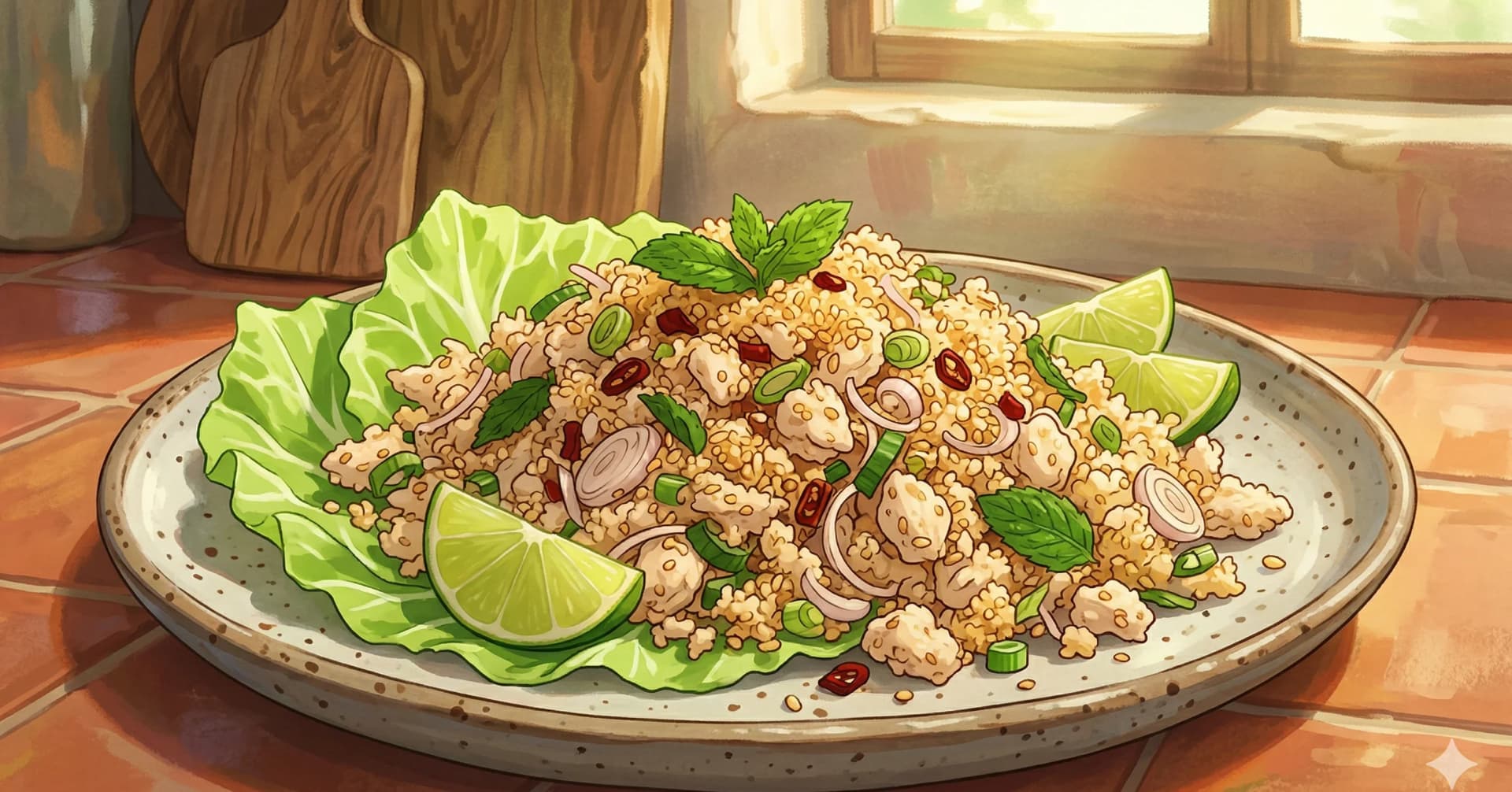
Larb Gai (Thai Chicken Salad)
Northeastern Thai minced chicken salad with toasted rice powder, fresh herbs, and a sharp lime-fish sauce dressing
Larb is the dish that best represents Isaan, the northeastern plateau of Thailand where cooking is direct, unfussy, and built around a small number of ingredients that do a lot of work. The name comes from the northeastern dialect word for mince, and the dish is exactly that: meat cooked simply, dressed quickly, and finished with enough raw herbs and toasted rice powder to make every bite feel layered despite having no sauce to speak of. The correct pronunciation drops the R entirely, so what you see spelled as "larb" on menus is spoken as "laab." Either spelling leads to the same place.
The dressing is nothing more than fish sauce, lime juice, and chili flakes, but the ratios matter. Fish sauce brings salt and fermented depth. Lime juice brings a sharp, almost aggressive acidity. The toasted rice powder, called khao khua, is the ingredient that quietly holds everything together. It mellows the lime, adds a nutty warmth, and gives the salad a faintly gritty texture that keeps it from feeling like just another meat-and-herb toss. Making your own khao khua takes five minutes and is the single step that separates a good larb from a forgettable one.
The chicken cooks in a splash of water rather than oil, which keeps the texture light and allows the dressing to cling. If you have made som tam or yam nua, you already understand this Thai instinct for salads that hit hard and fast across sour, salty, and spicy registers. Larb belongs to that family, and like its relatives, it is always served with sticky rice and something raw and crunchy on the side. In Thailand, gai yang is the classic companion, the smoky grilled chicken acting as a rich counterweight to the bright, lean salad.
At a Glance
Yield
2 servings
Prep
15 minutes
Cook
15 minutes
Total
30 minutes
Difficulty
Easy
Ingredients
Toasted Rice Powder Ingredients
- 3 tbspuncooked Thai sticky rice or jasmine rice
- 1makrut lime leaf (optional but recommended)
Salad Ingredients
- ¾ lbground chicken, preferably not lean (dark meat or a mix of breast and thigh is ideal)
- 2 tbspwater or unsalted chicken stock
- 1¾ tbspfish sauce (1 tablespoon plus 2 teaspoons), divided
- 1small shallot (about 30 g), thinly sliced
- 2 tbspfresh lime juice (about 2 limes)
- 5to 10 ml roasted Thai chili flakes, to taste
- 30to 45 ml toasted rice powder (from above)
- 6to 8 sprigs cilantro, roughly chopped
- 2to 3 leaves sawtooth coriander, thinly sliced (optional, or use more cilantro)
- 1green onion, thinly sliced
- ½ cupmint leaves (about one-third cup), roughly torn if large
To Serve
- —Cooked sticky rice
- —Crisp raw vegetables: lettuce leaves, cucumber, long beans, or cabbage
- —Crispy chicken skin or pork cracklings for garnish (optional)
Method
- 1
Place the uncooked rice and the makrut lime leaf, if using, in a dry skillet over medium-high heat. Toast, stirring constantly, until the rice turns a deep brown and smells distinctly nutty. This takes about 3 to 4 minutes. The color you want is well past golden and into a rich, dark brown. Pull from the heat immediately when you reach that point, because the residual heat will continue to darken the grains.
- 2
Transfer the toasted rice and lime leaf to a mortar and pestle or spice grinder. Pound or pulse until the mixture reaches a coarse powder with visible grain fragments. If using a spice grinder, work in short bursts to avoid turning it into flour. The texture should feel slightly gritty between your fingers, like fine sand. Set aside.
- 3
Add the water or stock to a wide skillet or saucepan and bring to a gentle simmer over medium-high heat. Add the ground chicken and 5 ml (1 teaspoon) of the fish sauce. Cook, stirring constantly and breaking the meat into small, even pieces with a wooden spoon or spatula, until the chicken is just cooked through and no pink remains. This takes roughly 3 to 5 minutes. The small amount of liquid keeps the meat moist and prevents it from seizing into tough clumps.
- 4
Remove the skillet from the heat. Add the sliced shallots directly into the hot chicken and stir well, separating all the shallot layers. The residual heat will soften them just enough to take the raw edge off while keeping their texture intact.
- 5
Add the remaining 20 ml fish sauce, the lime juice, the chili flakes, and 30 ml of the toasted rice powder. Stir everything together until the dressing coats the chicken evenly. The mixture should look moist but not pooling with liquid.
- 6
Add the cilantro, sawtooth coriander if using, and green onion. Toss to combine. Taste the salad carefully. If the lime feels too sharp, stir in another 15 ml of toasted rice powder or a small pinch of sugar (about 2 ml) to soften the acidity. If it tastes flat, add more fish sauce in small increments. The balance should lean sour and salty, with enough heat to keep your attention.
- 7
Transfer the larb to a serving plate. Scatter the torn mint leaves over the top without mixing them in. Mint blackens on contact with heat and acid, so it goes on last, just before the plate reaches the table. Garnish with a few whole dried chilies and crispy chicken skin or pork cracklings if you like.
- 8
Serve warm or at room temperature alongside sticky rice and a plate of raw vegetables. To eat in the Isaan style, pinch off a piece of sticky rice, press it flat in your fingers, and use it to scoop up the larb and soak up the dressing pooled on the plate.
Key Ingredient Benefits
Toasted rice powder (khao khua): The signature ingredient of larb and the one most often skipped by cooks unfamiliar with the dish. Toasting the rice develops Maillard reaction products that create the nutty aroma. The resulting powder also contributes resistant starch, which passes to the large intestine undigested and may support beneficial gut bacteria. Sticky rice is traditional in Isaan because it is the everyday grain of the region, but jasmine rice produces a more fragrant powder.
Fish sauce (nam pla): A fermented condiment made from anchovies and salt, aged for months to develop glutamate-rich flavor. It provides sodium, but also delivers free amino acids and small peptides that activate umami receptors. Quality varies widely between brands; look for a short ingredient list of fish and salt with an amber, not dark brown, color.
Mint: Thai larb typically uses spearmint rather than peppermint. Spearmint contains carvone as its primary volatile compound, which gives it a sweeter, less mentholated flavor. It is also a traditional carminative, used across Southeast Asian and Middle Eastern cuisines to aid digestion after rich or spicy meals.
Makrut lime leaf: The leaves of Citrus hystrix, used throughout Southeast Asian cooking for their intense citrus fragrance. They contain citronellal and limonene, terpene compounds with documented antimicrobial properties in laboratory studies. In khao khua, the leaf toasts alongside the rice and contributes a floral undertone to the powder that plain toasted rice lacks.
Thai chili flakes: Roasting dried chilies before crushing them, as Pailin Chongchitnant recommends, develops smoky pyrazine compounds and deepens the flavor beyond simple heat. Capsaicin, the active compound responsible for the burn, has been widely studied for its effects on metabolism, appetite regulation, and topical pain relief.
Why This Works
Cooking the chicken in water rather than oil is the defining technique. Oil would coat the meat and repel the lime-fish sauce dressing. Water-poached chicken stays porous, absorbing the dressing into every crumble of meat rather than letting it slide off. The small amount of fish sauce added during cooking seasons the chicken from the inside, so the final dressing does not have to do all the work alone.
Toasted rice powder performs two jobs at once. Its nutty, roasted flavor adds a savory dimension that neither the fish sauce nor the lime can provide. At the same time, the starch in the powder absorbs excess liquid and thickens the dressing into a clinging glaze rather than a thin pool. This is why Pailin Chongchitnant recommends holding the rice powder back if you are not serving immediately: once stirred in, it continues to absorb moisture and can leave the salad dry.
The herbs go in at different stages for good reason. Cilantro and green onion can handle the residual heat and the acidity of the dressing, so they are stirred in. Mint cannot. Its delicate cell walls collapse under heat and acid, releasing dark pigments and turning the leaves black. Scattering it over the top at the last moment preserves both its color and its bright, cooling menthol flavor.
Substitutions & Variations
Protein: Ground pork (laab moo) is the most common version in Thailand and works with the same method and dressing ratios. Ground turkey is leaner but acceptable. For a richer salad, use ground duck. Firm tofu, crumbled and dry-fried until golden, makes a vegetarian version; increase the fish sauce by 5 ml or substitute soy sauce if avoiding fish products entirely.
Toasted rice powder: There is no real substitute for this ingredient. If you cannot find sticky rice or jasmine rice, any short- or medium-grain white rice will work. Do not skip the toasting step; raw rice powder tastes starchy and chalky.
Fish sauce: Soy sauce mixed with a small amount of lime juice approximates the salinity and acidity, but the fermented depth is lost. Vegan fish sauce made from fermented soybeans or mushrooms is a closer match. For those avoiding soy, coconut aminos with a pinch of salt works in small quantities.
Shallots: Red onion, sliced paper-thin, is the most accessible swap. The flavor is sharper, so use slightly less and let the slices sit in the hot chicken a bit longer to mellow.
Mint: Thai basil has a different flavor profile but is commonly used in Thai salads and will not feel out of place. Regular basil is a more distant substitute. Do not omit a fresh herb here altogether; the raw greenness is essential to the character of the dish.
Sawtooth coriander: Standard cilantro. The flavor is similar but less intense. If you dislike cilantro, increase the mint slightly and add a few torn Thai basil leaves.
Chili flakes: Korean gochugaru offers a fruity, moderate heat. Aleppo pepper flakes are milder and slightly sweet. Standard red pepper flakes from a Western grocery store are workable but lack the smoky depth of properly roasted Thai chili flakes.
Lemongrass and galangal addition: Some versions of larb include a tablespoon of very finely minced lemongrass and a teaspoon of grated fresh galangal, stirred in with the shallots. These aromatics push the salad closer to the northern Thai style and add a woody, ginger-like complexity. They are not traditional in the Isaan version but are a worthwhile variation if you have the ingredients on hand.
Serving Suggestions
Larb and sticky rice are inseparable. The starchy, slightly chewy rice is the vehicle for the salty, sour dressing, and eating one without the other leaves the dish feeling incomplete. A plate of raw vegetables, particularly lettuce leaves for wrapping, cucumber slices, and cut long beans, provides the cooling crunch that keeps each bite in balance.
The classic Isaan meal pairs larb with gai yang, the lemongrass-marinated grilled chicken, and som tam, the pounded green papaya salad. Together, the three dishes cover smoky, sour, spicy, salty, and herbal registers without repeating themselves. Add a bowl of tom yum goong to open the meal if you want soup alongside.
Larb also fits naturally into a broader Thai spread. It contrasts well with the richness of green curry or panang curry, and it works as a lighter course before or after pad thai. For a Southeast Asian combination, serve it alongside bun cha, the Vietnamese grilled pork and noodle dish, where the two salad-and-protein formats echo each other across cuisines. A cold Singha or Chang beer is the traditional drink pairing; a dry Riesling or a crisp Gruner Veltliner also handles the heat and acid comfortably.
Storage & Reheating
Advance preparation: The toasted rice can be made days ahead and stored unground in an airtight container at room temperature for up to 2 weeks. Grind it just before use to preserve the aroma. The chili flakes can also be toasted ahead and stored the same way.
Leftovers: Larb keeps in a sealed container in the refrigerator for up to 2 days. Before storing, hold back the mint and the toasted rice powder if possible, as the powder will absorb the dressing and leave the salad dry, and the mint will darken. Add fresh mint and a dusting of rice powder when you reheat.
Reheating: Warm leftovers gently in a skillet over medium-low heat or microwave in short intervals. Add a small splash of water (about 15 ml) to loosen the texture, then re-season with a squeeze of lime juice and a pinch of chili flakes. The lime flavor fades overnight, so refreshing it before eating makes a meaningful difference.
Freezing: Not recommended. The fresh herbs and the texture of the dressed meat do not survive freezing well.
Cultural Notes
Larb (ลาบ, also spelled laab) is the spicy ground-meat salad that defines the cuisine of Isan, the northeastern region of Thailand that shares borders, language, and food culture with Laos. The dish is also the national dish of Laos, where it is spelled laap and prepared in closely related but regionally distinct versions. Both traditions treat larb as the centerpiece of celebratory meals, weddings, and funeral feasts, with the dish carrying enough cultural weight that ordering it well is treated as a marker of regional fluency.
The dish has a consistent structure across its variations. The meat (chicken, pork, beef, duck, or fish) is finely chopped or coarsely ground, then quickly cooked with fish sauce and a small amount of stock or water. The hot meat is tossed with lime juice, fish sauce, dried chili flakes, sliced shallots, mint, cilantro, sawtooth coriander, and the dish's signature ingredient: khao khua, a powder of dry-toasted sticky rice ground to a coarse crumb. The toasted rice powder gives larb its distinctive nutty fragrance and absorbs some of the lime-and-fish-sauce dressing, creating a clinging texture rather than a watery one. The salad is eaten at room temperature with sticky rice rolled into bite-sized balls in the hand and a side of raw vegetables and herbs for cooling between bites.
Regional larbs differ in important ways. Larb Isan (Thai northeastern) leans heavily on dried chili, fish sauce, and lime, producing a bright, sharp profile. Larb Lao uses fresh chilies and often includes bile from the animal for a bitter note (larb dip is the raw version, eaten in rural Laos and Isan). Larb Mueang, from northern Thailand around Chiang Mai, uses a complex toasted spice mix called prik larb with cumin, fennel, makhwen pepper, and long pepper, producing a darker, more deeply spiced salad. All three versions appear on Isan and Lao restaurant menus throughout Thailand and the Lao and Isan diaspora communities worldwide. Larb is typically eaten alongside som tam, grilled meats, and sticky rice as part of the larger Isan meal format.
Nutrition Facts
Calories: 329kcal (16%)|Total Carbohydrates: 24.7g (9%)|Protein: 29.5g (59%)|Total Fat: 12.6g (16%)|Saturated Fat: 3.5g (18%)|Cholesterol: 129mg (43%)|Sodium: 1105mg (48%)|Dietary Fiber: 1.6g (6%)|Total Sugars: 2.3g
You Might Also Like
Ratings & Comments
Ratings & Comments
Ratings
Share your thoughts on this recipe.
Sign in to rate and comment