Cross-Cultural · Korea
Grilled Marinated Pork (Maekjeok / 맥적)
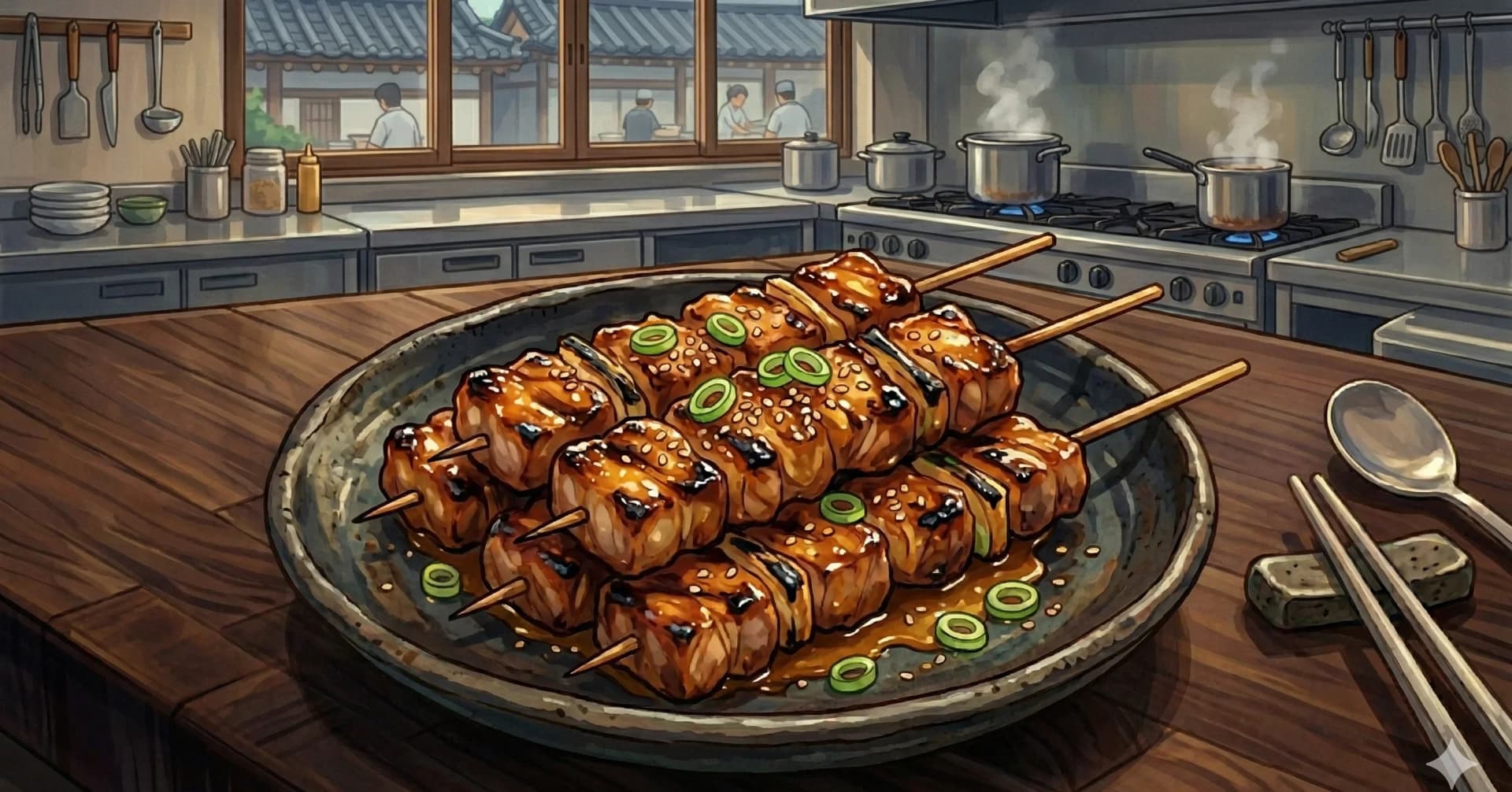
Doenjang-marinated pork skewers grilled until caramelized, one of the oldest Korean barbecue dishes and the ancestor of bulgogi
Maekjeok may be the oldest Korean barbecue dish still eaten today. The name comes from the Maek tribe of the ancient Goguryeo kingdom, which ruled parts of Korea and Manchuria from 37 BC to 668 AD. "Maek" is the tribe, "jeok" is barbecued meat on skewers. Many food historians believe maekjeok is the direct ancestor of modern bulgogi, since both rely on pre-marinating meat before cooking, a technique that distinguishes Korean barbecue from other grilling traditions.
What makes maekjeok historically interesting is what is not in it. There is no gochugaru, no gochujang, no chili of any kind. Chili peppers did not arrive in Korea until the 16th or 17th century via Portuguese and Japanese trade routes. Maekjeok predates that arrival by more than a thousand years. The flavor comes entirely from doenjang, the fermented soybean paste that is one of the oldest seasonings in Korean cooking. Combined with rice syrup, mirim, sesame oil, garlic, ginger, and onion, the doenjang creates a marinade that is salty, funky, faintly sweet, and deeply savory.
The pork marinates for at least thirty minutes, though overnight produces deeper flavor. It grills quickly, about eight minutes total, developing a caramelized crust from the sugars in the rice syrup. The traditional accompaniment is garlic chives seasoned simply with sesame oil and salt, which provides a fresh, pungent contrast to the rich, salty pork.
At a Glance
Yield
4 servings
Prep
15 minutes
Cook
8 minutes
Total
53 minutes
Difficulty
Easy
Ingredients
Pork Ingredients
- 1 lbpork shoulder, sliced very thin
Marinade Ingredients
- 2 tbspdoenjang
- 2 tbsprice syrup or corn syrup or honey
- 1 tbspmirim (rice wine)
- 2 tsptoasted sesame oil
- 3/4 cupsonion, minced
- 4garlic cloves, minced
- 1 tspfresh ginger, minced
- 1/2 tspground black pepper
To Serve
- 4 ozgarlic chives, cut into 3-inch pieces
- 1 tspsesame oil, for chives
- 1/2 tspsalt, for chives
Method
- 1
Mix marinade: doenjang, rice syrup, mirim, sesame oil, onion, garlic, ginger, black pepper.
- 2
Add pork, coat thoroughly. Refrigerate at least 30 min (overnight for deeper flavor).
- 3
Toss garlic chives with sesame oil and salt. Set aside.
- 4
Grill or pan-fry pork on medium heat, 2-3 min per side until caramelized and cooked through with no pink.
- 5
Serve hot pork over seasoned garlic chives. Garnish with sesame seeds.
Key Ingredient Benefits
Doenjang (fermented soybean paste): The umami foundation of the marinade. Made by fermenting soybeans with salt for months, doenjang contains a complex mix of free amino acids, peptides, and lactic acid that produce a deeply savory, slightly funky flavor. The proteolytic enzymes from doenjang's Aspergillus and Bacillus cultures act as a natural meat tenderizer, breaking down proteins on the surface of the pork as it marinates.
Pork shoulder: The classic cut for Korean barbecue. The intramuscular fat marbling melts during grilling, basting the meat from within and producing the caramelized, slightly crispy edges that define great jeok.
Garlic chives (buchu): Garlic chives are flat, broad-leafed members of the allium family with a distinctly garlicky aroma. They are added to the marinade and the finishing oil for fresh allium fragrance that does not overpower like raw garlic would. Garlic chives have been part of Korean cooking for at least 1,500 years and appear in many of the oldest Korean barbecue dishes.
Rice syrup (jocheong): A traditional Korean sweetener made by saccharifying cooked grains with malt. Used in the marinade for its glossy caramelization and gentler sweetness than refined sugar. Rice syrup also helps produce a lacquered, almost burnished finish on the grilled pork.
Why This Works
Doenjang is the secret weapon of this marinade. The fermented paste does three jobs at once: it seasons the pork with deep umami, the enzymes pre-tenderize the surface proteins, and the residual sugars caramelize during grilling to create the dish's signature blackened-and-bronzed crust. A simple soy-based marinade cannot do all of these things.
The combination of doenjang and rice syrup is what gives maekjeok its distinct character. Soy-sugar marinades produce a uniform sweet-savory glaze; doenjang marinades produce something more complex, almost cheese-like in their savoriness, with a slight pleasant bitterness from the fermentation. The rice syrup tames the doenjang's sharper edges and helps the marinade caramelize evenly.
Letting the pork marinate for at least a few hours, ideally overnight, gives the doenjang's enzymes time to penetrate deeply. Pork that is grilled immediately after marinating still tastes good but lacks the silky, tender bite of properly marinated meat.
High, direct heat is essential. Maekjeok is meant to char and caramelize, not poach in marinade. A hot grill or a heavy cast iron pan over high heat are both correct; an oven is a last resort. The marinade will smoke and stick to the cooking surface — this is part of what makes the dish, not a sign of doing something wrong.
Substitutions & Variations
Pork shoulder: Pork belly or pork loin both work; belly will be richer, loin leaner. Boneless beef short ribs (galbi style) make a closely related but different dish. Chicken thighs work well for a milder version.
Doenjang: Japanese miso (white or red) is the closest substitute and works fine, though the flavor is sweeter and less funky than true doenjang. Use 80% as much by volume since miso is generally saltier. Chinese fermented bean paste (douban) is too spicy and too aggressive.
Rice syrup: Honey is the best swap and very close in behavior. Light corn syrup works for the glaze but lacks the floral notes. Brown sugar dissolved in a little water is a passable substitute.
Garlic chives (buchu): Regular chives plus extra minced garlic approximate the flavor. The thicker green parts of scallions can fill in for texture but lack the garlicky aroma.
Mirin: Dry sake plus a pinch of sugar, or Chinese Shaoxing wine, both work. In a pinch, dry sherry or white wine.
Serving Suggestions
Maekjeok is best served immediately, off the grill, with the meat still hot and the edges crackling. Serve it as part of a Korean barbecue spread with steamed short-grain rice, kimchi, sigeumchi namul (seasoned spinach), and kongnamul muchim (seasoned soybean sprouts).
The traditional way to eat is ssam-style: tear off a piece of pork, place it on a leaf of red leaf lettuce or perilla, top with a bit of rice, a slice of raw garlic, a smear of ssamjang, and a piece of kimchi, then wrap and eat in one bite. The combination of hot pork, cool greens, and pungent dipping paste is the soul of Korean grilling.
For a beverage, pair with chilled soju, makgeolli (cloudy rice wine), or a crisp lager. For a non-alcoholic option, a barley tea (boricha) is the classic Korean choice.
Storage & Reheating
Refrigerator: Cooked pork keeps for up to 3 days in an airtight container. The doenjang marinade actually intensifies the flavor on day two.
Reheating: A hot cast iron pan or skillet for 1 to 2 minutes per side is the best method. Microwave will work but loses the crackling edges. To restore some crispness, finish briefly under a high broiler or in an air fryer at 200°C for 2 minutes.
Make-ahead: The marinade can be prepared and the pork marinated up to 24 hours in advance. Marinated raw pork can also be frozen in zip-top bags for up to 2 months; thaw overnight in the fridge before grilling. This is a great freezer meal for weeknight cooking.
Freezing cooked: Cooked maekjeok freezes for up to 1 month, but the texture suffers. Use the meat in fried rice or stews after thawing rather than serving as-is.
Cultural Notes
Maekjeok is one of the oldest documented Korean dishes still eaten today. The name itself is historical: Maek (맥) refers to the Maek tribe of the ancient Goguryeo kingdom (37 BC to 668 AD), which ruled parts of northern Korea and Manchuria, and jeok (적) means "skewered, grilled meat." References to maekjeok appear in Chinese historical texts dating to the 3rd century, where Goguryeo's grilling techniques were noted with admiration.
The dish is considered the direct ancestor of modern bulgogi, Korea's most famous grilled meat. Over centuries, the doenjang marinade evolved into a soy-sauce-and-pear marinade, the meat shifted from pork to beef, and the cooking method moved from skewers over open fires to thin slices on tabletop grills. But the underlying idea — pre-marinated meat cooked over high heat, served with rice and accompaniments — is the same.
The recent revival of maekjeok in Korean restaurants is part of a broader interest in pre-modern Korean cooking, sometimes called gungjung-eumsik (royal court cuisine) when referring to the elite tradition. Modern maekjeok recipes draw on historical sources and traditional Korean cooking texts to recreate flavors that disappeared from mainstream Korean cooking when soy sauce became the dominant marinade base in the 20th century.
Nutrition Facts
Calories: 376kcal (19%)|Total Carbohydrates: 15.5g (6%)|Protein: 22g (44%)|Total Fat: 24.7g (32%)|Saturated Fat: 8.1g (41%)|Cholesterol: 83mg (28%)|Sodium: 603mg (26%)|Dietary Fiber: 1.9g (7%)|Total Sugars: 6.6g
You Might Also Like
 Medium
Cross-Cultural · Korea
Napa Cabbage Kimchi (통배추김치)
8 hours plus 1-2 days fermentation
 Medium
Cross-Cultural · Korea
Braised Black Cod (Eundaegu-jorim / 은대구조림)
45 minutes
 Easy
EasyVietnamese Cuisine
Grilled Lemongrass Pork (Thịt Nướng)
2 hours 30 minutes
 Easy
EasyCross-Cultural · China
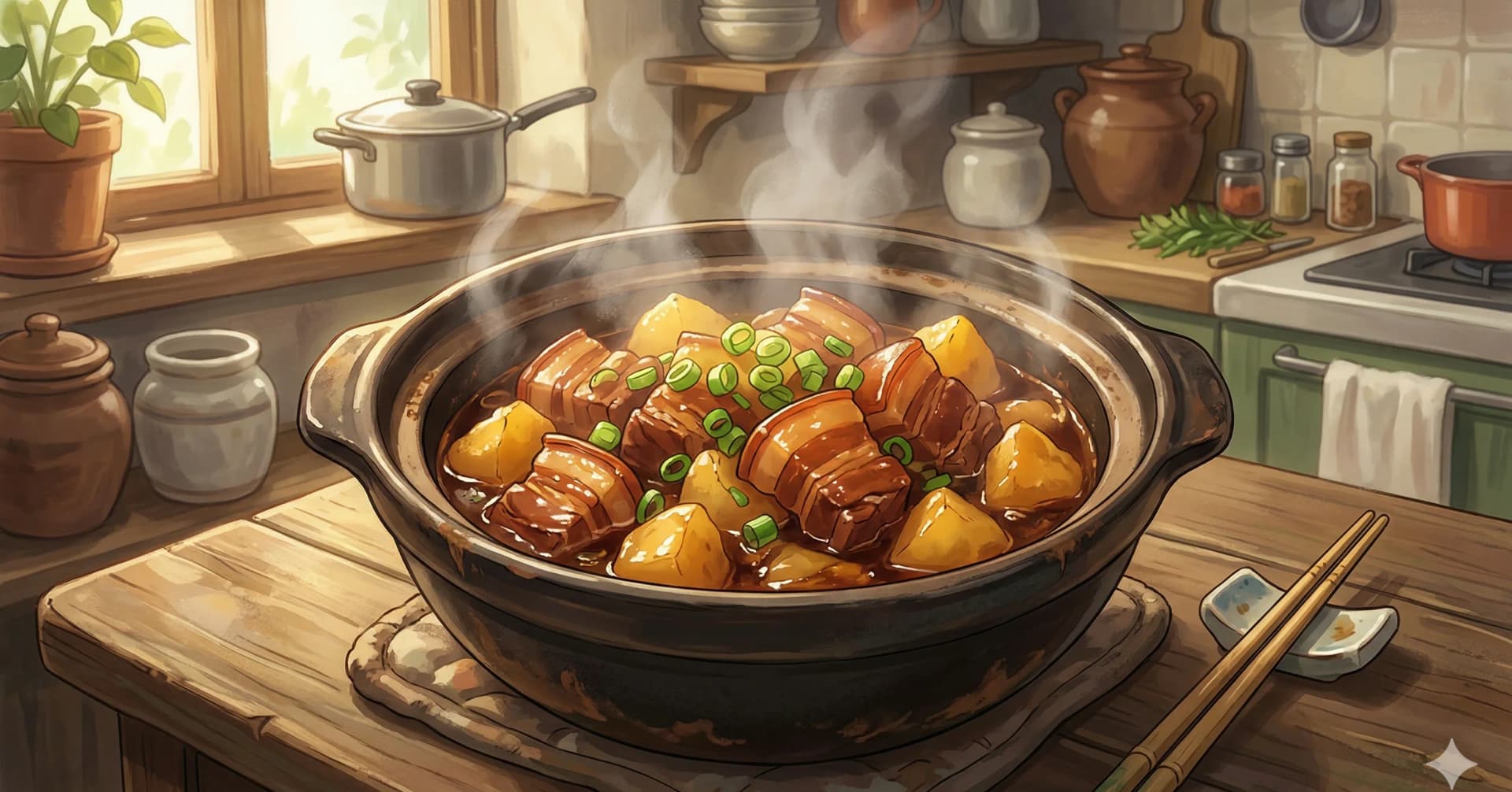
Braised Pork with Potatoes (薯仔炆豬肉)
40 minutes
Ratings & Comments
Ratings & Comments
Ratings
Share your thoughts on this recipe.
Sign in to rate and comment