Indian Cuisine
Cucumber Raita (Kheera Raita)
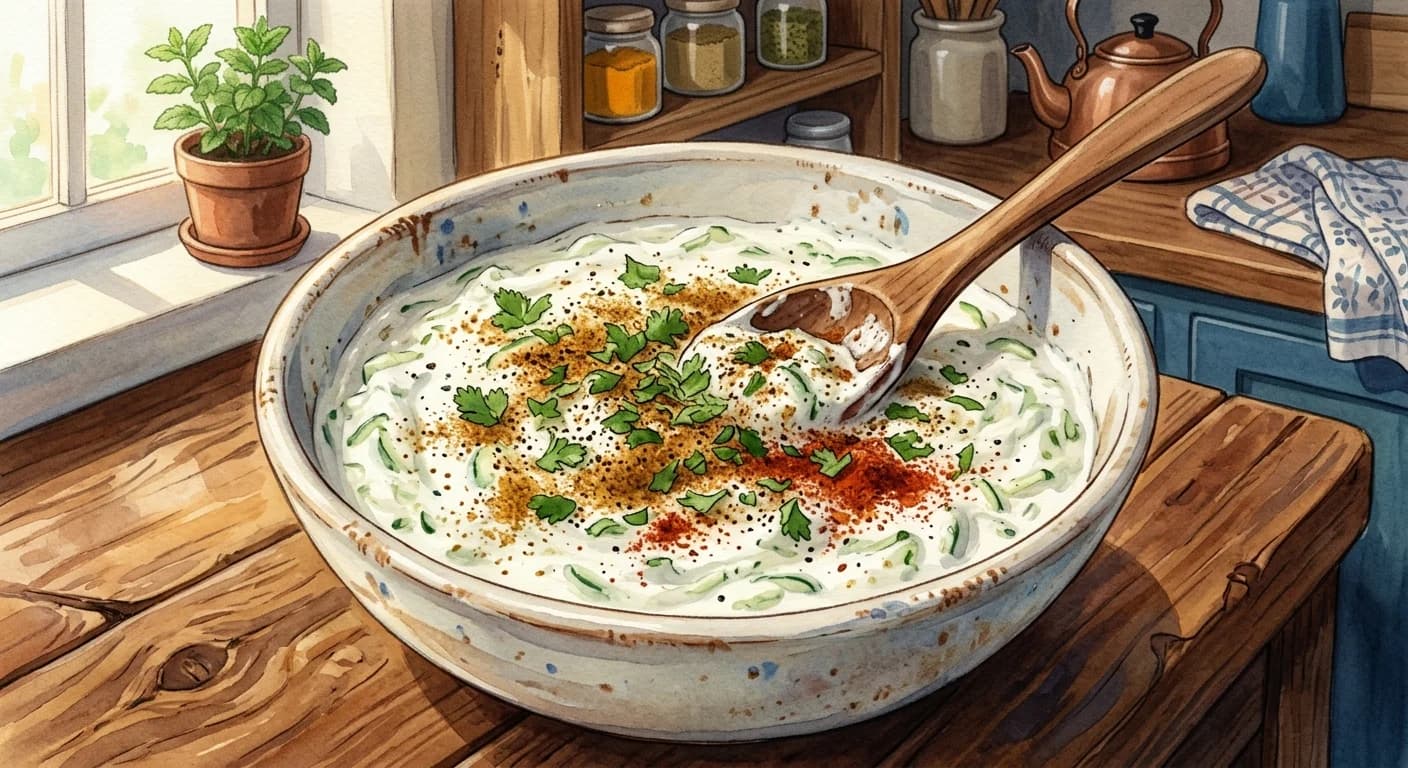
Cold whisked yogurt with grated cucumber, roasted cumin and black pepper, the cooling side for biryani and curry
A spoonful of raita after a mouthful of hot curry does what water can't. The yogurt is cold and a little sour, the cucumber is crisp and watery, and the roasted cumin on top smells toasty and faintly smoky. The burn fades, and you are ready for the next bite.
Raita is on the table at many North Indian meals, next to biryani, pulao, parathas and almost any curry with heat. There are dozens of versions, made with whatever is around: tiny fried chickpea flour pearls called boondi, chopped onion and tomato, a fistful of ground mint, or cooked vegetables. Cucumber, kheera in Hindi, is one of the most common and goes with nearly everything, which is why it is the main recipe here. The others are under Substitutions.
The method takes ten minutes and has two details that matter. Grate the cucumber and squeeze it gently before it goes in, or it keeps leaking water and the raita turns thin and soupy. And toast the cumin seeds yourself and grind them fresh. Pre-ground cumin tastes dusty next to the warm, nutty smell of seeds that came out of the pan a minute ago.
Raita should be looser than a dip, closer to a thick sauce that slides off a spoon. Use regular whole-milk yogurt, not Greek, or thin Greek yogurt with a little cold water. No garlic, no garam masala. The curry already has plenty going on, and the raita's job is to be the cool, plain thing beside it.
Inspired by Swasthi's Recipes and Ministry of Curry.
At a Glance
Yield
About 2½ cups (6 servings)
Prep
10 minutes
Cook
2 minutes
Total
12 minutes
Difficulty
Easy
Ingredients
Raita Ingredients
To Finish
- 1/2 tsproasted ground cumin, from 1 tsp cumin seeds, toasted and ground
- 1/4 tspground black pepper
- 1/4 tspKashmiri chili powder, for sprinkling (optional)
- 2 tbspchopped cilantro
Method
- 1
Toast the cumin. Put 1 teaspoon of cumin seeds in a small dry skillet over medium-low heat and shake the pan for 1 to 2 minutes, until the seeds turn a shade darker and smell nutty. Tip them onto a plate to cool, then grind them in a mortar or spice grinder. You need 1/2 teaspoon; keep the rest in a small jar for next time.
- 2
Grate the cucumber on the large holes of a box grater. Peel it first if the skin is waxy or tastes bitter. Toss the gratings with a pinch of the salt and leave them for 5 minutes, then squeeze them gently in your hands over the sink. Leave a little moisture in. Squeezing them bone dry makes the raita stiff.
- 3
Whisk the yogurt in a bowl for about 30 seconds, until it is smooth and creamy with no lumps. Raita should be spoonable and a little looser than a dip. If your yogurt is very thick, whisk in 2 to 4 tablespoons of cold water.
- 4
Fold in the cucumber, the rest of the salt, and the green chili and mint, if using. Taste. It should taste fresh and mildly salty, with just enough tang to cut through a rich curry.
- 5
Just before serving, scatter the roasted cumin, black pepper, Kashmiri chili powder, if using, and cilantro over the top. Serve it cold. If you make it ahead, keep the cucumber and yogurt separate in the fridge and combine them right before the meal so the raita doesn't go watery.
Key Ingredient Benefits
Yogurt and spicy food: There is research behind the cooling. A 2019 study in Physiology & Behavior tested common drinks after a spicy, capsaicin-laced tomato juice and found that whole milk, skim milk and, oddly, cherry Kool-Aid cut the burn the most. Skim worked about as well as whole, which the authors took to mean protein may matter more than fat. Yogurt wasn't part of the test, but it is made from milk, and cooks have put it next to hot curries for a very long time.
Live cultures: Yogurt can contain live microorganisms. According to the National Center for Complementary and Integrative Health, much remains to be learned about whether probiotics help with most health conditions, and in most cases researchers still don't know which ones are helpful. Yogurt labeled "live and active cultures" is the one to buy if that matters to you.
Cucumber: Mostly water, with a little vitamin K. In Ayurveda, cucumber is classified as a cooling food, and it is often paired with yogurt in summer.
Cumin: In Ayurveda, cumin is one of the most common digestive spices, and roasted cumin is the standard finish for raita and many yogurt dishes.
Sodium: About 220 mg per serving, most of it from the added salt.
Why This Works
Cucumber is about 95 percent water, and grating breaks open its cells. Salt pulls that water out within a few minutes, so a gentle squeeze removes most of it before the cucumber meets the yogurt. Skip that step and the water keeps seeping out at the table.
Whisking yogurt breaks up its curd into a smooth, pourable sauce. That texture coats rice and mixes into a curry on the plate, which is how raita is usually eaten.
Cumin seeds toasted in a dry pan brown slightly and release aroma compounds that raw ground cumin doesn't have. Scattering the cumin and pepper on top, not stirring them in, means each spoonful gets a hit of them against the cool yogurt.
The flavors are kept deliberately simple. Raita is a contrast to the main dish, so it skips the garlic and warm spice blends that the curry already has.
Substitutions & Variations
Boondi raita: Soak 1 cup of boondi, the tiny fried chickpea flour pearls sold in Indian groceries, in warm water for 2 to 3 minutes, then squeeze it gently. Use it in place of the cucumber and add it just before serving so it stays slightly chewy. Finish with the same cumin, chili and cilantro. It is a favorite with biryani and festive meals.
Onion-tomato raita: Finely chop 1 small red onion and 1 seeded tomato and stir them in with, or in place of, the cucumber. The onion gives it bite, and it is good with rich rice dishes.
Mint raita (pudina raita): Blend 1/2 cup of mint leaves, 1/4 cup of cilantro and 1 green chili with 2 tablespoons of the yogurt into a smooth green paste, then whisk it into the rest. It is sharper and greener, and many people pair it with biryani.
Chopped cucumber: Cut the cucumber into 1/4-inch dice instead of grating it. Diced cucumber releases less water, so you can skip the salting and squeezing, and the raita has more crunch.
Greek yogurt: Use 1 cup of Greek yogurt plus about 1/2 cup of cold water, whisked until smooth.
Dairy-free: Plain unsweetened coconut or oat yogurt works, though it tastes noticeably different from dairy yogurt.
Chaat masala: A pinch on top with the cumin adds a tangy, slightly sulfurous note from black salt.
Serving Suggestions
Serve it with biryani, which is the classic pairing, such as Hyderabadi biryani or kachi biryani, and with pulaos like yakhni pulao. It belongs next to anything spicy: rogan josh, chana masala or a hot chicken curry.
It is also good with stuffed parathas for breakfast, alongside grilled kebabs like seekh kebab, or as a dip for samosas and pakoras.
Storage & Reheating
Best fresh: Raita tastes best within a few hours of making it.
Fridge: Leftovers keep in a covered bowl for up to 1 day. The cucumber keeps releasing water, so stir it before serving and pour off any liquid on top.
Make ahead: Whisk the yogurt with the salt and keep the grated, squeezed cucumber and the herbs in separate containers in the fridge for up to a day. Combine and finish just before serving.
Freezing: Not recommended. Thawed yogurt separates and turns grainy.
Cultural Notes
According to Wikipedia, raita is a side dish and condiment of dahi, Indian yogurt, made with raw or cooked vegetables, fruit or pulses, and cucumber raita is one of the most common versions. The word first appeared in print in the 19th century and comes from Hindi, a blend of rai (black mustard seed) and tiktaka, meaning sharp or pungent.
Every region has its own yogurt sides. In South India, the related dishes are pachadi and kichadi, often tempered with mustard seeds and curry leaves. In Haryana, winter raita is made with bathua, the leafy green known in English as lamb's quarters. In western Nepal it is called raito.
What ties them together is their place on the plate. Raita isn't meant to be eaten alone. It sits next to the rice and curry, and each person mixes in as much as they want to cool things down.
Nutrition Facts
Calories: 44kcal (2%)|Total Carbohydrates: 4.5g (2%)|Protein: 2.4g (5%)|Total Fat: 2g (3%)|Saturated Fat: 1.3g (7%)|Cholesterol: 8mg (3%)|Sodium: 222mg (10%)|Dietary Fiber: 0.3g (1%)|Total Sugars: 3.5g
You Might Also Like



Ratings & Comments
Ratings & Comments
Ratings
Share your thoughts on this recipe.
Sign in to rate and comment