Korean Cuisine
Saenggang Cha (Ginger Tea)
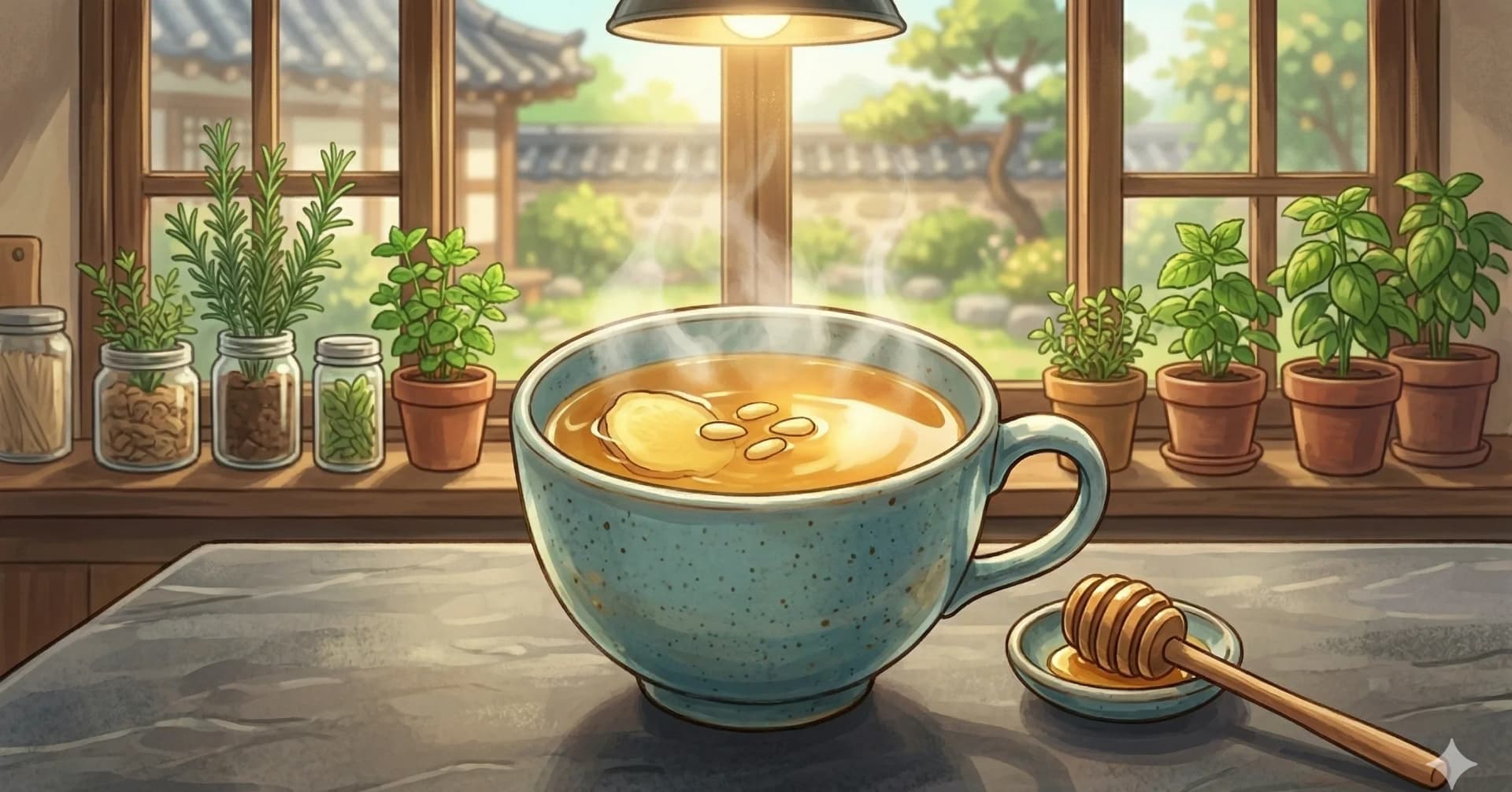
A bracing, warming tea of fresh ginger simmered with honey and garnished with pine nuts
Saenggang cha is the tea Koreans reach for when the first real cold arrives, when a scratchy throat signals the start of a seasonal illness, or simply when the body needs warming from the inside out. Fresh ginger, sliced thin and simmered in water, produces a tea that is sharp, clean, and instantly warming. The heat of the ginger spreads through the chest and settles in the belly, and for a few minutes after each cup, you feel genuinely, deeply warm.
In Korean traditional medicine, ginger is classified as a pungent, warming herb. It is believed to dispel cold, improve circulation, and support digestion. Modern research has largely corroborated some of these traditional uses, particularly ginger's effectiveness against nausea and its anti-inflammatory properties, making saenggang cha one of those rare cases where folk wisdom and clinical science agree.
The preparation is about as simple as tea-making gets. Fresh ginger, peeled and sliced or grated, goes into water and simmers for about 30 minutes. The longer it simmers, the more pungent and intense the tea becomes. A shorter simmer produces a lighter, more delicate drink. The ginger is strained out, and the tea is sweetened with honey (or sometimes brown sugar), which softens the sharp bite without masking it.
Garnish with a few floating pine nuts and, if you like, a thin slice of jujube. The pine nuts add a whisper of richness, and the jujube contributes a touch of natural sweetness and connects this tea to the broader Korean tradition of warming winter drinks. See daechu cha for the jujube tea counterpart.
At a Glance
Yield
4 cups
Prep
10 minutes
Cook
30 minutes
Total
40 minutes
Difficulty
Easy
Ingredients
Method
- 1
Prepare the ginger. Peel the fresh ginger using the edge of a spoon or a vegetable peeler. Slice it thinly, about 1/8 inch thick. For a stronger tea, grate the ginger instead of slicing.
- 2
Simmer. Combine the sliced ginger and water in a medium pot. Add the cinnamon stick and jujubes if using. Bring to a boil over medium-high heat, then reduce the heat to low. Cover and simmer for 30 minutes. The tea will turn a pale golden color and the aroma will be sharp and fragrant.
- 3
Strain. Pour the tea through a fine mesh strainer into another pot or pitcher. Discard the ginger slices (or save them for other uses).
- 4
Sweeten. Stir in honey or brown sugar to taste while the tea is still hot. Start with 3 tablespoons and adjust upward if needed. The sweetness should soften the ginger's bite but not overpower it.
- 5
Serve. Pour into small cups. Float 2 to 3 pine nuts on the surface of each cup and add a thin jujube slice if using. Serve warm.
Key Ingredient Benefits
Fresh ginger (saenggang): One of the most extensively studied culinary herbs. Its active compounds, gingerols and shogaols, have demonstrated anti-nausea effects in multiple clinical trials, including studies on pregnancy-related nausea, post-surgical nausea, and chemotherapy-induced nausea. Ginger also contains anti-inflammatory compounds that may be comparable to NSAIDs in some contexts, though it should not be treated as a substitute for prescribed medication. In Korean traditional medicine, ginger is considered essential for expelling cold from the body and improving sluggish circulation. Fresh ginger (saenggang) is distinguished from dried ginger (geongang) in Korean herbal practice; dried ginger is considered more warming and is used for deeper internal cold.
Honey: Contains trace amounts of enzymes, amino acids, and phenolic compounds that vary by floral source. Manuka and buckwheat honeys have been studied for their antioxidant and antimicrobial properties. In Korean herbal tradition, honey is classified as a harmonizing agent that helps other ingredients work together.
Pine nuts: Provide vitamin E, magnesium, and monounsaturated fats. Their mild flavor and richness complement the sharpness of ginger tea.
Why This Works
Simmering ginger in water for a sustained period extracts the gingerols, the primary bioactive compounds responsible for ginger's characteristic pungency and warming sensation. Gingerols are moderately heat-stable, so a 30-minute simmer concentrates their presence without destroying them. As ginger is heated, some gingerols convert to shogaols, which are even more pungent, explaining why a longer simmer produces a spicier tea.
Slicing the ginger thin increases the surface area exposed to the water, allowing for more efficient extraction. Grating produces an even stronger tea because it ruptures more cell walls and releases more juice directly into the liquid.
Honey is the traditional sweetener because it complements ginger without competing with it. Honey also has a long association with ginger in both Korean and Chinese herbal preparations, where the two are often combined for throat-soothing purposes.
Substitutions & Variations
Ginger intensity: For a milder tea suitable for children or those sensitive to pungency, reduce the ginger to 2 oz and simmer for only 15 to 20 minutes. For a very strong, medicinal-strength tea, use 6 oz of ginger and simmer for 45 minutes.
Sweetener: Brown sugar, Korean plum syrup (maesilcheong), or agave can replace honey. Each adds a slightly different flavor profile.
Ginger-jujube blend: Adding 10 to 15 dried jujubes to the pot creates a tea that combines the warmth of ginger with the calming sweetness of jujubes. This is a popular variation in Korean homes during cold and flu season.
Ginger syrup (saenggang-cheong): Thinly slice ginger and layer with equal weight of honey or sugar in a jar. After a few days, the ginger releases its juice and creates a concentrated syrup that can be spooned into hot water for instant tea. This keeps in the refrigerator for months.
Iced ginger tea: In summer, brew a concentrated batch and serve over ice with lemon. Refreshing and still warming from the inside.
Serving Suggestions
Saenggang cha is traditionally served on its own or alongside daechu cha for a warming two-tea evening ritual. It pairs well with Korean rice cakes, traditional sweets, or simply a bowl of hobakjuk. During cold and flu season, a cup of ginger tea before bed alongside a bowl of samgyetang or baeksuk is considered a restorative combination.
Storage & Reheating
Refrigerator: Store the strained tea in a sealed container for up to 1 week. The flavor remains strong.
Reheating: Warm gently on the stove or in the microwave. The ginger flavor holds up well to reheating.
Ginger syrup: The ginger-honey syrup (saenggang-cheong) keeps in the refrigerator for up to 3 months and provides instant ginger tea whenever needed.
Freezer: Freeze in ice cube trays or small containers for up to 2 months. Thaw and reheat for a quick cup.
Cultural Notes
Saenggang cha (생강차) belongs to the broader Korean tradition of cha (차, "tea") preparations that contain no actual Camellia sinensis tea leaves. The category also includes daechu cha (jujube), yujacha (yuja citron), omija cha (the five-flavor berry), ssanghwa cha (a multi-herb tonic), and many other infusions of grains, roots, fruits, and tree bark. These Korean teas sit at the intersection of cuisine and traditional Korean medicine (hanyak, 한약), and most have been documented in hanyak texts for hundreds of years before they ever appeared on a tearoom menu.
Ginger (saenggang, 생강) is one of the most foundational ingredients in Korean hanyak. Classical Korean medical thinking prescribes it for what is called cold in the body, a category that covers morning chills, circulation issues, sluggish digestion, and the early stages of colds and flu. Modern clinical research has confirmed some of these effects. Ginger's active compounds, including 6-gingerol and 6-shogaol, have measurable anti-inflammatory and anti-nausea properties. The warming sensation it produces in the mouth and throat is mediated by the TRPV1 receptor pathway, the same one activated by chili.
In daily Korean life, saenggang cha is the tea Korean grandmothers brew at the first sign of a sore throat or scratchy cough in a grandchild. It is also the tea most commonly poured on cold winter mornings. The traditional preparation, where the ginger gets simmered with honey or jocheong (조청, Korean rice syrup) and finished with pine nuts (jat, 잣), produces something more complex than a simple ginger infusion. The long simmer extracts the deeper, slightly sweet, vanilla-like notes of the ginger that a brief steeping never reaches.
Specialty Korean tearooms (jeon-tong-chajip, 전통차집) almost always have saenggang cha on the menu, and many sell it commercially in glass bottles for home use.
Nutrition Facts
Calories: 69kcal (3%)|Total Carbohydrates: 21.9g (8%)|Protein: 0.6g (1%)|Total Fat: 0.2g (0%)|Saturated Fat: 0.1g (1%)|Cholesterol: 0mg (0%)|Sodium: 5mg (0%)|Dietary Fiber: 0.6g (2%)|Total Sugars: 14.6g
You Might Also Like
Ratings & Comments
Ratings & Comments
Ratings
Share your thoughts on this recipe.
Sign in to rate and comment