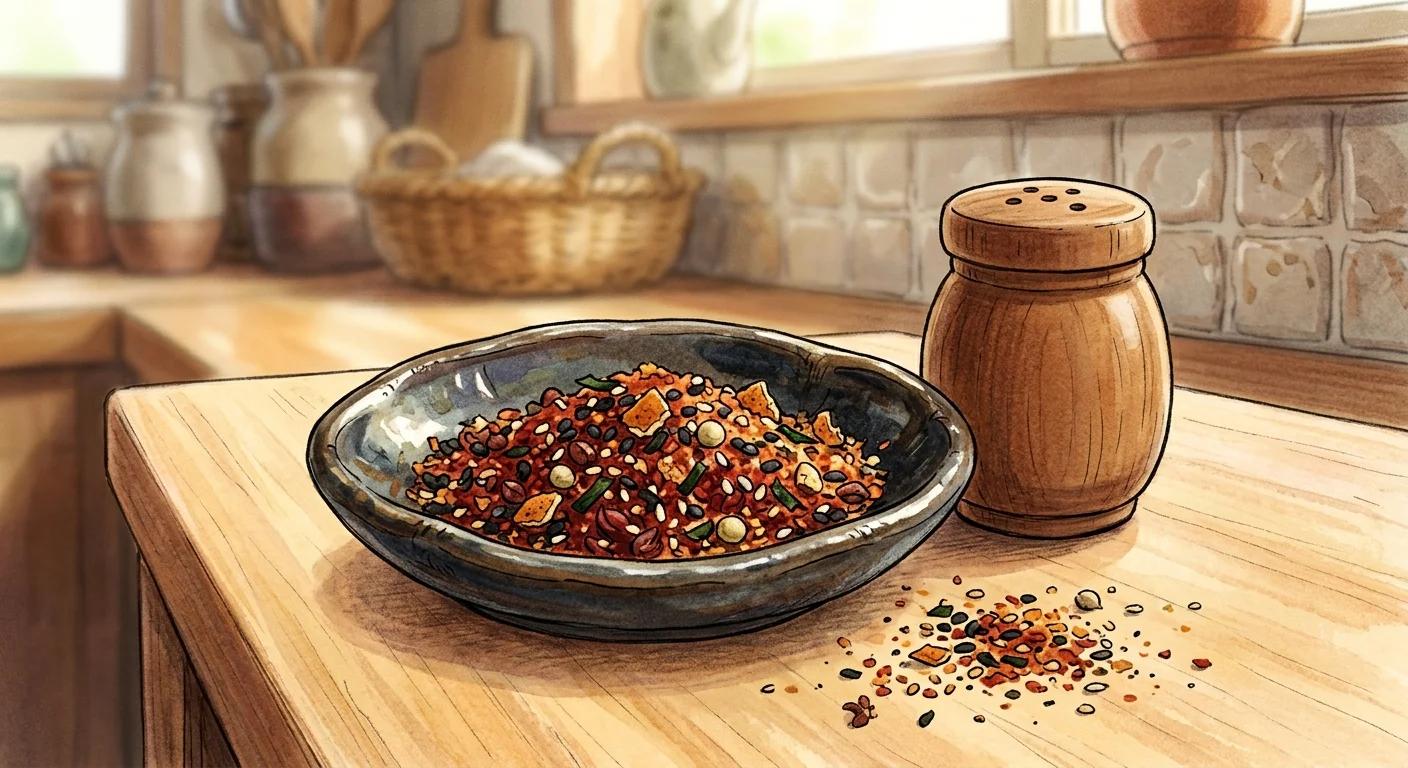
Shichimi Togarashi
Also known as: Shichimi, Seven-flavor chili pepper, Nanami togarashi, Yagenbori, 七味唐辛子
Shichimi togarashi (七味唐辛子) is Japan's seven-flavor chili blend. Coarse red chili makes up most of it, mixed with other seasonings such as sansho pepper, roasted orange peel, black and white sesame, hemp seed, ginger and nori. Each maker uses a slightly different mix.
It is a finishing spice. In Japan it sits in a small shaker on the table at noodle shops and rice-bowl counters, and you sprinkle it over your food just before eating. You get heat, a little citrus, a nutty crunch from the seeds and a light tingle from the sansho.
Key facts at a glance:
Flavor Profile
Origin
Japan
Modern Scientific Research
Most of shichimi's heat comes from capsaicin, the compound in chili that binds to the same nerve receptor that senses heat, which is why chili feels hot. Chili and capsaicin have been studied a great deal, and the results are mixed.
A 2022 umbrella review in Molecular Nutrition & Food Research pulled together 11 systematic reviews and meta-analyses. It found eating chili linked with lower mortality and cardiovascular disease in observational studies, but also with higher risk of some digestive cancers (esophageal, gastric and gallbladder), and it called the overall health effect unclear. The authors also concluded that eating spicy food is typically safe.
Shichimi is used by the pinch, so any of these effects matter far less here than in a diet heavy in fresh chili.
The tingle comes from sansho, a relative of Sichuan pepper. Its compound hydroxy-alpha-sanshool causes the buzzing, slightly numb feeling on the lips.
Cultural History
According to Wikipedia's article on shichimi, the name breaks down as shichi (seven), mi (flavor) and togarashi (red chili pepper). The blend dates back at least to the 17th century, when herb dealers in Edo, today's Tokyo, made and sold it.
It is sometimes called Yagenbori, after the place in Edo where it was first produced. The same article names three famous makers, each selling near a well-known temple:
- Yagenbori, near Sensō-ji in Tokyo
- Shichimiya, near Kiyomizu-dera in Kyoto
- Yawataya Isogorō, near Zenkō-ji in Nagano
Each shop guards its own mix, and Japanese cooks often have a favorite.
The word togarashi is written with characters that read roughly as "Chinese mustard," a reminder that chili peppers reached Japan from abroad. Its simpler cousin, ichimi togarashi (one-flavor chili), is just ground red chili.
Culinary Uses
Shichimi goes on at the end, over hot food, so the chili, citrus and sesame stay fragrant.
- Over noodle soups like udon, curry udon and soba
- On rice bowls such as gyudon, oyakodon and katsudon
- Into miso soup, nabe and the dipping sauces for shabu-shabu
- On yakitori, agedashi tofu and tamago kake gohan
Outside Japanese food it is good on fried eggs, popcorn, avocado toast, grilled corn and roasted vegetables.
Start with a light shake. The heat builds as you eat.
Preparation Methods
Shichimi is ready to use. Shake it straight from the jar onto the food.
Keep it airtight and away from light and heat. The orange peel and sesame lose their aroma first, within a few months of opening, while the chili lasts longer. Buy small amounts and use them up.
Don't cook it for long. A long simmer flattens the citrus and the sansho, leaving mostly heat, so add it at the table or in the last moment of cooking.
Comments
Share your thoughts on this ingredient.
Sign in to comment0 Comments