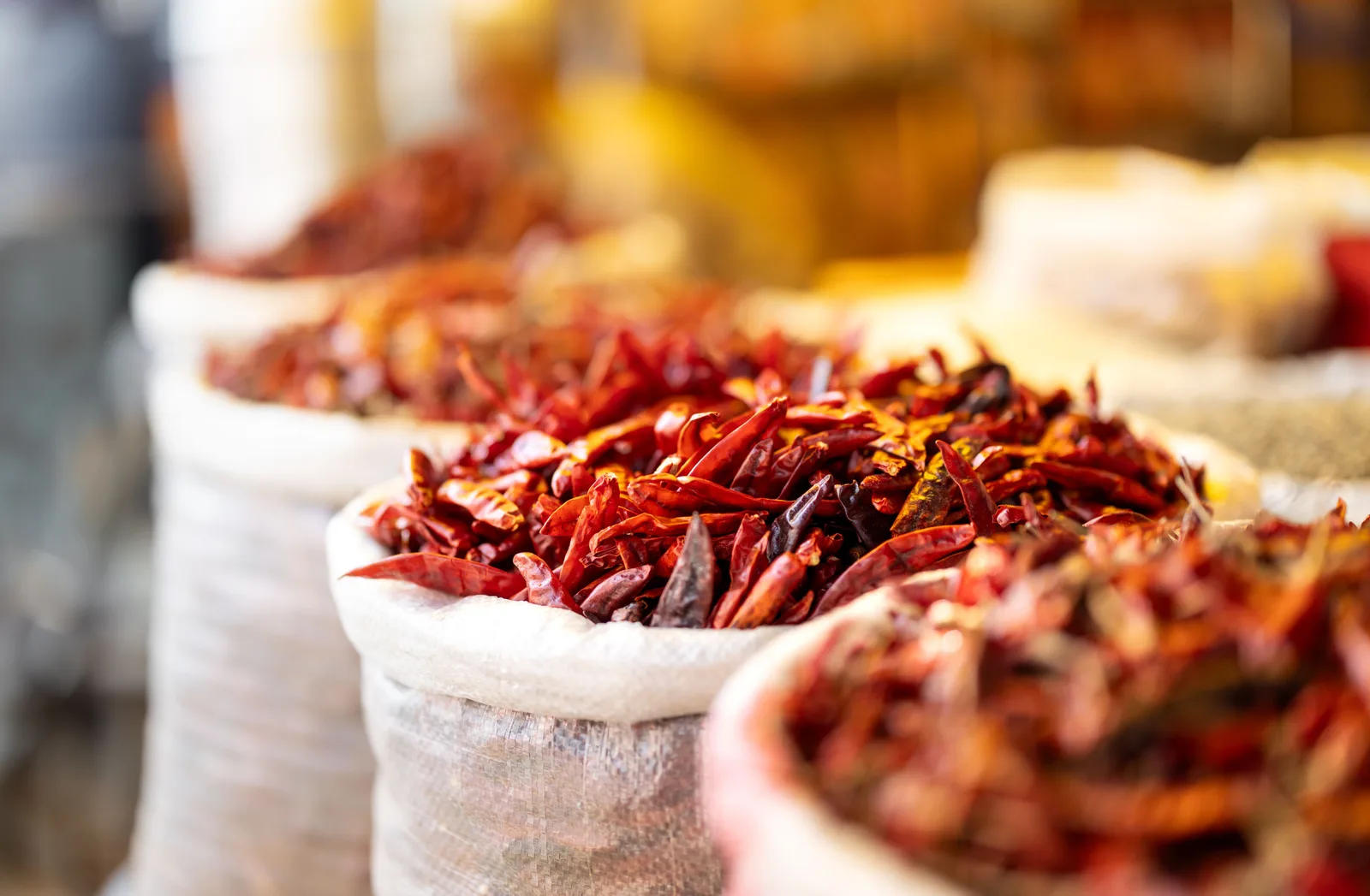
Dried Chillies: Kashmiri, Gochugaru, Sichuan, Bird’s Eye
A recipe says dried red chillies and you use whatever is in the jar. The dish comes out either bland and oddly bitter or unexpectedly brutal, and neither result is a cooking mistake. Dried chillies vary more than almost any other ingredient in an Asian pantry, and not mainly in heat.
Heat is the least interesting axis. What actually separates them is colour, fruitiness, skin thickness and whether they were dried in the sun or over smoke.
Kashmiri, for colour without heat
Kashmiri chillies are the reason Indian restaurant food is red. They are deep crimson, wrinkled, long, and very mild, and their job in a dish is almost entirely pigment.
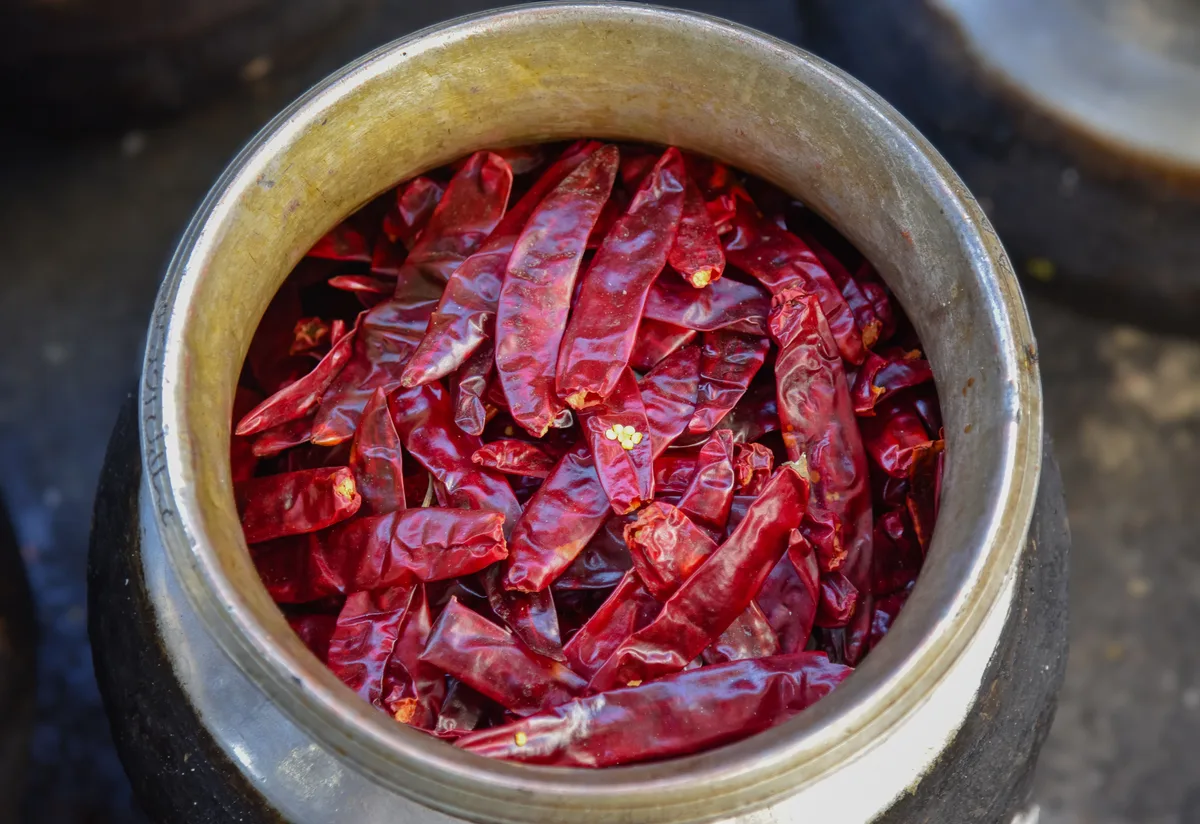
This is what makes rogan josh red without making it hot, and it is why substituting cayenne produces a dish that is both the wrong colour and painfully spicy. If a recipe calls for a tablespoon of Kashmiri chilli powder, it means it, and using a hot chilli powder at that quantity will ruin the dish.
Soak whole ones and blend them into a paste and you get a red that no other chilli produces.
Gochugaru, coarse and fruity
Gochugaru is Korean, sun-dried, deseeded and ground coarse, and it is mild with a distinctly fruity, almost sweet character.
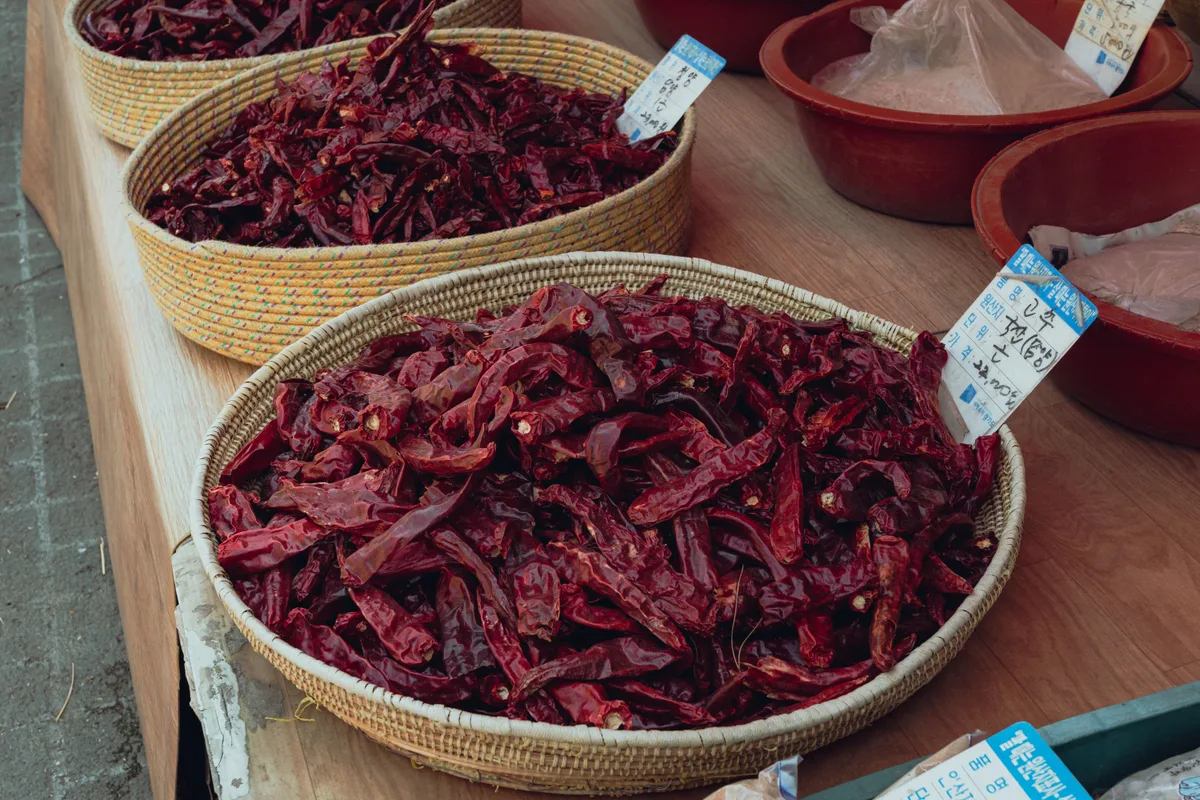
The grind matters. Coarse flakes are for kimchi and for stews where you want visible flecks. Fine gochugaru is for pastes and sauces. It is not interchangeable with crushed red pepper flakes from a pizzeria shaker, which are hotter, seedier and have no fruit at all.
Gochugaru fades badly. Keep it in the freezer, because faded gochugaru turns kimchi a dull orange instead of the deep red it should be.
Sichuan chillies, and the thing that is not a chilli
Sichuan chilli flakes come from varieties like erjingtiao, which are prized for aroma rather than heat. Whole dried ones go into hot oil at the start of a stir fry to perfume it, and they are usually pushed to the side of the plate rather than eaten.
The heat in Sichuan cooking is genuinely moderate. What makes it feel extreme is the pairing with Sichuan peppercorn, which is not a chilli and not a pepper. It is a citrus husk, it contains a compound that makes lips and tongue buzz and go slightly numb, and that numbing combined with chilli heat is ma la.
Buy Sichuan peppercorn recently and in small amounts. It loses its tingle within months and old stock is just woody.
Bird's eye, the one that is actually hot
Small, thin-skinned, straight and hot, used across Thailand, Vietnam and Indonesia. These are the ones that will hurt you, and they are used in small numbers rather than by the spoonful.
Dried bird's eye chillies are common in Thai curry pastes and in nam prik. Because the skin is thin and the flesh minimal, they contribute heat and very little body, which is the opposite of the Kashmiri and Sichuan ones.
Thin-skinned chillies also burn fast in oil. Add them later than you would a thick-skinned chilli, or they go acrid.
Chinese facing heaven chillies
Short, stubby, pointing upward on the plant, and the standard chilli of Sichuan and Hunan cooking alongside erjingtiao. Moderate heat, thick flesh and a lot of aroma when fried.
These are the whole chillies you see in a pile in a plate of chongqing chicken, where they vastly outnumber the meat and are not meant to be eaten. They are there to flavour the oil and to perfume everything cooked in it.
The rules that apply to all of them
Toast before grinding. Thirty seconds in a dry pan until they smell nutty transforms the flavour. Go past that and they turn bitter, and bitterness from burnt chilli cannot be corrected.
Deseed for less heat, not for less flavour. Most of the capsaicin sits in the pith and the seeds. Removing them lets you use more chilli for the same heat, which is exactly what you want when the chilli is there for colour and aroma.
Soak whole chillies for pastes. Twenty minutes in hot water makes them blendable and keeps the paste smooth.
Store cold and dark. Dried chillies lose colour and aroma to light and heat faster than they lose potency, so an old jar is dull rather than mild.
Frequently asked questions
What can I substitute for Kashmiri chilli?
Sweet paprika for colour with a small amount of cayenne for heat is the standard workaround, roughly four parts paprika to one part cayenne. It gets the colour close and misses the slight fruitiness.
Is gochugaru the same as chilli flakes?
No. Gochugaru is milder, fruitier, deseeded and coarser. Ordinary crushed red pepper is hotter and has a flat, generic heat. Kimchi made with the wrong one tastes and looks wrong.
How hot is Sichuan food really?
Moderate on the chilli axis. The intensity comes from combining that heat with the numbing of Sichuan peppercorn and a lot of oil, which reads as far hotter than the chilli alone would.
How long do dried chillies keep?
A year for reasonable flavour, longer for heat. Colour and aroma go first. Whole keeps much better than ground, so buy whole and grind as needed if you use them often.
What to cook
Rogan josh is the clearest lesson in chilli as a colouring agent. Mapo tofu shows chilli and Sichuan peppercorn working as a pair rather than as heat alone. Chongqing spicy chicken is the extreme version of chillies used for aroma rather than consumption. And for where each of these sits on its own shelf, see the Chinese pantry and the Korean one.
Comments
Share your thoughts on this post.
Sign in to comment0 Comments