The Eight Regional Cuisines of China, on a Plate
Chinese food outside China is mostly one cuisine wearing a coat. Cantonese cooking travelled, because Guangdong is where the emigration happened, and for a century that meant sweet and sour pork and chow mein stood in for a country the size of Europe.
Inside China the framework everyone uses is the eight great cuisines, ba da cai xi. It is a twentieth century formalisation of much older regional identities, it leaves things out, and every Chinese person will tell you their own province was robbed. It is still the most useful map there is.
Shandong, in the north
Lu cuisine is the oldest of the eight and the one with the least recognition abroad. Northern, wheat-eating, heavy on scallion and garlic, and built on the techniques that spread through northern restaurant kitchens and into the imperial court.
Its signatures are clear soups made from painstaking stock, braised seafood from the Shandong coast, and the roasting and knife work that Peking duck depends on. Beijing's most famous dish is built on Shandong technique, which is the clearest measure of how far this cuisine's influence reaches without carrying its own name.
Sichuan, the one everyone can name
Chuan cuisine is the most exported of the inland eight and the most misunderstood. Outsiders reduce it to heat, when the organising idea is complexity: twenty three officially recognised flavour combinations, of which only a handful involve chilli at all.
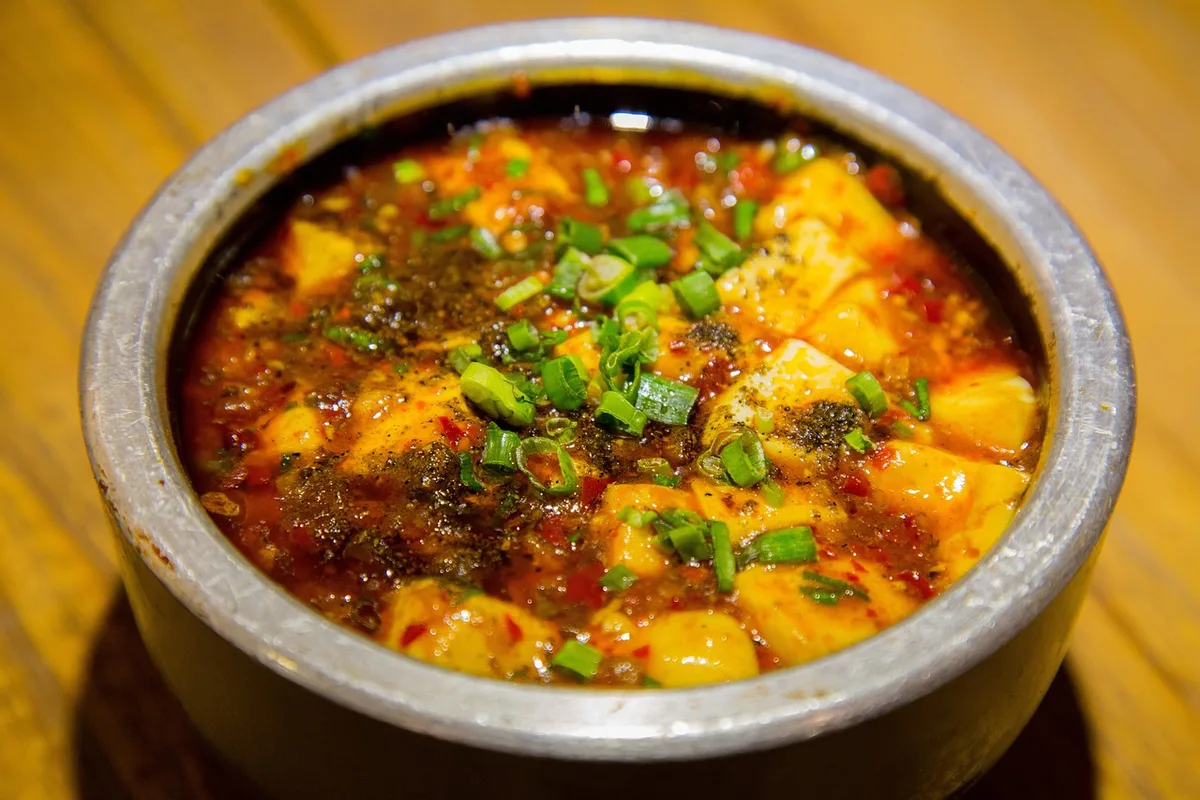
The signature is ma la, the numbing tingle of Sichuan peppercorn against chilli heat, and you can taste the whole argument in mapo tofu. Then there is gong bao chicken, which is sweet and sour before it is spicy, and twice cooked pork, which is neither.
Guangdong, the one that travelled
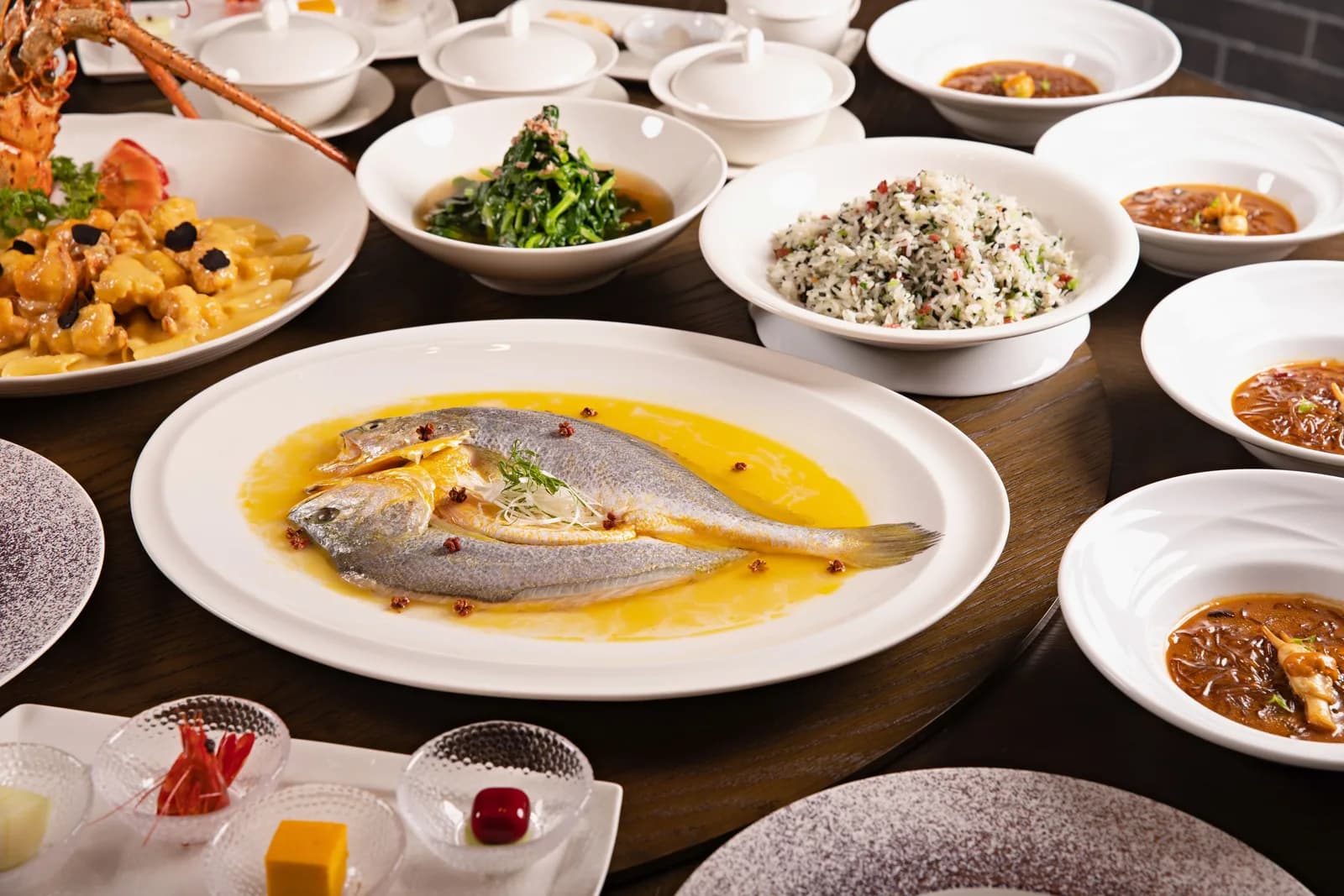
Yue cuisine prizes freshness above everything. Short cooking, restrained seasoning, and a near obsession with the natural taste of the ingredient, which is why steaming is the defining technique and why a whole steamed fish with ginger and scallion is the test of a Cantonese kitchen.
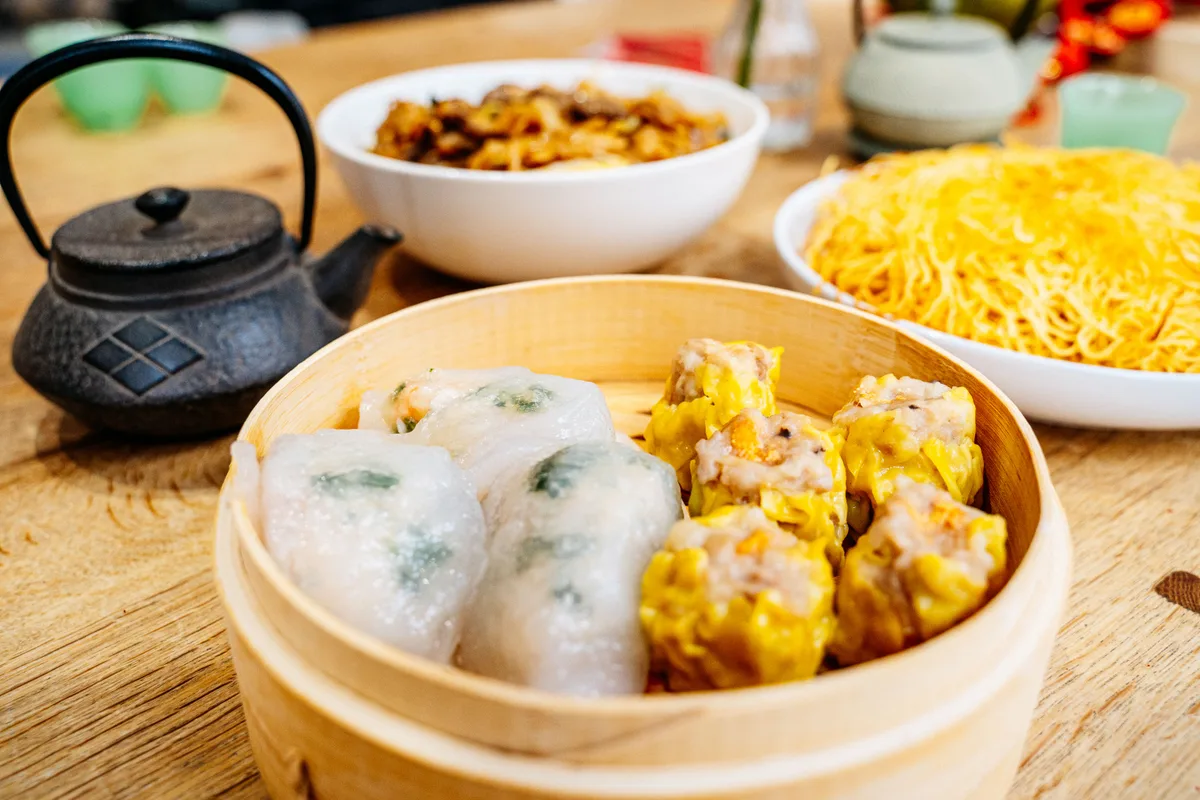
It is also the home of dim sum, roast meats and slow soups. Har gow, char siu and siu yuk are all Cantonese, and so is the habit of simmering a soup for four hours and drinking it before the meal rather than after.
Jiangsu, the elegant one
Su cuisine comes from the wealthy Yangtze delta, and it shows. Precise knife work, gentle braising, a controlled sweetness, and presentation that matters more here than anywhere else on the list.
Lion's head meatballs, enormous and soft enough to cut with a spoon, are the emblem. Yangzhou fried rice is Jiangsu too, and the real version has nothing to do with the takeaway one.
Zhejiang, fresh and light
Zhe cuisine sits just south, around Hangzhou and Ningbo, and shares Jiangsu's refinement with more emphasis on freshwater fish, bamboo and a clean finish. Dishes tend to be lighter and less sweet than their Jiangsu neighbours.
Beggar's chicken, wrapped in lotus leaf and clay and baked whole, is the Hangzhou dish everyone knows the story of.
Fujian, the broth people
Min cuisine is the one to know about if you like soup. Coastal, seafood heavy, and defined by broths and by the use of red rice wine lees, which give dishes a distinctive pink tint and a gentle winey sweetness.
Red wine lees chicken soup is the clearest example of that technique. Fujian also gave the world a great deal of Southeast Asian Chinese food, since this is where much of the emigration to Malaysia, Singapore and the Philippines came from.
Hunan, hotter than Sichuan
Xiang cuisine is spicier than Sichuan in raw terms, and people are often surprised by that. The difference is the kind of heat. Hunan uses fresh and pickled chillies rather than dried ones, with sourness and smoke rather than numbing, so the burn is sharper and more direct.
It is also heavy on cured and smoked meats, a consequence of a humid climate and a long tradition of preserving.
Anhui, the one nobody exports
Hui cuisine is the least known of the eight, inland and mountainous, built around wild ingredients: bamboo shoots, mountain herbs, wild mushrooms and freshwater turtle. Techniques run to slow braising and stewing rather than quick frying.
It barely exists outside China, partly because its ingredients do not travel and partly because Anhui did not send people abroad the way Guangdong and Fujian did.
What the eight leave out
A great deal. Xinjiang's lamb and cumin cooking, which is closer to Central Asia than to anything on this list, though cumin lamb has made it onto menus everywhere. Yunnan, with its mushrooms, cheese and Southeast Asian border influence. Shanxi's vinegar and its hand cut noodles, as in dao xiao mian. Northeastern cooking, Hakka cooking, and the Muslim Chinese tradition that produced Lanzhou beef noodle soup.
Treat the eight as a starting frame rather than a complete inventory.
Frequently asked questions
Which Chinese cuisine is the spiciest?
Hunan, by most measures, though Sichuan gets the reputation. Hunan heat is sharper and comes from fresh and pickled chillies; Sichuan heat is complicated by the numbing effect of Sichuan peppercorn.
What kind of Chinese food do most Western restaurants serve?
Historically Cantonese, adapted heavily. More recently Sichuan and northern cooking have spread in Western cities, which is why dishes like mapo tofu and hand pulled noodles now appear on menus that would have had none of it twenty years ago.
Are there really only eight?
No. The eight are a convention, not a census. Some lists use four, some ten, and major regional traditions like Xinjiang and Yunnan sit entirely outside the scheme.
What to cook
To taste the range in three dishes, cook mapo tofu for Sichuan, steamed fish with ginger and scallion for Guangdong, and lion's head meatballs for Jiangsu. They use the same pantry and taste like three different countries. Speaking of which, we set out what that pantry needs.
Comments
Share your thoughts on this post.
Sign in to comment0 Comments