Japanese Home Cooking Is Not Restaurant Cooking
Japanese food has a reputation abroad for being austere, precise and slightly intimidating. Sushi counters where the chef trained for a decade. Kaiseki with twelve courses and a specific bowl for each. Ramen shops with a queue and a single item on the menu.
None of that is what Japanese people eat on a Tuesday. The gap between restaurant Japanese food and home Japanese food is wider than in almost any other cuisine, and the home version is considerably easier than its reputation.
The format is fixed and it is not a main course
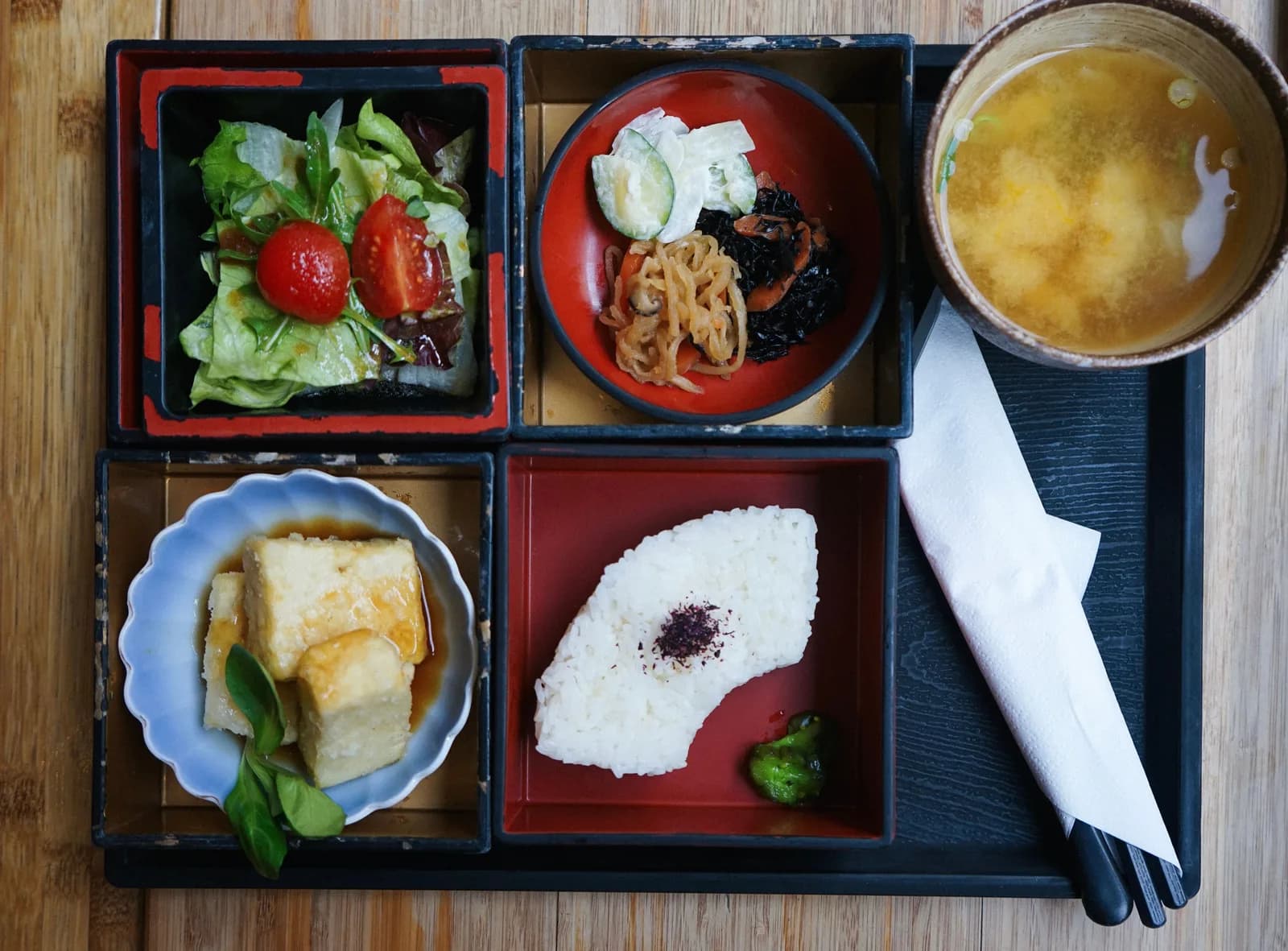
A Japanese home meal is ichiju sansai: one soup, three dishes, plus rice. That is the template, and it has been the template for a very long time.
Rice is the centre, not an accompaniment. The soup is usually miso soup and takes ten minutes. The three dishes are one substantial one, often fish or a simmered dish, and two small ones, which are frequently vegetables made two or three days earlier and kept in the fridge.
Nothing on that table is plated in the Western sense. There is no main course, no sauce painted across a plate, and no arrangement. Everything goes in its own small bowl, and everyone eats from all of them in whatever order they like.
The techniques a home cook actually uses
Restaurant Japanese cooking is about knife work, fresh fish and precision. Home cooking is mostly about simmering.
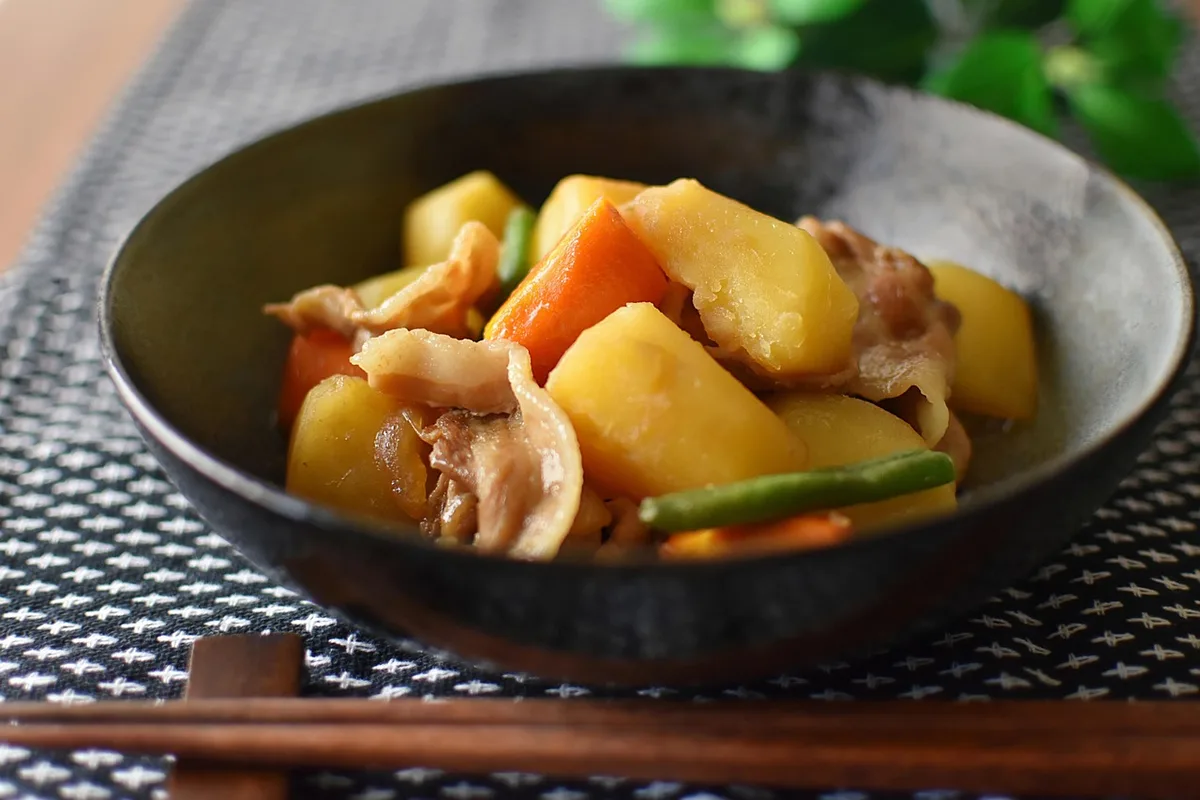
Nimono, simmered dishes, are the backbone. Something goes into dashi with soy, mirin and sake, and it cooks gently until it has taken up the liquid. Nikujaga, beef and potatoes, is the archetype and it is closer to a stew than to anything you would find in a Japanese restaurant abroad.
Aemono and sunomono are the small dishes: vegetables blanched or salted and then dressed, with sesame, vinegar or miso. Hijiki salad and kinpira gobo are both in this family, both are made in batches, and both keep for days.
Grilling with salt is the third, and it is the least complicated thing in the repertoire. Saba shioyaki, salted grilled mackerel, is salt, fish and a grill. That is the entire recipe, and it is a completely ordinary weeknight dinner.
The dishes nobody outside Japan associates with Japan
Ask someone abroad to name Japanese food and you get sushi, ramen and tempura. All three are restaurant food in Japan, and the first and third are rarely made at home.
What is actually eaten constantly is closer to this.
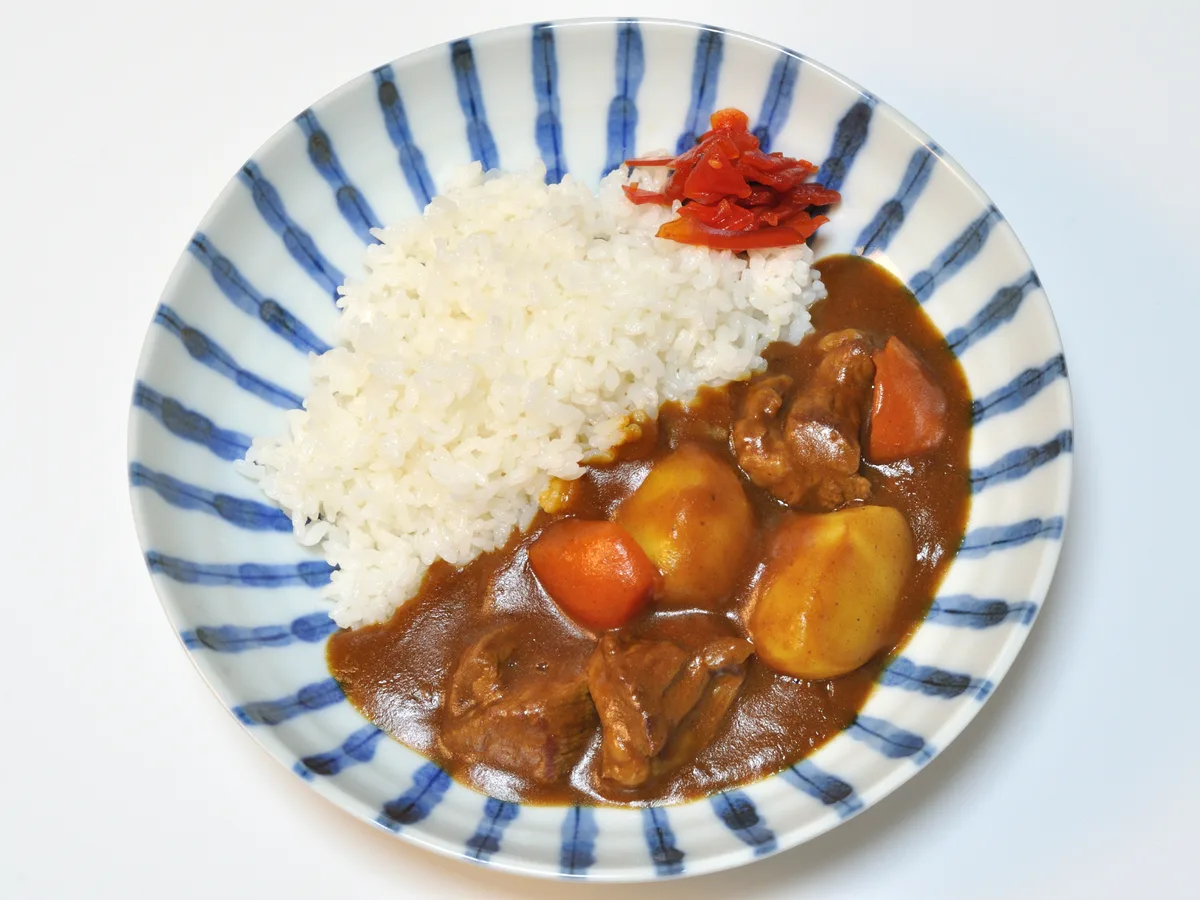
Kare raisu, Japanese curry, which is made from a block of commercial roux, is sweet and thick, and is somewhere near the top of any list of Japan's most-eaten home dinners. It is also, in origin, British naval food routed through the Meiji era.
Oyakodon, chicken and egg simmered and poured over rice, done in fifteen minutes in a single pan.
Tamago kake gohan, a raw egg stirred into hot rice with a splash of soy. It takes thirty seconds and it is breakfast for a very large number of people.
Shogayaki, ginger pork, which is the dish most likely to appear in a home kitchen on a weeknight and is almost never seen on a Western Japanese menu.
Why the imported version is so different
Migration and economics, mostly. The Japanese food that travelled abroad was restaurant food, because restaurants are what opened, and restaurants abroad had to be legible and impressive to people who had never eaten Japanese food before.
Sushi travels as an idea. Simmered burdock root does not. So the export version skewed heavily towards the expensive, the raw and the theatrical, and left out the stewed, the pickled and the leftover.
There is also a structural reason. Home Japanese food is built around dashi, rice and a stocked fridge of small dishes, which is a system rather than a set of recipes. Systems do not export. Individual dishes do.
What this means if you want to cook it
Stop looking for a main course. The unit is the meal, not the dish, and a good Japanese dinner is four small things that took twenty five minutes between them.
Make the small dishes in advance. This is the actual trick, and it is why a Japanese home cook can put five bowls on a table on a weeknight. Two or three vegetable dishes made on Sunday carry the whole week.
Get the rice right and the dashi right. Those two carry more of the flavour than anything else you do, which is the opposite of how a Western meal is weighted.
Accept that it will be mild. Home Japanese food is gentle. If you are expecting the intensity of a tonkotsu broth you will be disappointed, because that is a specialist restaurant product that took twelve hours.
Frequently asked questions
Do Japanese people eat sushi at home?
Rarely the nigiri kind. Home sushi tends to be temaki, hand rolls assembled at the table, or chirashi, toppings scattered over a bowl of seasoned rice, usually for celebrations rather than as a weeknight meal.
Is Japanese home cooking healthy?
It tends to be, structurally: lots of vegetables in small dishes, fish, fermented foods and modest portions. It is also high in sodium, from soy sauce, miso and pickles, which is the standard caveat.
How long does a Japanese home dinner take?
Twenty to forty minutes if the small dishes are already made. The system front-loads the work onto one batch-cooking session rather than spreading it across every evening.
What should I learn first?
Dashi, then miso soup, then one nimono. Those three unlock most of the rest of the repertoire, since nearly everything else is a variation on the same seasoning ratio.
What to cook
Nikujaga is the single most representative home dish and teaches the soy, mirin, sake and dashi ratio that underpins everything else. Shogayaki is fifteen minutes and is what people actually eat. Kinpira gobo is the small dish to make on a Sunday and eat all week. And for the six things that stock this kind of cooking, see the Japanese pantry.
Comments
Share your thoughts on this post.
Sign in to comment0 Comments