Korean Cuisine
Dak Gomtang (Clear Chicken Soup)
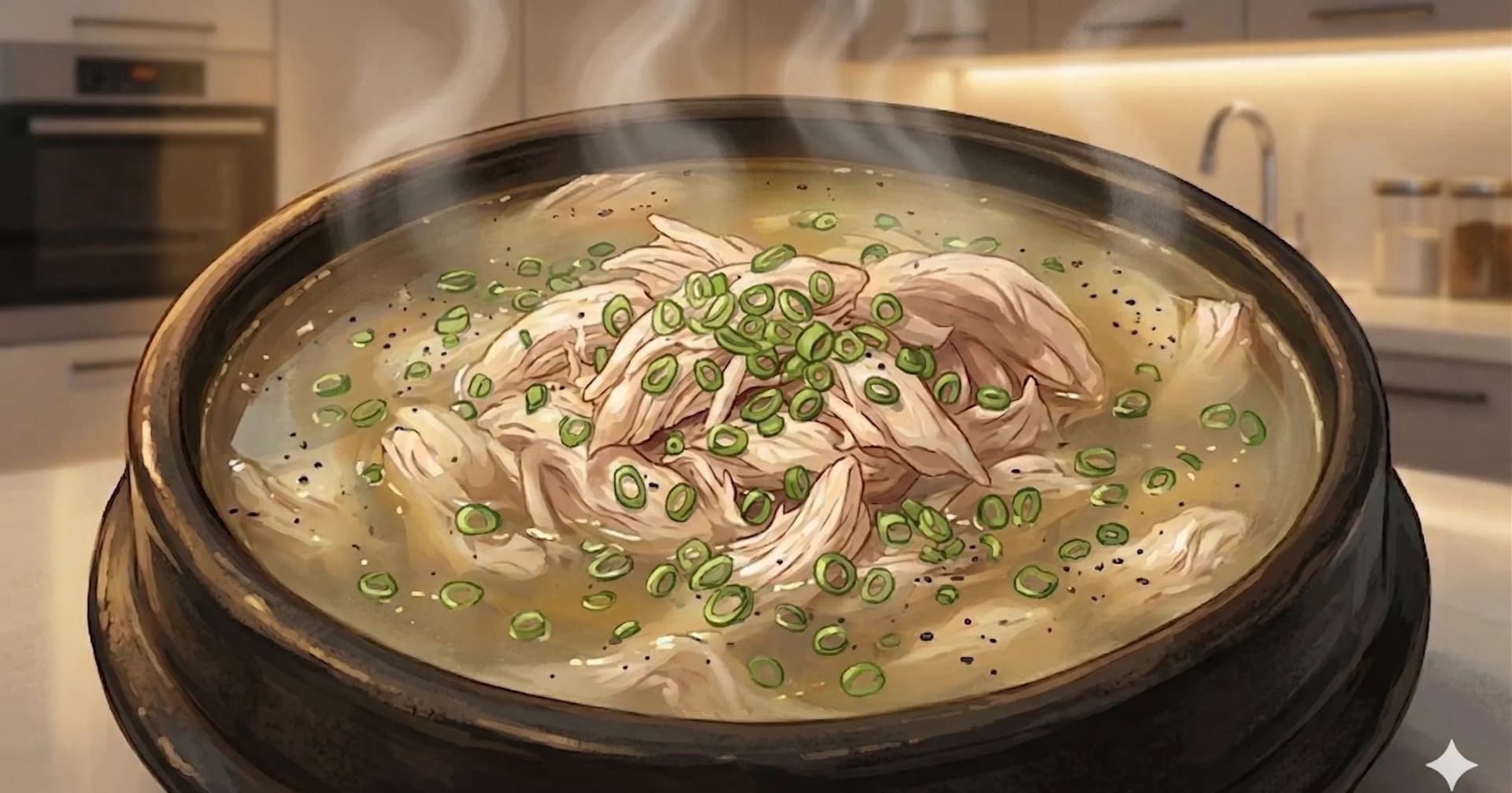
A clean, pale chicken broth simmered with whole aromatics and served over rice with a fiery side sauce
Where samgyetang makes a statement with ginseng and stuffed rice, dak gomtang is the quieter Korean chicken soup. It is plain in the best sense of the word: a whole chicken simmered with garlic, ginger, and onion until the broth is clean and full-bodied, then served over a bowl of rice with nothing more than scallions and salt.
The Korean word gomtang refers to a long-simmered bone broth, and while this chicken version does not require the marathon cooking sessions of beef seolleongtang, the principle is the same. You let the bones and meat do the work, skim carefully, and end up with something that tastes like much more than the sum of its parts.
What makes dak gomtang special is the dadaegi, a small, intense sauce made from gochugaru, garlic, and soy sauce mixed with a few spoonfuls of the hot broth. Each person stirs in as much or as little as they want, so the same pot serves someone who wants a mild, comforting bowl and someone who wants fire. It is a remarkably democratic soup.
This is Korean home cooking at its most practical. One chicken feeds four people generously when the meat is shredded and served over rice. The broth comes together in under an hour. And if you strain it and return the bones for a second simmer, you get a richer, more concentrated stock that you can freeze for weeks of quick meals.
At a Glance
Yield
4 servings
Prep
10 minutes
Cook
50 minutes
Total
1 hour
Difficulty
Easy
Ingredients
Broth Ingredients
Sauce Ingredients
Method
- 1
Clean the chicken. Rinse the chicken under cold water and remove any excess fat from the cavity and neck area. Pat dry. If the giblets are included, set them aside or discard.
- 2
Build the broth. Place the chicken in a large stockpot. Add the garlic cloves, ginger slices, onion, scallion whites, and peppercorns if using. Pour in 10 cups of cold water. The liquid should just cover the chicken.
- 3
Simmer. Bring to a boil over high heat. As foam rises to the surface, skim it away with a ladle or large spoon. Reduce heat to medium and simmer, covered, for 40 to 50 minutes until the chicken is fully cooked and the thigh juices run clear when pierced. The broth should be pale and gently fragrant.
- 4
Shred the chicken. Transfer the chicken to a cutting board and let it cool until you can handle it. Pull the meat from the bones in bite-sized strips, discarding the skin if you prefer. For a richer stock, return the bones to the pot and simmer for another 30 minutes to 1 hour, then strain.
- 5
Strain the broth. Pour the broth through a fine mesh strainer into a clean pot. Discard the spent aromatics. Skim any excess fat from the surface using a spoon or fat separator.
- 6
Make the dadaegi. In a small bowl, combine the gochugaru, minced garlic, and soy sauce. Stir in 3 tablespoons of hot broth from the pot. The mixture should be a loose, bright red paste.
- 7
Serve. Place a scoop of rice in each bowl. Arrange shredded chicken on top. Ladle the hot broth over the rice and chicken. Garnish with chopped scallions. Set out the dadaegi, salt, and pepper for each person to season to taste.
Key Ingredient Benefits
Soup Soy Sauce (Guk Ganjang). A lighter, saltier soy sauce traditionally used in Korean soups and stews. It seasons the broth without darkening it the way regular soy sauce does. If you cannot find it, use half the amount of regular soy sauce and adjust with salt. You will find this ingredient across many Korean soups, including miyeok-guk and kongnamul-guk.
Gochugaru (Korean Red Chili Flakes). Coarsely ground sun-dried chili peppers with a fruity, moderately spicy flavor. The texture ranges from flaky to powdery depending on the grind. For dadaegi, a medium grind works best. Gochugaru is also the backbone of kimchi jjigae and yukgaejang.
Whole Chicken. Using a whole bird rather than parts gives you the richest broth from the combination of back bones, rib cage, and joint cartilage. The collagen from these connective tissues is what gives the cooled broth a slight jelly-like consistency, a sign of good body.
Why This Works
Starting the chicken in cold water and bringing it up slowly extracts proteins and impurities gradually. These rise as grey foam that you skim away, which is why the finished broth stays clear and clean rather than turning cloudy. Dropping a chicken into already-boiling water seals the surface proteins and traps impurities inside the broth.
The aromatics are kept whole and simple on purpose. Onion, garlic, and ginger provide a savory backbone without making the broth taste like anything other than chicken. The whole peppercorns add warmth without sharpness. Everything gets strained out before serving, leaving behind a pure, focused flavor.
The dadaegi works because gochugaru is not just about heat. It brings a mild sweetness and a deep red color that transforms the pale broth into something more complex with each spoonful you stir in. The fat in the broth carries the chili flavor across your palate in a way that adding chili flakes directly cannot match.
Substitutions & Variations
Chicken parts. If a whole chicken feels like too much, use 1.4 kg (3 lbs) of bone-in, skin-on thighs. Reduce the simmer time to 30 minutes.
Somyeon noodles. Thin wheat noodles cooked separately and added to the bowl alongside the rice is a common variation. The noodles soak up the broth beautifully.
Glass noodles. Soak 85 g (3 oz) of dangmyeon in water for 20 minutes, then add to the broth for the last 5 minutes of cooking for a heartier bowl.
Eggs. A soft-boiled egg, halved, is a welcome addition to each bowl.
Richer broth. After removing the meat, return the bones to the strained broth and simmer for another hour. This second extraction produces a noticeably fuller, more gelatinous stock.
Serving Suggestions
Dak gomtang is a complete meal with rice in the bowl and the dadaegi on the side. For banchan, a plate of kkakdugi adds crunch and fermented tang, and oi-muchim brings a cool, vinegary contrast.
This soup is also an excellent base for a simple lunch. Keep the strained broth in the refrigerator and reheat a portion with leftover shredded chicken and fresh scallions whenever you need something warm and quick.
For a spread of Korean soups, serve dak gomtang alongside doenjang-jjigae and a bowl of rice. The mild broth and the bold stew complement each other well.
Storage & Reheating
The strained broth keeps in the refrigerator for up to 4 days. Fat will solidify on top when cold and can be lifted off easily. The shredded chicken stores separately in an airtight container for up to 3 days.
Reheat the broth gently on the stovetop over medium heat. Add the chicken to the hot broth to warm through. Do not boil the broth hard or it may turn slightly cloudy.
The broth freezes well for up to 3 months. Store in portioned containers for quick meals.
Cultural Notes
Dak gomtang (닭곰탕) belongs to the gomtang (곰탕) family of Korean bone-and-meat soups, defined by long simmering until the broth turns milky-pale and the meat falls cleanly off the bone. The most famous gomtang is seolleongtang, built on ox bones. The same technique applied to chicken produces dak gomtang: a quieter, more economical, more domestic version of the same soothing white-broth tradition.
Dak gomtang is less ceremonial than samgyetang, the ginseng-stuffed summer chicken soup, but the two dishes share the cultural classification of boyangsik (보양식), restorative food. Dak gomtang lives in the everyday repertoire. You make it for a tired worker after a long week, for someone recovering from a cold, or for a Sunday family lunch. The serving format is distinctive too. The boneless shredded chicken and the broth arrive separately, or together in a deep bowl over rice. Each diner adjusts the seasoning at the table with salt, chopped scallions, and a small dish of fiery red yangnyeomjang (양념장).
In Seoul, several decades-old dak gomtang restaurants have become cultural institutions. Jinok-hwa Halmae Wonjo Dak Hanmari near Dongdaemun, founded in the 1970s, draws long lines on weekends. The dak hanmari (닭한마리, "one whole chicken") format served at these specialty shops is a close cousin of dak gomtang. The chicken arrives whole in a wide pot of broth, eaten tableside with kalguksu noodles added at the end.
Both dishes rest on the same Korean conviction. A properly simmered chicken broth is one of the most fundamentally healing foods you can put in a body.
Nutrition Facts
Calories: 420kcal (21%)|Total Carbohydrates: 5.2g (2%)|Protein: 36.8g (74%)|Total Fat: 24.2g (31%)|Saturated Fat: 6.8g (34%)|Cholesterol: 156mg (52%)|Sodium: 295mg (13%)|Dietary Fiber: 1.3g (5%)|Total Sugars: 0.4g
You Might Also Like
Ratings & Comments
Ratings & Comments
Ratings
Share your thoughts on this recipe.
Sign in to rate and comment