Thai Cuisine
Thai Sour Curry (Gaeng Som)
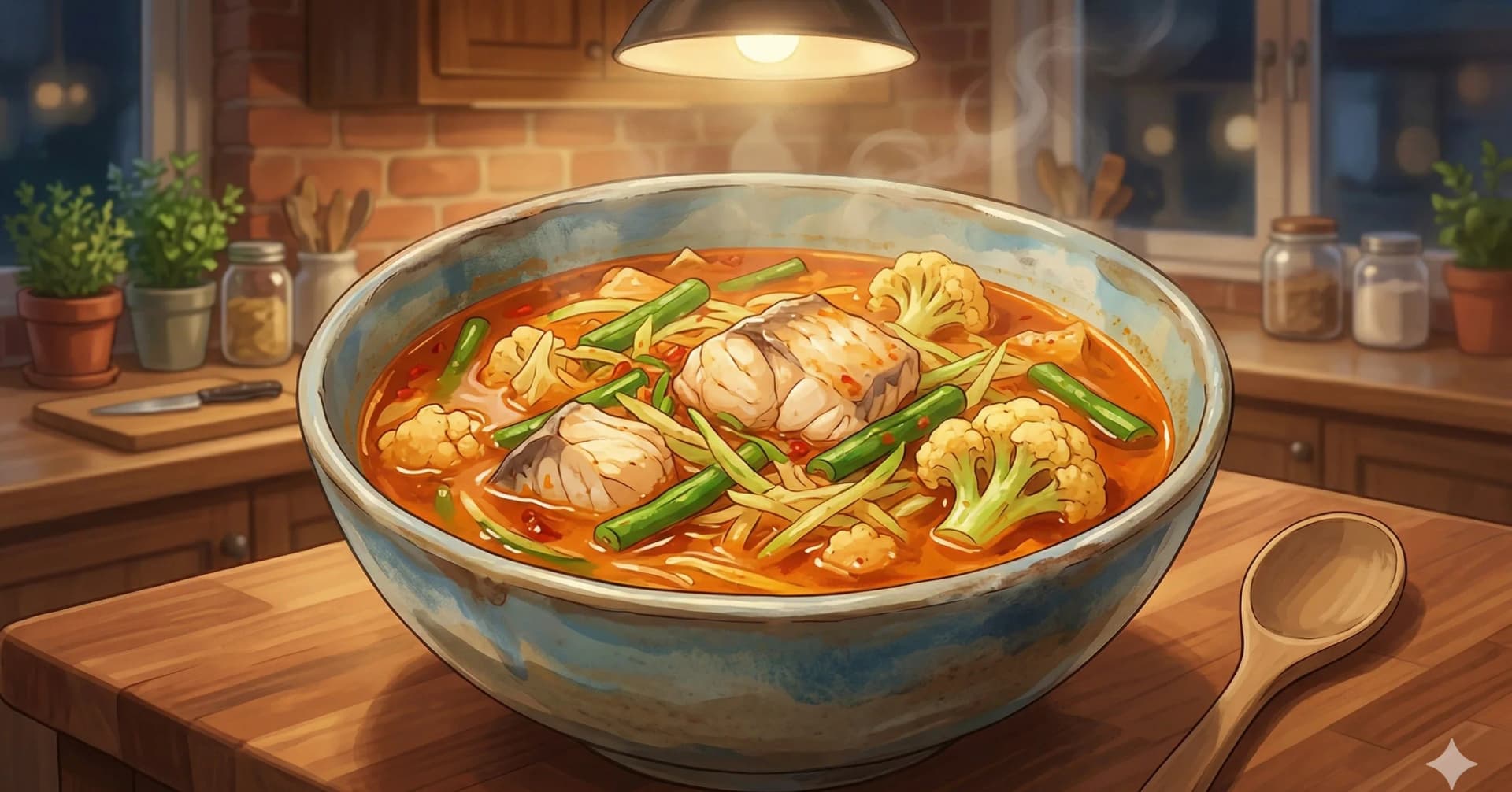
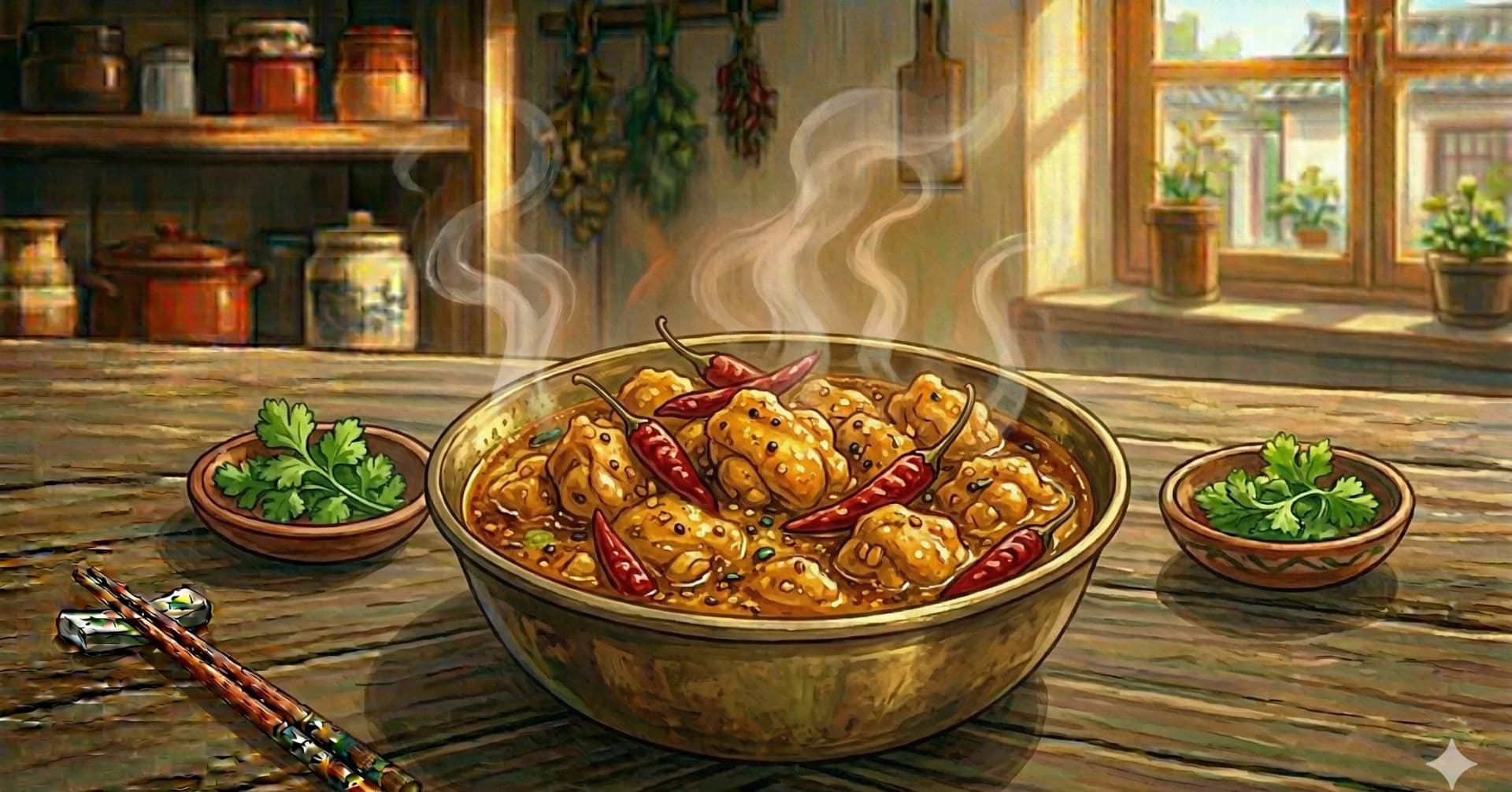
Thai sour curry with shrimp, pounded fish, and a tangle of vegetables
There is a whole family of Thai curries that most people outside of Thailand never meet. Gaeng som is one of them. The name translates to "orange curry" or "sour curry," and it is nothing like the coconut-rich curries that dominate Thai restaurant menus overseas. There is no coconut milk here, no creamy richness, no sweetness to soften the edges. Instead, the broth is thin, bright, and direct: sour from tamarind, hot from dried chilies, and savoury from fermented shrimp paste and fish sauce. It is a water-based curry, closer in spirit to a soup, and it is one of the dishes Thai families cook most often at home.
What makes gaeng som unusual among curries is the way the broth gets its body. A small piece of white fish is poached in the stock, then pounded or mashed into a fine paste and stirred back in. The fish breaks down and thickens the liquid just enough to give it a silky, slightly opaque quality without adding fat or starch. It is an old technique, practical and elegant, and it is the reason gaeng som has a presence in the mouth that plain broth does not.
The curry paste is one of the simplest in the Thai repertoire: dried chilies, shallots, garlic, fingerroot, salt, and shrimp paste, pounded or blended into a smooth paste. In southern Thailand, cooks often add fresh turmeric to the paste, turning the broth a deep golden yellow. Southern versions also tend to favour lime juice over tamarind for sourness, producing a sharper, more cutting acidity. This recipe follows the central Thai approach with tamarind as the primary souring agent, but you will find a note below on the southern variation if you want to explore that direction.
Gaeng som is built for vegetables. You can use almost anything from your crisper drawer: napa cabbage, green papaya, long beans, carrots, cauliflower, daikon, or cabbage. The curry is flexible, forgiving, and healthy. If you have enjoyed tom yum goong and want to explore another side of Thai sour cooking, or if you are drawn to jungle curry for its coconut-free intensity, gaeng som belongs in your rotation.
At a Glance
Yield
Serves 4
Prep
20 minutes
Cook
25 minutes
Total
45 minutes
Difficulty
Easy
Ingredients
Curry Paste Ingredients
- ¼ ozdried chilies (about 6 large mild chilies such as guajillo, plus 2 to 3 small hot chilies such as arbol or Thai chilies), seeds removed and cut into chunks
- ⅞ tspsalt
- 2¾ ozshallots, roughly chopped (about 1/3 cup)
- 3 clovesgarlic
- ¾ ozfingerroot (grachai or krachai), roughly chopped
- 5to 8 ml fermented shrimp paste, gapi (about 1 to 1 1/2 teaspoons)
Curry Ingredients
- 3 cupunsalted chicken, pork, or fish stock
- 2¾ ozwhite fish fillet such as cod, tilapia, or barramundi
- 15to 30 ml fish sauce
- 45to 60 ml tamarind paste, homemade or store-bought concentrate (about 3 to 4 tablespoons)
- 2 tbsppalm sugar, finely chopped, or substitute brown sugar
- 7 ozgreen papaya, peeled and cut into thin slices or wedges
- 1medium carrot (about 80 g), thinly sliced on a diagonal
- 3½ ozlong beans, cut into 5 cm pieces, or substitute green beans
- 7 oznapa cabbage, cut into bite-sized pieces
- 6 ozshrimp, peeled and deveined
- 15to 30 ml fresh lime juice, optional
To Serve
- —Jasmine rice
- —Thai omelette (highly recommended as a side)
Method
- 1
Remove the seeds from the dried chilies and cut the pods into rough chunks with scissors. Place the chilies, shallots, garlic, fingerroot, salt, and shrimp paste into a blender. Add just enough water to allow the blades to catch, roughly 60 to 80 ml, and blend until the paste is smooth and uniform. It should be a deep reddish-orange and smell sharply of shrimp paste and chili. Set aside.
- 2
Pour the stock into a medium pot and bring it to a gentle simmer over medium heat. Lower the fish fillet into the stock and poach it for 3 to 4 minutes, until the flesh is opaque all the way through and flakes easily when pressed with a spoon. Lift the fish out with a slotted spoon and transfer it to a mortar or a plate. Pound the fish with a pestle until it breaks into fine, almost fluffy shreds, or mash it thoroughly with a fork. You want no large chunks remaining, just a soft, fibrous paste that will dissolve back into the broth.
- 3
Return the pounded fish to the simmering stock and stir it in. The broth will turn slightly cloudy and gain a subtle body. Add the curry paste and stir well to combine. Raise the heat and bring the curry to a steady boil. The surface will become opaque and orange-tinted as the paste disperses.
- 4
Season the broth with fish sauce, tamarind paste, and palm sugar. Stir until the sugar dissolves. Taste the liquid at this point. It should be noticeably sour and salty with a gentle sweetness in the background and a building heat from the chilies. The flavour will intensify as it reduces and the vegetables cook, so season a little conservatively now.
- 5
Add the green papaya and carrot slices to the pot. These are the firmest vegetables and need the longest cooking time. Simmer for about 8 minutes, until the papaya is translucent at the edges and the carrot is just tender when pierced with a knife but still has a slight resistance at the centre.
- 6
Add the napa cabbage and long beans. Stir gently and simmer for another 2 minutes. The cabbage will wilt quickly, its white ribs turning glossy while the green leaves soften. The long beans should still have a clean snap when you bite through one.
- 7
Add the shrimp to the pot. Let them cook for about 30 to 45 seconds, watching closely. When they have just curled and turned pink on the outside but are still slightly translucent at the thickest part, turn off the heat immediately. The residual heat of the broth will finish cooking them through without making them tough. Once the heat is off, do not stir vigorously. Handle the pot gently so the shrimp stay intact and any fish that remains in the broth does not break apart further and cloud the curry.
- 8
Taste the curry one final time. Adjust with more fish sauce if it needs salt, more tamarind paste if it needs depth of sourness, or a squeeze of fresh lime juice if you want a brighter, sharper acidity to cut through. The finished curry should taste boldly sour first, then salty and hot, with just enough sweetness to keep the tamarind from tasting flat. Ladle into bowls and serve alongside jasmine rice.
Key Ingredient Benefits
Tamarind (Tamarindus indica) is the primary souring agent in gaeng som and one of the most widely used fruit acids in Southeast Asian, Indian, and Latin American cooking. The pulp is rich in tartaric acid, which gives it a warm, complex sourness distinct from citric acid (lime) or acetic acid (vinegar). Tamarind has a long history of use in Ayurvedic and traditional Thai medicine as a gentle digestive aid and mild laxative. Some research suggests that tamarind polyphenols may have antioxidant activity, though clinical evidence is limited. Use unsweetened tamarind paste or make your own from pulp blocks for the best flavour and control over sweetness.
Fingerroot (Boesenbergia rotunda), known as grachai or krachai in Thai, is a rhizome in the ginger family with slender, finger-like roots. Its flavour is cooling, earthy, and faintly medicinal, quite unlike ginger or galangal. In Thai traditional medicine, fingerroot has been used for centuries to treat digestive complaints and oral infections. Modern research has identified pinostrobin and panduratin A as bioactive compounds with demonstrated anti-inflammatory and antimicrobial properties in laboratory studies. It is available fresh, frozen, or brined at Southeast Asian grocery stores.
Fermented shrimp paste (gapi in Thai, belacan in Malay) is made from tiny krill or shrimp fermented with salt for weeks to months until they break down into a dense, pungent paste. Despite its intense aroma when raw, it mellows considerably during cooking and provides a deep, complex umami backbone. Shrimp paste is high in protein and contains significant amounts of sodium and naturally occurring glutamate. It is a cornerstone seasoning across Southeast Asian cuisines and appears in nearly every Thai curry paste.
Dried chilies provide capsaicin, the compound responsible for the sensation of heat. In gaeng som, using a mix of large mild chilies (for colour and body) and small hot chilies (for heat) gives you control over the spice level while maintaining the curry's characteristic orange-red colour. Capsaicin has been studied for its potential thermogenic and pain-modulating effects through the TRPV1 receptor pathway. In traditional Thai medicine, chilies are considered warming and are believed to aid digestion and circulation.
White fish (cod, tilapia, barramundi, or similar) serves a dual purpose in gaeng som: it thickens the broth and contributes lean protein. White-fleshed fish are low in fat and high in easily digestible protein, making gaeng som one of the lightest and most nutritious curries in the Thai repertoire. Any mild, flaky white fish will work. The fish is pounded into the broth, so there is no need to use an expensive cut.
Why This Works
Pounding the poached fish and stirring it back into the broth is the technique that defines gaeng som. The fish breaks down into microscopic fibres that remain suspended in the liquid, acting as a natural thickener in much the same way that a roux thickens a French sauce, but without any added fat or starch. The proteins in the fish also contribute glutamate, reinforcing the umami from the shrimp paste and fish sauce and giving the broth a savoury depth that plain stock alone cannot achieve.
The curry paste is deliberately simple compared to other Thai curry pastes. Where a green or red curry paste might use fifteen ingredients, gaeng som paste uses six. This simplicity keeps the dried chili and shrimp paste flavours front and centre, which is important because they need to stand on their own without coconut milk to round them out. Fingerroot adds a distinctive cooling, slightly medicinal note that separates gaeng som from any other Thai curry. Omitting it is noticeable.
Tamarind provides a particular kind of sourness: warm, rounded, and slightly fruity, very different from the sharp, bright acidity of lime juice. This matters because the tamarind's tartaric acid interacts with the savoury elements of the broth (fish sauce, shrimp paste, pounded fish) in a way that deepens flavour rather than simply adding a sour note on top. Lime juice, added at the end if needed, provides a contrasting brightness. The two acids together create a layered sourness that neither achieves alone.
Adding vegetables in stages according to their density ensures that everything finishes cooking at the same time. Firm vegetables like green papaya and carrots go in first and need a full 8 minutes, while quick-cooking napa cabbage and long beans need only 2 minutes. The shrimp go in last and cook almost entirely from residual heat, which prevents the proteins from tightening and turning rubbery.
Substitutions & Variations
Southern Thai style (gaeng leuang): Replace the tamarind paste with 150 to 200 ml of fresh lime juice (from about 8 to 10 limes), added entirely at the end after turning off the heat to preserve the lime's brightness. Add 15 to 20 g of fresh turmeric, peeled and sliced, to the curry paste when blending. This produces a golden-yellow curry with a sharper, more cutting sourness. Omit the palm sugar entirely if following this approach, as the southern version is traditionally unsweetened. This variation is closer to what you would find in Nakhon Si Thammarat province.
Fingerroot unavailable: Fingerroot is worth seeking out, but if you truly cannot find it, the curry will still taste good without it. Do not substitute ginger or galangal, as their flavour profiles are too different and will push the curry in the wrong direction. Simply omit and increase the shallots slightly to 100 g.
Protein swaps: Use 400 to 500 g of whole fish steaks (barramundi, snapper, or mackerel) in place of the shrimp for a more traditional version. Add the fish steaks after the curry paste has been incorporated and simmer gently for 8 to 10 minutes without stirring until cooked through. Southern Thai cooks follow a firm rule: do not stir the pot while fish is cooking, as it is believed to produce a fishy aroma in the broth. Chicken thigh, sliced thinly, also works if you prefer poultry.
Vegetable swaps: Almost any firm or leafy vegetable works in gaeng som. Cauliflower florets, daikon rounds, cabbage wedges, bamboo shoots, and morning glory are all common in Thailand. Use a single vegetable for a more traditional presentation or a mix for variety. If using green papaya, make sure it is completely green and firm, not at all ripe.
Spice level: For a milder curry, use only large mild dried chilies (guajillo or ancho) and skip the arbol or Thai chilies entirely. For a fiery southern-style heat, use 60 g of fresh bird's eye chilies in place of the dried chilies in the paste, blending them in raw. This will produce a much hotter and more pungent curry.
Vegan adaptation: Replace the fish stock with vegetable stock, omit the fish fillet thickener (use 15 g of rice flour dissolved in a little water as a thickener instead), replace fish sauce with soy sauce or mushroom sauce, and use firm tofu or mushrooms in place of the shrimp. Replace shrimp paste with fermented soybean paste (tao jiao). The curry will be different but still satisfying.
Serving Suggestions
Gaeng som is a communal dish, meant to sit at the centre of a Thai meal alongside jasmine rice and one or two other preparations. Its brothy, sour character makes it an ideal counterpoint to richer dishes. Pair it with a green curry for a contrast between coconut richness and tamarind brightness, or alongside pad krapow for a combination of sour broth and pungent stir-fry.
A Thai omelette is the classic companion. Fry a thin, puffy omelette in plenty of oil, tear it into pieces, and lay them over rice. Ladle the gaeng som broth and vegetables directly over the top. The crispy, eggy omelette soaked in sour curry broth is one of Thailand's great comfort combinations.
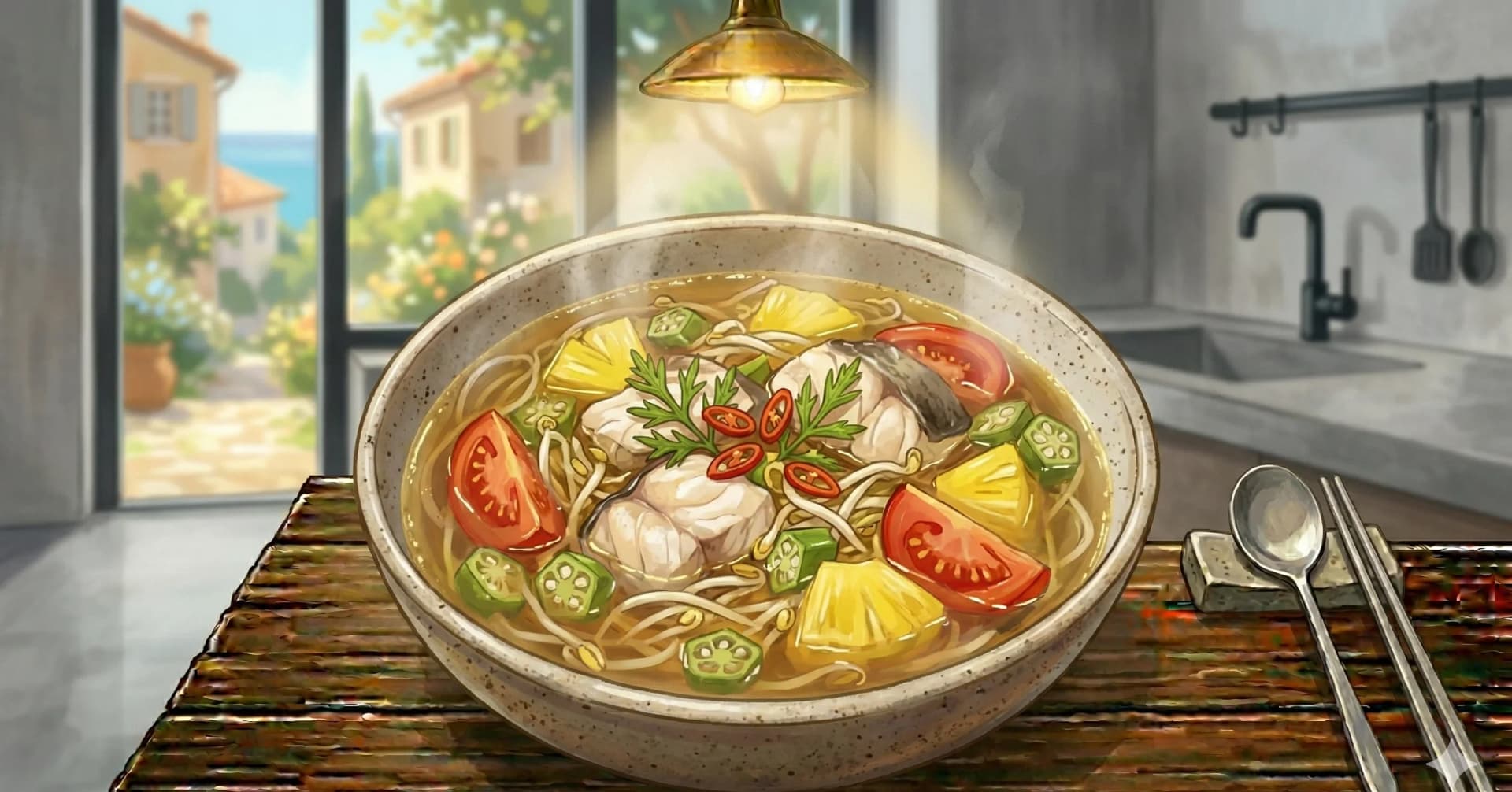
If you are building a larger spread, gaeng som sits comfortably alongside jungle curry (another coconut-free curry with a different herbal profile), a plate of som tam, or steamed fish with lime such as pla nueng manao. For a Southeast Asian sour soup comparison, try canh chua, Vietnam's tamarind-based sour fish soup, which shares gaeng som's love of tamarind and vegetables but takes a gentler, sweeter approach. Gaeng liang, the peppery Thai vegetable soup, makes a lovely pairing for a light, broth-focused meal.
Storage & Reheating
The curry broth and vegetables keep well in a sealed container in the refrigerator for up to 2 days. If possible, store the shrimp separately from the broth, as they will continue to firm up in the hot liquid. Reheat gently in a covered pot over low heat. Do not bring to a vigorous boil, as this will toughen the shrimp and dull the tamarind's brightness. Add a small squeeze of fresh lime juice after reheating to refresh the sour note, which flattens over time. The broth (without shrimp) freezes well for up to 1 month. Thaw in the refrigerator overnight and reheat with freshly cooked shrimp or fish. The tamarind flavour holds up better than lime-based sourness during freezing, which is one reason this curry stores more gracefully than tom yum goong.
Cultural Notes
Gaeng som (แกงส้ม, "sour curry") is the southern Thai curry built around the souring power of tamarind rather than the sweetness of coconut milk. The dish has no coconut at all, which separates it cleanly from the red curry and green curry family that dominates international Thai menus. Where those curries are rounded and rich, gaeng som runs sharp, bright, and assertively sour, with the heat of the chilies and the depth of the shrimp paste coming through clean against the tamarind acid.
The curry paste is built from dried red chilies, fresh prik chee fah chilies, shallots, garlic, and shrimp paste, pounded together and then dissolved into a tamarind-and-stock base. The traditional protein is fish, most often a freshwater white-fleshed variety, though shrimp and crab versions are common in coastal regions. The vegetables that go in vary by season and region: cha-om (acacia leaves), morning glory, white radish, daikon, Chinese cabbage, and the Thai-specific cha-om kai (acacia leaf omelet) are all standard. The vegetables are added in stages so each finishes at its proper texture.
The dish is most associated with southern Thai cooking, where seafood is abundant and the cuisine leans heavily on bright sour notes from tamarind, lime, and som khaek (a souring agent made from dried garcinia fruit). Southern gaeng som is typically hotter and more aggressively soured than central Thai versions, with diners expected to add additional chili or lime to taste. The dish is one of the standard items on the southern Thai khao rad gaeng one-plate-rice counter, and it appears at sit-down southern Thai restaurants throughout Bangkok as the curry that lets diners taste the difference between coconut-based and tamarind-based Thai cooking traditions side by side.
Nutrition Facts
Calories: 399kcal (20%)|Total Carbohydrates: 29.9g (11%)|Protein: 54.8g (110%)|Total Fat: 6.9g (9%)|Saturated Fat: 1.7g (9%)|Cholesterol: 207mg (69%)|Sodium: 1136mg (49%)|Dietary Fiber: 3.3g (12%)|Total Sugars: 17g
You Might Also Like
Ratings & Comments
Ratings & Comments
Ratings
Share your thoughts on this recipe.
Sign in to rate and comment